Source Industrial Grade Antimony Trioxide for Flame Retardants
Find 30 listings for Industrial Grade Antimony Trioxide to compare purity levels, particle sizes, and packaging options. This guide helps buyers evaluate suppliers for flame retardant applications in plastics and textiles; compare the available evidence and request quotations based on your requirements.
Key considerations
Products List


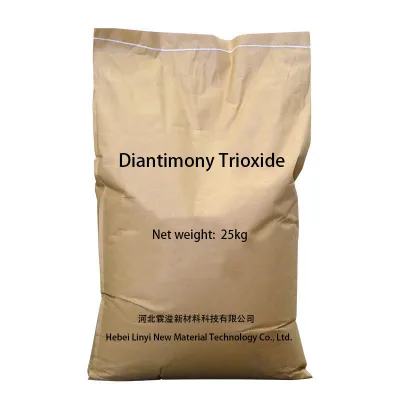
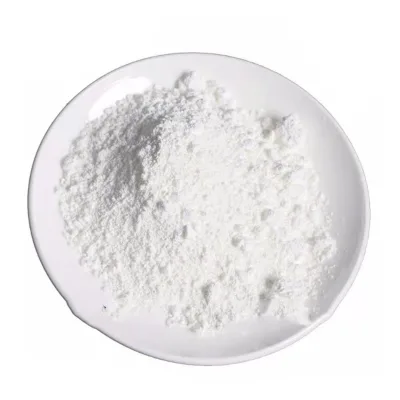


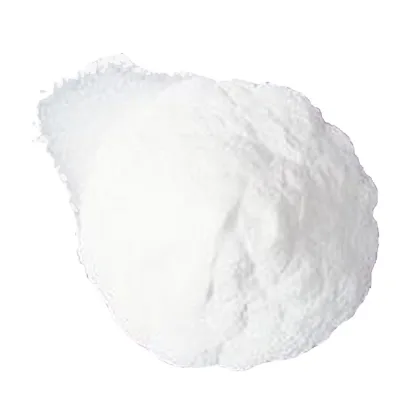
Antimony Trioxide Flame Retardant Sb2O3 99.5% Antimony Trioxide Price
$5.60 - $12.00
MOQ: 1000 Minimum


Manufacturer Supply Wholesale High Purity 99.8% Antimony Trioxide with Lower Price
$20999.00 - $25500.00
MOQ: 1 Tons

High Quality Antimony Trioxide Flame Retardant for Plastic and Rubber
$20000.00 - $23000.00
MOQ: 1 Tons


Comprehensive Sourcing Guide
Industrial Grade Antimony Trioxide Sourcing Guide
Procuring Industrial Grade Antimony Trioxide requires a disciplined approach to verifying chemical identity and physical consistency. Buyers must confirm that the material is indeed Antimony(III) Oxide, identified by CAS number 1309-64-4 and EC number 215-175-0. This substance functions as an amphoteric oxide, meaning it is insoluble in water but soluble in acids and bases, a property critical for its integration into various polymer matrices. The primary use case for this grade is as a flame retardant additive, where it synergizes with halogenated systems to suppress combustion effectively.
Sourcing decisions should be grounded in observed market signals rather than generic assumptions. Current listings indicate a wide price range from $1.8 to $25,500, reflecting variations in purity, particle size, and packaging. Minimum order quantities typically span from 1 to 1,000 units, with some suppliers offering a 1 kg free sample to facilitate initial quality assessment. Understanding these commercial baselines helps buyers distinguish between bulk industrial supply and specialized reagent-grade offerings, ensuring that procurement aligns with specific production volumes and budget constraints.
Product Scope and Observed Listing Signals
The product scope for Industrial Grade Antimony Trioxide encompasses a range of physical forms, primarily observed as a white powder or white crystalline solid. Key attributes include a density of 5.20 g/cm3 and a molecular weight of approximately 291.52 g/mol. Buyers should note that while the core chemical identity remains constant, physical specifications such as particle size can vary significantly. Standard offerings often include 325 mesh powder, while more advanced applications may require ultrafine or nano-scale variants, which command different pricing and handling protocols.
Commercial listings frequently highlight purity levels ranging from 99% to 99.9%, with some specifications citing a minimum flame retardant content of 99% by weight. Packaging options are diverse, including 25 kg kraft bags, bulk bags, and container loads of 20 tons. Origin data points predominantly to Hebei, China, indicating a concentrated supply chain in this region. Buyers must verify if the listed "First Class" quality designation aligns with their internal quality management systems, as this term is not universally standardized across all international markets.
Technical Specifications to Verify
Verification of technical specifications is paramount to ensure the material performs as expected in flame retardant applications. Buyers must confirm the main constituents, which are typically listed as 99.5%, 99.8%, or 99.9% Sb2O3. The whiteness index is another critical parameter, with observed values ranging from 95.3% to a minimum of 96%. These optical properties can influence the final appearance of colored plastics or coatings, making them essential for aesthetic-sensitive manufacturing processes.
Particle size distribution directly impacts dispersion and reactivity within the host polymer. While standard 325 mesh is common, ultrafine and nano-scale powders offer different surface area characteristics that may enhance flame retardancy efficiency. Buyers should request detailed particle size analysis reports to match the supplier’s claims with their processing equipment capabilities. Additionally, the decomposition temperature of 400°C is a key thermal property that must be considered when processing temperatures in extrusion or molding exceed this threshold, to prevent premature degradation of the additive.
Compliance and Safety Documentation
Safety documentation must be rigorously reviewed to ensure regulatory compliance in the destination market. Antimony trioxide is classified under specific hazard categories, and buyers must obtain the Safety Data Sheet (SDS) to understand handling, storage, and disposal requirements. The material is odorless and appears as a white powder, but its solubility in acids and bases necessitates careful handling to avoid unintended chemical reactions during storage or processing.
Regulatory identifiers such as CAS 1309-64-4 and EINECS 215-175-0 are essential for customs clearance and chemical inventory reporting. Buyers should verify if the supplier provides additional compliance certificates, such as REACH registration or TSCA compliance, depending on the target region. Although some listings mention "Reagent Grade" alongside "Industrial Grade," buyers must clarify which standard applies to their order, as reagent grades often carry stricter impurity limits and higher documentation burdens.
Cost Drivers and Commercial Terms
Cost drivers for Industrial Grade Antimony Trioxide include purity level, particle size, and packaging format. Higher purity grades, such as 99.9%, typically command a premium over standard 99.5% material. Similarly, ultrafine or nano-scale powders involve more complex milling processes, increasing production costs. Buyers should analyze the total landed cost, including freight, insurance, and tariffs, rather than focusing solely on the unit price, which can vary widely from $1.8 to $25,500 depending on volume and specifications.
Commercial terms often include flexible minimum order quantities, ranging from small trial orders to large container loads. Some suppliers offer a 1 kg free sample, which is a valuable tool for initial quality verification before committing to larger purchases. Payment terms and lead times should be clearly defined in the contract, as these can impact production scheduling. Buyers should also consider the supplier’s capacity to provide consistent batches, as fluctuations in raw material quality can affect the final product’s performance.
Supplier Qualification and Quality Control
Supplier qualification involves assessing the manufacturer’s ability to maintain consistent quality across batches. Buyers should verify the supplier’s production facilities, particularly if the origin is listed as Hebei, China, a major hub for antimony processing. Quality control processes should include regular testing of key parameters such as purity, whiteness, and particle size. Suppliers claiming "First Class" quality should provide evidence of their internal quality management systems, such as ISO certifications or in-house laboratory capabilities.
Quality control documentation should include a Certificate of Analysis (COA) for each batch, detailing test results against specified standards. Buyers should establish clear acceptance criteria for impurities and physical properties, ensuring they align with their production requirements. Regular audits or third-party inspections may be necessary for high-volume contracts to ensure ongoing compliance. Building a relationship with a supplier that prioritizes transparency and consistent quality is essential for long-term procurement success.
Long-Term Procurement Checks
Long-term procurement requires continuous monitoring of market trends and supplier performance. Buyers should track price fluctuations and availability of raw materials, as these can impact the stability of supply. Regular communication with suppliers is essential to anticipate changes in production capacity or regulatory requirements. Establishing a robust supplier evaluation process helps identify potential risks and ensures that the supply chain remains resilient against disruptions.
Performance reviews should include assessments of delivery reliability, product consistency, and responsiveness to issues. Buyers should maintain a database of test results and quality metrics to identify trends over time. This data-driven approach enables proactive management of the supply chain, allowing for timely adjustments to sourcing strategies. By focusing on long-term partnerships and continuous improvement, buyers can secure a stable supply of Industrial Grade Antimony Trioxide that meets their evolving business needs.
FAQs
What is the minimum order quantity for Industrial Grade Antimony Trioxide?
The minimum order quantity is 5 metric tons for bulk industrial transactions. However, free samples of 1 kilogram are available for testing purposes before committing to a larger purchase order.
Can I get a free sample of Industrial Grade Antimony Trioxide?
Yes, a free sample of 1 kilogram is available for evaluation. This allows buyers to verify the white powder appearance and purity levels before placing a bulk order for industrial applications.
What is the purity level of Industrial Grade Antimony Trioxide?
The product purity ranges from 99% to 99.9% depending on the specific grade selected. Most standard offerings maintain a minimum flame retardant content of 99% by weight for effective performance.
Where is Industrial Grade Antimony Trioxide manufactured?
This product originates from Hebei, China, where manufacturers produce it for global export. The goods are typically packed in 25kg kraft bags or shipped in 20-ton container loads.
How is Industrial Grade Antimony Trioxide packaged for shipment?
Standard packaging involves 25kg kraft bags, while larger shipments utilize 20-ton containers. Customization is available to meet specific logistical requirements for different industrial clients and distribution channels.
What are the key physical properties of Industrial Grade Antimony Trioxide?
It appears as a white powder with a density of 5.20 g/cm3 and a whiteness of at least 95.3%. The substance is odorless, insoluble in water, but soluble in acids and bases.
Is customization available for Industrial Grade Antimony Trioxide orders?
Customization is available to accommodate specific buyer requirements regarding particle size or packaging. Buyers can request standard 325 mesh, ultrafine powder, or nano-scale options depending on their application needs.