Source Industrial PPR PVC Pipe Cutter for Home, Factory, and Utility Tasks
Explore 30 options for the Industrial PPR PVC Pipe Cutter designed for home, factory, and utility applications. Buyers can compare models with varying cutting diameters, blade materials, and handle types to find the right tool for specific needs.
Key considerations
Products List


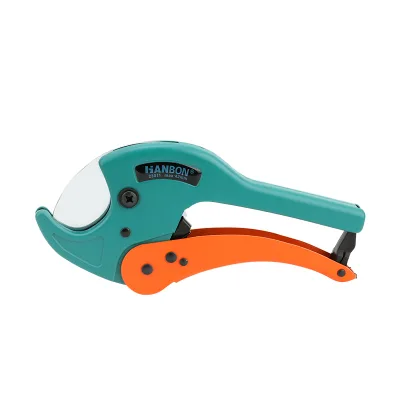
Good Design Pipe Cutter Factory Price Good Quality PPR Plastic for Pipes
$50.00 - $150.00
MOQ: 5 Boxes


$1000.00 - $20000.00
MOQ: 1 Pieces

$1000.00 - $20000.00
MOQ: 1 Pieces

$1000.00 - $20000.00
MOQ: 1 Pieces


$1000.00 - $20000.00
MOQ: 1 Pieces


Comprehensive Sourcing Guide
Strategic Sourcing Guide for Industrial PPR and PVC Pipe Cutters
Procuring industrial-grade pipe cutting tools for PPR (Polypropylene Random Copolymer) and PVC (Polyvinyl Chloride) applications requires a nuanced understanding of material compatibility, blade hardness, and operational efficiency. The market offers a diverse array of utility knives and specialized cutters, each designed for specific pipe diameters and material densities. Buyers must navigate a landscape where product attributes vary significantly between models, necessitating a rigorous evaluation of technical specifications before finalizing a procurement strategy. This guide outlines the critical factors for sourcing these tools, focusing on verified product data and industry best practices to ensure operational safety and cost-effectiveness.
Technical Specifications and Material Compatibility
The primary differentiator among pipe cutters is the blade material and its hardness, which directly dictates the tool's ability to slice through thermoplastic pipes without deforming the material. Based on observed product data, the market features blades constructed from high-carbon steel, specifically 5cr13 and 65mn steel, as well as stainless steel variants. The hardness of these blades is a critical metric, with observed values ranging from HRC 55 to HRC 58. For instance, specific models like the SD01 and SD05A utilize 5cr13 and 65mn steel respectively, both achieving a hardness of HRC 55. In contrast, the SD04B model employs a stainless steel blade with a higher hardness rating of HRC 56-58, while the SD02 model features an Mn65 blade with a hardness of HRC 58.
When selecting a cutter for PPR or PVC pipes, the maximum cutting diameter is the most immediate specification to verify. The observed product range includes models capable of cutting pipes with diameters of 26mm, 32mm, and up to 42mm. The SD02 model, for example, is specified for a maximum cutting diameter of 26mm, whereas the SD01 is rated for 42mm. This variation suggests that a single tool may not suffice for all industrial scenarios; a procurement strategy should account for a mix of tools if the facility handles pipes of varying sizes. Furthermore, the blade tip geometry is noted as "Sharp" with a "Straight" blade type, which is essential for clean cuts that prevent burrs, a common issue in PVC piping that can compromise joint integrity.
The handle material also plays a significant role in operator comfort and safety during extended use. Observed products utilize a combination of plastic, nylon, and aluminum bodies with TPR (Thermoplastic Rubber) coatings. The SD01 model features an aluminum body with a TPR coating, likely offering a balance of durability and grip. Conversely, the SD02 and other models utilize nylon or plastic handles. For industrial environments where vibration and repetitive motion are factors, the TPR-coated aluminum or nylon handles provide superior shock absorption compared to bare metal or hard plastic.
Compliance, Certification, and Standard Verification
In the industrial sector, compliance with safety and quality standards is non-negotiable, yet specific certification data for these tools is often limited in public listings. While background knowledge suggests the existence of ISO 9001 and ISO 15874 standards, these should not be assumed to apply to specific product listings without explicit verification from the supplier. Buyers must treat the "prod_standard" field in product data as a primary reference point. For example, the SD01 model lists its standard as "cutting max 42mm," and the SD04B lists "cutting max 32mm." These are functional standards rather than international safety certifications.
Procurement teams should explicitly request documentation regarding blade material composition and hardness testing results. The observed data mentions "Super Hard Material" for certain blades, but this is a qualitative observation rather than a quantifiable standard. To ensure compliance, buyers should verify that the blade material matches the claimed composition (e.g., 5cr13, 65mn, or Stainless Steel) through third-party testing if the application involves high-risk environments. Additionally, the origin of the product is a key factor in supply chain transparency. Most observed products originate from Zhejiang, China, a major manufacturing hub. While this indicates a concentration of supply, it does not guarantee quality consistency. Buyers should verify if the supplier adheres to specific export standards or if the products meet the safety regulations of the destination country, such as OSHA guidelines in the United States or CE marking in Europe, rather than relying solely on the "prod_standard" field provided in the listing.
Cost Drivers and Pricing Dynamics
The pricing of industrial pipe cutters is influenced by a complex interplay of material costs, manufacturing complexity, and order volume. The observed price range for these tools spans from $0 to $20,000, a wide spectrum that likely reflects the inclusion of specialized industrial kits, bulk packaging, or high-end automated variants alongside standard manual utility knives. The Minimum Order Quantity (MOQ) also varies significantly, ranging from 1 to 500 units. This flexibility allows buyers to procure small batches for immediate needs or large volumes for stockpiling, but it also introduces variability in unit cost.
Material costs are a primary driver of price. Models featuring aluminum bodies with TPR coatings, such as the SD01, may command a higher price point compared to those with all-plastic or nylon handles due to the cost of the raw materials and the additional processing required for the coating. Similarly, the hardness of the blade affects the price; blades hardened to HRC 58 (like the SD02) may be more expensive than those at HRC 55 due to the more intensive heat treatment processes involved. The packaging type, whether "Carton," "Box," or "Ctns" (Cartons), can also impact the final cost, especially for international shipping where bulk packaging reduces per-unit logistics expenses.
Buyers should analyze the total cost of ownership rather than just the unit price. A cheaper cutter with a lower hardness rating (HRC 55) may require more frequent replacement or sharpening compared to a higher-priced model with HRC 58 hardness, leading to higher long-term costs. Additionally, the "Customization" attribute observed in the product data suggests that suppliers may offer tailored solutions, which could affect pricing. Customization might include branding, specific handle colors (Black or Red are observed), or specialized blade geometries, all of which should be factored into the budget.
Typical Applications and Operational Context
The versatility of these cutters is evident in their designated usage. The observed data explicitly categorizes these tools as "Utility Knife" applications suitable for cutting PVC, with specific mentions of "Cut PVC" and "Working Layer: PVC Plastic." This confirms their primary role in plumbing, construction, and industrial maintenance sectors where PPR and PVC piping are prevalent. The application scope extends to both "Home" and "Factory" environments, indicating that the tools are designed for a wide range of operational intensities.
For factory settings, the durability of the tool is paramount. The "New" condition of all observed products suggests they are ready for immediate deployment, but the "Folding: Unfolded" attribute indicates that some models may have folding mechanisms, which are useful for portability but require careful handling to ensure the blade remains secure during use. The "Cutting Knife" designation reinforces their role as precision instruments rather than heavy-duty demolition tools. In scenarios where precision is critical, such as in the installation of PPR pipes for hot water systems, the sharpness of the blade tip and the straightness of the cut are vital to ensure a proper fit for solvent welding or heat fusion.
The ability to cut specific diameters, such as 26mm, 32mm, and 42mm, allows these tools to cover the most common pipe sizes used in residential and light industrial plumbing. However, for larger diameter pipes or specialized industrial applications, buyers must verify if the observed models meet the required cutting capacity. The "Max Cutting Dia" specification is a hard limit; exceeding this can damage the blade or the tool, leading to safety hazards. Therefore, matching the tool's specification to the project's pipe requirements is a critical step in the procurement process.
Supplier Evaluation and Quality Control
Evaluating suppliers for industrial pipe cutters requires a focus on consistency, transparency, and quality assurance. The observed product data provides a baseline for comparison, with models like SD01, SD02, SD04, SD04B, SD05A, 109, 110, and 105-350mm representing different configurations. When assessing suppliers, buyers should verify the consistency of the "prod_model" numbers across batches to ensure that the specifications remain stable. The presence of "Customization: Available" is a positive indicator of a supplier's flexibility, but it also necessitates clear communication regarding the customization parameters to avoid discrepancies in the final product.
Quality control should focus on the blade material and hardness verification. Given the observed hardness range of HRC 55 to HRC 58, buyers should request hardness test reports to confirm that the blades meet the specified ratings. The "Blade Material" should be cross-referenced with the claimed composition (e.g., 5cr13, 65mn, Stainless Steel) to ensure that the supplier is not substituting lower-grade materials. Additionally, the "Condition: New" attribute should be verified upon delivery to ensure that the tools have not been previously used or damaged during storage.
The origin of the product, specifically "Zhejiang" and "China," should be considered in the context of supply chain reliability. While these regions are known for manufacturing, buyers should establish clear communication channels with suppliers to monitor production timelines and quality control processes. The "Production Technology: Metal Handle" for certain models suggests a focus on durability, which should be a key criterion in the supplier selection process. Buyers should also inquire about the "prod_packing" standards to ensure that the tools are packaged securely to prevent damage during transit, especially for international shipments.
Long-Term Procurement Considerations
Sourcing industrial pipe cutters is not merely a transactional activity but a strategic decision that impacts long-term operational efficiency. The "Customization" attribute and the variety of models available suggest that suppliers can adapt to evolving needs, but buyers must plan for the lifecycle of the tools. The hardness of the blade is a key factor in longevity; higher hardness ratings (HRC 58) generally offer better wear resistance, reducing the frequency of blade replacement. However, this must be balanced against the risk of brittleness, which can lead to chipping if the tool is used on materials harder than intended.
The "Max Cutting Dia" specification should be reviewed periodically to ensure that the tools remain suitable for the facility's changing needs. As projects evolve, the pipe sizes may change, necessitating the procurement of new models with different cutting capacities. The "Color" options (Black or Red) may also be relevant for safety and organization, allowing for color-coding of tools based on their cutting capacity or intended use.
Finally, the "Standard" and "Origin" data should be used to build a robust supplier database. By tracking the performance of specific models like the SD01 or SD02 over time, buyers can identify which suppliers consistently deliver high-quality products. This data-driven approach to procurement ensures that the facility maintains a reliable inventory of tools capable of handling the specific demands of PPR and PVC pipe installation, ultimately reducing downtime and enhancing safety.
FAQs
What blade materials are used in industrial pipe cutters?
Blades are constructed from high-carbon steel, stainless steel, or super hard materials. Specific models utilize 5cr13, 65mn, or Mn65 steel to ensure durability and sharpness for cutting PVC and PPR pipes effectively.
Which models support cutting pipes up to 42mm diameter?
The SD01 model supports a maximum cutting diameter of 42mm. Other models like SD05A and SD04B are rated for smaller diameters of 32mm and 26mm respectively, requiring selection based on pipe size.
How hard are the blades on these utility knives?
Blade hardness ranges from HRC 55 to HRC 58 depending on the specific model. The SD01 and SD05A models feature a hardness of HRC 55, while the SD02 model reaches HRC 58 for enhanced wear resistance.
Can I find cutters with aluminum bodies and TPR coatings?
Yes, the SD01 model features an aluminum body with a TPR coated handle for improved grip. Other options include nylon or plastic handles, offering different comfort levels for extended industrial use.
What is the minimum order quantity for these pipe cutters?
The minimum order quantity ranges from 1 to 500 units depending on the supplier and model. This flexibility allows buyers to purchase single units for immediate needs or larger batches for stockpiling.
Where are these industrial pipe cutters manufactured?
Most observed products originate from Zhejiang, China. This region is a major manufacturing hub, though buyers should verify specific supplier locations and production standards to ensure quality consistency for their procurement.