Source Industrial Shock Absorber Polyurethane Pin for Machinery
Compare 30 Industrial Shock Absorber Polyurethane Pin options with varying durometers and materials. Review specifications for vehicle and machinery applications to select the right fit for your sealing and fixture needs; compare the available evidence and request quotations based on your requirements.
Key considerations
Products List


Mass Production Polyether-Based Flexible Polyurethane Foam Shock Absorber
$0.50 - $10.00
MOQ: 1000 Pieces


High Load-Bearing Polyester-Based Flexible Polyurethane Foam Shock Absorber
$0.50 - $10.00
MOQ: 1000 Pieces


Polyurethane PU Rubber for Shock Absorption Custom Shape Wear Resist PU Part
$0.02 - $0.04
MOQ: 300 Pieces




Comprehensive Sourcing Guide
Industrial Shock Absorber Polyurethane Pin Sourcing Guide
Procuring industrial shock absorber polyurethane pins requires a strategic approach that balances material performance with operational reliability. These components are critical in machinery, vehicle systems, and household appliances where vibration damping and impact resistance are paramount. Buyers must recognize that polyurethane offers superior wear resistance compared to traditional rubber, making it ideal for high-cycle applications. The sourcing process should begin by defining the specific mechanical loads and environmental conditions the pins will face. This initial assessment ensures that the selected material grade aligns with the intended service life, preventing premature failure in critical industrial components.
Understanding the market landscape is essential for effective negotiation and supplier selection. Listings for these components often highlight customization capabilities, indicating that standard off-the-shelf options may not meet specific engineering requirements. Many suppliers offer OEM and ODM services, allowing buyers to tailor dimensions and durometer hardness to their exact specifications. The availability of free samples and short sample lead times, typically ranging from three to five days, facilitates rapid prototyping and validation. By leveraging these commercial terms, procurement teams can accelerate the design phase and ensure that the final production run meets precise technical expectations without significant delays.
Product Scope and Observed Listing Signals
The product scope for industrial shock absorber polyurethane pins extends across various sectors, including machinery, electronic products, and industrial components. Observed listings indicate that these pins are frequently used in fixture and sealing applications, where their ability to absorb shock while maintaining a secure fit is crucial. The cross-section shape is often specified as O-rings, suggesting a focus on sealing integrity alongside shock absorption. Buyers should note that while the primary material is polyurethane, other materials like POM, ABS, and PTFE are also available, offering alternative solutions for specific chemical or thermal environments. This diversity allows for tailored solutions that address unique operational challenges.
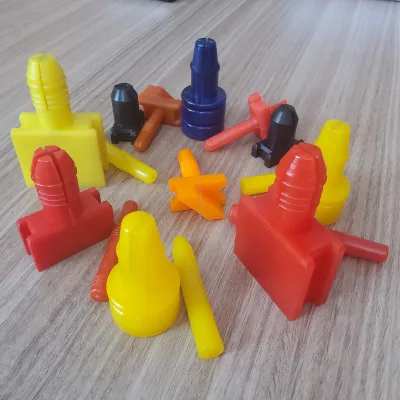
Listing signals reveal a strong emphasis on customization and flexibility in manufacturing. Suppliers frequently advertise support for custom colors, ranging from natural to red, yellow, and blue, which can aid in visual identification and quality control. The tolerance for these components is often specified at 0.05mm, indicating a high level of precision in manufacturing. Additionally, the availability of different durometer ratings, such as Shore A 30±5 and Shore A 60±5, provides buyers with options to adjust the hardness of the pins based on the required load-bearing capacity. These signals suggest that suppliers are well-equipped to handle complex, custom orders, making it easier for buyers to find partners who can meet specific technical demands.
Technical Specifications to Verify
When verifying technical specifications, buyers must prioritize the durometer hardness and density of the polyurethane material. The durometer, measured in Shore A, directly impacts the pin's ability to absorb shock and resist deformation. For instance, a durometer of Shore A 60±5 offers greater rigidity, suitable for high-load applications, while Shore A 30±5 provides more flexibility for lighter loads. Density, often specified as greater than or equal to 600kg/M³, influences the material's durability and resistance to compression set. Buyers should request detailed material data sheets to confirm these values, ensuring that the pins will perform reliably under the expected operational conditions.
Dimensional accuracy and tolerance are equally critical in the verification process. A tolerance of 0.05mm is a common standard for these components, ensuring that the pins fit precisely within their designated housings. Buyers should also verify the manufacturing process, as low-pressure molding is often used to produce these pins, which can affect the internal structure and performance. Additionally, the drawing format, such as Step, STP, CAD, PDF, or DWG, should be compatible with the buyer's design software to facilitate seamless integration. By meticulously checking these specifications, buyers can avoid costly rework and ensure that the pins meet the exact requirements of their industrial applications.
Compliance and Safety Documentation
Compliance with international standards is a non-negotiable aspect of sourcing industrial shock absorber polyurethane pins. Suppliers often hold ISO certifications, which indicate adherence to quality management systems that ensure consistent product quality. Buyers should request copies of these certificates to verify the supplier's commitment to maintaining high standards. Additionally, compliance with ASTM standards may be relevant, particularly for applications where specific material properties are mandated. Ensuring that the supplier can provide documentation for these standards helps mitigate risks associated with non-compliant materials, which could lead to safety hazards or regulatory issues.
Safety documentation should also include material safety data sheets (MSDS) that detail the chemical composition and potential hazards of the polyurethane material. This information is crucial for handling, storage, and disposal of the pins, especially in environments where strict safety protocols are enforced. Buyers should verify that the supplier can provide up-to-date MSDS documents that comply with local and international regulations. Furthermore, any certifications related to environmental impact, such as RoHS or REACH, should be reviewed to ensure that the materials do not contain harmful substances. This thorough review of compliance and safety documentation ensures that the sourced pins meet all necessary regulatory requirements.
Cost Drivers and Commercial Terms
The cost of industrial shock absorber polyurethane pins is influenced by several factors, including material grade, customization level, and order volume. Higher durometer ratings and specialized materials like PTFE or HDPE can increase the unit price due to their superior performance characteristics. Customization, such as specific colors or dimensions, may also add to the cost, as it requires additional manufacturing steps and quality checks. Buyers should request detailed quotes that break down these cost components, allowing for a clear understanding of what drives the price. This transparency helps in making informed decisions and negotiating better terms with suppliers.
Commercial terms, such as minimum order quantities (MOQ) and lead times, also play a significant role in the overall cost. Observed MOQs range from 1 to 1000 pieces, with some suppliers specifying a minimum of 100 pieces. Buyers should consider their inventory needs and production schedules when determining the optimal order size. Lead times for delivery typically range from seven to fifteen days, but this can vary depending on the complexity of the order and the supplier's production capacity. Negotiating favorable commercial terms, such as extended payment terms or volume discounts, can help reduce the total cost of ownership. By carefully evaluating these factors, buyers can optimize their procurement strategy and achieve cost efficiency.
Supplier Qualification and Quality Control
Qualifying suppliers for industrial shock absorber polyurethane pins involves assessing their manufacturing capabilities and quality control processes. Suppliers should have a proven track record of producing high-quality polyurethane components, with evidence of consistent performance in similar applications. Buyers should request references from previous clients and review case studies that demonstrate the supplier's ability to meet tight tolerances and deliver on time. Additionally, the supplier's location, such as Hebei or Jiangsu in China, may influence logistics and communication, so buyers should consider these factors when selecting a partner.
Quality control processes are critical in ensuring that the pins meet the required specifications. Suppliers should implement rigorous inspection procedures, including dimensional checks, material testing, and performance validation. Buyers should request detailed quality control plans that outline the specific tests and inspections performed at each stage of production. This transparency helps build trust and ensures that any potential issues are identified and addressed before the products are shipped. By thoroughly qualifying suppliers and verifying their quality control processes, buyers can minimize the risk of receiving defective products and ensure a reliable supply chain.
Long-Term Procurement Checks
Long-term procurement of industrial shock absorber polyurethane pins requires a focus on supplier stability and continuous improvement. Buyers should establish regular communication channels with their suppliers to monitor production performance and address any emerging issues promptly. This ongoing dialogue helps in maintaining a strong partnership and ensures that the supplier remains aligned with the buyer's evolving needs. Additionally, buyers should conduct periodic audits of the supplier's facilities to verify that quality standards are being maintained and that any necessary improvements are being implemented.
Sustainability and environmental considerations are increasingly important in long-term procurement strategies. Buyers should evaluate the supplier's commitment to sustainable practices, such as reducing waste and using eco-friendly materials. This not only aligns with corporate social responsibility goals but also helps in mitigating regulatory risks. By incorporating these checks into their procurement process, buyers can ensure that their supply chain is resilient, compliant, and aligned with their long-term business objectives. This proactive approach helps in building a sustainable and efficient procurement strategy for industrial shock absorber polyurethane pins.
FAQs
What materials are available for industrial shock absorber polyurethane pins?
The primary material is EPDM, with other options including POM, ABS, PU, PP, PE, PTFE, and HDPE. These materials support various industrial applications requiring specific durability or chemical resistance. Buyers can select based on their operational environment and performance requirements.
What is the typical lead time for custom polyurethane pin orders?
Delivery time typically ranges from 7 to 15 days after order confirmation. Sample production takes 3 to 5 days. These timelines allow for efficient planning in production schedules. Specific lead times may vary depending on order complexity and current production capacity.
Can suppliers provide free samples of industrial shock absorber polyurethane pins?
Yes, free samples are available for evaluation. This allows buyers to verify material quality, dimensions, and fit before committing to bulk orders. Sample requests usually require providing specific technical drawings or specifications to ensure the sample matches the intended application.
What customization options exist for polyurethane pin dimensions and shapes?
Customization is available for size, color, and shape based on customer drawings. Supported drawing formats include Step, STP, CAD, PDF, and DWG. Tolerance is maintained at 0.05mm. This flexibility ensures the pins fit precisely into existing machinery or assembly lines.
What certifications do Industrial Shock Absorber Polyurethane Pin suppliers hold?
Suppliers typically hold ISO certifications, indicating adherence to international quality management standards. Some may also reference ASTM standards for material properties. These certifications help ensure consistent product quality and reliability for industrial applications across different sectors.
What is the minimum order quantity for polyurethane pin purchases?
The minimum order quantity is generally 100 pieces. This threshold balances production efficiency for the manufacturer with accessibility for smaller buyers. Bulk orders may offer different pricing structures, but the 100-piece MOQ ensures a baseline for custom manufacturing runs.
How is the packaging for industrial shock absorber polyurethane pins handled?
Standard packaging includes poly bags and cartons, which can be customized per customer requirements. This ensures protection during transit and storage. Buyers can request specific labeling or packaging configurations to meet their warehouse or distribution needs.