Source Custom Air Conditioning Hose for HVAC, Auto, and Industrial Use
Find 30 verified options for Custom Air Conditioning Hose suitable for HVAC systems, automotive applications, and industrial cooling. Compare specifications like pressure ratings, materials, and lengths to select the right supplier for your needs; compare the available evidence and request quotations based on your requirements.
Key considerations
Products List


$0.40 - $1.60
MOQ: 500 Meters


Durable Air Conditioning Hose Assembly for Reliable Cooling Performance
$10.00 - $21.00
MOQ: 500 Pieces


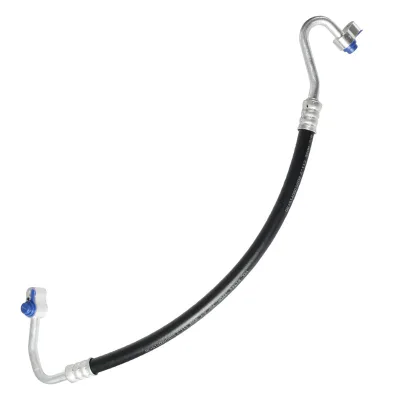
Auto Air Conditioning Hoses for Mercedes Air Conditioner Hose Fitting Ac Hose
$0.10 - $5.16
MOQ: 10 Minimum


Black Air Conditioner Flexible Rubber Hose Auto A/C Air Conditioner Hose
$0.10 - $10.00
MOQ: 1000 Meters


Comprehensive Sourcing Guide
Custom Air Conditioning Hose Sourcing Guide
Procuring custom air conditioning hoses requires a disciplined approach to verifying technical compatibility and supplier capability. Buyers must move beyond generic product descriptions to confirm that the specific rubber compound, internal diameter, and pressure ratings align with their system requirements. The observed market data indicates a wide range of capabilities, from standard refrigerant lines to specialized industrial applications. This guide outlines the critical verification steps necessary to mitigate supply chain risks.
Focus on the specific refrigerant type, such as R134A, which is explicitly mentioned in the product models. Ensure the hose material, often EPDM or natural rubber, is chemically compatible with the fluid being transported. Verify that the supplier can provide samples for free, as indicated in the listing attributes, to test fit and function before committing to bulk orders. This initial validation phase is crucial for preventing costly returns or system failures.
Product Scope and Observed Listing Signals
The product scope for custom air conditioning hoses includes various internal diameters, ranging from 3/16" to 1 1/2" in some listings, and 5/16" to 9/8" in others. Buyers should note that these ranges represent observed attributes rather than universal standards for every product. The capability descriptions highlight acid and alkali resistance, suggesting suitability for harsh chemical environments alongside standard HVAC applications. Understanding these scope boundaries helps in narrowing down potential suppliers who specialize in the specific hose type required.
Observed listing signals also include specific working pressures, such as 500, 600, and 800 psi, or 35 Bar with a burst pressure of 105 bar. These numerical values are critical for safety assessments. Additionally, the surface finish options, including smooth and cloth-wrapped exteriors, affect the hose's durability and installation ease. Buyers should request detailed specification sheets that clarify whether the quoted price includes these specific surface treatments or if they are add-on costs.
Technical Specifications to Verify
Technical verification begins with confirming the internal diameter and wall thickness to ensure proper flow rates and pressure containment. The observed data lists lengths of 50m and 100m, with options for custom lengths as requested. Buyers must verify if the supplier can cut hoses to precise lengths without compromising the integrity of the ends. The working temperature range, specified as -20 C to +100 C, is a key parameter for determining suitability in extreme climates.
Hardness is another critical technical metric, with observed values of Shore A 60. This measurement impacts the hose's flexibility and resistance to kinking. Buyers should request test reports that validate these hardness and temperature ratings under real-world conditions. Additionally, verify the burst pressure ratings, as exceeding the working pressure can lead to catastrophic failure. Ensuring that the technical specifications match the operational requirements of the end-user system is paramount for long-term reliability.
Compliance and Safety Documentation
Compliance documentation is essential for ensuring that the custom air conditioning hoses meet international safety and environmental standards. The observed certifications include ISO9001, CE, and SGS certificates, which indicate adherence to quality management and safety regulations. Buyers should request copies of these certificates and verify their validity and scope. The presence of ROHS compliance is also noted, which is critical for electronic and environmental safety in many global markets.
Safety documentation should also include material safety data sheets (MSDS) that detail the chemical composition of the rubber compounds. This is particularly important for applications involving acid or alkali resistance, as the chemical stability of the hose must be guaranteed. Buyers should ensure that the supplier can provide traceability documents that link the specific batch of hoses to the certified production process. This level of documentation supports regulatory compliance and enhances buyer confidence in the product's safety profile.
Cost Drivers and Commercial Terms
Cost drivers for custom air conditioning hoses include the raw material costs, such as EPDM or natural rubber, and the complexity of the customization required. The observed price range in USD is 0.1 to 100, which reflects the variability in hose length, diameter, and specification. Buyers should request itemized quotes that break down the costs of materials, labor, and packaging. Understanding these cost components helps in negotiating better terms and identifying areas for potential cost savings.
Commercial terms, including the minimum order quantity (MOQ), are also significant cost factors. The observed MOQ ranges from 1 to 3000 units, with a specific attribute noting 500m as a common threshold. Buyers should clarify whether the MOQ applies to the total length or the number of individual hose pieces. Payment terms and lead times, such as delivery within 15 days, should be negotiated based on the supplier's production capacity. Clear commercial terms reduce the risk of disputes and ensure a smooth procurement process.
Supplier Qualification and Quality Control
Supplier qualification involves assessing the manufacturer's production capabilities, quality control processes, and track record in the industry. The observed origin locations include Zhejiang, China, and Zhejiang Hangzhou, which are known for their manufacturing expertise. Buyers should conduct factory audits or request third-party inspection reports to verify the supplier's quality control measures. This includes checking for consistent production standards and the ability to handle custom orders efficiently.
Quality control should extend to the packaging and shipping processes, as observed in the attributes describing plastic film and woven bag packaging. Proper packaging prevents damage during transit and ensures that the hoses arrive in optimal condition. Buyers should verify that the supplier has robust quality assurance protocols in place, including incoming material inspection and final product testing. A qualified supplier will provide transparent communication and proactive problem-solving, which are essential for maintaining a reliable supply chain.
Long-Term Procurement Checks
Long-term procurement checks focus on the supplier's ability to maintain consistent quality and supply reliability over time. Buyers should establish key performance indicators (KPIs) for the supplier, such as on-time delivery rates and defect rates. Regular performance reviews help in identifying any trends or issues that may affect the supply chain. The observed delivery time of within 15 days should be monitored to ensure that the supplier can meet the required lead times consistently.
Additionally, buyers should consider the supplier's capacity for scaling production to meet increasing demand. The observed customization options, including ODM/OEM services, indicate that the supplier can adapt to changing requirements. Establishing a long-term partnership with a qualified supplier can lead to better pricing, priority production slots, and enhanced technical support. Regular communication and feedback loops are essential for maintaining a strong relationship and ensuring that the supplier remains aligned with the buyer's strategic goals.
FAQs
What customization options are available for air conditioning hoses?
Customization is available for these rubber air conditioning hoses to meet specific buyer requirements. The product supports ODM and OEM models, allowing tailored specifications. Buyers can request different lengths such as 50m or 100m, and the manufacturer offers flexible packaging options like plastic film or woven bags for various shipping needs.
Which certifications do the air conditioning hoses hold?
The hoses hold ISO9001 certification and comply with ROHS, CE, and SGS standards. These certifications ensure quality and safety for industrial applications. The manufacturer operates from Zhejiang, China, maintaining strict production controls. Buyers can verify these credentials to ensure the products meet international regulatory requirements for air conditioning systems.
How long is the delivery time for custom orders?
Delivery time is within 15 days for most orders of these rubber hoses. This fast turnaround supports urgent procurement needs for air conditioning components. The minimum order quantity is typically 500 meters, though some listings show lower thresholds. Buyers should confirm specific lead times based on their exact order volume and customization requests.
What are the working pressure ratings for these hoses?
Working pressure ratings vary between 500, 600, and 800 psi depending on the specific model. Some variants also list a working pressure of 35 Bar with a burst pressure of 105 bar. These ratings ensure durability for R134A air conditioning applications. Buyers must select the correct pressure rating to match their system requirements safely.
Can I get free samples of the air conditioning hose?
Free samples are available for potential buyers to evaluate product quality before placing large orders. This allows verification of material properties like EPDM or natural rubber composition. Buyers can assess the smooth or cloth surface finish and hardness levels. Contact the supplier directly to arrange sample requests and confirm shipping terms for the evaluation process.
What materials are used to manufacture these hoses?
Materials include EPDM rubber and natural rubber, selected for acid and alkali resistance. These materials ensure longevity in various environmental conditions. The hoses are designed for air conditioning and water transport applications. Buyers can choose based on specific chemical resistance needs and temperature ranges from -20 C to +100 C.
Where are these air conditioning hoses manufactured?
These hoses are manufactured in Zhejiang, China, specifically in Hangzhou. The region is known for producing high-quality rubber products for global export. Buyers can expect consistent quality standards due to local manufacturing expertise. The origin is clearly stated as China on product listings for transparency.