Source Infinitely Adjustable Rigid Stranding Machine for Wire, Cable, and Medical Applications
Compare 30 listings for the Infinitely Adjustable Rigid Stranding Machine suitable for wire and cable industry, medical cable, and drag chain wire production. Buyers can evaluate specifications including bobbin sizes, driven types, and certifications to find the right equipment.
Key considerations
Products List

Rigid Stranding Machine with Enhanced Speed for Efficient Operations
$35000.00 - $80000.00
MOQ: 1 Sets


High Quality Cage Planetary Auto Loading Rigid Planetary Stranding Machine
$16800.00 - $17400.00
MOQ: 1 Pieces


Precision Individual Motor Tubular Stranding Machine Cable Strander Machine
$25800.00 - $38800.00
MOQ: 1 Sets


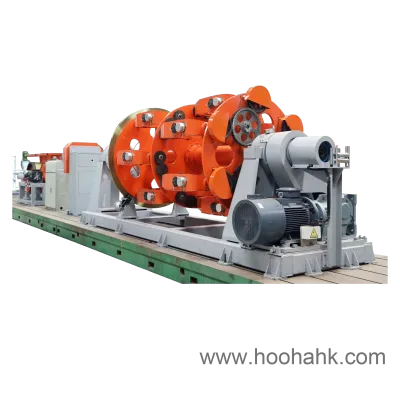


Chipeng Rigid Stranding Machine with Enhanced Speed for Efficient Operations
$45000.00 - $110000.00
MOQ: 1 Sets

Precision Engineered Planetary Stranding Machine with 23-118r/Min Speed
$40000.00 - $150000.00
MOQ: 1 Sets


Advanced Concentric Stranding Machine for Efficient Cable Production
$300000.00 - $400000.00
MOQ: 1 Pieces


Comprehensive Sourcing Guide
Strategic Sourcing Guide for Infinitely Adjustable Rigid Stranding Machines
Understanding the Core Technology and Operational Scope
The term "Infinitely Adjustable Rigid Stranding Machine" refers to advanced industrial equipment designed for the precise twisting of conductors in the wire and cable manufacturing sector. In the context of current market offerings, these machines are primarily categorized under high-speed and single stranding configurations, often utilizing electric driven types with PLC control systems. The fundamental operation involves taking multiple wires—typically copper, aluminum, steel wire, or insulated wire—and twisting them together to form a flexible cable assembly while maintaining structural rigidity and electrical continuity.
Buyers must distinguish between "automatic" and "semiautomatic" grades when evaluating these units. The market data indicates the presence of both fully automatic high-speed stranding machines and semiautomatic single stranding machines. The automatic grade is characterized by features such as high performance, high quality, and fully automated processes, whereas semiautomatic variants may require more operator intervention. A critical technical distinction lies in the stranding method; while some units are designated as "axial type" or "cylinder type" based on their cradle configuration, the "infinitely adjustable" capability usually pertains to the ability to vary the stranding pitch and tension dynamically without mechanical stops, allowing for the production of various cable diameters and twist rates.
The control architecture is a pivotal component of these machines. Most modern units employ PLC (Programmable Logic Controller) systems to manage the complex synchronization of bobbins and the stranding head. This digital control ensures that the "infinitely adjustable" parameters are maintained with high precision. The power requirements for these machines vary significantly; for instance, smaller semiautomatic units may operate on 220V at 50/60Hz with a power consumption of 750W, while larger high-speed industrial models will require substantial electrical input to drive their electric motors and inverters.
Technical Specifications and Configuration Variables
When evaluating a rigid stranding machine, the buyer must scrutinize the specific configuration variables that define its capability. The number of bobbins is a primary determinant of production capacity and cable complexity. Available configurations in the market range from 3 to 48 bobbins, with specific counts including 3, 6, 9, 12, 18, 21, 24, 30, 36, 40, and 48. This variability allows manufacturers to select a machine that matches their specific cable core requirements, whether for simple multi-core cables or complex high-density assemblies.
The physical dimensions of the bobbins are equally critical. The market supports a wide spectrum of bobbin sizes, including 160, 200, 250, 300, 400, 500, 630, and 800 millimeters. The selection of bobbin size directly influences the length of wire available for continuous operation and the overall footprint of the machine. Furthermore, the cradle type, which holds the bobbins, is available in axial or cylinder configurations. This choice affects the flow of wire and the mechanical stress on the strands during the stranding process.
Safety and structural integrity are also defined by the safety cover design. Buyers should verify whether the machine utilizes a rotary type or a sliding door type safety cover. These mechanisms are essential for operator protection during high-speed operations. Additionally, the "mould life," often cited in the context of the machine's capacity to perform shots, is a metric of durability. While some listings indicate specific shot counts, buyers should treat these as observations of the specific unit's status rather than a universal guarantee for all models. The machine's weight and packaging dimensions, such as 353042 cm for smaller units or larger wooden packages for heavy-duty models, are vital for logistics planning.
Compliance, Certification, and Regulatory Standards
Navigating the regulatory landscape is a non-negotiable aspect of sourcing industrial machinery. The compliance status of a stranding machine is often validated through a suite of certifications. The observed market data highlights several key certifications, including CE, ISO, CCC, RoHS, UL, FDA, and PSE. The presence of the CE mark indicates conformity with health, safety, and environmental protection standards for products sold within the European Economic Area. ISO certification suggests adherence to international management system standards, while CCC (China Compulsory Certification) is mandatory for products sold within China.
Buyers must verify that the specific machine they intend to purchase carries the certifications relevant to their local jurisdiction. For instance, a machine intended for export to the United States may require UL certification, while those destined for Japan might need PSE certification. The "RoHS" (Restriction of Hazardous Substances) certification is crucial for ensuring the machine does not contain restricted hazardous materials, which is a common requirement in global supply chains. Additionally, "FDA" and "PSE" certifications may be relevant depending on the specific application, such as medical cable production or use in specific industrial environments.
It is important to note that the "prod_standard" for these machines is often "As per customer requirement" or aligned with specific industry standards like "CE SGS." This indicates that while the machine may meet baseline international standards, specific performance criteria might be customized. Buyers should explicitly request documentation proving the machine's compliance with the standards applicable to their region before finalizing a purchase. The origin of the machine, often listed as Jiangsu, Shanghai, or the Chinese Mainland, does not automatically dictate compliance; the specific certification documents must be reviewed for each unit.
Cost Drivers and Financial Considerations
The pricing of infinitely adjustable rigid stranding machines is highly variable, influenced by a complex array of factors. The observed price range in the market spans from $6 to $400,000 USD. This vast disparity reflects the difference between small, semiautomatic units and large, fully automatic high-speed systems. The primary cost drivers include the number of bobbins, the complexity of the PLC control system, the quality of the motor and inverter components, and the level of customization required.
For example, a semiautomatic single stranding machine with a 750W motor and 80kg weight may fall at the lower end of the price spectrum. In contrast, a high-speed stranding machine equipped with Siemens motors and Yaskawa inverters, capable of handling 48 bobbins and large wire diameters, will command a premium price. The "Automatic Grade" is a significant cost factor; fully automatic systems with advanced PLC controls and safety features like rotary or sliding door covers are more expensive than semiautomatic counterparts.
Lead times and delivery conditions also impact the total cost of ownership. The standard delivery time observed is approximately 3 months. However, this can vary based on the machine's complexity and the supplier's production schedule. Buyers should also consider the packaging requirements; while some units come in export packages or PE film with wooden boxes, others may require custom wooden packaging, which adds to the shipping cost. The MOQ (Minimum Order Quantity) is typically 1 piece, offering flexibility for small-scale buyers, but bulk orders might negotiate better terms.
Typical Applications and Industry Use Cases
The application scope of infinitely adjustable rigid stranding machines is broad, covering various sectors within the wire and cable industry. These machines are specifically designed for the production of cables where precise twisting is essential for performance. Common applications include the manufacturing of USB4 cables, multi-core medical cables, and drag chain wires. The ability to handle different wire materials, such as copper, aluminum, steel wire, and insulated wire, makes these machines versatile for diverse industrial needs.
In the medical sector, the production of multi-core medical cables requires high precision and strict adherence to safety standards. The stranding machine must ensure that the conductors are twisted uniformly to prevent signal interference and maintain mechanical flexibility. Similarly, for USB4 and high-speed data cables, the stranding process must be precise to maintain impedance matching and signal integrity. The "infinitely adjustable" nature of these machines allows manufacturers to adapt quickly to changing cable specifications without requiring significant downtime or tooling changes.
The wire and cable industry also utilizes these machines for general power cables and control cables. The ability to stranding steel wire is particularly important for applications requiring high tensile strength, such as suspension cables or armored cables. The machine's capability to handle various bobbin sizes and numbers allows for the production of cables with different core counts, ranging from simple 3-core cables to complex 48-core assemblies. This versatility makes the stranding machine a central piece of equipment in modern cable manufacturing facilities.
Supplier Evaluation and Quality Assurance Protocols
Selecting the right supplier is critical for ensuring the long-term reliability and performance of the stranding machine. Buyers should evaluate suppliers based on their ability to provide comprehensive documentation, including certification proofs, technical manuals, and warranty terms. The standard warranty period observed is 12 months, which serves as a baseline for after-sales support. However, buyers should verify the specific terms of the warranty, including coverage for parts, labor, and on-site service.
Quality control should be a priority during the evaluation process. Buyers should request evidence of the machine's "mould life" and performance under load. While some listings provide specific shot counts, these should be treated as observations of the specific unit's status. It is advisable to request a factory audit or a video demonstration of the machine in operation to verify its "High Quality" and "High Performance" claims. The use of reputable components, such as Siemens motors and Yaskawa inverters, is a strong indicator of quality, but buyers should verify the authenticity of these components.
The supplier's location, often in Jiangsu, Shanghai, or the Chinese Mainland, can influence logistics and communication. Buyers should assess the supplier's ability to provide timely support and spare parts. The "Customization" availability is another key factor; suppliers that offer customization can tailor the machine to specific production needs, such as unique bobbin sizes or control system configurations. The "prod_packing" method, whether it is a wooden package, wooden box, or PE film, should be evaluated to ensure the machine arrives in good condition.
Long-Term Procurement and Operational Sustainability
Sourcing a stranding machine is a long-term investment that requires careful consideration of operational sustainability and future scalability. The "infinitely adjustable" feature is a key asset for future-proofing, as it allows the machine to adapt to new cable designs and standards without replacement. Buyers should consider the machine's energy efficiency and maintenance requirements. Machines with PLC controls and high-performance motors may offer better energy efficiency, reducing long-term operating costs.
Maintenance is another critical aspect. The "mould life" and the durability of the stranding head are factors that will impact the machine's lifespan. Buyers should inquire about the availability of spare parts and the recommended maintenance schedule. The "Automatic Grade" of the machine can also influence maintenance needs; fully automatic systems may require more specialized technical support than semiautomatic units. The "Warranty" period of 12 months provides a safety net, but buyers should consider the cost of extended warranties or service contracts for long-term protection.
Finally, buyers should consider the environmental impact of the machine. Certifications like RoHS and ISO indicate a commitment to environmental standards. The "prod_standard" being "As per customer requirement" allows for customization to meet specific environmental regulations. By selecting a machine that aligns with sustainability goals, buyers can ensure that their operations remain compliant with evolving global standards. The ability to handle various wire materials, including recycled or eco-friendly options, further enhances the machine's sustainability profile.
FAQs
What certifications do these machines typically hold?
These machines commonly hold CE, ISO, and CCC certifications. Some models also include RoHS, UL, FDA, and PSE marks depending on the specific configuration and target market requirements.
How many bobbins can the machine accommodate?
The number of bobbins ranges from 3 to 48 units. Specific available counts include 3, 6, 9, 12, 18, 21, 24, 30, 36, 40, and 48 to suit various cable core needs.
What is the standard delivery lead time for orders?
The standard delivery lead time is approximately 3 months. This duration applies to most configurations unless specific customization or high-volume orders alter the production schedule.
Which wire materials can the machine process?
The machine processes copper, aluminum, steel wire, and insulated wire. This versatility allows for the production of diverse cable types including medical and drag chain wires.
What warranty period is provided with the equipment?
A standard warranty period of 12 months is provided for the equipment. This coverage typically includes parts and labor, subject to the specific terms of the supplier.
Can the machine be customized for specific needs?
Yes, customization is available for various requirements. Buyers can request specific bobbin sizes, control configurations, or packing methods to align with their unique production standards.