Source Infant Bear Walker for Parks, Playgrounds, and Events
Explore 30 listings of the Infant Bear Walker featuring light, sound effects, and electric power. Buyers can compare models like ZH518-H1 and R232 with customizable options and CE certification for entertainment and learning walking needs.
Key considerations
Products List


$9.40 - $10.80
MOQ: 300 Pieces


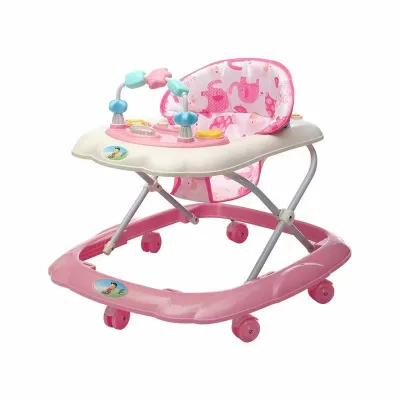
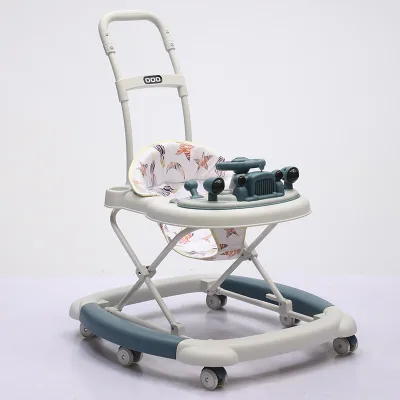
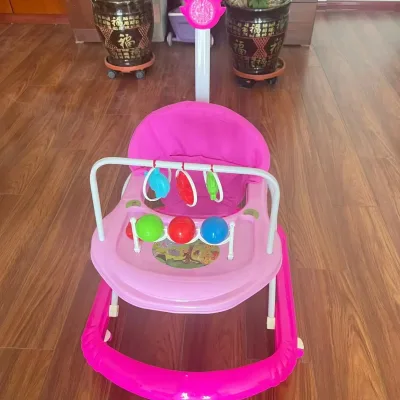
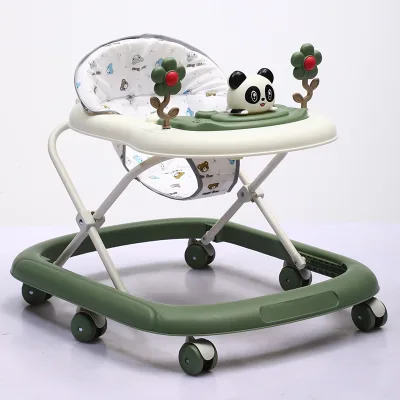
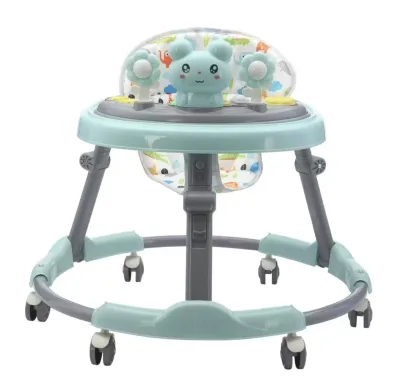
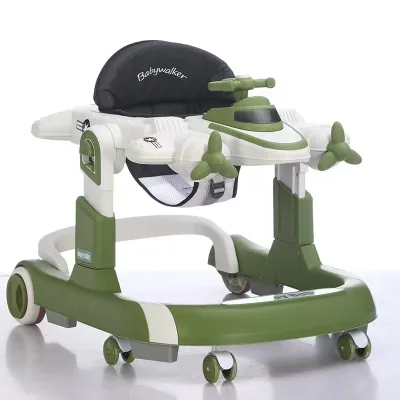


New Arrival Multifunctional Prevent O Legs Anti Rollover 6-18 Months Baby Walker
$14.20 - $15.40
MOQ: 500 Pieces


Comprehensive Sourcing Guide
Strategic Sourcing Guide for Infant Bear Walkers
The global market for infant mobility aids has seen a surge in demand for products that combine developmental functionality with engaging sensory features. Among these, the "Infant Bear Walker" represents a specific niche where thematic design meets practical utility. For B2B procurement professionals, sourcing these units requires a rigorous approach that balances aesthetic appeal with strict safety compliance. This guide analyzes the available product data to provide a structured framework for evaluating suppliers, understanding technical specifications, and mitigating supply chain risks. The following sections detail the critical factors buyers must consider when sourcing these items, ensuring that procurement decisions are grounded in verified facts rather than marketing assertions.
Technical Specifications and Product Variants
When evaluating infant bear walkers, the first step is to understand the technical diversity available in the current market. The supplied data indicates a range of models, each with distinct physical dimensions and packing configurations. For instance, model ZH518-H1 is characterized by a net weight of 15.2kg and a gross weight of 17.2kg, with a single-piece packing standard. In contrast, model R232 offers a lighter profile at 11kg net and 14kg gross, packed in a carton of 4 pieces with dimensions of 706450cm.
The variation in specifications extends to other models such as R140, which has a substantial net weight of 18.6kg, and R253, which is packed at a rate of 6 pieces per carton. These differences in weight and packing density directly impact logistics planning and shipping costs. Buyers must note that the material composition for these units is consistently identified as plastic, which suggests a focus on durability and ease of cleaning. Furthermore, the power source is universally electric-driven, indicating that these are not manual push-walkers but rather self-propelled or motorized units designed for entertainment and movement.
The following table summarizes the key physical attributes of the observed models to assist in logistics planning:
| Model Number | Net Weight (kg) | Gross Weight (kg) | Packing Configuration | Dimensions (cm) | Cbm |
|---|---|---|---|---|---|
| ZH518-H1 | 15.2 | 17.2 | 1 Piece/Carton | N/A | N/A |
| R232 | 11.0 | 14.0 | 4 PCS/CTN | 706450 | 0.212 |
| R140 | 18.6 | 20.75 | N/A | 1024052 | N/A |
| R253 | 18.0 | 20.2 | 6 PCS/CTN | 707050 | N/A |
| R181 | 16.8 | 18.5 | N/A | 706165 | 0.204 |
| R026 | 14.5 | 16.5 | N/A | 706148 | 0.184 |
| R112 | N/A | N/A | 7 PCS/CTN | 675550 | N/A |
It is crucial to observe that while some models list specific cubic meter (Cbm) values, others do not. This inconsistency in data presentation requires buyers to request precise volume calculations from suppliers to optimize container loading. Additionally, the origin of these products is consistently listed as Hebei or Heibei, a region known for its manufacturing capabilities in plastic goods and toys.
Functional Features and Target Demographics
The functional profile of infant bear walkers is defined by their dual purpose: entertainment and developmental support. The data explicitly states that these units feature "Light and Sound Effects" and include music capabilities. This suggests that the primary value proposition for the end-user involves sensory stimulation. The "Sound" attribute is confirmed across the product line, and the "Music" attribute is marked as "Have" or "Yes" for specific models. These features are designed to engage the child, potentially encouraging movement and interaction.
However, the target demographic varies significantly across the product range. One segment is explicitly categorized for children aged 3-8 years, focusing on entertainment usage. In contrast, another distinct category targets infants in the 0-6 months and 6 months to 3 years age groups. For this younger demographic, the primary function is listed as "Learn Walking," and the unit is equipped with 8 rotate/swivel wheels to facilitate smooth navigation. This distinction is critical for procurement; a buyer sourcing for a baby walker retailer must ensure they are selecting models with the correct age classification and wheel configuration to match their specific customer base. The "Customization" attribute is available, offering opportunities for buyers to tailor features such as branding or specific sound profiles to their market needs.
Compliance, Certification, and Safety Standards
Safety is the paramount concern when sourcing products for infants. The supplied data confirms that at least one model carries the CE certification, a mandatory conformity mark for products sold within the European Economic Area. This indicates that the manufacturer has met specific health, safety, and environmental protection requirements. However, the data also lists ASTM F977, EN 1273, and EN71-1 under "low-confidence background" standards. This classification implies that while these standards are relevant to the industry, their specific application to every listed product cannot be assumed without direct verification.
Buyers must treat the presence of CE certification as a baseline requirement but should not assume that all models automatically comply with ASTM or EN standards unless explicitly stated in the supplier's documentation. The "Low-confidence" label on these standards serves as a warning to procurement teams to conduct independent verification. It is the buyer's responsibility to request current test reports and certification documents for the specific batch being ordered. Relying on general industry knowledge without confirming the specific status of the product in question can lead to compliance failures and potential liability issues.
Cost Drivers and Economic Considerations
The pricing landscape for infant bear walkers is influenced by several factors, including the complexity of the electronic components, the volume of the order, and the specific model selected. The observed price range in the market spans from $5.3 to $27.7 USD. This wide variance suggests that the cost is heavily dependent on the feature set; models with advanced light and sound effects likely command the higher end of the price spectrum, while simpler units may fall toward the lower end.
The Minimum Order Quantity (MOQ) is another significant cost driver, with observed ranges between 1 and 1000 units. A lower MOQ allows for smaller, more frequent orders, which can be beneficial for testing new markets or managing cash flow. However, higher volumes typically unlock better unit economics. The packing configuration also plays a role in the final landed cost. Models with higher pieces per carton (e.g., 7 PCS/CTN for model R112) generally offer better shipping efficiency compared to single-piece units like ZH518-H1. Buyers should calculate the total cost per unit, including shipping, by factoring in the cubic meterage and weight of the specific packing configuration to ensure accurate budgeting.
Supplier Evaluation and Origin Verification
When evaluating potential suppliers, the geographic origin of the products is a key data point. The supplied facts consistently identify the production location as Hebei (or Heibei). This region is a significant manufacturing hub in China, particularly for plastic toys and baby products. Buyers should verify the specific factory location within this region to ensure it aligns with their quality expectations and logistical preferences.
Supplier evaluation should extend beyond the basic product data. Since customization is available, buyers should assess the supplier's flexibility in modifying product features, packaging, or branding. The ability to customize is a strong indicator of a supplier's capacity to meet specific market demands. Furthermore, the consistency of the data provided—such as the repeated listing of Hebei as the origin—suggests a concentrated supply chain. Buyers should investigate whether the supplier is a direct manufacturer or a trading company, as this distinction impacts lead times and communication efficiency.
Quality Control and Long-Term Procurement
Implementing a robust quality control (QC) protocol is essential for maintaining product integrity. Given the electronic nature of these walkers, QC must focus on the functionality of the light and sound effects, the stability of the electric drive system, and the durability of the plastic components. The presence of 8 rotate/swivel wheels on the baby walker models requires specific testing to ensure they do not lock up or cause instability during use.
For long-term procurement, buyers should establish clear communication channels regarding the "Customization" options and the availability of spare parts. The variation in packing standards (e.g., 1 Piece/Carton vs. 4 PCS/CTN) necessitates a clear agreement on packaging requirements to prevent damage during transit. Additionally, buyers should monitor the supply chain for consistency in the "Low-confidence" standards. Even if a supplier claims compliance with ASTM or EN standards, regular third-party audits and product testing should be mandated to ensure ongoing adherence to safety regulations.
Strategic Application and Market Positioning
The strategic application of infant bear walkers depends on the target market's specific needs. For retailers focusing on entertainment, the emphasis should be on models with robust light and sound effects, such as those targeting the 3-8-year age group. For those in the healthcare or early childhood development sector, the focus should shift to the "Learn Walking" models with the 8-wheel configuration designed for infants aged 0-3 years.
Understanding the distinction between these applications allows buyers to curate a product mix that maximizes market coverage. The "Entertainment" usage category suggests a broader appeal for general retail, while the "Learn Walking" function positions the product as a developmental tool. By aligning the procurement strategy with these distinct use cases, buyers can optimize their inventory to meet diverse consumer demands. The availability of customization further enhances this strategy, allowing retailers to create unique product lines that stand out in a competitive market.
In conclusion, sourcing infant bear walkers requires a meticulous approach that integrates technical analysis, compliance verification, and strategic market positioning. By leveraging the available data on specifications, costs, and certifications, buyers can make informed decisions that ensure product quality and safety. The variability in models and the specific requirements of different age groups highlight the need for a tailored procurement strategy. As the market continues to evolve, maintaining a focus on verified facts and rigorous quality control will remain the cornerstone of successful B2B transactions in this sector.
FAQs
What age groups can use these infant bear walkers?
These units serve children aged 3 to 8 years for entertainment or infants from 0 to 3 years for learning to walk. The specific model determines the target demographic, with some featuring 8 swivel wheels designed for younger babies to navigate safely.
Which certifications are available for these plastic walkers?
At least one model carries CE certification for safety compliance in the European market. While other industry standards exist, buyers must verify specific test reports for each batch rather than assuming all units meet every international safety requirement automatically.
How are these electric-driven walkers packed for shipping?
Packing configurations vary by model, ranging from single units per carton to seven pieces per carton. Dimensions and weights differ significantly, so buyers must request exact cubic meterage and gross weight details to optimize container loading and calculate accurate shipping costs.
Can buyers customize the light and sound effects on these units?
Yes, customization is available for these electric-driven plastic walkers. Suppliers can likely tailor features such as branding or specific sound profiles to meet market needs, allowing buyers to create unique product lines that stand out in competitive retail environments.
What is the typical price range for these infant bear walkers?
The observed market price ranges from 5.3 to 27.7 USD per unit depending on the model and features. Costs are influenced by the complexity of the electronic components, with advanced light and sound effects generally commanding higher prices than simpler units.
Where are these plastic walkers manufactured and shipped from?
All listed products originate from Hebei, a major manufacturing hub for plastic toys and baby products in China. Buyers should verify the specific factory location within this region to ensure alignment with their quality expectations and logistical preferences for the supply chain.