Source Inflatable Double Wall Ice Bath for Gym, Garden, Bathroom
Compare 30 options for the Inflatable Double Wall Ice Bath designed for athletes and adults. These freestanding tubs feature customizable logos and are available in various colors for indoor or outdoor recovery use.
Key considerations
Products List

Big Portable Inflatable Ice Bath Inflatable Bathtub Adult Ice Bath Soaking Tub
$9.78 - $1056.00
MOQ: 2 Pieces

Athletes Portable Recovery Ice Water Bath PVC Inflatable Adults Ice Bath
$21.71 - $24.05
MOQ: 500 Pieces


Cold Plunge Tub Inflatable Ice Bath Cold Water Therapy Portable Ice Bath
$12.90 - $24.00
MOQ: 100 Pieces

Portable Ice Bath for Cold Water Therapy Training Inflatable Ice Bath Tub
$12.90 - $15.00
MOQ: 500 Pieces


Cold Plunge Ice Bath Tub Manufacturer Inflatable Ice Bath with Water Chiller
$1350.00 - $1850.00
MOQ: 1 sets


Ice Bath Portable Bath for Recovery Inflatable Outdoor Ice Bath with Chiller 1HP
$680.00 - $780.00
MOQ: 1 Pieces

Custom Logo Ice Water Pool Tub Portable Inflatable Ice Cold Bath for Gym
$178.00 - $200.00
MOQ: 1 Pieces


Portable Ice Bath for Recovery Inflatable Outdoor Ice Bath with Chiller 1HP
$180.00 - $250.00
MOQ: 1 Pieces


2023 Customized Portable Inflatable Ice Bath and Blow up Ice Bath for Sale
$200.00 - $300.00
MOQ: 10 Pieces

2023 Inflatable Ice Tub Sport Recovery Portable Ice Bath with Chiller
$200.00 - $300.00
MOQ: 10 Pieces

High Quality Inflatable Ice Tub Sport Recovery Portable Ice Bath with Chiller
$200.00 - $300.00
MOQ: 10 Pieces

Comprehensive Sourcing Guide
Strategic Sourcing Guide for Inflatable Double Wall Ice Bath Systems
The global recovery market has driven significant demand for portable thermal therapy solutions, with the Inflatable Double Wall Ice Bath emerging as a critical category for athletes, wellness centers, and rehabilitation facilities. Sourcing these specialized units requires a disciplined approach that distinguishes between marketing claims and verifiable product attributes. This guide synthesizes available product data to provide a framework for evaluating suppliers, verifying technical specifications, and ensuring compliance without relying on unverified market assertions. Buyers must navigate a landscape where product definitions vary, ranging from single-wall portable units to complex double-wall systems designed for thermal retention. The following sections detail the essential criteria for procurement, focusing on material integrity, certification validity, and operational suitability.
Technical Specifications and Material Composition
The core functionality of an Inflatable Double Wall Ice Bath relies heavily on its construction materials and dimensional consistency. Based on observed product attributes, the primary materials utilized in this category include Polyester, PVC, Pearl Cotton, and Mesh. The double-wall architecture is specifically engineered to provide insulation, which is critical for maintaining low water temperatures during extended recovery sessions. When evaluating a potential supplier, buyers must verify the specific layering of these materials. The presence of Pearl Cotton or similar insulating layers between the inner and outer PVC walls is a key differentiator that separates high-performance units from standard inflatable pools.
Dimensional standards vary significantly across the market, and procurement decisions should be grounded in the specific needs of the end-user. Observed data indicates standard dimensions such as 70 x 70 cm, 75 x 75 cm, and 29.5" x 29.5" (75 x 75 cm). Some models are specified with a capacity of 480L, while others are described simply as "Big" or "Oval." The shape of the tub, whether Round, Oval, or Square, impacts the seating capacity and user comfort. For instance, certain models are explicitly rated for a seating capacity of two people, whereas others are designed for single-user recovery. Buyers should not assume that a "standard" size applies to all units; instead, they must request detailed technical drawings that confirm the internal volume and external footprint. The structural integrity of the tub is further defined by its installation type, which is predominantly Freestanding, allowing for versatile placement in bathrooms, gyms, or outdoor garden settings.
Compliance, Certification, and Safety Standards
In the B2B procurement of thermal therapy equipment, verifying compliance is as critical as evaluating physical specifications. The supply chain for inflatable ice baths often involves multiple jurisdictions, making the verification of certifications a non-negotiable step. Available data highlights several recognized certifications, including BSCI, ISO9001, GSV, and ICTI. These certifications indicate that the manufacturing facility adheres to specific standards regarding social compliance, quality management, and supply chain security. Additionally, product-specific certifications such as CE and ISO9001 are frequently cited, suggesting that the units meet European safety directives and international quality benchmarks.
However, buyers must exercise caution regarding the scope of these certifications. A factory holding an ISO9001 certification for its management system does not automatically guarantee that every specific model of ice bath has undergone independent material testing for toxicity or durability. The presence of a CE mark implies conformity with health, safety, and environmental protection standards for products sold within the European Economic Area, but the specific test reports supporting this mark must be requested. Similarly, while RoHS is mentioned in background contexts, its specific application to the PVC or polyester components of the tub must be confirmed through documentation. Procurement teams should demand a certificate of conformity for each batch, ensuring that the materials used (Polyester, PVC, Mesh) are free from harmful substances and meet the regulatory requirements of the destination market.
Cost Drivers and Pricing Dynamics
The pricing of inflatable double wall ice baths is influenced by a complex interplay of material costs, customization requirements, and order volume. The observed price range in the market spans from approximately $9.78 to $1,850 USD. This wide disparity is not merely a function of brand prestige but is directly correlated with the complexity of the design and the level of customization. A unit priced at the lower end of the spectrum likely represents a basic single-wall or simplified double-wall design with minimal accessories. Conversely, high-value units in the $1,000+ range typically incorporate advanced insulation materials like Pearl Cotton, include integrated heating or cooling controls, and come with comprehensive accessory kits.
Customization is a primary cost driver in this sector. The availability of OEM and ODM services allows buyers to alter the product model, logo, and packaging. Suppliers offering customized logos and specific color options (such as Pink, Black, Dark Gray, or Grey) will charge a premium over standard SKUs. The packaging method also impacts the final cost; units shipped in individual color boxes or specialized carton packages incur higher logistics and material expenses compared to bulk packing. Furthermore, the Minimum Order Quantity (MOQ) plays a significant role in unit economics. The observed MOQ range spans from 1 to 500 units. Buyers purchasing small quantities may face higher per-unit costs, while those ordering at the upper end of the MOQ range can leverage economies of scale to reduce the total cost of ownership.
Typical Applications and Operational Environments
The versatility of inflatable double wall ice baths makes them suitable for a diverse range of applications, from professional sports recovery to home wellness. The product attributes indicate usage in bathrooms, washrooms, outdoor areas, gardens, playgrounds, and gyms. This flexibility is enabled by the portable nature of the units and their freestanding installation type. For professional athletes, the "Recovery Inflatable Bathtub" serves as a critical tool for muscle recovery, requiring a stable, insulated environment that can be set up in a gym or training facility and packed away when not in use.
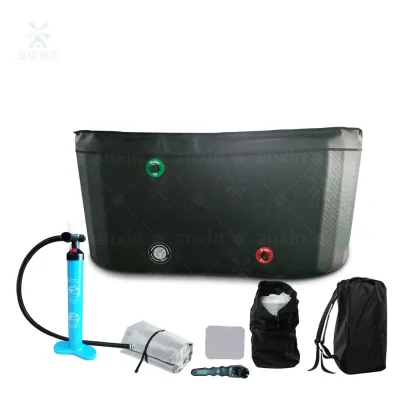
The "Way of Control" for these units is typically manual, involving hand control mechanisms for filling and draining. This simplicity reduces the risk of electronic failure but requires the user to manage the process manually. The drain location is another operational consideration; observed data points to a right-side drain location, which buyers must account for when planning the layout of their facility to ensure proper water disposal. The inclusion of accessories such as a hand pump, repair kit, and backpack further enhances the utility of these units for outdoor or travel-based applications. For instance, a unit with a dedicated backpack and repair kit is ideal for mobile sports teams or outdoor events where immediate access to a permanent plumbing system is unavailable.
Supplier Evaluation and Verification Protocols
Evaluating a supplier for inflatable ice bath systems requires a rigorous due diligence process that goes beyond reviewing product catalogs. Buyers should prioritize suppliers who demonstrate transparency in their production origins and quality control measures. The observed data indicates that many units originate from Guangdong, China, a major manufacturing hub for such products. While this region offers competitive pricing and a mature supply chain, it also necessitates strict verification of the supplier's capabilities.
Key evaluation criteria include the supplier's ability to provide detailed product specifications, their history of OEM/ODM projects, and their adherence to the cited certifications. Buyers should verify the "Customization" capabilities by requesting samples of previous work, particularly for logo application and color matching. The "Product Name" and "Model" (e.g., JE-200, Ice Bath Tub) should be cross-referenced with the supplier's catalog to ensure consistency. Additionally, the "Package" details, such as "Each with Color Box" or "Carton Package," should be confirmed to ensure that the shipping method protects the product during transit. Suppliers who can provide a comprehensive repair kit and clear instructions for the hand pump and lid inflation demonstrate a commitment to long-term product support.
Quality Control and Long-Term Procurement Considerations
Ensuring the longevity and safety of inflatable ice baths requires a proactive quality control strategy. The materials used, specifically PVC and Polyester, are susceptible to degradation if not manufactured to high standards. Buyers should insist on quality assurance protocols that include stress testing for the double-wall construction and leak testing for the seams. The "Standard" dimensions, such as 70 x 70 cm or 75 x 75 cm, must be verified against the actual product to ensure that the internal volume matches the claimed capacity, which is crucial for thermal efficiency.
Long-term procurement considerations also involve the availability of replacement parts and the durability of the product. The inclusion of a repair kit is a positive indicator, but buyers should verify the quality of the patch material and the adhesive provided. Furthermore, the "Lid" feature, often an inflatable lid, is essential for maintaining temperature and preventing evaporation; its durability should be a key focus during the sampling phase. For organizations planning to deploy these units over several years, establishing a relationship with a supplier who offers consistent quality and responsive after-sales support is vital. This includes clear communication regarding lead times, warranty terms, and the process for handling defective units. By focusing on these technical and operational details, buyers can secure a reliable supply of high-performance inflatable double wall ice baths that meet their specific recovery and wellness needs.
FAQs
What materials are used in inflatable double wall ice baths?
These tubs are constructed from Polyester, PVC, Pearl Cotton, and Mesh. The inclusion of Pearl Cotton between walls provides essential insulation for thermal retention during recovery sessions.
Which certifications do these products typically hold?
Products often carry BSCI, ISO9001, GSV, and ICTI certifications for facility compliance. Some units also display CE marks indicating conformity with European safety directives for health and environmental protection.
How much space does a standard inflatable ice bath require?
Standard dimensions include 70 x 70 cm, 75 x 75 cm, or 29.5 inches by 29.5 inches. Specific models may have a capacity of 480 liters or be described as big oval shapes.
Can buyers request customized logos and colors?
Yes, customization is available for logos, colors like Pink or Black, and packaging types. OEM and ODM services allow for tailored product models and specific branding requirements for bulk orders.
What accessories are included with the tub?
Typical kits include a hand pump, repair kit, and a backpack for portability. Some models also feature an inflatable lid to maintain temperature and prevent water evaporation during use.
Where are these products manufactured?
Most units originate from Guangdong, China, a major manufacturing hub for this category. Buyers should verify specific factory locations and production capabilities when evaluating potential suppliers for their orders.