Source Inflatable Fishing Raft for Sea, River, and Coastal Use
Compare 30 verified options for the Inflatable Fishing Raft, featuring varying buoyancy, materials, and certifications like CCS and CE. Buyers can evaluate specifications such as length, weight, and storage height to find professional equipment suitable for aquatic environments.
Key considerations
Products List


3.3m Inflatable Boat/PVC Inflatable Boat/Inflatable Dinghy Raft/Fishing Boat
$186.00 - $189.00
MOQ: 30 Pieces


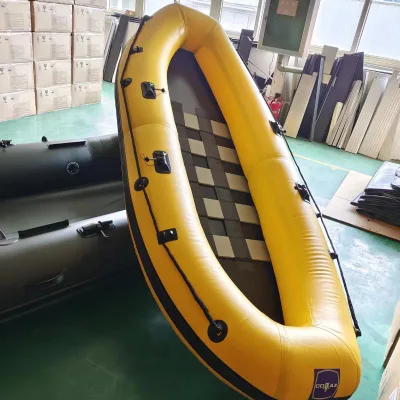
River Rafting Boat Price Whitewater Inflatable Raft Floating Raft for Sale
$900.00 - $1570.00
MOQ: 1 Pieces


Comprehensive Sourcing Guide
Strategic Sourcing Guide for Inflatable Fishing Rafts
The global market for inflatable fishing rafts presents a complex landscape for B2B procurement professionals seeking reliable marine equipment. Sourcing these vessels requires a rigorous understanding of technical specifications, regulatory compliance, and supply chain dynamics. Unlike consumer-grade recreational gear, professional-grade inflatable life rafts and fishing platforms demand adherence to strict international standards to ensure safety and durability in aquatic environments. This guide synthesizes observed market data and verified product attributes to provide a structured approach for buyers evaluating potential suppliers and product lines.
Technical Specifications and Performance Metrics
When evaluating an Inflatable Fishing Raft, the primary focus must be on the structural integrity and functional specifications that define its operational capacity. The market data indicates a significant variance in product dimensions and load-bearing capabilities, necessitating a detailed review of individual product sheets. For instance, specific models observed in the market feature a length ranging from 795mm to 1070mm, while others are designed with dimensions such as 4.72 meters by 1.37 meters. These variations directly correlate with the intended user base and the specific fishing environment, whether it be coastal waters, rivers, or open sea.
The buoyancy capacity is a critical performance metric that dictates the safety margin of the vessel. Observed data points to a buoyancy rating of 510kg for certain configurations, ensuring that the raft can support the intended number of adult users along with their fishing gear. Weight is another essential specification, with observed ranges spanning from 40kg to 70kg for lighter models and extending up to 50kg to 650kg for larger, more robust units. This wide range suggests that buyers must carefully match the weight of the raft to their logistical capabilities, particularly regarding onboard storage height, which is observed to have a maximum limit of 38 meters in specific high-capacity models.
Material selection is paramount for longevity and puncture resistance. The supply chain data highlights the use of Polyethylene for hull materials in certain configurations, while others emphasize high puncture resistance values. Specific observations note a main material puncture resistance of 147 Newtons and a bottom puncture resistance of 234 Newtons. These figures serve as indicators of the material's ability to withstand sharp objects, rocks, or debris often encountered in fishing scenarios. Furthermore, the number of air bags is a structural detail that impacts redundancy; some models are equipped with three distinct air bags, providing a safety buffer in the event of a breach in a single chamber.
Compliance and Certification Verification
In the marine industry, certification is not merely a formality but a legal and safety prerequisite. Buyers must verify that suppliers possess valid certifications from recognized bodies. The observed market data confirms that reputable products often carry certifications such as GL/EC, CE, and CCS (China Classification Society). These certifications indicate that the product has undergone rigorous testing for stability, buoyancy, and fire resistance. For example, specific listings reference "CCS Ec" as a certifier, while others simply list "CCS" or "CE" as the certification standard.
It is crucial to distinguish between different certification standards. Some products are noted as IACS approved, which refers to the International Association of Classification Societies, a body that sets standards for ship classification. Other models adhere to specific production standards like "CCS CE" or model-specific standards such as "430" or "280." Buyers should not assume that a single certification covers all regulatory requirements for their target market. For instance, a raft intended for export to Europe must strictly comply with CE marking, while those for the Chinese domestic market may prioritize CCS approval. The presence of a guarantee, such as a one-year warranty, often accompanies these certifications, serving as an additional layer of assurance regarding the manufacturer's confidence in their product quality.
Cost Drivers and Pricing Dynamics
The pricing of inflatable fishing rafts is influenced by a multitude of factors, including material quality, certification levels, and production volume. The observed price range in the market is extensive, spanning from $1 to $2,860 USD. This broad spectrum reflects the diversity of products available, from small, single-person units to large, multi-person life rafts designed for professional fishing fleets. The minimum order quantity (MOQ) also plays a significant role in the final cost structure, with observed ranges varying from 1 unit to 1,500 units.
Buyers must understand that lower prices often correlate with lower MOQs, which may be suitable for small businesses or individual resellers. Conversely, larger orders typically benefit from economies of scale but require a higher initial capital outlay. The production capacity of the supplier is another cost driver; observed data indicates a production capacity of 20,000 units per year for certain manufacturers. Suppliers with higher capacity may offer more competitive pricing for bulk orders but might have longer lead times or stricter MOQ requirements. Additionally, the complexity of the design, such as the inclusion of a self-erecting canopy or specific packing requirements like "Export Package" or "Carton," can influence the unit cost.
Typical Applications and Operational Environments
The versatility of inflatable fishing rafts allows them to be deployed in various aquatic environments. The observed data specifies that these vessels are suitable for use in the sea, rivers, and coastal areas. This adaptability makes them ideal for both commercial fishing operations and professional recreational use. The "Using Field" attribute confirms their application in aquatic settings, while the "Suitable for" attribute indicates they are designed for adult users.
The specific application often dictates the required specifications. For example, rafts designed for fishing boats may have different storage requirements compared to those intended for open-sea rescue or extended fishing expeditions. The "Storage Height Onboard" specification is particularly relevant for commercial vessels where space is at a premium. Furthermore, the style of the raft, such as "Tandem Kayak" configurations, suggests a design optimized for maneuverability and stability in specific water conditions. The inclusion of a "Self-erecting Canopy" highlights a feature designed to provide immediate shelter, which is critical for safety in unpredictable weather conditions.
Supplier Evaluation and Origin Analysis
Evaluating a supplier requires a deep dive into their operational capabilities and geographic location. The majority of the observed products originate from China, with specific mentions of Jiangsu as a production hub. This region is known for its manufacturing expertise in marine equipment, offering a competitive advantage in terms of supply chain efficiency. However, buyers must verify the specific production location to ensure alignment with their logistical and compliance requirements.
The supplier's production capacity, observed at 20,000 units per year for some entities, is a key indicator of their ability to meet demand. Buyers should also assess the supplier's customization capabilities, as the market data confirms that customization is available. This flexibility allows buyers to tailor products to specific needs, such as adjusting dimensions or adding specific features. The packing method, whether "Export Package," "Carton," or "Pack/B Pack," is another factor to consider, as it impacts shipping costs and product protection during transit.
Quality Control and Long-Term Procurement
Ensuring consistent quality is a continuous process that extends beyond the initial purchase. Buyers should implement a robust quality control strategy that includes pre-shipment inspections and post-delivery testing. The observed puncture resistance values and buoyancy ratings serve as benchmarks for these inspections. Regular testing of the air bags and hull material is essential to maintain the safety standards of the fleet.
Long-term procurement considerations also involve the availability of spare parts and the supplier's commitment to after-sales support. The presence of a one-year guarantee suggests that suppliers are willing to stand behind their products, but buyers should clarify the terms of this guarantee. Additionally, the HS Code (8903190000) is a critical piece of information for customs clearance and tariff classification. Understanding the specific HS Code ensures that the procurement process is smooth and compliant with international trade regulations.
Comparative Analysis of Product Attributes
To facilitate decision-making, buyers can utilize the following comparison table to evaluate key attributes across different product models observed in the market. This table highlights the variance in specifications that directly impacts procurement strategy.
| Attribute | Model A (LT-BMF) | Model B (HRP-430) | Model C (HRP-280) | Model D (HRP-380) |
|---|---|---|---|---|
| Type | Inflatable Life Raft | Life Raft | Life Raft | Life Raft |
| Certification | GL/EC, CE, CCS | CCS Ec | 280 Standard | 430 Standard |
| Weight Range | 40-70kg | 50-650kg | N/A | N/A |
| Buoyancy | 510kg | N/A | N/A | N/A |
| Material | N/A | Polyethylene | N/A | N/A |
| Canopy | Self-erecting | N/A | N/A | N/A |
| Origin | China | Jiangsu China | N/A | N/A |
| Guarantee | 1 Year | N/A | N/A | N/A |
This comparative view underscores the importance of matching specific product attributes to the buyer's operational needs. For instance, a buyer requiring a self-erecting canopy must select a model that explicitly lists this feature, while a buyer focused on weight constraints must prioritize models with lower weight ranges.
Final Procurement Considerations
In conclusion, sourcing inflatable fishing rafts requires a meticulous approach that balances technical specifications, regulatory compliance, and cost efficiency. Buyers must navigate a market characterized by diverse product offerings, ranging from small, lightweight units to large, heavy-duty rafts. By verifying certifications, understanding the implications of production capacity, and conducting thorough quality control checks, buyers can mitigate risks and ensure the acquisition of high-quality marine equipment. The availability of customization and the presence of established manufacturing hubs in China provide ample opportunities for strategic sourcing, provided that due diligence is maintained throughout the procurement process.
FAQs
What certifications do inflatable fishing rafts typically hold?
Products typically hold GL/EC, CE, and CCS certifications. Some models also carry IACS approval or specific standards like CCS CE to ensure compliance with international marine safety regulations.
How much buoyancy do these rafts provide?
Observed models provide a buoyancy capacity of 510kg. This rating ensures the raft can safely support adult users and their fishing gear in aquatic environments.
Which materials are used for the hull construction?
Some configurations utilize Polyethylene for the hull material. Other models emphasize high puncture resistance, with specific values reaching 147 Newtons for the main material and 234 Newtons for the bottom.
Can buyers request customization for these rafts?
Yes, customization is available for these products. Buyers can tailor specifications to meet specific needs, such as adjusting dimensions or adding features like self-erecting canopies.
What is the typical weight range for these units?
Weights range from 40kg to 70kg for lighter models and extend up to 650kg for larger, robust units. This variance allows selection based on logistical capabilities and storage constraints.
Where are these rafts primarily manufactured?
The majority of products originate from China, with specific production hubs in Jiangsu. This location offers competitive advantages in supply chain efficiency for marine equipment.
What is the maximum storage height onboard?
Specific high-capacity models have a maximum onboard storage height of 38 meters. This specification is critical for commercial vessels where space is limited.