Source Insect Resistant Aluminum Mesh Curtain for Screens, Decor, and Walls
Compare 30 listings for Insect Resistant Aluminum Mesh Curtain options suitable for screens, decorative applications, and curtain walls. Buyers can evaluate specifications like wire diameter, material, and surface treatment from verified Chinese suppliers.
Key considerations
Products List


Aluminium Alloy Window Screen Mesh Insect Screen Mosquito Anti Netting
$0.10 - $0.50
MOQ: 1 Square Meters

Security Balcony Mesh Window Screen Anti Insect Aluminum Mosquito Net
$0.50 - $3.50
MOQ: 30 Square Meters

New Design Flexible Decorative Aluminum Metal Woven Wire Mesh Curtains Metal Fabric Partition
$18.50 - $30.00
MOQ: 1 Square Meters


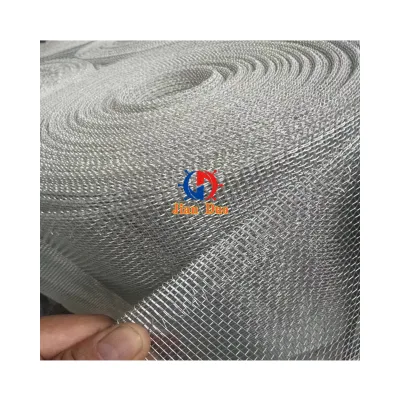


Comprehensive Sourcing Guide
Strategic Sourcing Guide for Insect-Resistant Aluminum Mesh Curtains
The global demand for insect-resistant aluminum mesh curtains has surged as commercial and residential architects prioritize ventilation, pest control, and aesthetic integration in building envelopes. Sourcing these specialized products requires a disciplined approach that balances technical performance with supply chain reliability. Unlike standard window screens, insect-resistant mesh curtains for curtain wall systems must withstand dynamic wind loads while maintaining a precise aperture size to exclude pests without compromising airflow. This guide synthesizes observed market data and technical attributes to provide a framework for procurement professionals evaluating potential suppliers and product configurations.
Technical Specifications and Material Composition
The foundation of a reliable insect-resistant curtain lies in its material composition and wire geometry. Based on current market observations, the primary materials utilized are Aluminum and Stainless Steel, with Aluminum Alloy Wire being a specific variant noted for its balance of strength and corrosion resistance. The wire diameter is a critical parameter; observed specifications indicate a range of 0.6mm to 1.2mm, with specific product listings highlighting diameters of 1.6mm and 1.9mm for heavy-duty applications. Buyers must verify that the selected wire diameter aligns with the required insect exclusion rate and structural load-bearing capacity.
The manufacturing technique is predominantly woven, creating a mesh structure that offers flexibility and durability. The mesh aperture and wire thickness determine the "insect resistance" factor; finer weaves exclude smaller insects but may reduce airflow. The surface treatment processes observed include Anodized and Coated finishes. These treatments are essential for longevity, particularly in coastal or high-pollution environments where aluminum is susceptible to oxidation. The color palette is diverse, with options including Black, Golden, Silver, Copper, Yellow, and Red, allowing for customization to match the building's architectural intent. Specific product models such as MVN-10001, MVN-10002, and RF-337 indicate that manufacturers offer distinct configurations for different load and aesthetic requirements.
Compliance, Certification, and Standard Verification
In the B2B procurement of construction materials, compliance is non-negotiable. The supplied data indicates that products often adhere to ISO9001-2000 standards, which governs quality management systems rather than the physical product itself. Buyers must distinguish between the manufacturer's quality certification and the product's performance standards. Additionally, SGS certification is observed in the market, serving as an independent verification of product quality and safety. However, buyers should not assume that every listed product carries this certification without explicit verification.
When evaluating compliance, procurement teams must look beyond generic labels. The "prod_standard" field in supplier data sometimes lists dimensions (e.g., 12mm) or lengths (e.g., 30m, 50m, 100m) rather than technical performance standards. This ambiguity necessitates a rigorous request for documentation. Buyers should demand specific test reports regarding tensile strength, wind load resistance, and insect exclusion efficiency. The absence of a universal "insect mesh standard" in the provided data means that the buyer must define the performance criteria based on local building codes and the specific insect species prevalent in the project location. Verification of the "10010050cm" packaging standard or "Wooden Case" specifications is also part of the logistical compliance check to ensure safe transit.
Cost Drivers and Pricing Dynamics
The pricing for aluminum mesh curtains is highly variable, with observed market ranges spanning from $0.10 to $96.00 USD. This wide disparity is driven by several factors, including the material grade (pure aluminum vs. aluminum alloy), wire diameter, surface treatment complexity, and order volume. The Minimum Order Quantity (MOQ) also plays a significant role in unit cost, with observed ranges from 1 unit to 50,000 units. High-volume orders typically secure lower per-unit pricing, but the MOQ threshold can be a barrier for smaller renovation projects.
Customization is a major cost driver. The availability of customization allows buyers to specify wire diameter, color, and mesh pattern, but these bespoke requirements often incur higher setup costs and longer lead times compared to stock items. The "Sample: Available" and "Sample: Accept" attributes indicate that suppliers are willing to provide prototypes, which is a crucial step in cost validation before committing to a large order. However, the cost of samples and the time required for their production must be factored into the project budget. Furthermore, the "Track: Can Supply Track and All The Accessories" attribute suggests that the total cost of ownership includes the supporting hardware, which should be included in the initial cost analysis to avoid budget overruns.
Typical Applications and Functional Integration
Insect-resistant aluminum mesh curtains are versatile, serving multiple applications beyond simple window protection. The primary use cases identified include Screen applications, Decorative Mesh, Window Curtains, and specialized Glass Curtain Wall systems. In the context of high-rise buildings, these products are integral to Frame Glass Curtain Walls and Exposed Frame systems. The "Supporting Construction" is typically Frame Type, and the "Metal Curtain Wall Kind" is often Aluminum Panel Curtain Wall.
The functional capabilities extend to "Intelligent Curtain Wall" systems, suggesting integration with automated control mechanisms for opening and closing. The "Open: Opening" attribute confirms that these are dynamic systems, not static screens. The maximum dimensions observed, with a height of up to 11 meters and a length of up to 100 meters, indicate suitability for large-scale commercial facades. The "Shape: Standard Plane" and "Number of Layers: Single" suggest that while customization is available, the baseline product is a flat, single-layer mesh. However, the "Glass Curtain Wall Kind" and "Frame Curtain Wall Kind" attributes highlight the product's role in complex architectural assemblies where aesthetics and function must merge seamlessly.
Supplier Evaluation and Production Capabilities
Evaluating a supplier for aluminum mesh curtains requires a deep dive into their production capabilities and logistical readiness. The origin of these products is consistently listed as China, which is a major manufacturing hub for metal mesh products. Buyers should verify the supplier's ability to handle the "prod_packing" requirements, which vary from Woodbox, Wooden Case, to Carton or Wood Pallet. Proper packaging is critical to prevent damage during shipping, especially for large rolls or custom-cut panels.
The "Wire Diameter" and "Model No." variations indicate a diverse product portfolio. A reliable supplier should be able to demonstrate consistency across different model numbers, such as 02308, RF-337, and the MVN series. The "Surface Treatment" and "Color" options must be consistent with the supplier's stated capabilities. Buyers should request a production flow chart to understand how the woven mesh is manufactured, treated, and finished. The availability of "Track and All The Accessories" is a significant value-add, indicating a supplier capable of providing a turnkey solution rather than just the mesh material.
Quality Control and Inspection Protocols
Quality control (QC) is paramount when sourcing construction materials that must perform under environmental stress. The "SGS" certification mentioned in the data provides a baseline for third-party verification, but it does not replace the need for ongoing QC during the manufacturing process. Buyers should implement a multi-stage inspection protocol:
- Raw Material Inspection: Verify the grade of Aluminum or Stainless Steel and the chemical composition of the alloy.
- In-Process Inspection: Monitor the weaving tension and wire diameter consistency to ensure the mesh aperture meets the insect resistance specifications.
- Surface Treatment Verification: Check the thickness and adhesion of Anodized or Coated layers to ensure corrosion resistance.
- Final Product Inspection: Test the tensile strength and dimensional accuracy of the finished rolls or panels.
The "Sample: Availabe" attribute is a critical tool for QC. Buyers should insist on receiving a pre-production sample that matches the exact specifications of the final order. This sample should be tested for insect exclusion and structural integrity before mass production begins. The "Standard: 1.6mm" or "Standard: 10010050cm" entries in the data highlight the need for precise dimensional verification against the agreed-upon standard.
Long-Term Procurement Considerations
Sourcing insect-resistant aluminum mesh curtains is not a one-time transaction but a long-term partnership. Buyers must consider the lifecycle of the product, including maintenance requirements and replacement cycles. The "Customization: Available" attribute suggests that future modifications or expansions of the project may be possible, but the supplier must be able to replicate the exact specifications years later. The "Lead Time" is not explicitly defined in the data, but the complexity of customization and the distance from the "prod_origin: China" imply that logistics planning is essential.
Buyers should also evaluate the supplier's capacity for after-sales support. The "Track: Can Supply Track and All The Accessories" feature implies a need for ongoing maintenance and potential part replacement. A supplier with a robust support network can provide technical assistance for installation and troubleshooting. Finally, the "Application: Screen" and "Usage: Decoration" attributes remind buyers that the product serves a dual purpose; the aesthetic longevity of the color and finish is as important as the functional insect resistance. Ensuring the supplier can guarantee color fastness and material durability over time is a key component of a sustainable procurement strategy.
FAQs
What materials are used for insect resistant aluminum mesh curtains?
These curtains are primarily made from Aluminum, Stainless Steel, or Aluminum Alloy Wire. Specific wire diameters range from 0.6mm to 1.2mm, with heavy-duty options reaching 1.9mm to ensure structural integrity and pest exclusion.
Can I customize the color and finish of the mesh curtain?
Yes, customization is available for colors including Black, Golden, Silver, Copper, Yellow, and Red. The surface treatment can be Anodized or Coated to enhance durability and match specific architectural requirements.
Which certifications do these mesh curtain products typically hold?
Products often adhere to ISO9001-2000 standards for quality management and may carry SGS certification for independent verification. Buyers should request specific test reports for tensile strength and wind load resistance to ensure compliance.
How large can the Insect Resistant Aluminum Mesh Curtain be made?
The maximum height can reach 11 meters and the length up to 100 meters for large-scale applications. These dimensions support use in Frame Glass Curtain Walls and Exposed Frame systems for commercial buildings.
What is the typical minimum order quantity for these mesh products?
The minimum order quantity ranges from 1 unit to 50,000 units depending on the supplier and customization level. Higher volumes generally secure lower per-unit pricing, though smaller renovation projects can source single units.
How are these mesh curtains packaged for international shipping?
Packaging options include Woodbox, Wooden Case, Carton, or Wood Pallet to prevent damage during transit. The specific packaging standard may vary, such as 100*100*50cm, ensuring safe delivery of rolls or panels.
What applications are suitable for this woven aluminum mesh curtain?
These curtains serve as screens, decorative mesh, window curtains, and intelligent curtain wall systems. They are designed for both functional insect resistance and aesthetic integration in various building envelope configurations.