Source Insulated Waterproof Cooler Bag for Hiking Food and Wine
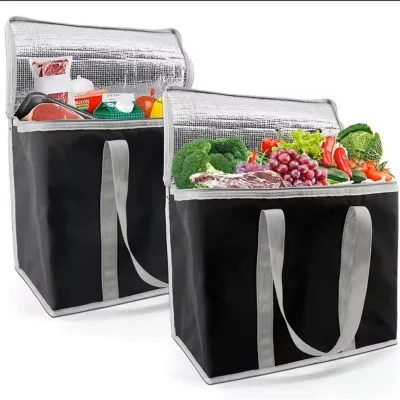
Compare 30 Insulated Waterproof Cooler Bag options from Chinese manufacturers with varying cold retention times and capacities. These polyester bags suit food transport, hiking, and promotional events with customizable logos and designs.
Key considerations
Products List


Leakproof Insulated Cooler Backpack Large Capacity Lightweight Soft Cooler Bag
$8.99 - $15.99
MOQ: 500 Pieces


Cooler Backpack 35 Can Backpack Cooler Leakproof Insulated Soft Cooler Bag
$9.00 - $10.00
MOQ: 100 Pieces


Factory Customized Waterproof Cooler Bag with Pocket Insulated Thermal Bag
$9.68 - $11.00
MOQ: 500 Pieces


Comprehensive Sourcing Guide
Strategic Sourcing Guide for Insulated Waterproof Cooler Bags
Understanding Product Architecture and Material Specifications
When sourcing insulated waterproof cooler bags, the foundational step involves a rigorous analysis of material composition and structural design. The market offers a diverse array of options, but the most reliable units for commercial and industrial applications typically utilize high-density polyester as the primary shell material. This fabric choice is critical because it provides the necessary tensile strength to withstand heavy loads while offering a durable surface for printing and branding. In the observed product spectrum, the material is consistently identified as polyester, which serves as the backbone for the insulation layer.
The insulation mechanism itself is not merely a feature but a performance requirement that dictates the bag's utility. Buyers must distinguish between general storage bags and true thermal containment units. The data indicates that effective cooler bags are engineered to maintain cold temperatures for specific durations, with observed performance metrics ranging from 4 to 6 hours up to more than 6 hours of cold retention. This variance suggests that the thickness and type of insulating foam or reflective lining vary significantly between models. For applications requiring extended cold storage, such as medical transport or long-distance hiking, the selection must prioritize units explicitly rated for a cold time of greater than six hours.
Waterproofing is another non-negotiable attribute for this category. The product specifications confirm that viable units must be fully waterproof to prevent external moisture from compromising the internal temperature or damaging the contents. This is achieved through sealed seams and high-quality zippers. The zipper is frequently cited as the primary closure mechanism, and its quality directly impacts the bag's ability to seal out air and water. A standard zipper closure is common, but the quality of the teeth and the slider mechanism must be verified to ensure they do not fail under the stress of frequent opening and closing. The bearing capacity of these bags also varies, with observed ranges spanning from less than 0.5 kg for lightweight promotional items to over 10 kg for heavy-duty backpacks. This wide disparity necessitates a clear definition of the intended load before procurement begins.
Technical Standards and Dimensional Variability
The technical landscape of cooler bags is defined by a lack of universal standardization, requiring buyers to verify specific dimensional and structural standards for each order. Unlike consumer electronics, where ISO standards are ubiquitous, cooler bags often rely on customized specifications tailored to the buyer's branding or logistical needs. The observed product data reveals a spectrum of dimensions, ranging from compact handbag sizes of 25.5 x 17.5 x 24 cm to larger backpack configurations measuring 43 x 23 x 23 cm or even 30 x 18 x 44 cm.
This variability in size is directly linked to the intended usage. For instance, a bag designed for hiking or outdoor promotion might be specified at 20 x 10 x 32 cm, while a unit intended for food transport or carrying multiple cans and wine bottles could be significantly larger. The gross weight of these products also fluctuates based on these dimensions and the amount of insulation used. Lighter models, often used for promotional giveaways, may weigh less than 0.5 kg, whereas heavy-duty backpacks capable of bearing over 10 kg can weigh between 1 and 1.5 kg.
Buyers must treat the "standard" attribute with caution. In many cases, the standard is listed as "customized" or "customize," indicating that the dimensions and features are not fixed but are subject to the buyer's design requirements. However, when specific dimensions are provided, such as 28 x 40 x 15 cm or 30 x 18 x 44 cm, these serve as critical benchmarks for logistics planning. The internal volume must be sufficient to hold the intended cargo, whether it is food, cans, wine, drinks, or medical supplies. The bearing capacity, which ranges from 3 to 10 kg in some models and exceeds 10 kg in others, must align with the weight of the cargo to prevent structural failure during transport.
Cost Drivers and Pricing Dynamics
The pricing structure for insulated waterproof cooler bags is influenced by a complex interplay of material costs, customization levels, and order volume. The observed price range in the market spans from $0.04 to $25 per unit, a wide disparity that reflects the difference between simple promotional items and high-performance thermal bags. The lower end of this spectrum typically corresponds to lightweight, non-insulated or minimally insulated bags with basic branding, often used for short-term promotional events. These units may have a gross weight of less than 0.5 kg and a bearing capacity of under 3 kg.
Conversely, the higher price points are associated with bags featuring advanced insulation, robust waterproofing, and complex customization. A bag with a cold retention time of over six hours, a bearing capacity exceeding 10 kg, and a polyester shell with reinforced stitching will command a significantly higher price. The cost is also driven by the complexity of the customization. While logo customization is widely available, the method of application—whether screen printing, heat transfer, or embroidery—can affect the unit cost. Additionally, the choice of packaging, such as individual OPP bags versus custom polybags, adds a variable cost component.
Minimum Order Quantity (MOQ) is another critical cost driver. The observed MOQ range spans from 100 to 5,000 units. Lower MOQs, such as 100 units, are often available for standard models but may come with a higher per-unit cost due to the setup fees for production lines. Higher MOQs, up to 5,000 units, typically unlock lower per-unit pricing, making them more economical for large-scale distribution. Buyers must balance the upfront capital required for the order volume against the unit cost savings. The payment terms, often cited as T/T (Telegraphic Transfer), also play a role in the financial planning of the procurement, as deposits are usually required before production begins.
Application-Specific Selection Criteria
Selecting the right cooler bag requires a deep understanding of the specific application environment. The product data highlights several distinct usage scenarios, each demanding different performance characteristics. For food service and catering, the bag must be capable of maintaining hygiene and temperature for extended periods. Models listed with a usage of "Food" and a cold time of 4-6 hours are suitable for short-duration transport, while those rated for over 6 hours are better for long-haul logistics. The bearing capacity for these applications should be sufficient to carry multiple containers, often falling in the 3-10 kg range.
In the realm of outdoor recreation, such as hiking or camping, the durability and weight of the bag are paramount. A cooler backpack designed for hiking must be lightweight yet capable of bearing the weight of food and water supplies. The observed models with a usage of "Hiking" and a style of "Backpack" or "Cooler Backpack" are tailored for this purpose. These units often feature ergonomic designs and may have a gross weight between 0.5 and 1.5 kg, ensuring they do not burden the user during long treks. The waterproofing is essential in these environments to protect contents from rain or accidental submersion.
Promotional and corporate gifting represent another significant market segment. In this context, the aesthetic appeal and branding potential are as important as the functional performance. Bags with a usage of "Promotion" often feature custom logos and vibrant colors, such as blue or black. The cold time for these bags may be shorter, as they are often used for short-term events, but the customization options are extensive. The bearing capacity for promotional bags is typically lower, focusing on carrying a few cans or bottles rather than heavy loads.
Supplier Evaluation and Production Logistics
Evaluating suppliers for insulated waterproof cooler bags requires a focus on their production capabilities, lead times, and quality assurance processes. The supply chain for these products is heavily concentrated in China, as indicated by the origin data. Buyers should verify the supplier's ability to handle the specific customization requirements, such as logo placement and color matching. The availability of customization is a standard feature, but the quality of the execution varies.
Lead times are a critical factor in procurement planning. The observed production time ranges from 45 to 60 days after receiving the deposit, which is a significant duration that buyers must account for in their inventory management. Sample lead times are shorter, typically around 7 to 10 days, allowing buyers to evaluate the product quality before committing to a full order. However, the transition from sample to mass production can introduce delays if design changes are required.
Payment terms are generally standardized, with T/T being the most common method. This requires buyers to have a clear understanding of the deposit requirements and the timeline for the remaining balance. The production process often involves a deposit phase, followed by the manufacturing period, and finally the shipping phase. Buyers should ensure that the supplier has a robust quality control system in place to minimize the risk of defects, especially given the custom nature of many orders. The packing method, whether individual OPP bags or custom packaging, should be agreed upon in advance to ensure the products arrive in pristine condition.
Quality Control and Long-Term Procurement Strategy
Quality control for insulated waterproof cooler bags must address both the functional and aesthetic aspects of the product. The primary functional checks include verifying the waterproof integrity, the effectiveness of the insulation, and the durability of the zippers and seams. Buyers should request test results or samples that demonstrate the cold retention time, ensuring it meets the specified requirements of 4-6 hours or over 6 hours. The bearing capacity should also be tested to confirm that the bag can safely carry the intended load without tearing or deforming.
Aesthetic quality control involves checking the color consistency, logo placement, and overall finish. The observed colors, such as blue and black, should be matched to the buyer's brand guidelines. The hardness of the material, described as "medium soft" in some specifications, should be appropriate for the intended use, providing a balance between flexibility and structure.
For long-term procurement, buyers should establish a relationship with suppliers who offer consistent quality and reliable lead times. The ability to customize the product, including the model number and standard dimensions, is a key advantage for building a unique brand identity. However, buyers must remain vigilant about the variability in specifications, as different models may have different performance characteristics. Regular audits and sample testing are essential to maintain quality standards over time. By focusing on these critical areas, buyers can ensure a successful sourcing strategy for insulated waterproof cooler bags that meets both functional and commercial objectives.
FAQs
What material is used for insulated waterproof cooler bags?
The primary material used is polyester, which provides tensile strength and a durable surface for branding. This fabric serves as the backbone for the insulation layer and ensures the bag can withstand heavy loads while remaining waterproof.
How long can these bags maintain cold temperatures?
Effective cooler bags maintain cold temperatures for durations ranging from 4 to 6 hours up to more than 6 hours. The specific retention time depends on the thickness and type of insulating foam or reflective lining used in the model.
Can I customize the logo and dimensions of the bag?
Yes, customization is available for logos, colors, and dimensions, with many models listed as having customized standards. Buyers can specify unique model numbers and dimensions, such as 28*40*15 cm, to meet specific branding or logistical needs.
What is the typical lead time for production after deposit?
The production time typically ranges from 45 to 60 days after receiving the deposit. Sample lead times are shorter, usually taking about 7 to 10 days, allowing buyers to evaluate quality before committing to a full order.
What is the bearing capacity of these cooler bags?
Bearing capacity varies significantly, ranging from less than 0.5 kg for lightweight promotional items to over 10 kg for heavy-duty backpacks. Buyers must select a model with a capacity that aligns with the weight of the intended cargo.
Where are these products typically manufactured?
The supply chain for these products is heavily concentrated in China, as indicated by the origin data. Buyers should verify the supplier's ability to handle customization requirements and ensure reliable lead times from this location.