Source Insulated Waterproof Large Lunch Bag for Work, Travel, and Picnic
Find 30 options for an Insulated Waterproof Large Lunch Bag designed for shopping, food transport, and outdoor activities. Buyers can compare models with varying cold retention times, capacities, and customization features to find the right cooler bag for their needs.
Key considerations
Products List


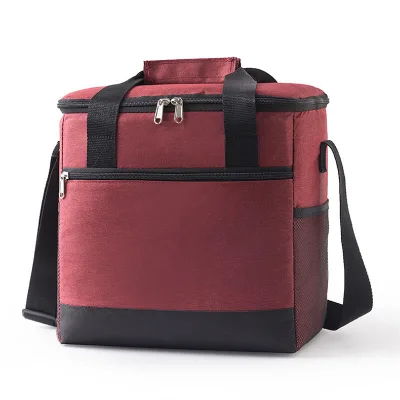


Waterproof Lunch Picnic Bag Large Capacity Leakproof Insulated Cooler Backpack
$5.99 - $7.15
MOQ: 500 pieces


Comprehensive Sourcing Guide
Strategic Sourcing Guide for Insulated Waterproof Large Lunch Bags
Understanding Technical Specifications and Material Composition
When sourcing an Insulated Waterproof Large Lunch Bag, the primary objective is to identify products that maintain thermal integrity while withstanding the rigors of daily transport. Based on current market observations, the dominant material composition for these items is polyester. This synthetic fabric is selected for its durability, resistance to tearing, and ability to hold printed graphics effectively. The structural integrity of the bag is often reinforced by an aluminum lining, which serves as the critical barrier against heat transfer. This lining is essential for achieving the specific cold retention times observed in the market, which typically range from 2 to 6 hours depending on the specific model and insulation thickness.
The physical dimensions and capacity are vital parameters for "large" lunch bags. Market data indicates a wide variance in capacity, with some models designed to hold 6 to 12 cans, while others offer a capacity exceeding 12 cans. For procurement purposes, buyers must verify the specific capacity requirements against their intended usage. The bearing capacity of these bags is a crucial mechanical specification; observed data suggests a weight limit exceeding 10 kg for certain heavy-duty models, ensuring they can carry substantial loads without strap failure. Conversely, the gross weight of the empty bag itself is a significant factor for logistics costs, with some lightweight variants weighing less than 0.1 kg, while others designed for heavy insulation may weigh between 1 and 1.5 kg.
Closure mechanisms are another technical differentiator. The standard closure type for these insulated units is the zipper, which provides a secure seal to prevent air exchange. The hardness of the material is generally categorized as medium soft, offering a balance between structural rigidity to protect contents and flexibility for packing. The style of the bag often falls under the "tote bag" or "handled" category, featuring adjustable straps or shoulder straps to facilitate carrying. These bags are designed for unisex use and are suitable for all seasons, making them versatile for both indoor and outdoor applications.
Compliance, Certification, and Standard Verification
In the B2B procurement of food-related accessories, compliance and standard verification are non-negotiable. While specific certification documents are not universally listed for every product variant, buyers must actively verify that the materials used, particularly the aluminum lining and polyester outer shell, meet food safety standards. The product origin is predominantly China, a major manufacturing hub for these goods, but the country of origin does not inherently guarantee compliance. Buyers should request proof of compliance with relevant international food contact material regulations, such as FDA or EU standards, depending on the destination market.
The production standards for these bags vary significantly. Some models are manufactured to a "Standard" specification, while others offer "Customized" standards to meet specific client requirements. This distinction is critical when evaluating suppliers. A supplier offering customized standards must demonstrate the capability to adhere to the specific technical drawings and material specifications provided by the buyer. The printing process, often gravure printing, and the lamination process used to bond the insulation layers must also be verified for environmental compliance. Buyers should ensure that the inks and adhesives used in the lamination and printing processes do not contain hazardous substances that could migrate into food items.
Furthermore, the "Standard or Customized" nature of the product standard implies that there is no single universal benchmark. Buyers must define their own acceptance criteria before engaging with suppliers. This includes verifying the durability of the zipper, the integrity of the seams, and the effectiveness of the insulation. The absence of a universal certification label in the general product listing means that the burden of verification falls on the procurement team. It is advisable to request third-party test reports specifically for food contact safety and thermal performance to validate the supplier's claims regarding the cold retention times of 2-3 hours or 4-6 hours.
Cost Drivers and Pricing Dynamics
The pricing of insulated waterproof large lunch bags is influenced by a complex interplay of factors, including material costs, customization levels, and order volume. The observed price range in the market spans from 0 to 11.7 USD, indicating a highly competitive and segmented market. This wide range suggests that price is not a linear function of quality but is heavily dependent on the specific configuration of the bag. Factors driving higher costs include the use of specialized aluminum linings, the complexity of the lamination process, and the inclusion of multiple compartments for organization.
Customization is a primary cost driver. The market data confirms that customization is available for logos, sizes, and even product standards. Adding a customized logo via gravure printing or lamination adds a setup cost and potentially a per-unit cost, especially for smaller orders. The MOQ (Minimum Order Quantity) ranges from 1 to 1000 units, which significantly impacts the unit price. Buyers ordering near the lower end of the MOQ spectrum will likely face higher per-unit costs due to the fixed costs of setup and machine time. Conversely, orders approaching the 1000-unit threshold can leverage economies of scale to reduce the unit price.
Packing requirements also influence the final cost. Options such as bulk packing (100 pieces per carton) or individual OPP bags add to the packaging material and labor costs. Buyers must consider the total landed cost, which includes not just the unit price but also the cost of packaging, shipping, and any potential tariffs. The weight of the product, ranging from under 0.1 kg to 1.5 kg, directly affects shipping costs, particularly for air freight. Therefore, a bag with a lower unit price but higher weight or bulkier packaging may result in a higher total cost of ownership.
Typical Applications and Usage Scenarios
The versatility of insulated waterproof large lunch bags makes them suitable for a diverse range of applications. The primary usage category is food storage, specifically for keeping cans, wine, drinks, and ice cream cold. The capacity specifications, ranging from 6-12 cans to over 12 cans, allow these bags to serve as lunch carriers for individuals or small groups. The "Type For: ≤2 Persons" specification indicates that these bags are optimized for personal or dual-person use, making them ideal for office lunches, picnics, or short trips.
Beyond food storage, the market data highlights usage in promotion and medical cooler applications. The ability to customize logos and colors makes these bags excellent promotional items for corporate events, trade shows, or brand awareness campaigns. The "Leisure" and "Outdoor" style attributes suggest suitability for camping, hiking, and other recreational activities where temperature control is necessary. The "All Season" designation further reinforces their utility in various weather conditions.
The specific features of the bags, such as multiple compartments and adjustable straps, enhance their functionality for different use cases. For medical applications, the insulation properties are critical for transporting temperature-sensitive medications or samples. The "Food, Cans, Wine & Drink, Promotion, Medical Cooler, Ice Cream" usage list demonstrates the broad adaptability of these products. Buyers should match the specific capacity and insulation time (2-3h vs. 4-6h) to the intended application. For instance, a medical cooler requiring longer transport times would necessitate a bag with superior insulation, likely corresponding to the higher cold retention models.
Supplier Evaluation and Production Capabilities
Evaluating suppliers for insulated lunch bags requires a focus on their production capabilities and flexibility. The product models observed, such as SU-CRB-003, SU-CLB-004, and various HM-CL series, indicate that suppliers often have a range of SKUs with different specifications. A capable supplier should be able to navigate the customization options, including logo printing, size adjustments, and standard modifications. The availability of "Customized" sizes and standards suggests that the supplier has the technical capacity to alter production lines to meet specific client needs.
When assessing a supplier, buyers should verify their experience with the specific printing and lamination processes mentioned. Gravure printing and lamination are specialized techniques that require precise equipment and skilled operators to ensure consistent quality. The supplier's ability to maintain the integrity of the aluminum lining during the lamination process is crucial for thermal performance. Additionally, the packing methods, whether bulk packing or individual OPP bags, should align with the buyer's logistical requirements.
The origin of the products, primarily China, offers access to a mature supply chain with competitive labor and material costs. However, buyers must ensure that the supplier has robust quality control measures in place to manage the variability inherent in mass production. The wide range of observed gross weights and capacities suggests that suppliers may have multiple production lines or tiers of quality. Buyers should request samples from different production batches to verify consistency. The ability to provide a "Standard or Customized" standard indicates a willingness to collaborate, but the buyer must clearly define the acceptance criteria to avoid disputes.
Quality Control and Long-Term Procurement Considerations
Implementing a rigorous quality control (QC) protocol is essential for ensuring the longevity and performance of insulated lunch bags. Given the observed variations in cold retention times (2-3 hours vs. 4-6 hours), buyers must establish clear testing protocols to verify thermal performance. This may involve independent testing of the insulation layer's effectiveness under controlled conditions. The durability of the zipper and the strength of the handles, which must support a bearing capacity of over 10 kg, should also be tested for wear and tear.
For long-term procurement, consistency is key. Buyers should prioritize suppliers who can maintain the same specifications across multiple production runs. The "Customized" nature of the product standard and logo means that any changes in the supplier's process could alter the final product. Therefore, a detailed technical specification sheet agreed upon by both parties is necessary. This document should outline the exact material composition, dimensions, insulation type, and printing methods.
The MOQ range of 1 to 1000 units offers flexibility for buyers to start with small test orders before committing to larger volumes. However, for long-term partnerships, buyers should aim to negotiate favorable terms for larger orders to secure better pricing and priority production slots. The packaging specifications, such as 100 pieces per carton, should be standardized to optimize shipping efficiency. Finally, buyers should monitor the supplier's ability to adapt to changing market demands, such as new sustainability requirements or evolving food safety standards, to ensure a stable and reliable supply chain.
Comparative Analysis of Product Attributes
To assist in the decision-making process, the following table summarizes the key attributes observed in the market for insulated waterproof large lunch bags. This comparison highlights the variance in specifications that buyers must consider when selecting a product.
| Attribute | Observation Range / Specifics | Procurement Implication |
|---|---|---|
| Material | Polyester | Durable, printable, water-resistant. |
| Insulation | Aluminum Lining | Critical for thermal retention; verify thickness. |
| Cold Time | 2-3h to 4-6h | Match to usage duration (short vs. long haul). |
| Capacity | 6-12 Cans to >12 Cans | Determine based on user group size. |
| Weight Limit | >10 kg | Ensure structural integrity for heavy loads. |
| Gross Weight | <0.1 kg to 1-1.5 kg | Impacts shipping costs and portability. |
| Closure | Zipper | Standard; verify smooth operation and durability. |
| Customization | Logo, Size, Standard | Available; adds cost and lead time. |
| Printing | Gravure | High quality; requires setup for custom logos. |
| Usage | Food, Drink, Medical, Promotion | Versatile; select based on specific application. |
| Origin | China | Major hub; verify supplier compliance and logistics. |
This comparative view underscores the importance of aligning specific product attributes with the buyer's operational needs. By carefully evaluating these factors, procurement teams can select insulated lunch bags that deliver optimal performance and value.
FAQs
Can I customize the logo and size for these lunch bags?
Yes, customization is available for both logos and sizes. You can request specific dimensions and have your logo printed using gravure printing or lamination processes to meet your branding needs.
What is the cold retention time for these insulated bags?
The cold retention time varies by model, ranging from 2 to 6 hours. Some units maintain temperature for 2-3 hours while others with aluminum lining can keep contents cold for 4-6 hours.
Which capacity options are available for large lunch bags?
Available capacities range from holding 6 to 12 cans to models capable of storing more than 12 cans. You can select a medium capacity or larger option depending on your specific storage requirements.
What material is used to construct these waterproof lunch bags?
The bags are primarily constructed from polyester with an aluminum lining for insulation. This combination ensures durability, water resistance, and effective thermal retention for food and drinks.
How much weight can these bags safely carry?
Certain heavy-duty models support a bearing capacity of over 10 kg. This ensures the bags can carry substantial loads without strap failure during transport for shopping or outdoor activities.
What is the minimum order quantity for these products?
The minimum order quantity ranges from 1 to 1000 units depending on the supplier and customization level. Lower MOQs allow for testing, while larger orders may offer better pricing.
Where are these insulated lunch bags manufactured?
These products originate from China, a major manufacturing hub for such goods. Buyers should verify specific factory locations and compliance standards when placing orders for international markets.