Source Insulated Waterproof Lunch Bag for Work, School, Picnic
Compare 30 Insulated Waterproof Lunch Bag options featuring polyester materials, zipper closures, and thermal retention for daily use, office work, and outdoor picnics. Buyers can evaluate customization, dimensions, and cold time performance across multiple suppliers.
Key considerations
Products List


Leak-Proof Insulated Lunch Bag for Work School Outdoor Picnic Daily Use Lunch Bag
$1.80 - $2.16
MOQ: 20 Pieces

Portable Insulated Lunch Bag with Comfort Handle for Work and School Use Lunch Bag
$1.08 - $1.29
MOQ: 500 Pieces

Insulated Polyester Lunch Bag with Multiple Pockets for Food Storage Lunch Bag
$1.24 - $1.49
MOQ: 20 Pieces

Lightweight Insulated Lunch Bag with Multiple Colors for Daily Meal Carrying Lunch Bag
$1.08 - $1.29
MOQ: 500 Pieces

Durable Large-Capacity Lunch Bag with Multi-Color, Waterproof and Stainproof
$2.30 - $2.40
MOQ: 500 Pieces

Travel-Friendly Insulated Lunch Bag with Soft Handle for Work School Needs
$1.24 - $1.49
MOQ: 20 Pieces


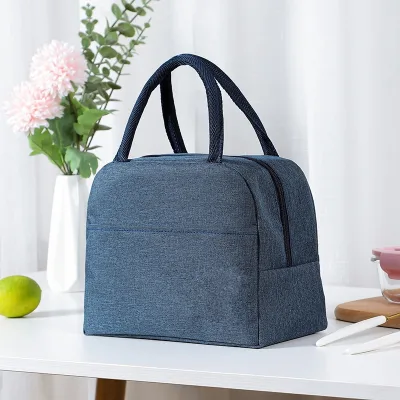


Portable Lunch Bag Waterproof Insulated Thermal Food Picnic Bag for Kids
$0.55 - $0.63
MOQ: 500 pieces


Lightweight Insulated Neoprene Bag Waterproof Tote Bag for Lunch Carrier
$2.49 - $4.01
MOQ: 1000 Pieces
Comprehensive Sourcing Guide
Strategic Sourcing Guide for Insulated Waterproof Lunch Bags
The global market for food containment solutions has seen a significant shift toward durable, multi-functional, and environmentally conscious packaging. For procurement professionals specializing in the B2B sector, the Insulated Waterproof Lunch Bag represents a critical category that bridges the gap between simple storage and active temperature management. This guide provides a comprehensive, evidence-based framework for sourcing these products, focusing on technical specifications, material integrity, supplier evaluation, and long-term operational stability. Buyers must navigate a landscape where "water-resistant" and "waterproof" are often used interchangeably, yet distinct performance thresholds exist. The following analysis details the essential criteria for selecting high-quality insulated bags that meet rigorous commercial and consumer standards.
Technical Specifications and Material Composition
The foundational requirement for any insulated lunch bag is the integrity of its thermal barrier and its resistance to moisture ingress. Based on observed product attributes, the industry standard for the primary material is Polyester. This fabric choice is driven by its balance of durability, cost-effectiveness, and ability to hold complex prints and logos. The internal construction typically features an Aluminum Lining, which serves as the primary reflective layer to retain heat or cold. This lining is critical for achieving the observed performance metrics where bags maintain warmth for 4-6 hours and cold for 6-8 hours, or in higher-tier variants, extending these windows to 5-7 hours for warmth and 7-9 hours for cold retention.
When evaluating the physical structure, buyers should look for specific design elements that enhance functionality. The "Handled" type with a "Top Handle" configuration is prevalent, offering ease of transport for single or dual-person usage. The shape is predominantly rectangular, maximizing internal volume while maintaining a compact footprint. Dimensions vary significantly across the market, with observed standards ranging from 22.5cm (L) × 15cm (W) × 21cm (H) to larger configurations like 25cm (L) × 18cm (W) × 22cm (H). Some specialized models, such as those marketed as "Picnic Baskets," may feature a "Single Compartment" design, though multi-compartment options exist for better organization.
The hardness of the bag is another technical differentiator. Products are often categorized as "Medium Soft" or "Soft," indicating a flexible structure that can be compressed for storage when empty. However, the inclusion of rigid or semi-rigid insulation layers is necessary to maintain the bag's shape when fully loaded. The weight limit for these bags is generally observed to be greater than 10 kg, ensuring they can carry substantial meal loads without structural failure. The gross weight of the empty bag is typically low, often under 0.5 kg, which is a crucial factor for logistics and shipping costs.
Manufacturing Processes and Customization Capabilities
Customization is a primary driver in the lunch bag market, allowing brands to differentiate their offerings through unique aesthetics and branding. The "Customized" standard applies to both the product dimensions and the branding elements. For printing, the industry utilizes Gravure printing, a high-volume method that offers superior color fidelity and durability compared to standard screen printing. This process is often paired with a Laminating process to seal the design and protect it from abrasion and moisture. The "Pure Color" pattern type is common, but the availability of "Customized" logos allows for extensive brand integration.
The supply chain for these items is heavily concentrated in China, with specific manufacturing hubs noted in Anhui. This regional concentration suggests a mature ecosystem of raw material suppliers and finishing facilities. Buyers should verify the "OEM/ODM" capabilities of potential suppliers, as most manufacturers offer both Original Equipment Manufacturing and Original Design Manufacturing services. The "Sample Time" for these customizations is typically 3-7 days, a relatively short turnaround that facilitates rapid prototyping and design iteration.
Packaging standards are equally important for B2B logistics. Products are frequently shipped in "Bulk Packing" configurations, such as 100 pieces per carton, or in individual "OPP Bag" packaging to protect the product during transit. The "MOQ" (Minimum Order Quantity) varies widely, ranging from 1 unit for sampling to 5000 units for full production runs, with a common commercial threshold of 500 pieces. Understanding these thresholds is essential for budgeting and inventory planning, as the cost per unit often decreases significantly as order volumes approach the higher end of the range.
Compliance, Certification, and Safety Standards
While the provided data does not list specific third-party certifications (such as FDA, LFGB, or ISO), the absence of such claims necessitates a proactive verification strategy for buyers. Food-contact materials must comply with international safety standards to ensure that the Aluminum Lining and Polyester exterior do not leach harmful substances into food. Buyers should explicitly request documentation regarding the chemical composition of the lining and the fabric treatment processes.
The "Customized" standard implies that the product may not adhere to a single universal industrial standard but rather to a negotiated specification. However, the "prod_standard" often includes specific dimensional tolerances, such as 25cm (L) × 17.5cm (W) × 20cm (H), which serve as a baseline for quality control. Buyers must verify that the supplier has a robust quality management system in place to ensure that every batch meets these dimensional and functional specifications.
Water resistance is a critical compliance area. While some products are labeled "Water-Resistant" and others "Waterproof," the distinction lies in the testing methodology. Buyers should request test reports that define the hydrostatic head rating or the specific IP (Ingress Protection) rating if available. The "Feature" list often includes "Water-Resistant" and "Wear-Resistant," indicating that the product is designed to withstand daily abrasion and occasional exposure to moisture, but may not be submersible. Clarifying the exact performance level required for the intended use case is vital to avoid procurement of under-specification products.
Cost Drivers and Pricing Dynamics
The pricing structure for insulated lunch bags is influenced by several key variables. The observed price range in the market spans from $0 to $8.15 USD, a wide spectrum that reflects differences in material quality, insulation thickness, and customization complexity. The lower end of the range typically corresponds to basic models with standard Polyester and minimal insulation, while the higher end includes bags with advanced thermal technology, reinforced handles, and complex custom printing.
The "Gross Weight" of the product, being less than 0.1 kg for some models, impacts shipping costs, particularly for air freight. However, the "Weight Limit" of over 10 kg means that the shipping volume is often determined by the packed carton dimensions rather than the product weight itself. The "prod_packing" method, whether bulk or individual OPP bags, also affects the cubic volume of the shipment. Buyers should calculate the landed cost by factoring in the unit price, packaging efficiency, and shipping logistics.
Customization adds a layer of cost complexity. The "Customized" logo and "Customized" size requirements often incur setup fees and higher per-unit costs due to the need for specialized tooling or manual adjustments. The "Sample Time" of 3-7 days suggests that the production line is agile, but rush orders may still incur premium charges. Buyers should negotiate based on the total volume and the complexity of the design to optimize the cost per unit.
Supplier Evaluation and Quality Control Protocols
Selecting a reliable supplier requires a multi-faceted evaluation process. The "prod_origin" being China, specifically Anhui, provides a clear geographical context, but buyers must look beyond location to assess the supplier's operational maturity. Key evaluation criteria include the supplier's capacity to handle the "MOQ" requirements, their ability to meet the "Sample Time" commitments, and their track record for "OEM/ODM" projects.
Quality control should be integrated into the procurement lifecycle. Buyers must verify that the "Hardness" and "Insulation" properties are consistent across batches. The "Cold Time" and "Warm Time" specifications, such as 4-6 hours or 5-7 hours, should be validated through third-party testing or in-house sampling. The "Feature" list, including "Water-Resistant" and "Wear-Resistant," should be tested against actual usage scenarios to ensure the product performs as advertised.
The "prod_model" identifiers, such as SU-CRB-003 or SU-CLB-004, serve as unique references for specific product lines. Buyers should ensure that the supplier maintains a clear inventory of these models and can provide consistent quality for each. The "Type For" specification, indicating suitability for ≤2 Persons, helps in segmenting the market, but buyers should verify that the internal volume and insulation are sufficient for the intended user group.
Typical Applications and Market Segmentation
The versatility of insulated waterproof lunch bags allows them to serve a diverse range of applications. The "Occasion" list includes "Work," "School," "Outdoor Picnic," and "Daily Use," indicating a broad market appeal. For office workers and students, the "Rectangle" shape and "Top Handle" design offer convenience for commuting. The "Leisure" style and "Unisex" gender classification make these products suitable for a wide demographic.
Outdoor enthusiasts may prioritize the "Insulated" and "Thermal" features, relying on the bag to keep food safe during extended periods away from refrigeration. The "Picnic Basket" keyword suggests that some models are designed for group settings, potentially offering larger capacities or specialized compartments. The "Single Compartment" design is ideal for simple meal transport, while more complex models may offer additional organization for utensils and drinks.
The "Daily Life" and "Office Workers" segments represent the largest volume markets. In these sectors, durability and ease of cleaning are paramount. The "Wear-Resistant" feature ensures the bag can withstand daily handling, while the "Water-Resistant" property protects against spills and rain. Buyers should align their product selection with the specific needs of these segments, ensuring that the "Material" and "Feature" set matches the expected usage intensity.
Long-Term Procurement Considerations
Sourcing insulated lunch bags is not merely a transactional activity but a strategic partnership that requires long-term planning. The "Customized" nature of the product means that once a design is finalized, it becomes a unique asset for the buyer. Protecting this intellectual property and ensuring consistent supply is critical. Buyers should establish clear contracts regarding the "prod_standard" and "prod_model" to prevent unauthorized variations.
The "Sample Time" of 3-7 days allows for rapid response to market changes, but buyers should plan for lead times that include production, quality control, and shipping. The "MOQ" of 500 pieces is a common threshold, but buyers should negotiate flexibility for initial orders or reorders based on sales velocity. The "Bulk Packing" and "OPP Bag" options should be evaluated for their impact on storage and retail presentation.
Finally, buyers must consider the environmental impact of their procurement decisions. The "Polyester" material is durable but not biodegradable. Buyers should inquire about the use of recycled materials or sustainable production practices. The "Customized" logo and "Gravure" printing processes should be evaluated for their environmental footprint. By prioritizing suppliers who demonstrate a commitment to sustainability, buyers can enhance their brand reputation and align with evolving consumer expectations.
FAQs
How long does the insulation keep food warm or cold?
The insulation keeps food warm for 4 to 6 hours and cold for 6 to 8 hours in standard models. Higher-tier variants can extend warmth to 5 to 7 hours and cold retention to 7 to 9 hours depending on the specific product construction and lining thickness.
What material is used for the exterior and lining?
The exterior is typically made of durable Polyester fabric, while the interior features an Aluminum Lining for thermal reflection. This combination ensures the bag remains water-resistant and wear-resistant for daily use in various conditions.
Can I customize the logo and dimensions of the bag?
Yes, both the logo and product dimensions are fully customizable to meet your brand requirements. Suppliers offer OEM and ODM services with a sample time of 3 to 7 days for approved designs and specifications.
What is the minimum order quantity for bulk production?
The minimum order quantity varies from 1 unit for sampling up to 5000 units for full production runs. A common commercial threshold for bulk orders is 500 pieces, though specific supplier policies may differ.
Where are these lunch bags primarily manufactured?
These products are primarily manufactured in China, with specific production hubs located in Anhui province. This regional concentration supports a mature ecosystem for sourcing and manufacturing insulated bags efficiently.
How are the products packed for shipping?
Products are shipped in bulk packing configurations such as 100 pieces per carton or in individual OPP bags. This packaging method protects the items during transit while optimizing the cubic volume for logistics.
What is the weight limit and gross weight of the bag?
The bag can support a weight limit greater than 10 kg without structural failure. The empty gross weight is typically under 0.5 kg, which helps keep shipping costs low for international orders.