Source Insulated Stainless Steel Vacuum Tumbler with Straw for Travel, Camping, and Fitness
Explore 30 listings of Insulated Stainless Steel Vacuum Tumbler with Straw options designed for travel, camping, and fitness. Buyers can compare specifications, materials, and customization services from verified suppliers in Zhejiang, China.
Key considerations
Products List


Stainless Steel Double Walled Insulated Vacuum Tumbler with Straw with Handle
$4.00 - $4.20
MOQ: 3000 pieces


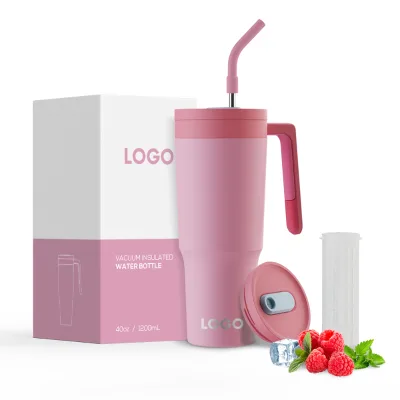

Stainless Steel Vacuum Insulated Tumbler with Retractable Straw for Travel
$6.70 - $7.40
MOQ: 1000 Pieces

40oz Stainless Steel Double Wall Vacuum Insulated Tumbler with Handle and Straw
$3.20 - $3.60
MOQ: 1000 Pieces


Stainless Steel Tumbler with Straw Vacuum Insulated Water Bottle for Home
$2.55 - $2.85
MOQ: 100 Pieces


40oz Stainless Steel Double Wall Vacuum Insulated Tumbler with Lid and Straw
$1.00 - $2.99
MOQ: 25 Pieces

30oz Insulated Tumbler Stainless Steel Coffee Tumbler with Handle and Straw
$2.76 - $3.38
MOQ: 100 Pieces


30oz Insulated Tumbler Stainless Steel Coffee Tumbler with Lid and Straw
$2.46 - $3.44
MOQ: 100 Pieces


Comprehensive Sourcing Guide
Strategic Sourcing Guide for Insulated Stainless Steel Vacuum Tumblers with Straw
The global market for insulated stainless steel vacuum tumblers has expanded significantly, driven by a demand for durable, reusable drinkware that maintains beverage temperature for extended periods. For procurement professionals, identifying a supplier for an "Insulated Stainless Steel Vacuum Tumbler with Straw" requires a disciplined approach that separates verified product attributes from marketing generalizations. The following guide outlines the critical technical, compliance, and operational factors necessary to secure a reliable supply chain for this specific product category.
Technical Specifications and Material Composition
The core of any successful procurement strategy for vacuum tumblers lies in understanding the precise material composition and structural design. Based on available industry data, the primary material for these units is stainless steel, often combined with polypropylene (PP) and acrylonitrile butadiene styrene (ABS) for lids and handles. This composite approach ensures that the vessel maintains thermal integrity while providing necessary durability for the plastic components that interact with the user's mouth and hand.
When evaluating a potential supplier, buyers must verify the specific vacuum insulation technology employed. High-quality tumblers utilize a double-wall vacuum construction to prevent heat transfer, a feature explicitly noted in product descriptions as "Thermal and with Lid." The physical dimensions are equally critical; observed specifications for similar models indicate a diameter and height configuration around 14cm by 8cm, with a unit weight approximately 220 grams, though larger travel mugs may weigh up to 0.3kg. The manufacturing process often involves a combination of injection molding for the plastic components and ultrasonic welding to ensure a seamless bond between the metal and plastic parts.
The design style for these products typically ranges from classic to modern, with a "skinny" profile being a common aesthetic choice for business gifts and promotional items. The inclusion of a straw is a functional requirement that necessitates a specific lid design, often featuring a flip-top or screw-on mechanism that accommodates the straw while maintaining the vacuum seal. Buyers should confirm that the lid is leak-proof, as this is a primary failure point in travel mugs. The presence of a handle, described as a "handgrip" or "cup accessory," adds stability for users during outdoor activities such as camping, travel, or fitness routines.
Compliance Standards and Certification Verification
Navigating the regulatory landscape for food-contact products is a non-negotiable aspect of B2B procurement. While specific certification claims must be verified against current supplier documentation, the industry standard for quality control in this sector often references the AQL (Acceptable Quality Limit) standard. This standard dictates the maximum number of defective items allowed in a random sample, ensuring that the final batch meets consistent quality thresholds before shipment.
Buyers must also scrutinize the origin of the product. Many high-volume manufacturers are located in Zhejiang, China, a region known for its robust metalworking and plastic injection capabilities. However, the location of the factory does not automatically guarantee compliance with international safety standards. For markets in the USA, Europe, and Asia, suppliers must provide evidence that their stainless steel is food-grade and that the plastic components (PP and ABS) are free from harmful substances like BPA.
Although some background data may mention certifications like CE, these should not be assumed to be present without explicit verification. Procurement teams should request current test reports from accredited third-party laboratories to confirm that the product meets the specific regulatory requirements of the destination market. This includes verifying that the "Spraying-Plastic" and "Spraying-Paints" processes used for customization do not introduce toxic heavy metals or volatile organic compounds (VOCs) that could violate environmental or safety regulations.
Cost Drivers and Pricing Dynamics
The pricing of insulated stainless steel tumblers is influenced by several variable factors, including material costs, customization complexity, and order volume. The observed price range for these products in the market spans from approximately $1 to $9.98 USD, a wide spectrum that reflects differences in wall thickness, insulation efficiency, and the extent of branding services.
The Minimum Order Quantity (MOQ) is another significant cost driver. Data indicates that MOQs for these items can range from 25 units to 3,000 units. Lower MOQs are typically associated with standard, off-the-shelf designs, while higher volumes are required to achieve the lower end of the price spectrum. Suppliers often offer OEM services for logo, color, and design customization, which can increase the unit cost due to the setup fees for printing or laser engraving.
Packaging also plays a role in the final landed cost. Standard export packaging often involves carton boxes containing 24 pieces per unit, which optimizes shipping efficiency but requires careful handling to prevent damage. Buyers should calculate the total cost of ownership, including freight, which can be shipped via air, sea, or courier depending on the urgency and volume of the order. For large orders, sea freight is the most economical choice, whereas air freight may be necessary for urgent replenishment of stock.
Typical Applications and Market Segmentation
The versatility of insulated stainless steel tumblers makes them suitable for a diverse range of applications and market segments. The product descriptions highlight usage in "Gifts/Promotion" and "Business Gifts," indicating a strong B2B market for corporate branding. The "Classic" and "Modern" design styles appeal to a broad demographic, including adults and children, depending on the specific model and size.
Outdoor enthusiasts represent another key market segment. The product features, such as being "Leak Proof" and having a "Double Wall" vacuum, make these tumblers ideal for "Camp; Travel, Fitness and Any Outdoor" activities. The inclusion of a handle and a secure lid ensures that beverages remain contained and hot or cold during transit. Additionally, the "Printed" and "Colored" options allow for customization that aligns with specific events such as "Camping, Travel, Party, Graduation, Presents," making these items popular for event giveaways and personal gifts.
The target markets for these products are primarily the USA, Europe, and Asia, where there is a growing consumer preference for sustainable and reusable drinkware. The "Stainless Steel Coffee Travel Mug" and "Steel Vacuum Insulated Skinny Tumbler" are specifically designed to meet the needs of commuters and professionals who require reliable temperature retention throughout the day.
Supplier Evaluation and Service Capabilities
Selecting the right supplier requires a thorough evaluation of their technical capabilities and service offerings. A reliable supplier should demonstrate proficiency in the "Injection & Ultrasonic" technologies mentioned in the product specifications, ensuring that the plastic components are securely bonded to the metal body. The ability to provide "OEM for Logo, Color and Design" is a critical service capability that allows buyers to create unique, branded products that stand out in the market.
Buyers should assess the supplier's flexibility regarding customization. The "Customized" attribute suggests that suppliers are willing to adapt the product to specific client requirements, whether it involves changing the color scheme, adding a specific logo, or modifying the handle design. However, buyers must verify that the supplier has the capacity to maintain quality standards during these customizations. The "Standard Export Package" indicates a commitment to safe shipping, but the buyer should also inquire about the supplier's experience with international logistics and their ability to handle different transportation modes like "Air/Sea/Courier."
Furthermore, the supplier's location in Zhejiang, China, offers access to a mature supply chain for stainless steel and plastic components. However, buyers should conduct a factory audit, such as those performed by BV, to verify the supplier's production capacity, quality control processes, and ethical labor practices. This due diligence is essential to mitigate risks associated with supply chain disruptions or quality inconsistencies.
Quality Control and Long-Term Procurement Considerations
Implementing a robust quality control (QC) strategy is vital for maintaining product integrity and customer satisfaction. The AQL standard serves as a baseline for inspection, but buyers should establish more stringent criteria for critical features such as vacuum insulation performance and leak-proof capabilities. Regular testing of the "Double Wall" construction is necessary to ensure that the thermal properties are maintained over the product's lifespan.
Long-term procurement considerations include the scalability of the supplier's production line and their ability to handle fluctuations in demand. Given the wide range of MOQs, buyers should negotiate terms that allow for flexible ordering as market conditions change. Additionally, the supplier's commitment to continuous improvement in their "Spraying-Plastic" and "Spraying-Paints" processes can lead to better product finishes and reduced environmental impact.
Buyers should also consider the lifecycle of the product. The use of high-quality stainless steel and durable plastics ensures that the tumblers are long-lasting, which aligns with sustainability goals. However, the "Accessories" such as straws and lids should be designed for easy replacement or cleaning to extend the product's usability. By focusing on these long-term factors, procurement professionals can build a resilient supply chain that delivers value to their end customers while minimizing risks associated with product failure or regulatory non-compliance.
FAQs
What materials are used for Insulated Stainless Steel Vacuum Tumbler with Straw?
The product is constructed from stainless steel combined with PP and ABS plastics for lids and handles. This composite design ensures thermal integrity while providing durability for components that interact with the user's mouth and hand.
Which customization services are available for these tumblers?
Suppliers offer OEM services for logo, color, and design customization on the product. Buyers can request specific branding options, though setup fees may apply depending on the complexity of the printing or engraving required.
How does the MOQ affect the pricing for this product?
Minimum Order Quantities range from 25 to 3,000 units, directly influencing the unit cost. Lower prices are typically achieved at higher volumes, while standard off-the-shelf designs often support lower MOQs.
Can these tumblers be used for outdoor activities like camping?
Yes, the product is designed for applications including camping, travel, fitness, and any outdoor setting. Features such as leak-proof lids and double-wall vacuum insulation make them suitable for maintaining beverage temperature during transit.
What is the typical weight and size of these tumblers?
Specifications indicate dimensions around 14 by 8 centimeters with a weight of approximately 220 grams. Larger travel mug models may weigh up to 0.3 kilograms while maintaining similar functional profiles.
Where are the manufacturers of these tumblers located?
Manufacturers are primarily located in Zhejiang, China, a region known for robust metalworking and plastic injection capabilities. This location provides access to a mature supply chain for stainless steel and plastic components.
What quality standards are applied to these products?
The industry standard for quality control often references the AQL (Acceptable Quality Limit) standard. This dictates the maximum number of defective items allowed in a random sample to ensure consistent quality thresholds before shipment.