Source Interchangeable Handle Saltwater Reel for Shore, River, and Ocean Beach
Compare 30 listings of Interchangeable Handle Saltwater Reel options featuring aluminum spools, various gear ratios, and drag alarm systems. Buyers can evaluate spinning and bait-casting models suitable for shore, river, and ocean beach fishing applications.
Key considerations
Products List


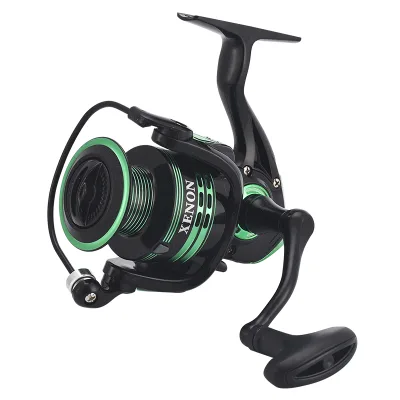
Best Baitcaster Ice Fishing Catfish Rod and Combo Saltwater Spinning Reels
$0.94 - $1.03
MOQ: 100 Pieces

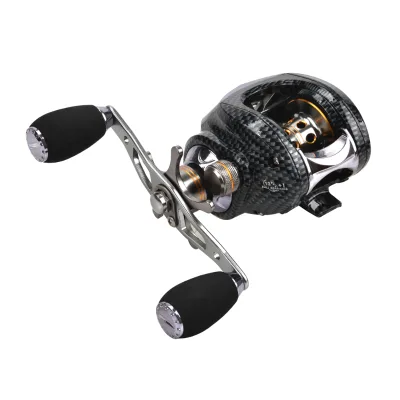
Best Rod and Combo Saltwater Spinning Reels Musky Carp on Sale Fishing Reel
$2.30 - $2.57
MOQ: 120 Pieces

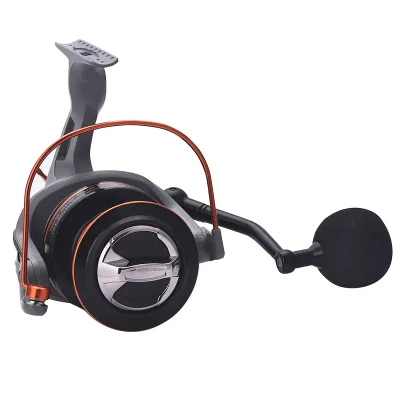
Saltwater Rod and Combo Crappie Sougayilang in a Fish Deep Sea Fishing Reels
$13.26 - $16.57
MOQ: 50 Pieces


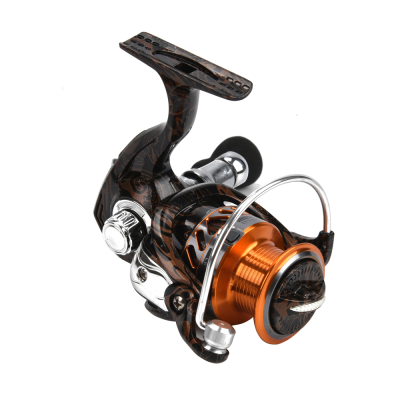
Travel Saltwater Freshwater Portable Telescopic Spinning Reels Fishing Reel Rod
$1.60 - $2.00
MOQ: 500 Pieces

Freshwater Saltwater Spinning Colorful Poratble Light Weight Fishing Combo Reel Rod
$3.30 - $3.50
MOQ: 300 Pieces

Travel Saltwater Freshwater Telescopic Pole Fishing Spinning Reel Combos Rod
$3.30 - $3.50
MOQ: 300 Pieces

Ready-to-Go Gear Set Carrier Bag Freshwater Saltwater Reel Combo Telescopic Fishing Rod
$4.00 - $5.00
MOQ: 200 Pieces

Freshwater Gift Collapsible Portable Travel Kit Carrier Bag Reel Combo Fishing Rod
$1.60 - $2.00
MOQ: 500 Pieces


Comprehensive Sourcing Guide
Strategic Sourcing Guide for Interchangeable Handle Saltwater Reels
Understanding the Technical Architecture of Saltwater Spinning Systems
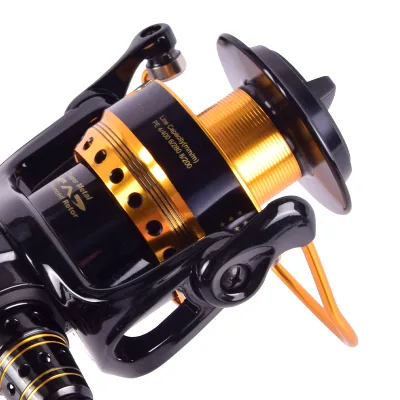
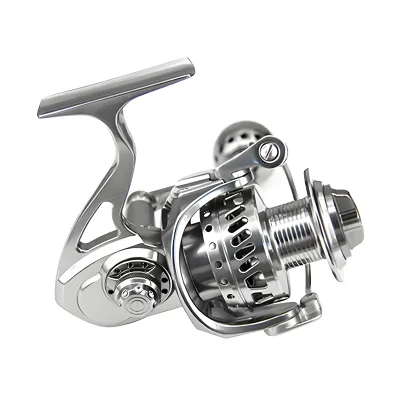
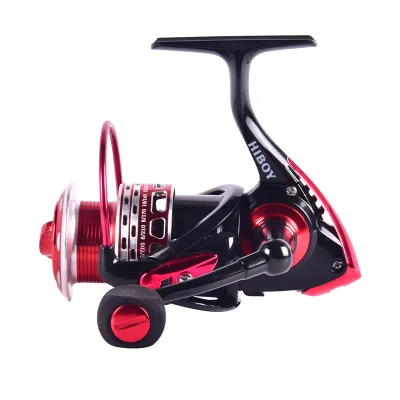
When sourcing interchangeable handle saltwater reels, buyers must first distinguish between the specific mechanical architectures available in the current market. The observed product data indicates a clear bifurcation in reel types, primarily between Spinning Reels and Bait-Casting Reels. For saltwater applications, the Spinning Reel category often presents specific advantages regarding line management and casting distance in turbulent conditions. The technical specifications for these units frequently highlight a Gear Ratio of 5.2:1, which offers a balanced approach between retrieval speed and torque, essential for fighting strong saltwater species.
Material composition is a critical differentiator in this sector. The supply chain data confirms that Aluminum is a primary material used for both the Spool and the main body in several high-confidence listings. This choice of material is vital for saltwater environments where corrosion resistance is paramount. Aluminum spools provide the necessary rigidity to handle heavy braided lines without deformation, while the metal construction of the frame ensures longevity against salt spray. In contrast, some listings reference "Metal" generally for line capacity specifications, suggesting a need for buyers to verify the specific alloy composition to ensure it meets marine-grade standards.
The handle system itself is a focal point for the "interchangeable" requirement. While the observed data lists "High Strength Plastic" for handles in certain models, the core requirement for an interchangeable system implies a design that allows for left-hand or right-hand retrieval configurations. Buyers should verify that the handle attachment mechanism is robust, as the plastic components must withstand the high torque generated during the fight with large game fish. The presence of a "Drag Alarm System" in the observed data suggests advanced models may include electronic or mechanical aids to signal a bite, a feature that adds value for serious anglers but requires specific verification of its reliability in wet conditions.
Compliance Standards and Certification Verification Protocols
Navigating the compliance landscape for fishing gear requires a rigorous approach to verifying standards, as the provided data contains specific but varied entries regarding product standards. One observed entry lists a standard dimension of "11065108cm," which appears to be a packaging or shipping standard rather than a manufacturing certification. Another entry cites "a8" and "a10" as standards, which are likely internal manufacturer codes or model identifiers rather than international safety or quality certifications.
Buyers must not assume that the presence of a standard code implies compliance with international maritime or safety regulations. Instead, the procurement strategy should focus on verifying that the supplier can provide documentation for recognized industry standards, such as ISO 9001 for quality management or specific material safety data sheets (MSDS) for the aluminum and plastic components used. The data mentions "Environmentally Friendly" attributes, which is a positive indicator, but buyers should request third-party verification for claims regarding the environmental impact of the manufacturing process or the recyclability of the packaging materials, which are listed as "Carton," "PP Bag," or "Paper Box."
Furthermore, the "Waterproof" and "Quakeproof" attributes observed in the data must be treated as claims requiring validation. In a B2B context, "Waterproof" for a saltwater reel does not simply mean it can withstand rain; it implies a specific IP rating or a tested resistance to saltwater immersion. Buyers should demand test reports that detail the duration and depth of water exposure the reel can endure without internal corrosion or mechanical failure. Similarly, "Quakeproof" suggests vibration resistance, which is crucial for the durability of the ball bearings and gear systems during high-impact casting or retrieval. Without specific test data or certification numbers in the public listing, the buyer must explicitly request these documents before finalizing a purchase order.
Cost Drivers and Pricing Structure Analysis
The pricing landscape for interchangeable handle saltwater reels is highly variable, with observed listed prices ranging from $0.94 to $132.91 USD. This wide disparity indicates a market segmented by quality tiers, material grades, and feature sets. The lower end of the price spectrum likely corresponds to entry-level models where the "High Strength Plastic" handle and basic aluminum spool are used, potentially with fewer ball bearings or simpler drag systems. Conversely, the higher price points likely reflect reels with advanced features such as the "Drag Alarm System," superior corrosion-resistant coatings, or more complex gear ratios optimized for specific saltwater species.
Minimum Order Quantity (MOQ) is another significant cost driver, with observed ranges spanning from 2 to 740 units. This variation suggests that suppliers have different production capacities and pricing tiers. A buyer seeking a small batch for testing or a niche market might find the lower MOQ options attractive, but they may face a higher unit cost. Conversely, larger orders that meet the higher MOQ thresholds could unlock significant volume discounts, potentially bringing the unit price closer to the lower end of the observed range. However, buyers must balance the savings against the risk of inventory holding costs and the potential for obsolescence if the specific model does not perform as expected in the field.
The material cost is a primary factor influencing the final price. The use of Aluminum for the spool and body is a premium feature compared to plastic or composite alternatives, directly impacting the manufacturing cost. Additionally, the number of ball bearings, noted in the data as "2+" or "12+1," is a direct correlation to price. Reels with a higher bearing count generally offer smoother operation and better durability, justifying a higher price point. Buyers should analyze the cost per bearing and the quality of the lubrication used to determine if the price premium is justified by the performance gains in a saltwater environment.
Typical Applications and Operational Scenarios
The operational context for interchangeable handle saltwater reels is diverse, ranging from shore-based fishing to boat-based operations. The observed data explicitly lists "Shore Fishing" as a primary fishing method, alongside "Stream, River, Lake, Ocean Beach Fishing, Ocean Bo" (likely Boat). This versatility suggests that these reels are designed to handle the transition from freshwater to saltwater environments, provided the corrosion protection is adequate. The "Navigation, Time, Barometer, Thermometer, Hygrometer, Altimeter, Gradienter, Instant Message" attributes observed in the data appear to be associated with a different product category, likely a smartwatch or multi-function tool, rather than the reel itself. Buyers must be cautious not to conflate accessory features with the core mechanical performance of the reel.
For saltwater applications, the "Hardness" and "Durability" attributes are critical. The reels must withstand the abrasive nature of salt, sand, and the physical stress of fighting large fish. The "Durable" and "Safe" attributes listed in the data support the suitability of these products for demanding environments, but the specific application (e.g., deep-sea vs. surf casting) will dictate the required gear ratio and line capacity. The "Line Capacity" specification of "0.18-Material:Metal" indicates the ability to handle specific line diameters, which is crucial for matching the reel to the target species.
The "Customization: Available" attribute is particularly relevant for B2B buyers looking to brand these reels or adapt them for specific regional fishing styles. Customization can include color schemes, logo placement, or even modifications to the handle interchangeability mechanism to suit local preferences. The "Small" size specification suggests that some models are designed for lighter applications or younger anglers, while larger models would be required for heavy-duty saltwater fishing. Buyers should align their procurement strategy with the specific fishing environments their end-users frequent, ensuring the reel's size and capacity match the intended use case.
Supplier Evaluation and Quality Assurance Framework
Evaluating suppliers for interchangeable handle saltwater reels requires a multi-faceted approach that goes beyond the basic product listing. The origin of the products is consistently listed as "China," which is a major hub for fishing tackle manufacturing. However, the country of origin does not guarantee quality uniformity. Buyers should prioritize suppliers who demonstrate transparency in their manufacturing processes and provide detailed technical documentation. The presence of various model numbers, such as "HZ-PQ-2," "XM-200," "FW-BJ," and "WXY-0542," indicates a diverse product portfolio, but buyers must verify that the specific model they are sourcing has a consistent track record of performance.
Quality control should be a central component of the supplier evaluation. Given the "Waterproof" and "Quakeproof" claims, buyers should implement a rigorous inspection protocol that includes random sampling for water resistance testing and vibration testing. The "Condition: New" attribute is standard, but buyers must ensure that the "New" condition is maintained through the supply chain, particularly regarding the packaging. The observed packaging methods include "Carton," "in PP Bag," and "Paper Box," each offering different levels of protection during transit. For saltwater reels, which are sensitive to moisture and impact, the packaging must be robust enough to prevent damage before the product reaches the end-user.
Supplier reliability is also assessed through their ability to meet lead times and handle customization requests. The "Customization: Available" flag suggests flexibility, but buyers must confirm the lead time implications of custom orders. The lack of specific lead time data in the provided facts necessitates direct negotiation with the supplier to establish realistic timelines. Additionally, the "Safety" and "Convenience" attributes should be validated through user feedback or third-party reviews, ensuring that the design does not compromise the angler's safety during high-stress fishing scenarios.
Long-Term Procurement and Lifecycle Management
Sourcing interchangeable handle saltwater reels is not merely a transactional activity but a strategic decision that impacts long-term operational efficiency and customer satisfaction. The "Environmentally Friendly" attribute observed in the data points to a growing market demand for sustainable products. Buyers should consider the lifecycle of the reel, including its repairability and the availability of spare parts. The "Interchangeable Handle" feature itself is a key component of long-term value, as it allows for easy replacement of worn parts and adaptation to different fishing styles without replacing the entire unit.
The "Efficiency" and "Flexibility" attributes suggest that these reels are designed for modern, dynamic fishing environments. Buyers should plan for a procurement strategy that includes regular quality audits and performance reviews of the sourced products. The wide price range and MOQ variability indicate that buyers should adopt a phased approach, starting with smaller orders to validate performance before committing to larger volumes. This strategy mitigates the risk of investing in a product line that may not meet the specific demands of the saltwater market.
Furthermore, the "Noctilucence" (glow-in-the-dark) feature observed in the data adds a unique selling point for night fishing applications. Buyers should assess the longevity of this feature, as the phosphorescent materials can degrade over time. Ensuring that the supplier uses high-quality, long-lasting materials for such features is essential for maintaining the product's value proposition. Finally, the "Unisex" and "Gift" applications suggest a broad market appeal, but buyers must ensure that the product design and marketing align with the specific needs of the target demographic to maximize sales potential in the competitive saltwater fishing gear market.
FAQs
What materials are used for the spool and body?
Aluminum is the primary material used for the spool and body in high-confidence listings. This choice ensures rigidity for heavy lines and corrosion resistance in saltwater environments, though some listings reference general metal for line capacity.
Which gear ratios are available for these reels?
A gear ratio of 5.2:1 is observed as a balanced option for torque and retrieval speed. Another configuration lists a 7.2 ratio paired with 12 plus 1 ball bearings, offering different performance characteristics for specific fishing styles.
Can the handle be customized or changed?
Customization is available for these reels, allowing for handle configuration changes. While some models list high-strength plastic handles, the interchangeable design implies the ability to adjust retrieval sides, though specific mechanisms require verification.
How does the drag system function on these units?
Some observed models include a drag alarm system to signal bites. This feature adds value for serious anglers, but its reliability in wet conditions requires validation through specific test reports before purchase.
What are the typical packaging options for these reels?
Packaging varies between carton, paper box, and PP bag depending on the specific model. These options provide different levels of protection during transit, with cartons and paper boxes generally offering more robust defense against moisture and impact.
Which fishing methods are these reels designed for?
The reels are designed for shore fishing, stream, river, lake, and ocean beach or boat fishing. This versatility allows use in both freshwater and saltwater environments, provided the corrosion protection meets the specific marine conditions.
What is the minimum order quantity for these products?
The minimum order quantity ranges from 2 to 740 units depending on the supplier. Lower MOQs allow for testing or niche markets, while larger orders may unlock volume discounts but increase inventory holding risks.