Source IP65 Compact LED Screen Panel for Advertising Stage
Compare 30 listings for the IP65 Compact LED Screen Panel suitable for advertising, stage performance, and shopping guides. Buyers can evaluate pixel pitch, cabinet materials, and scanning modes to find the right solution for their specific display needs.
Key considerations
Products List

LED Display Screen Panel Advertising Full Color LED Cube Screen Panel
$400.00 - $480.00
MOQ: 1 Square Meters


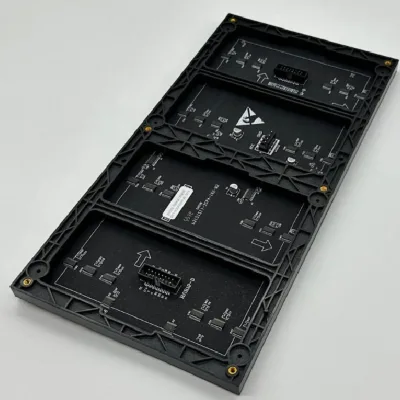

$210.00 - $220.00
MOQ: 17 Pieces


IP65 Weather Resistance P6 P8 P10 Outdoor LED Screen Billboard Panel
$430.00 - $620.00
MOQ: 1 Square Meters


Indoor Full Color Soft/Flexible Screen LED Display Panel P2.5p2.9 P1.47
$650.00 - $780.00
MOQ: 2 Square Meters


China Factory Outdoor P75 Full Color Flexible LED Screen Panel Price
$999.00 - $1099.00
MOQ: 1 Square Meters

Comprehensive Sourcing Guide
Sourcing Guide for IP65 Compact LED Screen Panels
Procuring an IP65 Compact LED Screen Panel requires a rigorous understanding of the intersection between environmental durability, display performance, and supply chain reliability. The term "IP65" denotes a specific level of ingress protection, implying the unit is dust-tight and resistant to water jets from any direction. However, the market for such panels is fragmented, with varying definitions of "compact" and "IP65" depending on the manufacturer's application focus. This guide synthesizes available product attributes and industry standards to provide a structured approach for buyers evaluating potential suppliers for advertising, stage performance, and industrial applications.
Technical Specifications and Pixel Architecture
The core of any LED screen panel selection lies in its pixel architecture and physical dimensions. In the current market, pixel pitch is the primary determinant of viewing distance and image resolution. Data indicates that compact panels often utilize pixel pitches such as 2.5mm or 6mm, though variations exist. A 2.5mm pitch is typically associated with high-resolution indoor or close-proximity applications, while a 6mm pitch is often found in semi-outdoor or stage environments where viewing distances are greater. The pixel structure is frequently defined as SMD (Surface Mount Device), with specific configurations like the SMD1415 3-in-1 LED or SMD 2121 package. These packages influence the brightness, color consistency, and thermal management of the module.
The physical module definition also varies significantly. Some specifications cite a standard module size of 640mm x 640mm x 70mm, while others may utilize a 576mm x 576mm format. The cabinet material is a critical factor for structural integrity, particularly for IP-rated units. Buyers should verify if the cabinet is constructed from Iron, Die-Casting Aluminum, or Aluminum Profiles. Die-casting aluminum is often preferred for outdoor or high-durability applications due to its superior heat dissipation and resistance to corrosion compared to standard iron or plastic composites.
Scanning modes further define the performance characteristics. Common scanning modes observed in this category include 1/8 scan and 1/16 scan. The scanning mode impacts the refresh rate and the potential for flicker under camera capture. A 1/16 scan typically offers higher brightness and better motion handling but may require more complex driver ICs. The display function is generally categorized as Video Display, Text Display, or Image & Text Display, with the system operating platform often cited as Windows XP or similar legacy systems for control software compatibility. Buyers must ensure the chosen panel supports the required scanning mode and pixel pitch for their specific viewing environment.
Compliance, Certification, and Environmental Ratings
When sourcing an IP65 rated panel, verifying compliance with international safety and environmental standards is non-negotiable. The presence of certifications such as CCC (China Compulsory Certification), CE (Conformité Européenne), and RoHS (Restriction of Hazardous Substances) provides a baseline assurance of product safety and environmental compliance. While specific product listings may claim these certifications, buyers must treat them as observations requiring verification rather than absolute guarantees. The CE mark, for instance, indicates conformity with health, safety, and environmental protection standards for products sold within the European Economic Area. RoHS compliance ensures that the electronic components do not contain restricted hazardous materials like lead or mercury.
The IP65 rating itself is a critical specification that must be validated against the physical construction of the panel. This rating implies that the front of the module is sealed against dust and water jets. However, the IP rating often applies to the front face; the rear of the cabinet, where power supplies and receiving cards are housed, may have a lower rating (e.g., IP20 or IP54) depending on the design. Buyers should inquire about the sealing method used for the cabinet joints and the cable entry points. Additionally, the display technology, whether TFT or direct LED, must be compatible with the intended environment. For outdoor or semi-outdoor use, the panel must withstand UV exposure and temperature fluctuations, which are not always explicitly detailed in standard product attributes.
Cost Drivers and Pricing Dynamics
The pricing of LED screen panels is influenced by a complex matrix of factors, including pixel pitch, cabinet material, and customization requirements. The observed price range in the market spans from approximately $8.66 to $2,800 per unit, reflecting the vast difference between small, low-resolution modules and large, high-brightness, custom-configured cabinets. The primary cost driver is the pixel pitch; a 2.5mm panel will inherently cost more per square meter than a 6mm panel due to the higher density of LEDs and the more complex driver electronics required.
Cabinet material also plays a significant role in cost. Die-casting aluminum cabinets are generally more expensive than iron or standard aluminum profiles due to the manufacturing process and material costs, but they offer superior durability and heat dissipation. Customization is a major variable; the availability of custom designs, such as specific module definitions or unique mounting types, can significantly increase the unit price. Furthermore, the packaging method, whether a standard flight case or a wooden case, adds to the overall logistics cost. Buyers should note that the Minimum Order Quantity (MOQ) can range from 1 to 17 units, with some suppliers requiring a minimum of 10 pieces for specific models. This variability affects the unit cost, as larger orders typically benefit from economies of scale.
Typical Applications and Usage Scenarios
The versatility of IP65 compact LED panels allows them to serve a wide array of applications. The primary use cases identified include advertising, stage performance, shopping guides, and public information displays in airports or halls. The choice of application dictates the required technical specifications. For advertising in high-traffic areas, a high-brightness panel with a 2.5mm pitch is often necessary to ensure visibility and clarity. In contrast, stage performance applications may prioritize high refresh rates and specific scanning modes to prevent flicker during video recording, often utilizing a 6mm pitch for larger screen areas.
The "compact" nature of these panels makes them suitable for modular installations where space is limited or where the screen needs to be transported frequently. The use of flight cases or die-casting aluminum cases facilitates this mobility. The system operating platform, often cited as Windows XP or similar, suggests compatibility with standard control software used in digital signage. Buyers should consider the specific environmental conditions of the installation site. For example, a panel used in an airport terminal must withstand constant foot traffic and potential humidity, whereas a panel for a stage performance must handle rapid changes in lighting and temperature. The product attributes indicate that these screens are designed for functions ranging from parties to advertising, highlighting their adaptability across different sectors.
Supplier Evaluation and Procurement Logistics
Evaluating a supplier for LED screen panels requires a focus on their production capabilities, lead times, and after-sales support. The observed lead times for these products range from 2-5 days for standard items to 15-20 days for customized or larger orders. This variance suggests that suppliers may have different production capacities or inventory levels. Buyers should verify the actual lead time for their specific order to avoid project delays. The place of origin is frequently listed as Shenzhen, China, or Guangdong, China, which are major hubs for LED manufacturing. While this indicates access to a robust supply chain, buyers should still conduct due diligence on the specific factory's quality control processes.
Payment terms are another critical aspect of supplier evaluation. Common terms include Trade Assurance, Telegraphic Transfer (TT), and Western Union. Trade Assurance offers a layer of protection for the buyer, ensuring that funds are only released upon satisfactory delivery. The warranty period is typically stated as 2 years, but buyers must clarify what this covers, including the LED modules, power supplies, and control systems. Additionally, the availability of BOM (Bill of Materials) list services indicates a supplier's willingness to provide transparency on component sourcing, which can be crucial for long-term maintenance and repair.
Quality Control and Long-Term Procurement Considerations
Ensuring the long-term reliability of an IP65 LED screen panel involves rigorous quality control measures. Buyers should request test results for key performance indicators such as brightness uniformity, color consistency, and thermal stability. The module maximum power dissipation, often cited around 4.5-5W, is a critical metric for thermal management. Excessive heat can lead to premature LED failure and color shift over time. The response time, observed as 2ms in some specifications, is vital for video applications to ensure smooth motion without lag.
For long-term procurement, the availability of spare parts and the ease of maintenance are paramount. The use of standard module definitions, such as 8192 or specific pixel structures, can simplify the replacement process. Buyers should also consider the digital LCD module type and the LCD drive mode, as these affect the overall system integration. The mounting type, often listed as "output" or specific to the cabinet design, must be compatible with the installation structure. Finally, the product packing, whether in a flight case or wooden case, must be robust enough to protect the panels during transit, especially for international shipments. By focusing on these technical and logistical details, buyers can mitigate risks and ensure a successful procurement of high-quality IP65 compact LED screen panels.
Comparative Analysis of Key Specifications
To assist in the decision-making process, the following table summarizes the key technical variations observed in the market for IP65 compact LED panels. This comparison highlights the trade-offs between resolution, size, and application suitability.
| Feature | Specification A (High Res) | Specification B (Stage/Outdoor) | Specification C (General) |
|---|---|---|---|
| Pixel Pitch | 2.5mm | 6mm | 3.91mm |
| Module Size | 640 x 640 x 70mm | 576 x 576mm | Standard |
| Cabinet Material | Die-Casting Aluminum | Iron / Aluminum Profiles | Aluminum Profiles |
| Scanning Mode | 1/8 Scan | 1/16 Scan | Variable |
| Primary Application | Indoor Advertising | Stage Performance | Shopping Guide |
| LED Package | SMD1415 3-in-1 | SMD 2121 | SMD |
| Warranty | 2 Years | 2 Years | 2 Years |
| Lead Time | 15-20 Days | 2-5 Days | Variable |
This table illustrates that while the warranty period is consistently 2 years across different specifications, the lead time and physical dimensions vary significantly based on the intended application. Buyers must align these specifications with their specific project requirements to ensure optimal performance and cost-efficiency.
FAQs
What certifications do ip65 compact led screen panels typically have?
These panels typically carry CCC, CE, and RoHS certifications. Buyers should verify these marks as observations rather than absolute guarantees, ensuring the product meets safety and environmental standards for the intended region.
Which pixel pitches are available for these compact LED screens?
Available pixel pitches include 2.5mm and 6mm. The 2.5mm pitch suits high-resolution indoor applications, while the 6mm pitch is often used for stage performances or semi-outdoor environments with greater viewing distances.
How long is the lead time for standard orders?
Lead times range from 2 to 5 days for standard items and 15 to 20 days for customized orders. Buyers must confirm the specific timeline based on their customization needs to avoid project delays.
Can I find suppliers with a minimum order quantity of 1?
Yes, some suppliers offer a minimum order quantity of 1 unit. However, other models may require a minimum of 10 pieces, so buyers should check specific model requirements before placing an order.
What materials are used for the cabinet construction?
Cabinets are constructed from iron, die-casting aluminum, or aluminum profiles. Die-casting aluminum is preferred for superior heat dissipation and durability, especially in outdoor or high-durability applications.
Which scanning modes are commonly used in these modules?
Common scanning modes include 1/8 scan and 1/16 scan. The 1/16 scan typically offers higher brightness and better motion handling, which is critical for video applications and camera capture.