Find IP65 Explosion Proof Fire Bell for Home, Industry, and Car Use
Source 30 verified options for the IP65 Explosion Proof Fire Bell designed for indoor and industrial safety. Buyers can compare models like DLB1 and FB-02, checking certifications such as CE and ISO9001 alongside protection levels and installation types to find the right alarm solution.
Key considerations
Products List


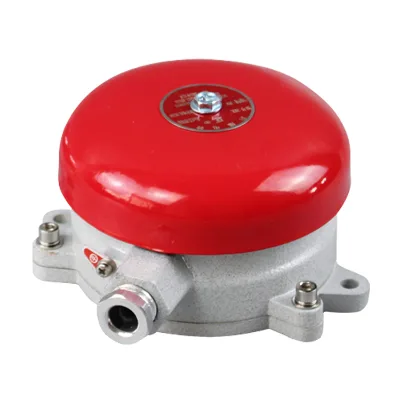


$14.00 - $15.00
MOQ: 500 Pieces


$14.00 - $15.00
MOQ: 500 Pieces
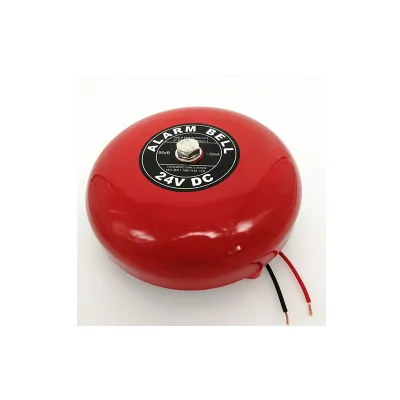
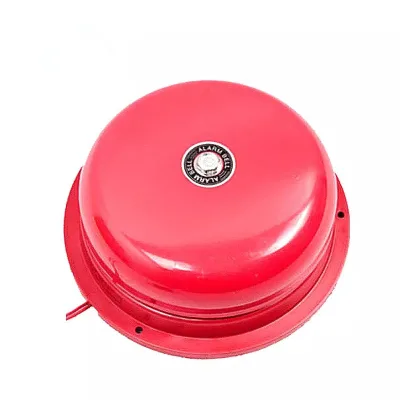
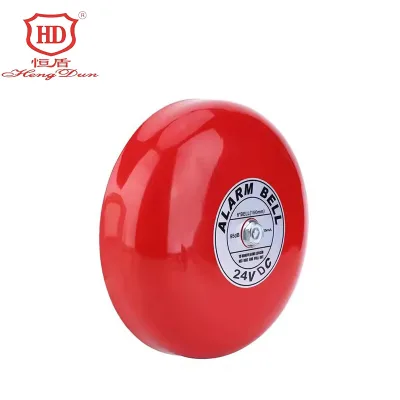
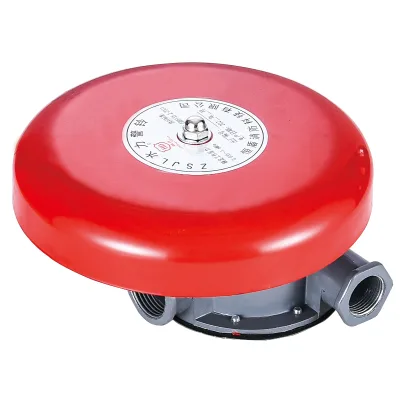
Comprehensive Sourcing Guide
Strategic Sourcing Guide for IP65 Explosion-Proof Fire Bells
Procuring industrial safety equipment requires a rigorous approach that balances technical performance, regulatory compliance, and supply chain reliability. When sourcing an IP65 explosion-proof fire bell, buyers must navigate a complex landscape of environmental ratings, hazardous area classifications, and acoustic specifications. The following guide outlines the critical factors for evaluating potential suppliers and products, ensuring that the selected equipment meets the stringent demands of industrial safety applications without relying on unverified marketing claims.
Understanding the IP65 Rating and Environmental Durability
The IP65 rating is a fundamental specification for fire bells deployed in harsh industrial environments. The "IP" stands for Ingress Protection, a standard defined by the International Electrotechnical Commission (IEC). The first digit, "6," indicates a total protection against dust ingress, meaning the unit is dust-tight. The second digit, "5," signifies protection against water jets from any direction. This combination ensures that the fire bell can operate reliably in outdoor settings or indoor areas subject to wash-downs, high humidity, or dusty conditions where particulate matter could otherwise clog mechanical components or short-circuit electrical systems.
When evaluating a product, buyers should verify that the manufacturer explicitly states the IP65 rating in the technical datasheet. It is crucial to distinguish between temporary water resistance and sustained protection against high-pressure jets. In many industrial contexts, the fire bell must withstand not only rain but also chemical splashes or cleaning procedures. The observed data indicates that specific models in this category are rated for IP65 protection, often alongside other ratings like IP66 or IP67 for more severe conditions. However, for a specific IP65 requirement, the buyer must confirm that the sealing mechanisms, such as gaskets and cable entries, are designed to maintain this integrity over the product's lifespan. Corrosion resistance is another critical attribute often paired with high IP ratings. Materials such as stainless steel or specialized coatings are typically required to prevent degradation from environmental exposure, ensuring the device remains functional during an emergency.
Explosion-Proof Classification and Hazardous Area Compliance
The "explosion-proof" designation is perhaps the most critical safety feature for fire bells used in volatile environments. This classification implies that the device is engineered to contain any internal explosion and prevent it from igniting the surrounding atmosphere. In the provided context, specific models are noted with explosion-proof signs such as "Exdimb," which refers to a specific type of protection for electrical equipment in hazardous areas. Buyers must understand that explosion-proof ratings are not generic; they are tied to specific gas groups and temperature classes.
When sourcing these units, procurement teams must verify the exact certification marks and the applicable standards. The presence of certifications such as CE, ISO9001, and RoHS is a strong indicator of a manufacturer's commitment to quality and safety, but these do not automatically replace the need for specific hazardous area certifications. In many jurisdictions, equipment for hazardous locations requires approval from recognized bodies like ATEX (in Europe) or UL (in North America). The buyer should request documentation that explicitly maps the product's explosion-proof rating to the specific hazardous zones (e.g., Zone 1, Zone 2, or Zone 21) where the device will be installed. Relying solely on the term "explosion-proof" without verifying the specific standard and gas group compatibility can lead to significant safety liabilities. The atmospheric pressure range of 80kPa to 100kPa is another parameter that may be relevant for altitude-specific installations, though this should be cross-referenced with the specific operational limits of the chosen model.
Technical Specifications and Acoustic Performance
The primary function of a fire bell is to emit a clear, audible alarm to evacuate personnel. Technical specifications regarding the sounder's design and power requirements are essential for ensuring compliance with local fire codes. The provided data highlights several key attributes: the use of a permanent magnetic speaker, bone conduction transmission modes in some variants, and specific voltage requirements such as 24V. The coil resistance is noted as "adjusted," suggesting that the internal circuitry may be tuned for specific impedance matching or power efficiency.
For a fire bell, the radiation mode is typically "direct radiation type," meaning the sound is projected outward in a specific pattern rather than omnidirectionally. This affects the placement strategy; the bell must be positioned to ensure coverage of the intended area without dead zones. The dimension of the unit, often observed in sizes like 6 inches or 8 inches, influences the sound pressure level (SPL) and the physical space required for installation. Buyers should verify the decibel output against the specific noise floor of the facility; a bell that is adequate in a quiet office may be ineffective in a noisy factory. Additionally, the material of the cone, such as aluminum, impacts the durability and the acoustic properties of the sound. The "Bell Base" being made of iron suggests a robust mounting structure, which is vital for withstanding vibrations or potential physical impacts in industrial settings.
Compliance, Certification, and Regulatory Verification
Navigating the regulatory landscape is a non-negotiable aspect of sourcing industrial safety equipment. The observed product data lists several certifications, including CE, RoHS, ISO9001, and ISO14001. While these indicate that the manufacturer adheres to quality management systems and environmental standards, they do not necessarily confirm compliance with local fire safety codes in the buyer's specific region. For instance, the CE mark indicates conformity with health, safety, and environmental protection standards for products sold within the European Economic Area, but it does not automatically grant approval for use in the United States or Asia without additional local testing.
Buyers must conduct a thorough audit of the supplier's documentation. The "Certificates" field often lists a combination of standards, but the buyer must ensure that the specific fire bell model carries the necessary approvals for its intended application. For example, in the context of combustible gas detection or fire alarm systems, the installation method (ceiling or vertical) and the specific model number (such as AW-CBL2166EX or FB-02) must be matched to the certified configuration. The "CCC" certification mentioned in the data is specific to China, and its relevance depends on the procurement location. A robust procurement strategy involves requesting a copy of the test reports and certification certificates for the exact model number being purchased, rather than relying on a general statement that the brand holds these certifications.
Cost Drivers and Procurement Economics
The cost of an IP65 explosion-proof fire bell is influenced by several factors beyond the base unit price. The observed price range of 1.35 to 85 USD suggests a wide variance in product quality, feature sets, and certification levels. Lower-priced units may lack advanced explosion-proof features or may be intended for less critical applications, while higher-priced units likely include robust housing, higher sound pressure levels, and comprehensive certification packages.
The Minimum Order Quantity (MOQ) is another significant economic factor. The observed MOQ range of 1 to 1000 units allows for flexibility, but buyers should be aware that higher volumes often unlock better pricing tiers. Customization is listed as "Available," which can be a cost driver. Features such as specific wiring configurations (with or without wire), custom terminal types, or tailored packaging (carton box vs. standard export package) may incur additional charges. The "Design" attribute of OEM/ODM indicates that buyers can request modifications to the product, but this typically involves tooling costs and longer lead times. When evaluating the total cost of ownership, buyers should also consider the installation requirements, such as the need for specialized conduit or explosion-proof junction boxes, which can significantly impact the overall project budget.
Supplier Evaluation and Quality Assurance
Selecting the right supplier is as important as selecting the right product. The origin of the products, noted as Guangdong, China, and Ningbo, China, indicates a concentration of manufacturing in these regions, which are known for their electronics and safety equipment industries. However, geographical origin alone does not guarantee quality. Buyers should evaluate suppliers based on their quality control processes, specifically their adherence to ISO9001 standards. The presence of ISO14001 certification also suggests a commitment to environmental management, which can be a proxy for overall operational discipline.
Quality assurance should extend beyond the factory floor. Buyers should inquire about the supplier's testing protocols for explosion-proof integrity and IP rating verification. Do they perform batch testing, or is quality control limited to final inspection? The "Variety Terminal Type" being available suggests a level of flexibility, but it also requires clear communication to ensure the correct terminals are supplied. The "Standard Packing or Packed According to Customers" option highlights the need for clear packaging specifications to prevent damage during transit, especially for delicate electronic components. A reliable supplier will provide a comprehensive product manual, installation guide, and maintenance schedule, ensuring that the fire bell performs correctly throughout its lifecycle.
Long-Term Procurement and Lifecycle Management
Procuring a fire bell is not a one-time transaction but the beginning of a long-term relationship focused on safety and reliability. The "Design" attribute of OEM/ODM implies that the product may be part of a larger, customized system. Buyers should consider the availability of spare parts and the supplier's ability to support the product over its expected lifespan. The "Used in Alarm System" attribute, specifically as a "Siren Sounder," indicates that the bell is part of a networked system. Compatibility with existing control panels and wiring infrastructure is crucial for seamless integration.
Maintenance is another critical consideration. The "Corrosion Resistance" and "Protection Level" attributes suggest that the unit is designed for durability, but regular inspection is still necessary. Buyers should establish a maintenance schedule that includes checking the integrity of the IP65 seals, verifying the explosion-proof housing for any damage, and testing the acoustic output. The "Operating Voltage" of 24V is a standard low-voltage DC supply, which simplifies power integration but requires a reliable power source. Long-term procurement strategies should also include a review of the supplier's ability to provide firmware updates or hardware revisions if safety standards evolve. By focusing on these lifecycle aspects, buyers can ensure that their fire alarm systems remain compliant and effective for years to come.
FAQs
What certifications are required for an IP65 Explosion Proof Fire Bell?
Required certifications typically include CE, ISO9001, and RoHS for quality and safety compliance. Specific models may also carry CCC or ISO14001 marks depending on the manufacturing origin and target market regulations.
How is the IP65 rating defined for fire bells in industrial settings?
The IP65 rating ensures total dust protection and resistance to water jets from any direction. This allows the device to operate reliably in harsh environments subject to wash-downs or high humidity without internal damage.
Which explosion-proof signs indicate compliance for hazardous area installation?
Models may display specific signs like Exdimb to indicate compliance with hazardous area protection standards. Buyers must verify these signs against local regulations to ensure the device is safe for the intended gas group and zone.
Can the fire bell be customized for specific alarm system integration?
Yes, customization is available for various terminal types and wiring configurations with or without wire. OEM and ODM design options allow for tailored packaging and specific operational voltages like 24V to match existing systems.
What is the typical operating voltage for these explosion proof fire bells?
The standard operating voltage for these units is 24V DC. This voltage requirement ensures compatibility with common industrial control panels and alarm system power supplies while maintaining safe operation in hazardous locations.
Which materials are used for the cone and base of the fire bell?
The cone is often made of aluminum to ensure durability and optimal acoustic performance. The base is typically constructed from iron to provide a robust mounting structure capable of withstanding vibrations in industrial environments.
What packaging options are available for shipping these safety devices?
Standard export packaging or carton boxes are commonly used to protect the units during transit. Custom packing according to customer requirements is also available to ensure the product arrives safely and meets specific logistical needs.