Source IP67 Rotary Valve Position Indicator for Oil Gas Water
Find and compare 30 IP67 Rotary Valve Position Indicator options for oil, gas, and water systems. Evaluate models like ITS100 and APL210 based on input signals, protection classes, and customization availability to select the right component for your industrial automation needs.
Key considerations
Products List


Donjoy Il-Top 1831 Valve Positioner with Feedback Signal Output for Flow Control
$100.00 - $500.00
MOQ: 1 Pieces

Intelligent Fluid Controller Valve Positioner for Fluid Processing Control
$150.00 - $350.00
MOQ: 1 Pieces


Intelligent Valve Positioner With Explosion Proof Function Single Acting
$300.00 - $600.00
MOQ: 1 Pieces


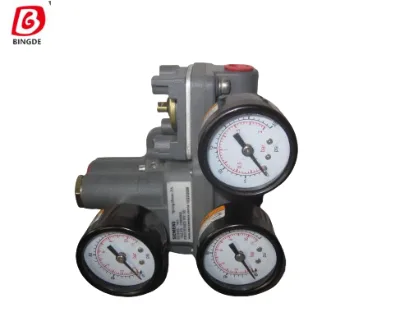


Smart Valve Positioner Controller Double Single Acting for Linear Rotary Valves
$120.00 - $145.00
MOQ: 1 Pieces


Linear Stroke Limit Switch Position Indicator for Pneumatic Angle Seat Valve
$10.00 - $50.00
MOQ: 1 Pieces


Comprehensive Sourcing Guide
IP67 Rotary Valve Position Indicator Sourcing Guide
The IP67 Rotary Valve Position Indicator serves as a critical interface for monitoring the open and closed states of industrial valves, particularly in environments where dust ingress and temporary water immersion are concerns. Based on observed market listings, these devices often feature a robust design with a working temperature range of -20 to +80 degrees Celsius, ensuring reliability across diverse operational climates. The core functionality typically involves a visual indication system where the "Close" position is marked in red and the "Open" position in yellow, providing immediate status feedback to operators without the need for complex diagnostic tools.
Procurement of these indicators requires careful attention to the specific actuation mechanism, as the market presents both electric and pneumatic variants. Electric models frequently utilize a 4-20mA DC input signal to drive the switching mechanism, while pneumatic versions rely on air pressure sources ranging from 4 to 7 Bar. Buyers must distinguish between these power sources early in the sourcing process, as the integration requirements for control systems differ significantly between the two types, affecting wiring complexity and power supply infrastructure.
Product Scope and Observed Listing Signals
The current market for IP67 rotary valve position indicators displays a wide variance in product specifications, with observed models ranging from the IP 8000/8100 series to the APL210 and ITS100 configurations. Listings indicate that the physical dimensions of the units are generally compact, with some specifications noting a standard size of 20cm by 10cm by 10cm, while others highlight a weight between 2.5 and 2.8 kilograms per piece. This variation suggests that buyers should not assume a uniform footprint or weight class when planning installation spaces or structural supports for their specific valve assemblies.
A significant portion of the available inventory offers customization options, allowing for tailored solutions such as specific bracket materials or optional proximity switches. While some units are listed as non-customized, the majority of suppliers appear to support modifications, including the selection of carbon steel or stainless steel brackets to match the corrosion resistance needs of the application. The packaging for these items varies from original paper boxes to foam and carton combinations, which may influence the logistics strategy and the level of protection required during transit from the manufacturing origin in Wenzhou, China.
Technical Specifications to Verify
When evaluating the technical capabilities of a rotary valve position indicator, the input signal type is a primary verification point. The observed data confirms that many units accept a 4-20mA DC input signal, which is standard for industrial automation, but buyers must confirm if the specific model supports split ranges or continuous signals as required by their control logic. Additionally, the output capability is critical, with some devices offering DC 4 to 20mA outputs or split ranges that must align with the receiving PLC or DCS inputs to ensure accurate data transmission and system stability.
The mechanical and environmental ratings of the device must be scrutinized to ensure compatibility with the specific valve stroke and operating conditions. The stroke for these indicators is typically observed as 0 to 90 degrees, which corresponds to standard quarter-turn valve operations, but the protection class varies between IP66 and IP67, with the latter offering superior protection against temporary immersion. Buyers should also verify the surface finish, as polyester powder coating is a common treatment for the housing, and confirm the number of cable entries, which are often specified as two M20 entries to facilitate secure and weather-tight wiring connections.
Compliance and Safety Documentation
Certification documentation is a mandatory requirement for industrial procurement, and the observed listings frequently cite CE certification as a baseline compliance standard. Some suppliers provide additional documentation indicating ISO certification, which adds a layer of assurance regarding the manufacturer's quality management systems. However, buyers should not assume that all listed products automatically meet specific international safety standards without requesting the actual test reports or certificates, as the presence of a certification mark on a listing does not guarantee that the specific batch being purchased has undergone the necessary validation.
Safety and operational compliance also extend to the electrical and mechanical interfaces of the device. The wiring configuration often includes two SPDT V3 micro mechanical switches, which must be verified against the safety protocols of the facility to ensure they meet the required switching capacity and isolation standards. Furthermore, the protection grade of the enclosure, whether rated IP66 or IP67, must be validated through the manufacturer's test data to confirm that the device can withstand the specific environmental hazards of the installation site, such as high-pressure water jets or heavy dust accumulation.
Cost Drivers and Commercial Terms
The pricing for IP67 rotary valve position indicators is highly variable, with observed market ranges spanning from 1 to 3650 USD, driven largely by the complexity of the model and the level of customization required. Factors such as the choice of bracket material, the inclusion of optional proximity switches, and the specific version of the control interface (basic versus feedback) significantly influence the final unit cost. Buyers should be prepared for a wide price spectrum and must clearly define their technical requirements to avoid overpaying for unnecessary features or under-specifying critical components that could lead to premature failure.
Commercial terms and logistics play a crucial role in the total cost of ownership, with shipping methods typically including major carriers like DHL, FedEx, EMS, UPS, and TNT. The minimum order quantity (MOQ) observed in the market ranges from 1 to 100 units, offering flexibility for both small-scale replacement projects and large-scale infrastructure upgrades. However, the lead time and shipping terms are not explicitly standardized in the available data, meaning buyers must negotiate these details individually with suppliers to ensure that delivery schedules align with project timelines and that the Incoterms selected protect against transit risks.
Supplier Qualification and Quality Control
Supplier qualification should focus on the origin and manufacturing consistency of the products, with the majority of observed listings originating from Wenzhou, China. While this region is a known hub for industrial components, buyers must verify the specific factory's capacity to maintain consistent quality across batches, especially when dealing with customized orders. The presence of certifications like CE and ISO is a positive indicator, but it is essential to confirm that the supplier has a robust quality control process in place to ensure that every unit meets the specified IP rating and electrical performance standards before shipment.
Quality control measures should also include a verification of the product condition, as the listings consistently describe the items as "New." Buyers should request evidence of the manufacturing process, including surface treatment procedures like polyester powder coating, to ensure the durability of the finish against environmental degradation. Additionally, the structural integrity of the combination design and the reliability of the micro mechanical switches should be assessed through sample testing or third-party inspection reports to mitigate the risk of receiving defective units that could compromise the safety of the valve system.
Long-Term Procurement Checks
Long-term procurement success depends on establishing a reliable supply chain that can support maintenance and replacement needs over the lifecycle of the equipment. Buyers should verify the availability of spare parts, such as replacement switches or cable entries, and confirm that the supplier can provide technical support for troubleshooting issues related to the 4-20mA signal or the rotary mechanism. The ability of the supplier to accommodate future customization requests, such as changes in bracket material or signal types, is also a key factor in maintaining a flexible and resilient supply chain.
Finally, ongoing performance monitoring is essential to ensure that the installed indicators continue to meet the IP67 protection standards and operational requirements. Buyers should implement a schedule for regular inspections to check for signs of wear, corrosion, or seal degradation that could compromise the enclosure's integrity. By maintaining a proactive approach to maintenance and keeping open lines of communication with the supplier, organizations can ensure the continued reliability of their valve position indicators and minimize the risk of unplanned downtime in their industrial processes.
FAQs
What is the input signal for the IP 8000/8100 indicator?
The IP 8000/8100 indicator accepts a 4-20mA DC input signal. It provides a DC 4 to 20 Ma or split range output. This configuration supports regulated type adjusted forms. The unit weighs between 2.5 and 2.8 Kgs per piece. It features an IP67 enclosure for protection.
Can the valve position indicator be customized?
Yes, customization is available for the IP 8000/8100 model. The product supports customized options for specific operational needs. It utilizes electric power and operates as a rotary type device. The bracket material can be carbon steel or stainless steel. This flexibility allows for tailored industrial applications.
What are the working temperature and ambient conditions?
The device operates within a normal temperature working range. The ambient temperature specification is -20 to +80 degrees. It is designed for medium pressure applications. The surface finish includes polyester powder coating. These conditions ensure reliable performance in various industrial environments.
Which certification does the L8A-100 model hold?
The L8A-100 model holds ISO and CE certifications. It functions as an automatic control device with continuous signals. The structure is a combination type designed for adjustment tasks. It operates on an air pressure range of 4-7 Bar. The protection grade is IP67 for environmental safety.
What is the air source interface size for the ITS100?
The ITS100 model features a PT or NPT 1/4 air source interface size. It supports dual acting or single acting types. The stroke range is 0 to 90 degrees. The input signal is 4 to 20mA. This pneumatic power type ensures precise valve positioning.
How is the valve position indicated visually?
The valve position indicator shows close as red and open as yellow. It allows 0 to 90 degrees of free rotation. The unit includes two SPDT V3 micro mechanical switches. Wiring holes consist of two M20 cable entries. This visual feedback aids in immediate operational status checks.