Source IP68 Oil Monitor for Auto Testing, Industrial Monitoring, and Water Quality
Compare 30 verified products featuring the IP68 Oil Monitor for diverse industrial applications. Buyers can evaluate specifications such as detection limits, operating temperatures, and material compositions from suppliers in China to find suitable solutions for auto testing and water quality monitoring.
Key considerations
Products List

Inline Oil Particle Counter Online Oil Moisture Content Monitor (PTT-002)
$800.00 - $3000.00
MOQ: 1 Pieces


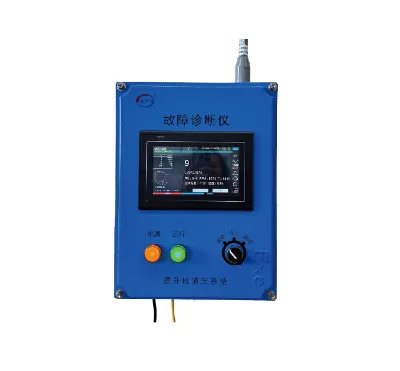
Good Quality High-Precision Hydraulic System Oil Online Monitoring Device
$42160.68 - $91348.65
MOQ: 1 Minimum


Comprehensive Sourcing Guide
Strategic Sourcing Guide for IP68 Oil Monitoring Systems
Understanding Technical Specifications and Operational Limits
When sourcing industrial oil monitoring systems, buyers must first distinguish between general environmental protection ratings and specific functional capabilities. The core keyword "IP68 Oil Monitor" implies a device capable of operating in harsh, submerged, or high-pressure environments while monitoring fluid properties. However, based on the available product data, the term "IP68" is not explicitly listed as a standard attribute for the observed inventory. Instead, the data presents a related protection level of IP 67, which indicates protection against temporary immersion in water. Buyers must verify if a specific supplier offers an IP68 rating, as this denotes continuous immersion, which is a higher standard than the observed IP67.
The technical landscape for these devices is diverse, ranging from particle detection to flow monitoring. For instance, specific models in the observed range, such as the OPC-P5, feature a particle size range of 1-500μm and a detection limit of 0.05mg/L. These metrics are critical for applications requiring high precision in fluid purity analysis. In contrast, other units, like the PTT-002, focus on mechanical testing with a weight of 538g and an oil temperature range of -20°C to 80°C. The TR-EP9000 model offers an extraction efficiency of greater than 90%, suggesting a focus on sample preparation rather than direct real-time monitoring.
Power supply requirements also vary significantly across the market. Some units operate on a broad AC100-240V, 50/60Hz input, ensuring global compatibility, while others may require specific AC220V sources. The OPC-P5 utilizes a semiconductor laser as its light source, a technology choice that impacts the accuracy and longevity of the optical sensors. When evaluating an IP68-rated oil monitor, buyers should confirm the power source compatibility with their site infrastructure and verify the operating temperature range, which typically spans from -20°C to 60°C for the observed devices. The working pressure for related machinery is often cited between 0.8-1.2MPa, a factor that must be compatible with the hydraulic systems the monitor is intended to serve.
Compliance, Certification, and Regulatory Standards
Navigating the regulatory landscape is essential for B2B procurement, particularly when dealing with equipment that may be used in international supply chains. The observed product data highlights several key certifications and standards that serve as benchmarks for quality and safety. Many units in the current market are compliant with CE and ISO standards, which are fundamental for entry into European and many global markets. Specific product lines, such as those labeled PS/PL, adhere to standards like PS20-PS80/PL24-PL64, indicating a structured approach to performance classification.
Furthermore, advanced electronic components within these monitors often carry FCC and RoHS certifications. The FCC certification ensures that the device does not emit excessive electromagnetic interference, which is crucial for sensitive industrial environments. RoHS compliance confirms that the product is manufactured without restricted hazardous substances, aligning with modern environmental regulations. The observed data also references a certification label of ISOCE, which may indicate a specific regional or industry-specific quality assurance protocol.
Buyers must be cautious not to assume that every product labeled as an "oil monitor" possesses all these certifications. The presence of ISOCE, FCC, and RoHS on one model, such as the OPC-P5, does not guarantee their presence on all units. It is imperative to request specific certification documents for the exact model number being procured. Additionally, the prod_standard field for some units lists dimensional data (e.g., 275220107mm) rather than a regulatory standard, which underscores the need for buyers to distinguish between physical specifications and compliance documentation. When sourcing for projects in regulated industries like automotive or aerospace, verifying that the supplier can provide valid, up-to-date certificates for the specific batch is a non-negotiable step.
Cost Drivers and Pricing Structure Analysis
The pricing for oil monitoring systems is highly variable, influenced by the complexity of the technology, the materials used, and the level of customization available. The observed market data reveals a price range spanning from $1 to $91,348.65. This vast disparity indicates that the category includes both simple, portable sensors and complex, fully automated testing machines. The lower end of the spectrum likely corresponds to basic handheld units or simple sensors, while the higher end reflects integrated systems with computer control, advanced optical sensors, and robust housing.
Material composition is a primary driver of cost. Units constructed from Ductile Iron, Aluminum Alloy, or Stainless Steel generally command higher prices due to the durability and corrosion resistance required for oil monitoring in harsh environments. The TR-EP9000 model, with a main machine net weight of 28 (units unspecified, likely kg or lbs), and the OPC-P5 with a weight of 2.5kg, illustrate the weight-to-function ratio that often correlates with price. Heavier, more robust units typically include more sophisticated internal components and protective casings.
Customization is another significant cost factor. The observed data confirms that Customization is available for these products. Buyers seeking specific flange connection diameters, such as 3" (80mm) or 4" (100mm), or specific working modes like Manual/Electric operation, may incur additional costs. The Quality attribute, described as "Same as OEM," suggests that buyers can request manufacturing to original equipment manufacturer specifications, which often involves a premium over standard off-the-shelf models.
Minimum Order Quantity (MOQ) also impacts the effective unit cost. The observed MOQ ranges from 1 to 1500 units. For small-scale procurement, an MOQ of 1 allows for single-unit testing, whereas large-scale deployments may require negotiating an MOQ closer to 1500 to achieve volume discounts. Buyers should analyze the total cost of ownership, including shipping and packaging. While some units come in Wooden Cases for heavy machinery, others are packed in Paper Cartons or Standard Export Packages, which affects logistics costs.
Typical Applications and Operational Scenarios
The versatility of oil monitoring systems allows them to be deployed across a wide array of industrial sectors. The PTT-002 model, identified as an Auto Testing Machine, is likely suited for laboratory or factory floor environments where automated quality control is necessary. Its ability to handle oil temperatures from -20°C to 80°C makes it suitable for monitoring fluids in varying thermal conditions, such as in hydraulic systems or engine testing.
For applications requiring high-precision particle analysis, the OPC-P5 is a strong candidate. With a sensitivity of 0.8μm or 4μm (C) and a sampling volume of 1-999 Ml, it is ideal for monitoring lubricant cleanliness in critical machinery like turbines, pumps, and compressors. The IP 67 protection level suggests it can withstand dusty or wet environments, making it suitable for outdoor or semi-outdoor industrial sites.
The TR-EP9000 model, with its high extraction efficiency and detection limits, is well-suited for environmental monitoring or water treatment applications where oil contamination must be detected at very low concentrations (0.05mg/L). Its portability and LED display make it accessible for field technicians who need to perform on-site testing.
In the automotive sector, the Jetting Range of Above 48m~80m and Flow Rate of 20L/S~80L/S observed in related machinery suggest that some systems are designed for large-scale cleaning or testing operations. These high-flow systems might be used in vehicle manufacturing lines or large-scale equipment maintenance. The Horizontal Turning Angle of 0~360 Degree and Updown Turning Angle of -70~70 Degree indicate a high degree of maneuverability, which is beneficial for applications requiring coverage of complex geometries or large surface areas.
Supplier Evaluation and Geographic Considerations
When evaluating potential suppliers, geographic origin plays a significant role in logistics and supply chain reliability. The observed data indicates that products originate from China and specifically Quanzhou, Fujian, as well as China/Hongkong. Quanzhou is a known manufacturing hub, particularly for machinery and industrial equipment. Buyers should verify the specific factory location to assess the supplier's capacity and proximity to ports, which can influence lead times and shipping costs.
Supplier evaluation should also focus on the consistency of product attributes. For example, the Body Material is listed as Ductile Iron/Aluminum Alloy/Stainless Steel, but the specific alloy used may vary by batch. Buyers must request material certificates to ensure the corrosion resistance and mechanical strength meet their project requirements. Similarly, the Accuracy Grade is noted as Control: Computer Control for some units, implying a need for software integration and technical support.
The Quality attribute, described as "Same as OEM," is a claim that requires verification. Buyers should ask for references or case studies where the supplier has successfully met OEM standards. Additionally, the Working Mode (Manual/Electric) and Operating Mode (Manual/Electric) suggest that suppliers must provide clear documentation on how to switch between modes and the safety protocols associated with each.
It is crucial to avoid assuming that all listed products share the same origin or certification status. While many items are from China, the prod_origin field explicitly lists different locations for different models. Buyers should confirm the origin of the specific unit they are purchasing to ensure compliance with any trade restrictions or local content requirements.
Quality Control and Long-Term Procurement Strategies
Ensuring long-term reliability requires a robust quality control strategy. The observed Protection Level of IP 67 is a key indicator of durability, but buyers should verify if this rating is maintained over the product's lifespan. Environmental factors such as temperature fluctuations, vibration, and chemical exposure can degrade seals and sensors over time. The Working Temperature range of -20°C to 60°C provides a baseline, but buyers should inquire about the specific testing protocols used to validate this range.
Packaging is another critical aspect of quality control. The data shows a mix of Wooden Cases, Paper Cartons, and Standard Export Packages. For heavy or sensitive equipment, a wooden case offers superior protection during transit. Buyers should specify the required packaging based on the fragility of the equipment and the shipping method. The Standard Export Package is a common baseline, but for high-value items, custom packaging may be necessary to prevent damage.
Long-term procurement considerations include the availability of spare parts and technical support. The Power Supply requirements (e.g., AC100-240V) suggest that power adapters or converters may be needed for international use. Buyers should ensure that the supplier provides compatible power solutions or clear guidance on local power requirements. Furthermore, the Sampling Volume and Detection Limit specifications imply that consumables or calibration standards may be required for ongoing operation.
Buyers should also consider the Main Machine Net Weight and Weight specifications for installation planning. A unit weighing 28 units or 538g will have different mounting and support requirements. For large-scale deployments, the cumulative weight of multiple units must be factored into the facility design. Finally, the Customization availability suggests that buyers can tailor the system to their specific needs, but this should be done early in the procurement process to avoid delays. By focusing on these quality control measures and long-term factors, buyers can secure a reliable supply of oil monitoring systems that meet their operational demands.
FAQs
What is the protection level of the observed oil monitors?
The observed devices feature an IP 67 protection level, which guards against temporary water immersion. This rating is distinct from IP68, which requires continuous immersion capability. Buyers must verify if a specific supplier offers the higher IP68 standard for submerged operations.
Which certifications are available for these industrial monitoring units?
Available certifications include CE, ISO, FCC, and RoHS for specific models like the OPC-P5. Some units also carry ISOCE labels. Buyers should request specific documents for the exact model, as not all listed products possess every certification.
How does the price range vary for these monitoring systems?
Prices span from 1 to 91,348.65 USD depending on complexity and materials. Lower costs cover basic sensors, while higher prices reflect automated machines with computer control. Material composition and customization options significantly influence the final unit cost.
Can buyers request customization for specific product specifications?
Yes, customization is available for these products. Buyers can request specific flange diameters, working modes, or OEM-quality standards. Customization may affect the minimum order quantity and lead time, requiring direct negotiation with the supplier.
What is the origin location for the listed oil monitoring equipment?
Products originate from China, specifically Quanzhou, Fujian, and some from China/Hongkong. Quanzhou is a known manufacturing hub for industrial machinery. Buyers should confirm the specific factory location to assess logistics and supply chain reliability.
Which power supply options are supported by these devices?
Devices support AC100-240V, 50/60Hz or AC220V power sources. The OPC-P5 model uses a semiconductor laser and requires compatible input voltage. Buyers must verify power compatibility with their site infrastructure before procurement.