Source Isuzu Genuine Intake Valve Seat for Forklifts, Trucks, and Engines
Find 30 listings for the Isuzu Genuine Intake Valve Seat suitable for Sitrak trucks, forklifts, and machinery repair shops. Buyers can compare specifications, prices, and certifications like ISO9001 across multiple suppliers.
Key considerations
Products List








Comprehensive Sourcing Guide
Strategic Sourcing Guide for Isuzu Genuine Intake Valve Seat Acquisition
Procuring critical engine components such as the Isuzu Genuine Intake Valve Seat requires a disciplined approach that balances technical precision with supply chain reliability. The intake valve seat is a fundamental element within the cylinder head assembly, responsible for creating a gas-tight seal between the valve and the combustion chamber. Failure in this component can lead to significant engine performance degradation, including loss of compression, overheating, and catastrophic engine failure. For B2B buyers, the objective is to secure parts that meet original equipment manufacturer (OEM) specifications while navigating a global market filled with varying grades of quality. This guide outlines the essential factors for sourcing these components, drawing upon observed market data and standard industry practices to ensure a robust procurement strategy.
Technical Specifications and Material Compatibility
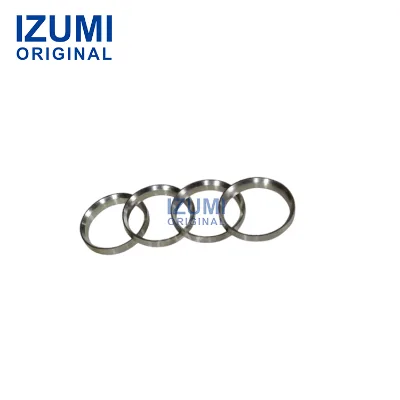
The integrity of an intake valve seat depends heavily on its material composition and dimensional accuracy. Based on observed market listings for similar heavy-duty engine components, the material profile often includes Stainless Steel, which offers superior resistance to heat and corrosion compared to standard cast iron alternatives. However, buyers must verify that the specific material grade matches the thermal expansion requirements of the Isuzu engine model in question. The observed product attributes indicate that materials are often selected for their durability in high-stress environments, such as those found in truck and machinery repair applications.
Dimensional specifications are equally critical. The market data reveals a variety of part numbers associated with valve seats, such as 201V03203-0439 and 200V90701-0243. These alphanumeric codes serve as unique identifiers that distinguish between different engine families, such as the 10PE1, 10PD1, and 10PC1 series. When sourcing, buyers must cross-reference the part number with the specific engine model to ensure compatibility. The "Standard size" attribute observed in listings suggests that while some components adhere to strict OEM tolerances, others may be designed as generic replacements. It is imperative to confirm whether the seat is designed for a specific application, such as the Sitrak/Sinotruk Truck or general Isuzu chassis, as the geometry of the valve seat interface varies significantly between manufacturers.
Furthermore, the surface treatment process plays a vital role in performance. Observations indicate that processes like Oxygenation are sometimes applied to enhance surface hardness and wear resistance. Buyers should inquire about the specific heat treatment and surface finishing techniques used, as these directly influence the seat's ability to withstand the thermal cycling of the combustion process. The color of the component, observed as Silver, Bronze, or Black in various listings, can sometimes indicate the material alloy or coating type, but visual inspection alone is insufficient for verification.
Compliance, Certification, and Quality Assurance
In the B2B procurement of engine parts, compliance with international quality standards is non-negotiable. The observed data confirms that ISO9001 certification is a prevalent standard among suppliers offering these components. This certification indicates that the manufacturer has established a quality management system that meets international requirements for consistency and traceability. While some background information mentions ROHS or REACH compliance, these should be treated as secondary verification points rather than primary guarantees of mechanical performance.
Buyers must demand documentation that proves the product meets the "Standard" specification mentioned in the product attributes. This often includes a machinery test report, which is listed as "Provided" for certain high-confidence listings. This report serves as empirical evidence that the component has undergone rigorous testing for durability, pressure resistance, and dimensional accuracy. The presence of a "100% new" condition claim is also a key attribute to verify, ensuring that the parts are not refurbished or remanufactured unless explicitly stated.
The warranty terms observed, such as a 6-month coverage, provide a baseline for supplier confidence. However, buyers should not rely solely on the warranty period as a proxy for quality. Instead, the warranty should be viewed as a contractual commitment to replace defective parts, while the primary quality assurance comes from the certification and test reports. It is essential to verify that the supplier can provide the specific test data for the batch being purchased, rather than relying on generic certification documents that may not apply to the specific production run.
Cost Drivers and Pricing Dynamics
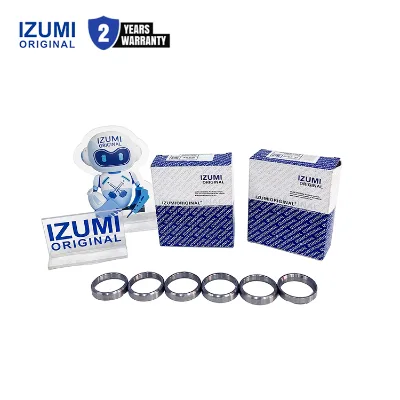
The pricing for Isuzu genuine intake valve seats exhibits a wide range, with observed market data showing values from $0.11 to $240. This significant variance is driven by several factors, including the complexity of the casting, the material grade, the brand reputation, and the volume of the order. Lower-priced items often correspond to generic aftermarket parts or those with minimal packaging, while higher-priced items typically reflect OEM-branded components, such as those from "IZUMI ORIGINAL," which command a premium for guaranteed compatibility and quality.
The Minimum Order Quantity (MOQ) is another critical cost driver. The observed MOQ range spans from 1 piece to 300 units. For buyers requiring a single replacement part for a specific repair, an MOQ of 1 piece is ideal, though the unit cost may be higher. Conversely, for fleet maintenance or large-scale refurbishment projects, negotiating an MOQ of 300 units can significantly reduce the per-unit cost. Buyers should also consider the packaging costs, as options range from simple Corrugated Cartons to robust Plywood Boxes or Exporting Standard packaging. While Plywood Boxes offer superior protection for international shipping, they add to the overall cost and may not be necessary for small, local orders.
Additionally, the origin of the product influences pricing. Products originating from China are frequently listed with competitive pricing, while those from Japan, such as those with the "IZUMI ORIGINAL" brand, often carry a higher price tag due to the perceived higher quality and stricter manufacturing controls. Buyers must weigh the cost savings of importing from China against the potential risks of quality inconsistency, especially when the application involves critical engine components.
Typical Applications and Engine Compatibility
Understanding the specific application of the intake valve seat is crucial for successful procurement. The observed data highlights that these components are primarily used in heavy-duty truck applications, including Sitrak/Sinotruk trucks and general chassis systems. The "Application" attribute explicitly lists "Truck" and "Machinery Repair Shops," indicating that the primary market is the commercial vehicle and industrial machinery sector.
The compatibility extends to specific engine models, such as the Nhr/Nkr series and the Sinotruk Mc11. Buyers must ensure that the valve seat is compatible with the specific engine configuration of their fleet. For instance, the part number 201V03203-0439 is associated with specific engine models, and using an incorrect part can lead to fitment issues or engine failure. The "Driving System Parts" and "Brake System Parts" attributes in the data suggest that these components are part of a larger ecosystem of truck parts, and buyers should consider sourcing from suppliers who can provide a comprehensive range of compatible components to streamline the procurement process.
The "Main Market" for these components is often the Middle East, suggesting that the supply chain is well-established for regions with high demand for heavy-duty truck maintenance. However, buyers should verify that the supplier has experience shipping to their specific location to avoid logistical delays. The "Product Name" variations, such as "Inlet Valve Seat" or "Valve Spring Seat," also indicate that buyers must be precise in their search terms to ensure they are purchasing the correct component for their specific engine assembly.
Supplier Evaluation and Verification Protocols
Evaluating suppliers requires a multi-faceted approach that goes beyond simple price comparison. The presence of "Customization" and "Customized" attributes in the product data suggests that some suppliers offer tailored solutions, which can be beneficial for unique or legacy engine models. Buyers should prioritize suppliers who demonstrate transparency in their manufacturing processes and are willing to provide detailed product specifications.
Key verification steps include checking the "Part No." and "Part Number" fields for consistency. Discrepancies between the listed part number and the actual product can indicate a lack of quality control or potential counterfeit goods. Buyers should also verify the "Brand Name," such as "IZUMI ORIGINAL," to ensure they are purchasing genuine OEM parts rather than unbranded or counterfeit alternatives. The "Condition" attribute, stating "100% new," should be backed by physical inspection or third-party verification upon delivery.
Furthermore, the "Feature" attribute, described as "Cost-Effective OEM Forklift Parts," indicates that some suppliers may market their products as cost-effective alternatives to genuine OEM parts. While this can be attractive, buyers must balance cost savings with the risk of reduced lifespan or performance. A reliable supplier will provide clear documentation regarding the origin of the parts, the manufacturing process, and the quality control measures in place.
Quality Control and Long-Term Procurement Considerations
Implementing a robust quality control (QC) process is essential for long-term procurement success. Buyers should establish a protocol for inspecting incoming shipments, focusing on dimensional accuracy, material hardness, and surface finish. The "Machinery Test Report" mentioned in the data should be a mandatory requirement for every batch, ensuring that the parts meet the specified performance standards before they are installed.
For long-term procurement, building a relationship with a reliable supplier is more valuable than securing the lowest price for a single order. Suppliers who offer "Exporting Standard" packaging and have a track record of meeting delivery deadlines are preferable. The "Warranty" period of 6 months provides a safety net, but buyers should also consider the supplier's ability to handle returns and replacements efficiently.
Finally, buyers should monitor market trends and technological advancements in valve seat manufacturing. As engine technology evolves, the requirements for intake valve seats may change, necessitating updates to the procurement strategy. Staying informed about new materials, surface treatments, and design improvements will ensure that the fleet remains competitive and reliable. By adhering to these guidelines, buyers can secure high-quality Isuzu genuine intake valve seats that meet the rigorous demands of modern heavy-duty applications.
FAQs
What materials are used for Isuzu Genuine Intake Valve Seat?
Stainless Steel is the primary material used for these components to ensure durability. This selection provides superior resistance to heat and corrosion compared to standard alternatives in heavy-duty applications.
Which certifications do suppliers typically hold for these parts?
ISO9001 certification is a prevalent standard among suppliers offering these components. This indicates the manufacturer has established a quality management system meeting international requirements for consistency and traceability.
How is the condition of the valve seat described in listings?
The condition is explicitly stated as 100% new in high-confidence product attributes. Buyers should verify this claim against machinery test reports to ensure parts are not refurbished or remanufactured.
Can buyers find customized options for specific engine models?
Customization is available for specific engine models and unique requirements. This allows buyers to secure tailored solutions for legacy engines or specific configurations like the 10PE1 series.
What is the typical warranty period for these engine parts?
A 6-month warranty period is commonly observed for these engine components. This serves as a contractual commitment to replace defective parts while quality assurance relies on certification and test reports.
How does the MOQ vary for Isuzu Genuine Intake Valve Seat orders?
The Minimum Order Quantity ranges from 1 piece to 300 units depending on the supplier. Single piece orders suit specific repairs, while larger volumes reduce per-unit costs for fleet maintenance.
Which packaging standards are used for shipping these components?
Products are shipped in Plywood Boxes, Corrugated Cartons, or Exporting Standard packaging. These options ensure protection during international transit, with Plywood Boxes offering superior safety for heavy-duty parts.