Source Jellyfish Silicone Facial Cleansing Brush for Anti-Aging, Whitening, Acne Control
Explore 30 options for the Jellyfish Silicone Facial Cleansing Brush designed for combination, oily, and all skin types. Buyers can compare models with varying materials like silicone and ABS, shelf lives up to 5 years, and customization services including OEM and private logos.
Key considerations
Products List


Deeply Cleansing and Exfoliating Spin Silicone Facial Cleansing Soft Brush
$0.45 - $0.55
MOQ: 1000 Pieces


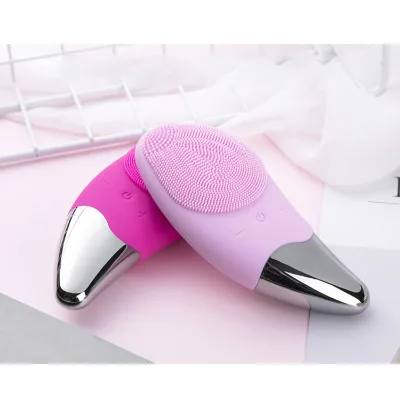


Silicone Face Cleaning Massage Beauty Tool Baby Body Facial Cleansing Bath Brush
$0.88 - $1.20
MOQ: 10 Pieces


Custom Soft Silicone Facial Brush Product Face Cleaning Wash Skin Care Beauty Tool
$0.58 - $1.20
MOQ: 20 Pieces
Comprehensive Sourcing Guide
Strategic Sourcing Guide for Jellyfish Silicone Facial Cleansing Brushes
The global demand for advanced skincare tools has driven a significant shift toward silicone-based facial cleansing devices, with the "jellyfish" design emerging as a distinctive niche within the category. This specific form factor, characterized by soft, flexible tentacle-like bristles, offers a unique tactile experience that mimics gentle exfoliation without the abrasion associated with traditional nylon bristles. For B2B procurement professionals, sourcing these items requires a nuanced understanding of material science, manufacturing capabilities, and supply chain logistics. This guide synthesizes available product data and industry standards to provide a disciplined framework for evaluating suppliers and selecting the optimal product for your market.
Material Composition and Physical Specifications
The foundation of any silicone facial cleansing brush lies in its material composition. The supplied data indicates a clear divergence in body materials across different product models, ranging from pure silicone to composite structures involving ABS plastic. For a "jellyfish" style brush, the primary contact surface must be food-grade silicone to ensure safety and flexibility. The provided facts confirm that "Food Grade Silicone" is a verified attribute for specific models, such as the "Silicone Face Clean Brush" (Model CB102), which weighs 18g and measures 5.3*5.5 cm. This specific weight and dimension profile suggests a compact, handheld design suitable for travel or daily routine use.
However, buyers must be vigilant regarding the structural integrity of the handle. Some models in the dataset, such as those with model numbers LD1002 and LD1054, utilize ABS plastic as the primary body material, often combined with silicone bristles. The standard for these composite units is listed as "Material: ABS+ Brush" or "Material: ABS." While ABS provides a rigid, durable handle, it lacks the flexibility inherent to the jellyfish aesthetic. Therefore, a procurement strategy should prioritize models where the standard explicitly states "Material: Silicone" or "Material: Silicone+ABS" to ensure the bristles retain the necessary softness. The dataset also notes a specific standard dimension of 7.583.5 cm for model GP-A005 and 96.53.5 cm for GP-A004, indicating that size variations are common and must be verified against the specific "jellyfish" design requirements.
Functional Attributes and Target Demographics
Understanding the functional claims and target demographics is essential for aligning product selection with market needs. The observed product attributes reveal a broad spectrum of intended uses. Functions listed include "Acne/Blemish Control," "Anti-Aging," and "Whitening." Notably, the dataset distinguishes between products targeting specific skin types, such as "Combination" and "Oily" skin, while others are marked for "All Ages." This variation implies that a single SKU may not satisfy all market segments. For instance, a brush designed for "Oily" skin with "Acne/Blemish Control" functions may differ in bristle density or firmness compared to a unit marketed for "Anti-Aging" on "Combination" skin.
The "jellyfish" design specifically caters to users seeking gentle exfoliation, which aligns well with the "Anti-Aging" and "Whitening" claims found in the data. The flexibility of the silicone tentacles allows for deep cleaning without irritating sensitive skin, a critical factor for the "All Ages" demographic. Buyers should verify that the specific model they select explicitly lists the desired function. The dataset confirms that some models offer "OEM&ODM" services and "Private Logo" capabilities, allowing brands to customize the functional messaging and packaging to match their specific brand identity. This customization is particularly relevant for the "jellyfish" variant, where the unique shape can be leveraged as a key marketing differentiator.
Compliance, Certification, and Safety Standards
In the realm of personal care devices, compliance and safety are paramount. The supplied context includes a reference to "CE" certification, though it is categorized as low-confidence background information. This distinction is crucial for procurement teams: while CE marking is a common requirement for products entering the European market, the absence of high-confidence verification in the provided data means buyers cannot assume every listed product is CE-compliant without direct verification. Procurement protocols must mandate that suppliers provide current, valid certification documents for the specific model being ordered.
Furthermore, the material standard "Food Grade Silicone" is a significant safety indicator. This classification implies that the material is non-toxic and safe for prolonged contact with the skin, a prerequisite for any facial cleansing device. Buyers should also scrutinize the "prod_standard" field, which in some cases lists dimensions (e.g., "119*130mm") rather than material composition. This suggests that some listings may prioritize packaging or dimensional standards over material safety. To mitigate risk, buyers should request material safety data sheets (MSDS) and ensure that the "Body Material" matches the "Food Grade" claim. Additionally, the "Shelf Life" varies significantly across the dataset, ranging from 2 to 5 years. This variance affects inventory management and product rotation strategies; a 5-year shelf life offers more flexibility for long-term storage, whereas a 2-year limit requires tighter supply chain coordination.
Cost Drivers and Pricing Dynamics
The pricing landscape for silicone facial cleansing brushes is influenced by material costs, customization levels, and order volume. The observed price range in the dataset spans from $0.25 to $13.90 USD. This wide disparity suggests that the base cost of a simple, non-customized unit is low, while prices increase significantly with added features, premium packaging, or complex designs. The "jellyfish" design, with its intricate molding requirements, may sit toward the higher end of this spectrum compared to standard flat brushes.
The Minimum Order Quantity (MOQ) is another critical cost driver, with observed ranges between 10 and 3000 units. A low MOQ of 10 allows for smaller batch testing and reduces initial capital expenditure, which is beneficial for startups or niche brands. Conversely, an MOQ of 3000 indicates a supplier focused on large-scale manufacturing, likely offering lower per-unit costs at scale. Buyers must balance the desire for low MOQs with the need for competitive pricing. The "Standard Package" and "Carton" options listed in the data also impact the final landed cost. Custom packaging, such as "OPP Bag or According to Customer," may incur additional tooling or setup fees, which should be factored into the total cost of ownership.
Supplier Evaluation and Manufacturing Capabilities
Evaluating suppliers requires a focus on their manufacturing location and service capabilities. The dataset identifies origins in "Zhejiang, China" and "Guangdong, Cn," both of which are established hubs for plastic and silicone manufacturing. These regions typically offer robust supply chains for raw materials like ABS and silicone. However, the presence of "OEM&ODM" and "Private Logo: Yes" attributes suggests that many suppliers in these regions are equipped to handle custom orders.
Buyers should prioritize suppliers who demonstrate flexibility in design. The data note that "Any Size, Shape, Color Are Warmly Welcome" for silicone face brushes, indicating a high degree of customization potential. This is particularly relevant for the "jellyfish" design, where the shape is a key differentiator. When evaluating potential partners, procurement teams should verify the supplier's ability to maintain consistent quality across different production runs. The "Service: OEM&ODM" attribute is a strong indicator of a supplier's willingness to collaborate on product development. However, buyers must ensure that the supplier has the technical expertise to mold complex silicone shapes without compromising the structural integrity of the bristles.
Quality Control and Long-Term Procurement Considerations
Implementing a robust quality control (QC) protocol is essential for maintaining product integrity. The dataset lists various packing standards, including "Each Set in One OPP Bag" and "Standard Package." These packing methods must be verified to ensure they protect the product during transit, especially given the delicate nature of silicone bristles. A "jellyfish" brush with long, flexible tentacles is more susceptible to deformation or damage if not packed correctly.
Long-term procurement considerations also involve shelf life management. With shelf lives ranging from 2 to 5 years, buyers must align their inventory turnover rates with the product's expiration timeline. A product with a 2-year shelf life requires a more aggressive sales strategy to prevent obsolescence. Additionally, the "Customization: Available" attribute implies that buyers should plan for lead times associated with mold creation and design approval. While specific lead times are not provided in the data, the complexity of custom silicone molding suggests that these processes will take longer than standard off-the-shelf orders.
To ensure consistency, buyers should establish clear acceptance criteria based on the observed specifications. For example, verifying that the weight is approximately 18g and dimensions match the 5.3*5.5 cm standard for the CB102 model can serve as a baseline for quality checks. Regular audits of the supplier's production line and random sampling of finished goods are recommended to maintain high standards. By focusing on these technical and operational details, buyers can secure a reliable supply of high-quality jellyfish silicone facial cleansing brushes that meet both regulatory requirements and consumer expectations.
Comparative Analysis of Product Models
To assist in decision-making, the following table summarizes key attributes observed in the dataset, highlighting the differences between models that may be relevant for a "jellyfish" sourcing strategy.
| Attribute | Model CB102 | Model GP-A005 | Model LD1002 | Model GP-A004 |
|---|---|---|---|---|
| Body Material | Food Grade Silicone | Silicone+ABS | ABS | ABS |
| Dimensions | 5.3*5.5 Cm | 7.583.5cm | N/A | 96.53.5cm |
| Weight | 18g | N/A | N/A | N/A |
| Function | N/A | Anti-Aging | Anti-Aging, Whitening | Anti-Aging |
| Packing | OPP Bag | OPP Bag or Custom | Carton | N/A |
| Shelf Life | N/A | N/A | 3 Years | N/A |
| Origin | N/A | Guangdong, Cn | China | N/A |
This comparison underscores the importance of selecting a model that aligns with the specific design and material requirements of a "jellyfish" brush. Models like CB102, which explicitly state "Food Grade Silicone," are the most suitable candidates for this application. In contrast, models relying heavily on ABS may require additional verification to ensure the silicone components meet the necessary flexibility and safety standards. By carefully analyzing these attributes, buyers can make informed decisions that optimize product performance and market fit.
FAQs
What materials are used for jellyfish silicone facial cleansing brushes?
The body material is typically food-grade silicone or a combination of silicone and ABS plastic. Some models use pure silicone for flexibility, while others combine silicone bristles with ABS handles for durability. Buyers should verify the specific standard listed for each model to ensure safety and desired texture.
Which functions do these brushes offer for different skin types?
Functions include acne control, anti-aging, and whitening depending on the specific model selected. The products cater to combination and oily skin types, with some units suitable for all ages. Buyers must match the function attribute to their target demographic to ensure efficacy.
Can suppliers provide customization for these facial cleansing devices?
Yes, customization is available with options for private logos and OEM or ODM services. Suppliers welcome requests for any size, shape, or color, allowing for unique jellyfish designs. Buyers should confirm packaging requirements like OPP bags or custom cartons during the ordering process.
How long is the shelf life of these silicone cleansing brushes?
Shelf life varies between two and five years depending on the specific product model. Some units are rated for five years, while others have a two-year limit. Inventory planning must account for this variance to prevent obsolescence and ensure product freshness upon delivery.
What are the standard dimensions and weights for these brushes?
Dimensions range from compact sizes like 5.3 by 5.5 cm to larger units around 7.5 by 8 by 3.5 cm. Specific models weigh approximately 18 grams, while others vary based on material composition. Buyers should verify exact specifications against the model number to ensure fit for their needs.
Where are these silicone facial brushes manufactured?
Manufacturing origins include Zhejiang and Guangdong provinces in China, which are established hubs for silicone and plastic production. These locations support robust supply chains for raw materials like ABS and food-grade silicone. Buyers should verify the specific origin listed for each supplier to confirm logistics capabilities.
What is the minimum order quantity for these cleansing brushes?
Minimum order quantities range from 10 units to 3000 units depending on the supplier and customization level. Lower MOQs allow for testing small batches, while higher volumes often reduce per-unit costs. Buyers must balance initial capital expenditure with the need for competitive pricing when selecting a supplier.