Source Kids Play Tent with Light and Pine Stand for Camping, Parties, Beach
Explore 30 options for a Kids Play Tent with Light and Pine Stand suitable for camping, parties, and beach use. Buyers can compare features like waterproofing, customization, and materials such as polyester or canvas across various models.
Key considerations
Products List


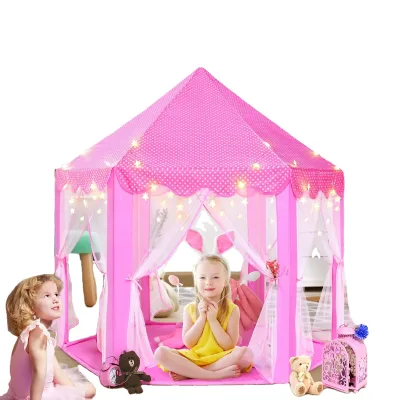


Durable Kids Tent with Easy Setup Ideal for Home and Camping Adventures
$29.40 - $31.50
MOQ: 200 Pieces
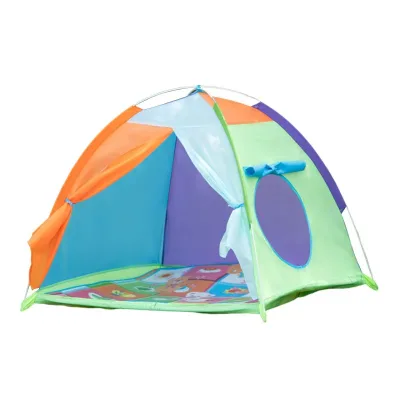

Princess Tent Princess Castle Play Tents for Girls with Warm Star Lights Kids Play Tent
$15.90 - $17.90
MOQ: 1000 Pieces

Wholesale Manufacturer Family Children's Outdoor Play Automatic Pop-up Tent
$11.06 - $12.29
MOQ: 80 Pieces


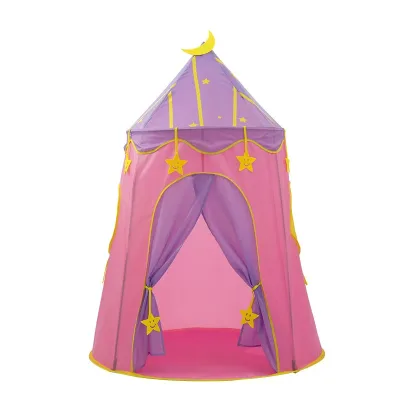

Comprehensive Sourcing Guide
Strategic Sourcing Guide for Kids Play Tents with Lighting and Pine Stand Integration
Understanding Product Variants and Core Specifications
When sourcing a Kids Play Tent with Light and Pine Stand, buyers must first recognize that the market offers a diverse array of configurations rather than a single monolithic product. The core keyword suggests a specific integration of play structures with ambient lighting and natural wood support systems. However, current market observations indicate that "pine stand" is a specific material choice that may not be universally present in all listings, as many suppliers default to flexible poles or fiberglass alternatives. The provided data reveals a spectrum of structural designs, ranging from single-skin pup tents to double-skin ridge tents. Buyers should note that while some models feature a "1 Door" configuration suitable for compact play areas, others offer a "2 Door" layout for enhanced accessibility in larger family settings.
The material composition is a critical differentiator. While the target keyword specifies a "pine stand," the observed inventory frequently utilizes polyester fabric combined with flexible fiberglass poles. This distinction is vital for procurement planning. Fiberglass offers high flexibility and durability for pop-up structures, whereas pine wood provides a more rigid, traditional aesthetic but requires different assembly and storage considerations. The color palette observed in the market is vibrant, with specific listings highlighting "Red," "Pink," and "Blue" options, often featuring cartoon designs or mixed patterns like "Blue & Pink with Different Pattern." These visual elements are essential for targeting the "for Girls and Boys" demographic, ensuring the product appeals to a broad age range.
Furthermore, the application scope extends beyond simple indoor play. The data indicates usage for "Party, Camping Tent, Beach Tent," and "Kids Playhouse." This versatility suggests that the product line can serve dual purposes: as a stationary playhouse in a home or a portable shelter for outdoor events. Buyers must verify if the specific "light" feature mentioned in the keyword is integrated into the tent structure itself or if it is an accessory. The current facts list "Anti-Mosquito Foldable" as a feature, implying that the tent is designed for portability, which may conflict with the weight and bulk of a permanent pine stand. Therefore, the sourcing strategy must prioritize suppliers who can offer a modular design where the lighting and stand components are compatible with the tent's fabric and pole structure.
Technical Specifications and Structural Integrity
The technical evaluation of a kids play tent requires a granular understanding of dimensions, structural layers, and material properties. Based on the available data, specific models such as M00062-2, M00072-5, and BM251002C exhibit distinct dimensional profiles. For instance, one standard configuration measures 1829686cm (723834in), while another compact model is listed at 808090cm. A larger variant reaches 130x100x120cm. These variations dictate the suitability of the tent for different environments; a 130cm height model offers more headroom for active play, whereas the 80cm model may be better suited for younger toddlers or confined indoor spaces.
The structural integrity is defined by the "Single Skin" or "Double Skin" construction. Single-skin tents, often made of polyester, are lighter and easier to set up but may offer less insulation and durability compared to double-skin variants. The data explicitly notes that some products are "Not Waterproof," which is a crucial technical limitation for buyers planning outdoor use. If the "pine stand" is intended for outdoor deployment, the lack of waterproofing in the fabric becomes a significant risk factor. Buyers must cross-reference the fabric material with the intended usage environment. While some listings mention "Nature Canvas" as a raw material, which implies a different texture and durability profile compared to standard polyester, the majority of the observed inventory relies on polyester fabric.
The integration of lighting and the pine stand into the technical specification requires careful verification. The provided facts do not explicitly confirm the presence of integrated lighting systems or pine wood stands in the standard SKUs. Instead, they highlight "Flexible Pole" and "fibreglass" as the primary support materials. This suggests that a "pine stand" might be a custom request or a specific supplier offering rather than a standard industry feature. Consequently, buyers should request detailed technical drawings that specify the joinery methods for attaching lighting fixtures to the structure and the treatment process for the pine wood to ensure it is safe for children. The "Hand Feeling" is described as "Safe and Comfortable," which implies that all edges and joints, including those for the stand and light fixtures, must be smooth and free of splinters or sharp points.
Compliance, Certification, and Safety Standards
Safety is the paramount concern when sourcing products for children. The market data provides specific evidence of compliance efforts, noting that certain models carry the "Cpsia" (Consumer Product Safety Improvement Act) certification. This is a critical benchmark for products intended for the North American market, ensuring that materials do not contain prohibited levels of lead or phthalates. The data further reinforces this with standards listed as "Sustainable, Non-Toxic, Lead Free." These attributes align with the "E-Co Friendly" and "Advantage: Eco Friendly" claims found in the inventory, suggesting a market trend toward environmentally safe materials.
However, buyers must exercise caution regarding the "EN71" standard. While this is a trusted category knowledge reference for toy safety in Europe, the provided facts list it under "Low-confidence background." Therefore, it should not be asserted as a guaranteed feature of every product. Instead, procurement teams should treat EN71 as a verification target. Buyers must explicitly request test reports confirming EN71 compliance if the target market is the European Union. The absence of a specific certification in the listing does not necessarily indicate non-compliance, but it necessitates a rigorous audit of the supplier's quality control documentation.
The "prod_standard" field often lists "To be customized," which indicates that safety standards may vary based on the specific order requirements. This variability underscores the importance of defining the target market's regulatory requirements before placing an order. For instance, if the product includes electrical components for the "light" feature, additional certifications such as UL or CE for electrical safety may be required, which are not currently reflected in the provided facts. The "Standard" section also mentions "Non-Toxic" and "Lead Free," which are general claims that should be backed by third-party laboratory testing results. Buyers should ensure that the "Nature Canvas" or "Polyester" materials used are treated with non-toxic dyes and finishes, especially given the "Hand Feeling: Safe and Comfortable" claim.
Cost Drivers and Pricing Dynamics
The pricing landscape for kids play tents is influenced by a complex interplay of materials, customization, and order volume. The observed price range in the market spans from $3.43 to $50.00 USD. This wide disparity is driven by several key factors. At the lower end of the spectrum, products likely utilize basic polyester fabric, fiberglass poles, and minimal packaging. These units may lack advanced features like integrated lighting or specialized wood stands. Conversely, the higher price points are associated with more complex configurations, such as double-skin structures, custom designs, and the inclusion of premium materials like nature canvas or treated pine stands.
The Minimum Order Quantity (MOQ) is another significant cost driver. The observed MOQ range is extensive, from 10 pieces to 10,000 pieces. Small MOQs of 10 pieces allow for lower financial risk and are suitable for testing the market or fulfilling niche orders, but they often come with a higher unit cost due to the lack of economies of scale. High-volume orders, approaching the 10,000-piece threshold, typically unlock significant cost reductions per unit. However, the data indicates that "Customization" is available, which can impact pricing. Custom orders for specific colors, patterns, or structural modifications like a pine stand may incur additional setup fees or higher per-unit costs, even at volume.
Packaging also plays a role in the final landed cost. The inventory shows variations such as "Carry Bag" and "PE Bag with Carton Box." The latter is more robust and suitable for international shipping, adding to the material and labor costs. Buyers must consider the total cost of ownership, including shipping and handling, which can be substantial given the volume of the product. The "prod_packing" method must be optimized to prevent damage during transit, especially for items with wooden components. Additionally, the "Private Label" allowance suggests that branding costs, such as logo printing on the tent or packaging, will be factored into the final price.
Typical Applications and Market Positioning
The versatility of kids play tents positions them for a wide range of applications, from domestic use to commercial events. The data explicitly lists "Kids Playhouse, Kids Tents" as primary applications, indicating a strong focus on indoor and outdoor residential use. The "Party, Camping Tent, Beach Tent" usage categories suggest that these products are also marketed for recreational activities. The "Anti-Mosquito Foldable" feature enhances their utility for outdoor camping and beach outings, providing a protected space for children to play away from insects.
The "Cartoon" design and vibrant color options like "Pink" and "Blue" are strategically aligned with the "for Girls and Boys" demographic. This broad appeal allows suppliers to target a wide consumer base, but it also requires careful inventory management to ensure a balanced mix of designs. The "Type: Blue & Pink with Different Pattern" observation highlights the importance of visual variety in the market. Parents often seek products that are not only functional but also aesthetically pleasing and engaging for children.
The integration of a "light" feature, as suggested by the core keyword, opens up additional use cases, such as nighttime play or creating a cozy reading nook. This feature transforms the tent from a simple shelter into an interactive play environment. However, the current data does not confirm the prevalence of this feature in standard listings, suggesting it may be a premium or custom option. The "Ridge Tent" and "Pup Tent" styles cater to different aesthetic preferences, with ridge tents offering a more traditional look and pup tents providing a compact, easy-to-setup solution. The "Single Skin" and "Double Skin" options further differentiate the product line, with double-skin tents likely targeting users who require more durability and insulation for extended outdoor use.
Supplier Evaluation and Quality Control Protocols
Evaluating suppliers for kids play tents requires a multi-faceted approach that goes beyond price and basic specifications. The "Made in China" origin is a common attribute in the observed data, indicating a concentration of manufacturing in this region. Buyers should verify the supplier's capacity to handle the specific customization requirements, such as the "pine stand" and "light" integration. The "Customization: Available" and "Customized" attributes suggest that many suppliers are willing to adapt their products, but the extent of this capability varies.
Quality control protocols must be rigorous, given the safety implications for children. Buyers should request evidence of the "Cpsia" certification and other relevant safety tests. The "Hand Feeling: Safe and Comfortable" claim should be validated through physical inspection of samples to ensure there are no rough edges, loose threads, or unstable joints. The "prod_standard" being "To be customized" implies that quality benchmarks may differ between orders, making it essential to establish clear quality acceptance criteria before production begins.
The "Sample: Allowed, Can Be Customized" attribute is a valuable tool for supplier evaluation. Buyers should insist on receiving samples that match their specific requirements, including the lighting and stand components, before committing to a large order. This allows for a thorough assessment of the build quality, material feel, and overall functionality. The "Private Label: Allowed" feature also indicates that the supplier is experienced in working with brand owners, which can be a positive indicator of their professionalism and reliability.
Long-Term Procurement and Sustainability Considerations
Sourcing decisions should be guided by long-term considerations, including sustainability and supply chain resilience. The "E-Co Friendly" and "Advantage: Eco Friendly" attributes highlight a growing market demand for environmentally responsible products. Buyers should prioritize suppliers who demonstrate a commitment to sustainable practices, such as using non-toxic materials and minimizing waste. The "Standard: Sustainable, Non-Toxic, Lead Free" specification reinforces this trend, suggesting that eco-friendly attributes are becoming a baseline expectation rather than a premium feature.
The "prod_standard: To be customized" aspect offers flexibility for future product iterations. As market trends evolve, buyers may need to adjust their product specifications to meet new safety regulations or consumer preferences. A supplier with a flexible manufacturing process can adapt more quickly to these changes, ensuring a steady supply of compliant products. The "MOQ" range of 10 to 10,000 pieces allows for a scalable procurement strategy, enabling buyers to start small and grow their order volume as market demand increases.
Finally, the "Location: Made in China" and "prod_origin: China" facts indicate a reliance on a specific geographic region. Buyers should assess the supply chain risks associated with this location, such as potential disruptions due to logistics or geopolitical factors. Diversifying the supplier base or establishing strong relationships with multiple manufacturers can mitigate these risks. The "Carry Bag" and "PE Bag with Carton Box" packaging options also play a role in sustainability, with buyers potentially preferring recyclable or biodegradable packaging materials to align with their own corporate sustainability goals. By focusing on these long-term factors, buyers can build a resilient and responsible supply chain for kids play tents.
FAQs
Can I customize the Kids Play Tent with Light and Pine Stand?
Customization is available for this product line, allowing buyers to specify unique features. However, the standard inventory primarily uses flexible fiberglass poles rather than pine stands, so a pine stand would likely require a specific custom order.
What certifications do the kids play tents meet for safety?
Some models carry CPSIA certification and are labeled as non-toxic and lead-free. While EN71 is a trusted standard for toys, it is not explicitly confirmed in the provided high-confidence facts, so buyers should request specific test reports for European markets.
Which materials are used for the tent structure and poles?
The tents are constructed from polyester fabric with flexible fiberglass poles. Some listings mention nature canvas as a raw material, but the majority of observed products rely on polyester combined with fiberglass for durability and portability.
How does the MOQ vary for custom orders of these tents?
The Minimum Order Quantity ranges from 10 pieces to 10,000 pieces depending on the supplier and customization level. Lower MOQs of 10 pieces are available for testing, but custom features like specific lighting or wood stands may affect the final pricing and volume requirements.
Are these tents waterproof for outdoor camping use?
The observed product attributes explicitly state that some models are not waterproof. Buyers planning outdoor camping or beach use must verify the specific fabric treatment, as standard polyester versions may lack the necessary waterproofing for wet conditions.
What are the standard dimensions for the kids playhouse models?
Standard dimensions vary by model, with sizes including 182x96x86cm, 80x80x90cm, and 130x100x120cm. These measurements dictate the headroom and floor space, allowing selection based on whether the tent is intended for toddlers or older children.