Source Educational Human Skeleton Wood Puzzle for Schools, Museums, and Homes
Find 30 Educational Human Skeleton Wood Puzzle options from verified Chinese manufacturers. Compare features like ASTM and EN71 certifications, customizable logos, and age-appropriate designs for 2-13 year olds to find the right fit for your needs; compare the available evidence and request quotations based on your requirements.
Key considerations
Products List


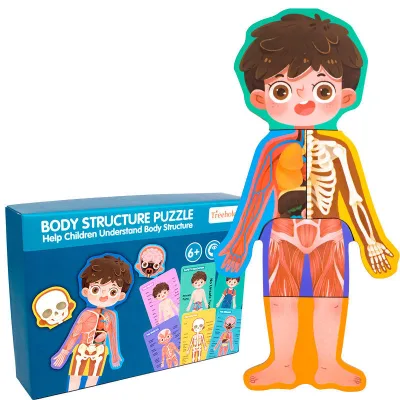


Wooden Three-Dimensional Animal-Shaped Puzzle for Early Education Puzzle
$5.60 - $6.00
MOQ: 100 Pieces

Wooden Dinosaur Cartoon Puzzle for Early Education and Color Cognition Puzzle
$1.00 - $1.90
MOQ: 100 Pieces


Wooden Children's Puzzle Animal Three-Dimensional for Early Education Puzzle
$2.60 - $3.00
MOQ: 100 Pieces


Animal Toys Kids Educational Puzzle Educational Toy Puzzle Jigsaw Puzzle
$1.90 - $3.00
MOQ: 2000 Pieces
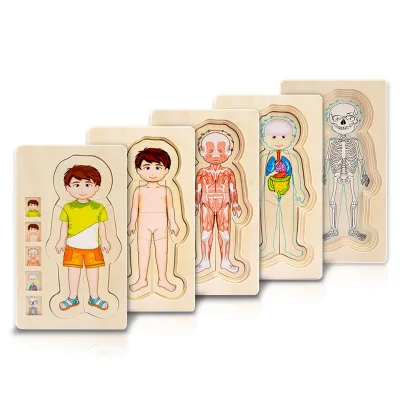


Early Childhood Education Learning Wooden Shape Matching Puzzle for Children
$2.50 - $2.90
MOQ: 3000 Pieces


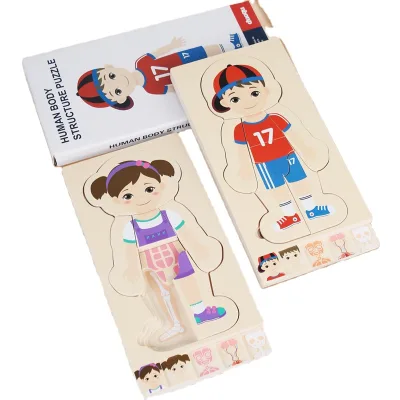
Comprehensive Sourcing Guide
Educational Human Skeleton Wood Puzzle Sourcing Guide
Buyers seeking educational human skeleton wood puzzles must first distinguish between general wooden toys and specialized anatomical models. The observed product range includes items categorized as intellectual toys and jigsaw puzzles, with specific models designed to develop intelligence and learning capabilities. These products are typically marketed for boys and girls, serving dual purposes in promotion and recreation while functioning as educational tools for young children.
The market data indicates a diverse age segmentation, with listings targeting children under three years old as well as those aged three to eight and up to thirteen years. This variation suggests that procurement strategies must align with specific developmental stages, as the complexity of the puzzle and the size of the components will differ significantly. Buyers should verify that the selected model matches the intended cognitive level of the end-user to ensure safety and educational efficacy.
Product Scope and Observed Listing Signals
The core product category encompasses wooden intellectual toys that function as puzzles, often featuring customizable logos and sizes to meet specific branding needs. Listings frequently describe these items as having a European and American style, with materials strictly identified as wood rather than plastic. The functional scope extends beyond simple assembly to include developing intelligence and learning outcomes, making them suitable for both classroom environments and home-based recreational activities.
Procurement signals reveal that suppliers offer samples with a lead time of seven to ten days, allowing buyers to verify physical quality before committing to larger orders. The packaging is typically described as a color box or carton, with some specific models noting a single gross weight of 0.600 kg and dimensions around 24x17x4 cm. Buyers should expect variations in model numbers, such as CM0011 or ST-134, which may indicate different structural complexities or anatomical focuses within the human skeleton theme.
Technical Specifications to Verify
When evaluating technical specifications, the physical dimensions and material composition are critical for ensuring the puzzle fits the intended age group and safety standards. Observed data includes specific size standards like A5, A4, and A3, as well as magnet sizes restricted to under 31.7mm for certain models. Buyers must confirm that the single package size and gross weight align with their logistics requirements, as these factors directly impact shipping costs and storage efficiency.
The structural integrity of the puzzle is another vital verification point, particularly regarding the flux index and magnet strength for models incorporating magnetic components. Specifications such as a flux index under 50kG².mm² suggest a controlled magnetic force designed to prevent accidental ingestion or injury while maintaining assembly stability. Procurement teams should request detailed dimension sheets for each model number to ensure the puzzle pieces are large enough to be safe for the specified age range, particularly for children under three years old.
Compliance and Safety Documentation
Safety compliance is paramount for wooden educational toys, with observed listings citing multiple international certification standards including ASTM, EN71, CE, and CPSC. These certifications are essential for market access in North America and Europe, ensuring that the wood and any adhesives used are non-toxic and free from harmful chemicals. Buyers must verify that the specific model they intend to purchase holds the relevant certification for their target market, as a product certified for one region may not automatically qualify for another.
Documentation should also confirm adherence to specific product standards such as ASTM F963-96a, which governs the safety of toys for children. The presence of these certifications on the product page serves as a strong indicator of supplier diligence, but buyers should still request current test reports to validate the claims. Ensuring that the supplier can provide up-to-date compliance documentation is a necessary step to mitigate liability risks and maintain brand reputation in the competitive educational toy sector.
Cost Drivers and Commercial Terms
The cost of sourcing these puzzles is influenced by the level of customization required, such as custom logos and specific size adjustments, which can increase production complexity. The observed minimum order quantity (MOQ) ranges widely from 10 pieces to 3000 pieces, allowing flexibility for both small startups and large retailers. Buyers should anticipate that lower MOQs may come with a higher unit price, while larger orders typically benefit from economies of scale, though the exact pricing structure depends on the specific model and material costs.
Commercial terms observed in the market include payment methods like T/T and PayPal, alongside sample lead times of seven to ten days. These terms provide a framework for negotiation, but buyers must clarify the total cost of ownership, including shipping and potential tariffs. Understanding the relationship between the MOQ, customization level, and unit price is essential for budgeting, as the cost drivers for a custom-branded, anatomically accurate puzzle will differ significantly from a standard off-the-shelf model.
Supplier Qualification and Quality Control
Supplier qualification should focus on verifying the place of origin, with observed listings indicating production in Jiangsu and Guangdong, China. These regions are known for their manufacturing capabilities in wooden toys, but buyers must assess the specific factory's quality control processes to ensure consistency. The availability of samples is a key indicator of a supplier's willingness to engage, allowing buyers to physically inspect the finish, joinery, and safety of the wooden components before finalizing a contract.
Quality control measures must extend beyond the initial sample to include pre-shipment inspections that verify the product matches the agreed-upon specifications. Buyers should confirm that the supplier has a robust process for checking the flux index, magnet size, and overall structural integrity of the puzzle. Establishing clear quality benchmarks and communication channels with the supplier is crucial for maintaining product standards, especially when dealing with custom orders that require precise adherence to anatomical accuracy and safety requirements.
Long-Term Procurement Checks
Long-term procurement success relies on maintaining a consistent supply chain that can adapt to changing market demands and regulatory updates. Buyers should regularly review the supplier's ability to meet lead times and maintain inventory levels, particularly for popular models like the human cognitive puzzle or body structure puzzle. Establishing a relationship with a supplier who can provide consistent quality and timely delivery is essential for sustaining a reliable product line in the educational toy market.
Continuous monitoring of product performance and customer feedback is also necessary to identify any potential issues with the puzzle's durability or safety. Buyers should track the performance of different models over time to determine which ones offer the best value and educational impact. By staying informed about industry trends and regulatory changes, procurement teams can proactively adjust their sourcing strategies to ensure the long-term viability and success of their educational toy offerings.
FAQs
What certifications do these wooden puzzles hold?
These wooden puzzles hold ASTM F963-96a, EN71, CE, and CPSC certifications. They are designed to meet international safety standards for children. The products originate from Jiangsu and Guangdong, ensuring quality control. Buyers can verify these documents before placing bulk orders for safety compliance.
Can I customize the logo and size of the puzzle?
Yes, you can customize the logo and size of the puzzle. The product page confirms that customization is available for logos and dimensions. Buyers can request specific sizes like A4 or A3. This flexibility allows brands to create unique educational toys tailored to their specific marketing needs.
What is the minimum order quantity for these toys?
The minimum order quantity ranges from 5 to 3000 units depending on the supplier. Some listings specify an MOQ of 10 pieces for specific models. Buyers should check individual product pages for exact thresholds. This range accommodates both small trial orders and large wholesale purchases effectively.
How long does it take to receive sample orders?
Sample orders typically take 7 to 10 days to be delivered. Suppliers offer samples to allow buyers to verify product quality before committing to bulk purchases. This lead time ensures that the wooden puzzles meet your expectations. Samples are a practical step for validating the educational value and safety.
Which age groups are suitable for these educational puzzles?
These puzzles are suitable for children ranging from under 3 years up to 13 years. Specific models target age groups like 2 to 4 years, 5 to 7 years, and 8 to 13 years. The design focuses on developing intelligence and learning through play. They are unisex and appropriate for both boys and girls.
What materials are used to make these puzzles?
The puzzles are primarily made from wood, ensuring durability and safety. Some listings mention plastic types as not applicable, highlighting the natural material focus. The packaging often includes color boxes or paper cartons. This material choice supports the educational and recreational usage intended for young learners.