Source Kids Outdoor Inflatable Water Slide for Parks Schools Homes
Compare 30 verified options for Kids Outdoor Inflatable Water Slide featuring customizable sizes, various certifications like CE and ASTM, and capacities for 10-500kg. Buyers can evaluate materials such as PVC and tarpaulin, installation methods, and shipping terms to find suitable units for commercial parks, schools, or home use.
Key considerations
Products List


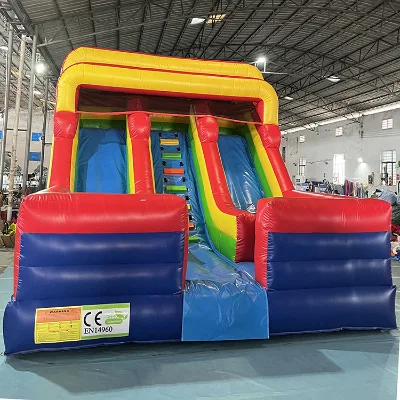
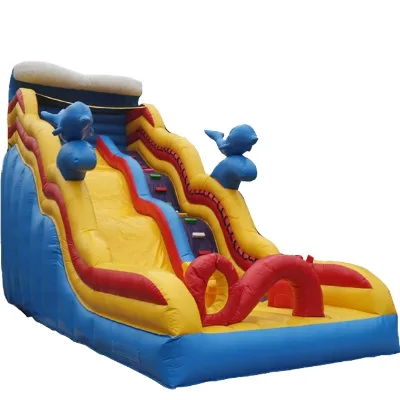
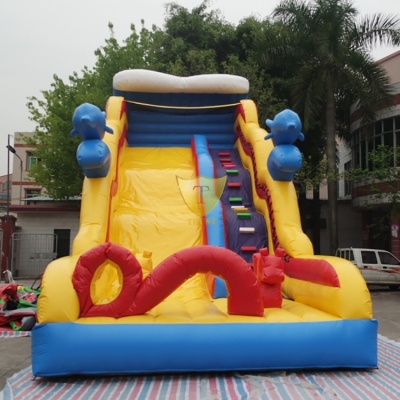


High Quality Blue Dolphin Kids Waterslide Inflatable Outdoor Water Slides
$699.00 - $899.00
MOQ: 1 Pieces


Commercial Inflatable Water Slide Outdoor Kids Adults Water Park Slide for Pool
$599.00 - $1999.00
MOQ: 1 Pieces


Children Games Park Outdoor Kids Playground Equipment Giant Water Slide
$328.00 - $418.00
MOQ: 12 Meters

Outdoor Water Amusement Playground Pool Kids Big Water Slide for Sale
$388.00 - $418.00
MOQ: 12 Meters


Comprehensive Sourcing Guide
Strategic Sourcing Guide for Kids Outdoor Inflatable Water Slides
Procuring commercial-grade water slides for children requires a rigorous approach that balances safety compliance, technical durability, and logistical feasibility. The market for these assets is diverse, ranging from small-scale home units to large commercial installations for parks and resorts. Buyers must navigate a complex landscape of material specifications, certification requirements, and capacity constraints to ensure the selected equipment meets operational needs without compromising safety. This guide outlines the essential factors for evaluating suppliers and products in this category, focusing on evidence-based criteria derived from current market data.
Technical Specifications and Material Durability
The foundation of any reliable water slide lies in its material composition and structural design. In the current market, the predominant material for inflatable water slides is PVC (Polyvinyl Chloride) or heavy-duty Tarpaulin. These materials are selected for their specific performance characteristics, including high strength, water resistance, and UV protection. When evaluating a product, buyers should verify that the material explicitly lists features such as being lead-free, fire-retardant, and capable of withstanding prolonged sun exposure. The absence of these specific attributes in a product description is a significant red flag for outdoor commercial use.
Capacity is another critical technical parameter. Data indicates that units vary significantly in their load-bearing capabilities, with observed maximum capacities ranging from 100kg to 500kg per unit. This variance directly impacts the number of children who can use the slide simultaneously. Some specifications list a capacity for 10 to 25 kids, while others provide a weight limit. Buyers must align these figures with their expected foot traffic. A unit rated for 500kg is suitable for high-volume commercial parks, whereas a lower capacity unit may suffice for a daycare or private home setting.
Size and customization are equally important. While standard dimensions such as 6x3.5x5 meters or 8x5x6 meters are available, many suppliers offer fully customized sizes to fit specific venue layouts. The "Customized Size" attribute is common, allowing for tailored solutions. However, buyers must ensure that the "Customized Design" does not compromise structural integrity. The product model numbers, such as Ml-10104 or ZR-22046, often serve as identifiers for specific design iterations, but the physical dimensions and material thickness should always be the primary verification points.
Compliance and Certification Verification
Safety compliance is non-negotiable in the children's play equipment sector. The market data reveals a wide array of certifications, including CE, ASTM, CCC, ISO 9001, ISO 14001, ISO 18001, GS, RoHS, REACH, and UV protection standards. It is crucial for buyers to understand that not every listed product satisfies every certification. A supplier may claim a broad range of certifications, but the specific unit purchased must be verified against the required standards for the target market. For instance, the European market typically mandates CE and EN standards, while the North American market often requires ASTM compliance.
The presence of a "Certificate" listing multiple standards like GS, Tuv, CCC, and ISO 9001 suggests a robust quality management system, but buyers should request specific test reports for the model they intend to purchase. The distinction between "Certification" and "Certificate" in product listings can sometimes be ambiguous; therefore, direct verification with the supplier is necessary. Additionally, the air blower, a vital component for inflatable slides, must also meet electrical safety standards. Specifications indicate that blowers should be CE certified with voltage options of 220v-240v or 110v-120v, depending on the plug type required for the destination country.
Buyers should be wary of vague claims regarding standards like EN71 or EN14960 if they are not explicitly tied to a specific test report. While these are recognized industry standards, their mention in a general product description does not guarantee that the specific unit has passed the relevant tests. The verification process must include a request for the latest test certificates corresponding to the exact model number and material batch.
Cost Drivers and Pricing Structure
The pricing for kids outdoor inflatable water slides is highly variable, with observed ranges spanning from $58 to $155,000 USD. This vast difference is driven by several factors, including size, material thickness, customization level, and the complexity of the design. A basic unit with standard dimensions and minimal features will fall at the lower end of the spectrum, while a large-scale, custom-designed slide with advanced safety features and high-capacity specifications will command a premium price.
The Minimum Order Quantity (MOQ) is another significant cost driver. Data shows an MOQ range from 1 set to 12 sets. Suppliers offering an MOQ of 1 set are ideal for buyers testing the market or those with smaller operational needs, such as a single school or community center. However, buyers should be aware that purchasing in larger quantities often reduces the unit cost. The "Selling Units" attribute indicates that some items are sold as single units, which simplifies the procurement process for small orders but may result in higher per-unit logistics costs.
Additional cost factors include the packaging method and shipping requirements. Products may be packed in boxes, cartons, or PVC carry bags, with the latter being common for inflatable items to reduce volume. The shipping method, whether by sea, air, or express, significantly impacts the final landed cost. Sea freight is generally the most economical for large, heavy items, with lead times ranging from 10 to 40 days. Express or air shipping offers faster delivery, typically 3 to 9 days, but at a substantially higher cost. Buyers must factor these logistics into their total budget calculation.
Typical Applications and Usage Scenarios
The versatility of inflatable water slides allows them to be deployed in a wide range of environments. The "Usage" attribute highlights applications in water parks, schools, family settings, and commercial venues. Specific occasions listed include outdoor public playgrounds, daycare centers, training centers, adventure parks, resorts, shopping malls, and home kids zones. This diversity means that the procurement strategy must be tailored to the specific environment.
For commercial water parks and large resorts, the focus should be on high-capacity units with robust safety certifications and durable materials capable of withstanding constant use. These environments often require slides with specific features such as pools, ramps, or obstacle courses. In contrast, units for schools or daycares may prioritize ease of setup and compact storage, with a focus on age-appropriate design for children aged 3 to 18 years. The "Age" attribute suggests that some units are designed for a broad range, while others may be more specific, such as those targeting the 5-7 year age group.
The installation requirements also vary by application. Commercial installations often require professional CAD instructions and a dedicated installation team, whereas home or small community units may be designed for "Easy Setup" by a small group of adults. The "Installation" attribute noting "Professional CAD Instruction" implies a need for technical expertise, which should be factored into the project timeline and budget. Buyers must ensure that the chosen supplier provides adequate support for the specific installation environment.
Supplier Evaluation and Quality Control
Selecting the right supplier is critical to ensuring product quality and long-term reliability. Buyers should evaluate suppliers based on their origin, production capabilities, and after-sales support. The "prod_origin" attribute indicates that many suppliers are located in China, specifically in regions like Zhejiang and Guangdong. These regions are known for their manufacturing clusters in the play equipment industry. However, the location alone does not guarantee quality; buyers must verify the supplier's track record and production standards.
Quality control should be a central part of the evaluation process. Buyers should request detailed information on the manufacturing process, including material sourcing and quality assurance protocols. The "Condition" of the product is typically listed as "New," but buyers should confirm that the units are factory-fresh and not refurbished. The "Warranty" period, often cited as 1 year, is a key indicator of the supplier's confidence in their product. A longer warranty period or more comprehensive coverage can be a sign of higher quality.
OEM and ODM support is another important consideration. Many suppliers offer "OEM/ODM: Support" and "Customized" design options, allowing buyers to brand the equipment or modify it to specific requirements. This flexibility is valuable for large operators who want unique branding or specific design features. However, customization can introduce complexity in the quality control process. Buyers must ensure that the supplier has the technical capability to maintain quality standards even when customizing the product.
Long-Term Procurement and Maintenance Considerations
Beyond the initial purchase, long-term procurement considerations include maintenance, storage, and potential expansion. The "Features" attribute often includes "Easy Setup," which is beneficial for frequent installation and dismantling. However, buyers should also consider the storage requirements. Inflatable slides, even when deflated, require significant space and proper storage conditions to prevent damage from moisture or pests. The "Package" type, such as a PVC bag or carton, plays a role in how easily the unit can be stored and transported.
Maintenance is an ongoing cost that buyers must plan for. The material features, such as being water-proof and UV protective, help extend the lifespan of the slide, but regular inspection and cleaning are necessary. Buyers should inquire about the availability of spare parts, such as repair patches or replacement blowers. The "Optional Parts" list, which may include card holders, rain/sun roofs, ramps, and pools, suggests that the system can be upgraded or modified over time.
Finally, buyers should consider the scalability of their procurement. If the initial purchase is successful, the ability to order additional units or compatible accessories from the same supplier can streamline future operations. The "Shipping Method" and lead times should be factored into the long-term planning, especially for commercial operators who may need to replace or expand their fleet quickly. By focusing on these long-term factors, buyers can ensure a sustainable and cost-effective procurement strategy for kids outdoor inflatable water slides.
FAQs
What certifications do kids outdoor inflatable water slides typically have?
These slides often carry certifications such as CE, ASTM, CCC, ISO 9001, and GS. Buyers should verify specific test reports for the exact model, as not every listed product satisfies every certification standard.
How much does a Kids Outdoor Inflatable Water Slide cost?
Prices range from 58 to 155,000 USD depending on size and customization. The final cost is driven by material thickness, design complexity, and whether the unit is a standard or fully customized commercial installation.
Which materials are used for kids outdoor inflatable water slides?
Products are commonly made from PVC or heavy-duty Tarpaulin. These materials are selected for high strength, water resistance, UV protection, and fire retardancy to ensure safety during outdoor commercial use.
Can buyers customize the size and design of these slides?
Yes, customization is available with options for free customized design and tailored sizes. Buyers can request specific dimensions like 6x3.5x5 meters or fully custom layouts to fit their venue requirements.
What is the maximum capacity for these water slides?
Maximum capacities observed range from 100 to 500 kg per unit. Some specifications also indicate a capacity for 10 to 25 kids, which impacts suitability for high-volume commercial parks versus smaller settings.
How long is the shipping time for these products?
Shipping takes 3 to 9 days by express or air, and 10 to 40 days by sea. The method chosen depends on urgency and the size of the order, with sea freight being the most economical option.