Find Compare Source Konecranes Brake Pressure Sensor Switch for Vehicles, Industrial, Commercial
Explore 30 listings for the Konecranes Brake Pressure Sensor Switch to compare specifications like voltage, pressure range, and certifications. Buyers can evaluate options for vehicles, industrial, and commercial applications with varying MOQs and prices.
Key considerations
Products List


Comprehensive Sourcing Guide
Strategic Sourcing Guide for Industrial Brake Pressure Sensors and Switches
When sourcing critical components like brake pressure sensors and switches for heavy machinery, particularly within the context of brands such as Konecranes, buyers must navigate a complex landscape of technical specifications, supply chain reliability, and quality assurance. The core keyword "Konecranes Brake Pressure Sensor Switch" implies a need for high-reliability components designed to operate under rigorous industrial conditions. While specific OEM part numbers for Konecranes may vary by model and year, the fundamental requirements for these sensors remain consistent: precise pressure monitoring, robust electrical interfaces, and durability against vibration and environmental stress. This guide outlines the essential factors for procurement professionals to consider when identifying, evaluating, and acquiring these components from global suppliers, ensuring that the final selection aligns with operational safety and efficiency standards.
Technical Specifications and Electrical Parameters
The foundation of a successful procurement strategy lies in a precise understanding of the technical specifications required for the application. Brake pressure sensors are not generic components; they must match the hydraulic or pneumatic systems of the specific machinery they serve. Based on observed market data for similar industrial pressure transmitters, buyers should verify that the sensor's output voltage and supply voltage align with the vehicle or machine's control system architecture. For instance, standard electronic pressure sensors often operate within a supply voltage range of 5 +/- 0.25VDC, with an output voltage spanning from 0.5 to 4.5VDC. This linear output is critical for accurate signal processing by the machine's electronic control unit (ECU).
Furthermore, the measuring range is a decisive factor. Industrial applications, including those involving heavy lifting equipment, often require sensors capable of handling pressures from 0.1 MPa up to 60 MPa. The measurement accuracy is equally vital; typical high-performance units offer accuracies of 0.3% or 0.5%. Buyers must also consider the working current, which for many sensitive electronic sensors should be less than 10mA to prevent unnecessary load on the power system. The connection type is another technical variable that requires strict verification. Interfaces may include wire connections, threaded fittings, copper pipes, plugs, or capillary tubes. The material composition, often copper for the sensing element or housing in many industrial variants, influences both conductivity and corrosion resistance. Ensuring the sensor's working temperature range matches the "Normal Temperature" or specific high/low thermal environments of the intended application is essential to prevent signal drift or failure.
Compliance, Certification, and Safety Standards
In the industrial sector, compliance is not merely a bureaucratic hurdle but a prerequisite for operational safety and liability protection. When sourcing brake pressure sensors, buyers must demand evidence of relevant certifications. Common certifications observed in the market for industrial sensors include CE and ISO, which indicate adherence to European safety standards and international quality management systems, respectively. However, the absence of these specific marks on a general listing does not preclude a product from being suitable; rather, it necessitates a deeper inquiry into the supplier's quality documentation.
Buyers should verify if the product meets specific industry standards, such as HLP110 or other relevant mechanical and electrical standards applicable to the region of operation. The "Explosion-proof Type" is another critical safety attribute, particularly for sensors used in environments where flammable gases or dust may be present. If the application involves such hazards, the sensor must be rated as "Flameproof" or possess equivalent protection ratings. Additionally, the "Over Pressure Protection" capability, often rated at 16VDC or specific pressure thresholds, serves as a safeguard against system surges that could damage the sensor or the control system. Verifying that the supplier can provide test reports or certification documents for these specific attributes is a non-negotiable step in the due diligence process.
Cost Drivers and Pricing Dynamics
Understanding the cost structure of industrial sensors helps buyers negotiate effectively and avoid unexpected budget overruns. The observed price range for similar components can vary significantly, from as low as $0.66 to as high as $90, depending on the complexity, brand reputation, and specific technical capabilities of the unit. Several factors drive these price variations. First, the level of customization plays a major role. Sensors that are "Non-Customized" or standard off-the-shelf items typically command lower prices, whereas units with "Customization Available" options, such as specific cable lengths, unique connector types, or tailored pressure ranges, will incur higher costs.
The Minimum Order Quantity (MOQ) also influences the unit price. Suppliers may offer lower per-unit costs for larger orders, with MOQs ranging from 1 piece to 500 pieces. For buyers needing to replace a single failed component, an MOQ of 1 piece is ideal, but for fleet-wide maintenance, bulk purchasing can yield significant savings. The condition of the product is another cost driver; "New" condition items are the standard for replacement parts, but the price may differ if the item is refurbished or remanufactured. Finally, the packaging requirements, such as "PP Bag + Box + Carton" or "Neutral Packing," can add to the overall cost, especially if specialized protective packaging is required to prevent damage during long-distance shipping.
Typical Applications and Usage Scenarios
Brake pressure sensors and switches are integral to a wide array of industries, extending beyond just heavy machinery. Their primary application is in the "Control Switch" domain, where they monitor hydraulic or pneumatic pressure to ensure safe braking operations. These components are utilized in "Home, Commercial, Industrial, and Vehicles" sectors, though the specific requirements for each vary. In the context of Konecranes and similar heavy equipment manufacturers, the sensors are critical for "replace/repair" scenarios, ensuring that lifting and hoisting operations remain safe and compliant with safety regulations.
The "Type" of sensor, such as "Electronic" or "Diffused Silicon Pressure Transmitter," dictates its suitability for specific environments. For example, sensors with "Retro-reflective Mode" detection methods might be used in automated systems where precise positioning is required. The "Structure," often described as "Power Built-in Type," indicates that the sensor integrates the power supply and signal processing, simplifying installation. Buyers should also consider the "Number of Switch" capability; "Multi Control Switch" configurations allow for complex logic operations, enabling the sensor to trigger multiple safety protocols based on different pressure thresholds. Understanding these application nuances ensures that the selected sensor is not just a functional replacement but an optimized component for the specific operational demands of the machinery.
Supplier Evaluation and Verification
Evaluating a supplier requires a multi-faceted approach that goes beyond price comparisons. The "Place of Origin" is a significant indicator of supply chain logistics and manufacturing capabilities. Many industrial sensors originate from regions like "Guangdong, China," which is a major hub for electronics manufacturing. However, the location alone does not guarantee quality. Buyers must verify the supplier's ability to provide "100% tested" products before shipment. This attribute suggests a rigorous quality control process where every unit is functionally tested, reducing the risk of receiving defective parts.
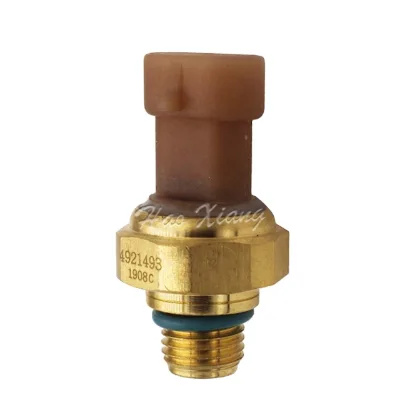
The "Brand Name" associated with the product can also provide insights into the supply chain. While some suppliers may use their own brand names like "Haoxiang," others may supply generic or OEM components. It is crucial to distinguish between the brand name on the packaging and the original equipment manufacturer (OEM) specifications. The "Model Number" and "OE NO." (Original Equipment Number) are the primary identifiers for compatibility. For instance, a model number like "4921493 0090C" or an OE number "4921493" must be cross-referenced with the machinery's service manual. Buyers should also check the "Warranty" terms, with "12 Months" being a standard expectation for new industrial components. A supplier offering a robust warranty demonstrates confidence in their product's longevity and reliability.
Quality Control and Long-Term Procurement Considerations
Ensuring long-term reliability requires a proactive approach to quality control and procurement planning. The "Condition" of the product must be explicitly stated as "New" to avoid issues with refurbished or used parts that may have hidden wear and tear. The "Packing" method is also a critical quality indicator. Packaging described as "PP Bag + Box + Carton" or "Neutral Packing" should be inspected to ensure it provides adequate protection against moisture, vibration, and physical damage during transit. For sensitive electronic components, proper anti-static and shock-absorbing packaging is essential.
Long-term procurement considerations involve establishing a relationship with suppliers who can support "Customization" needs as machinery evolves. The availability of "Customer Requirement" packing or specific model adaptations ensures that the supply chain remains flexible. Buyers should also verify the "Material" composition, such as "Copper," which affects the sensor's conductivity and resistance to environmental degradation. Finally, the "Working Temperature" range must be compatible with the operational environment to prevent premature failure. By focusing on these quality control metrics and planning for future customization needs, buyers can secure a reliable supply of brake pressure sensors that maintain the safety and efficiency of their industrial operations over the long term.
Comparative Analysis of Sensor Attributes
To facilitate a clearer decision-making process, the following table summarizes key attributes that buyers should compare when evaluating potential suppliers for brake pressure sensors. This comparison highlights the variability in specifications and the importance of matching these attributes to specific application requirements.
| Attribute Category | Key Considerations | Observed Market Ranges/Options | Verification Requirement |
|---|---|---|---|
| Electrical Output | Voltage range and accuracy | 0.5-4.5VDC Output; 5 +/- 0.25VDC Supply | Match to ECU specifications |
| Pressure Range | Operating and over-pressure limits | 0.1 ~ 60 MPa; 16VDC Over Pressure Protection | Verify against system max pressure |
| Certification | Safety and quality compliance | CE, ISO | Request valid certificates |
| Material | Durability and conductivity | Copper, Standard Alloys | Check for corrosion resistance |
| Packaging | Protection during shipping | PP Bag+Box+Carton, Neutral Packing | Ensure shock/vibration protection |
| Warranty | Post-purchase support | 12 Months Standard | Confirm terms and conditions |
| Customization | Adaptability to specific needs | Available / Non-Customized | Confirm feasibility and lead time |
| Origin | Manufacturing location | Guangdong, China / Global | Assess logistics and lead times |
By systematically evaluating these attributes, procurement professionals can mitigate risks and ensure that the selected brake pressure sensors meet the stringent demands of industrial applications. The goal is to secure components that not only fit the immediate technical requirements but also contribute to the overall safety and reliability of the machinery throughout its operational lifecycle.
FAQs
What is the supply voltage for this brake pressure sensor?
The supply voltage is 5 +/- 0.25VDC. This standard electronic range ensures compatibility with most vehicle control units while maintaining stable signal processing for accurate pressure monitoring during operation.
Can I find sensors with a 12-month warranty?
Yes, new condition sensors are available with a 12-month warranty. This coverage applies to the product as listed and ensures protection against defects, provided the item is installed and used according to standard industrial requirements.
Which certifications do these pressure sensors hold?
These sensors hold CE and ISO certifications. These marks indicate adherence to European safety standards and international quality management systems, which are critical for ensuring reliability in heavy machinery applications like those found in Konecranes equipment.
How is the measuring range defined for this unit?
The measuring range spans from 0.1 to 60 MPa. This wide operational window allows the sensor to handle diverse hydraulic pressures, making it suitable for various industrial and vehicle applications requiring precise pressure control.
What is the minimum order quantity for this part?
The minimum order quantity is 1 piece. This low MOQ allows buyers to replace single failed components without committing to bulk purchases, offering flexibility for immediate repair needs in fleet maintenance scenarios.
Can the product be customized for specific needs?
Customization is available for this product. Buyers can request specific packing or model adaptations, ensuring the sensor meets unique operational requirements while maintaining the core specifications of the original equipment number 4921493.