Source Layflat Fire Service Discharge Hose for Fire-Fighting, Shipping, and Agriculture
Find and compare 30 Layflat Fire Service Discharge Hose options featuring rubber, PVC, or PU linings with polyester jackets. Evaluate working pressures from 8 to 25 bar, burst strengths up to 75 bar, and customization options for industrial fire-fighting, shipping, and agricultural applications.
Key considerations
Products List


Flexible Fire Protection High Pressure Water Discharge Layflat Fire Hose
$0.29 - $8.00
MOQ: 1000 Meters


Fire Hose Layflat Water Discharge Hose for Fire Cabinet
$0.32 - $0.40
MOQ: 15000 Meters
Fujian Nanan Sheng Xin Lian Fa Fire Fighting Equipment Factory


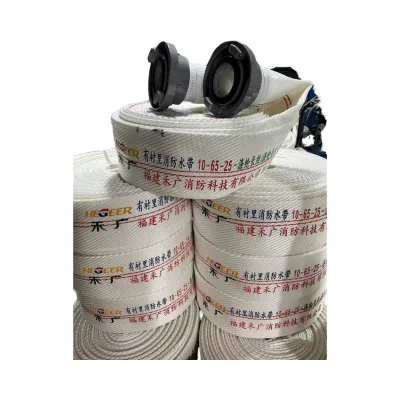


Zyfire High Pressure Layflat Water Discharge Hose for Industrial Firefighting
$0.80 - $2.20
MOQ: 1000 Meters


Comprehensive Sourcing Guide
Layflat Fire Service Discharge Hose Sourcing Guide
The Layflat Fire Service Discharge Hose represents a critical component in emergency response and industrial fluid transfer, characterized by its collapsible design and high-pressure resilience. Sourcing these hoses requires a precise understanding of the diverse material compositions and structural reinforcements available in the current market. Buyers must distinguish between hoses designed for fire-fighting operations, which often demand rapid deployment and high burst resistance, and those intended for agricultural or petroleum applications where chemical compatibility and flexibility are paramount. The observed product landscape includes variations such as rubber lining, PVC lining, and PU lining, each offering distinct performance profiles regarding durability, temperature resistance, and weight.
Procurement decisions hinge on matching the specific operational environment with the correct hose construction, as a mismatch can lead to premature failure or safety hazards. The market offers options ranging from simple single-jacket designs to complex double-jacket configurations with reinforced polyester woven jackets. Buyers should verify that the selected hose meets the specific working pressure requirements of their application, noting that observed minimum working pressures can range from 8 bar to 10 bar, while maximum working pressures may reach up to 25 bar. Understanding these technical baselines is essential before engaging with suppliers, as the hose must withstand the dynamic pressures of fire suppression or fluid transport without rupturing.
Product Scope and Observed Listing Signals
The product scope for layflat fire service discharge hoses is broad, encompassing various lining materials and weaving types that define their specific utility. Listings indicate the availability of hoses with rubber, PVC, PU, and double jacket linings, alongside specific weaving types such as twill and plain weaving. These structural differences directly influence the hose's flexibility, abrasion resistance, and suitability for different fluids. For instance, nitrile rubber and synthetic rubber tubes are common, often paired with polyester high tenacity silk jackets to ensure the hose maintains its shape under pressure while remaining easy to store and deploy.
Buyers should carefully analyze listing signals regarding hose dimensions and coupling types, as these are critical for system compatibility. The observed market includes hoses with inner diameters ranging from 1.5 inches to 5 inches, with standard lengths often available at 25 meters, 40 meters, or custom requirements up to 60 meters. Coupling types vary significantly, with options including hose couplings, adapters, and plug-in structures, which must align with existing fire hydrant or pump systems. Additionally, the presence of certifications like ISO9001 and specific standards such as EN14540 in listings serves as a preliminary indicator of manufacturing consistency, though these should be verified against actual product documentation.
Technical Specifications to Verify
Verifying technical specifications is the most critical step in ensuring the hose will perform under stress. Buyers must confirm the exact working pressure (W.P.) and burst pressure (B.P.) ratings, as observed data shows a range of minimum working pressures from 8 bar to 10 bar and maximum working pressures up to 25 bar. Burst pressures are equally vital, with observed minimums starting at 24 bar and maximums reaching 75 bar. It is essential to request specific test certificates for the batch being purchased, as these values can vary between different lining types and reinforcement layers, and relying on general listing ranges without batch-specific verification is a significant procurement risk.
Dimensional accuracy and material composition must also be rigorously checked against the project requirements. The inner diameter, often specified in inches or millimeters (e.g., 65mm), must match the flow rate requirements of the fire suppression system or industrial application. The jacket material, typically 100% polyester high tenacity silk, should be inspected for weave density and tensile strength to ensure it can handle the mechanical stress of dragging and deployment. Furthermore, the lining material—whether nitrile rubber, PVC, or PU—must be verified for chemical resistance if the hose is intended for petroleum or specialized agricultural use, as the wrong lining can degrade rapidly when exposed to incompatible fluids.
Compliance and Safety Documentation
Compliance with international safety standards is non-negotiable for fire service equipment, and buyers must demand comprehensive documentation before finalizing any order. The observed listings reference certifications such as ISO9001-2008, ISO9001, and CE, alongside specific product standards like EN14540. While these certifications indicate a manufacturer's commitment to quality management systems, they do not automatically guarantee that every individual hose batch meets fire safety performance criteria. Buyers should insist on third-party test reports that specifically validate the hose against fire service standards, ensuring that the burst pressure and working pressure claims are backed by independent laboratory data.
Safety documentation must also include detailed material safety data sheets (MSDS) and fire resistance test results. For hoses intended for fire-fighting, the ability to withstand high temperatures and direct flame exposure is a primary safety concern. Buyers should verify that the lining and jacket materials have been tested for thermal stability and that the hose does not release toxic fumes when exposed to fire conditions. Additionally, the origin of the product, often listed as China or Hebei, should be cross-referenced with the manufacturer's quality control records to ensure that the production facility adheres to the same rigorous standards claimed in the marketing materials.
Cost Drivers and Commercial Terms
The cost of layflat fire service discharge hoses is driven by several key factors, including the complexity of the lining, the quality of the reinforcement, and the customization level required. Hoses with double jacket linings or specialized materials like nitrile rubber generally command higher prices than standard PVC options due to the increased material costs and manufacturing complexity. Buyers should also consider the impact of customization on pricing, as options for custom lengths, specific coupling types, and unique color insertations can significantly alter the final unit cost. The observed price range of 0.1 to 80.66 USD highlights the vast difference between basic models and high-performance, customized units.
Commercial terms, particularly Minimum Order Quantity (MOQ) and lead times, play a crucial role in the total cost of ownership. The market shows a wide MOQ range from 1 to 15,000 units, meaning that small buyers may face higher per-unit costs or limited supplier options compared to large-scale procurement. Lead times are often influenced by the customization requirements and the specific production schedule of the supplier. Buyers should negotiate clear terms regarding sample availability, as free samples are often available for evaluation, and clarify the payment structure to ensure cash flow alignment with delivery schedules. Understanding these commercial variables helps in budgeting accurately and avoiding unexpected cost overruns.
Supplier Qualification and Quality Control
Supplier qualification extends beyond checking for basic certifications; it requires a deep dive into the manufacturer's production capabilities and quality control processes. Buyers should verify that the supplier has a proven track record in producing hoses with the specific lining and weaving types required, such as twill or plain weaving, and that they possess the necessary machinery for consistent reinforcement. The presence of a "Capability" for water rubber hoses and specific product models like LFH or PNRD suggests a specialized focus, but buyers must confirm that the supplier's quality control protocols cover every stage of production, from raw material inspection to final pressure testing.
Quality control measures should be explicitly defined in the purchase agreement, including the frequency of in-process inspections and the criteria for final acceptance. Buyers should request a detailed quality control plan that outlines how the supplier ensures consistency in working pressure and burst pressure ratings across different batches. It is also advisable to conduct on-site audits or third-party inspections for large orders to verify that the production environment and testing equipment meet the required standards. This proactive approach to supplier qualification helps mitigate the risk of receiving substandard products that could fail during critical operations.
Long-Term Procurement Checks
Establishing a long-term procurement strategy for layflat fire service discharge hoses involves regular performance monitoring and periodic re-evaluation of supplier relationships. Buyers should implement a system for tracking the performance of hoses in the field, noting any instances of premature wear, lining degradation, or coupling failures. This data is essential for identifying trends and ensuring that the supplier continues to meet the required specifications over time. Regular reviews of the supplier's quality control records and certification status help maintain high standards and ensure that any changes in manufacturing processes do not compromise product safety.
Continuous improvement should be a core component of the procurement relationship, with buyers and suppliers collaborating to enhance product durability and performance. This may involve discussing updates to lining materials, reinforcement techniques, or coupling designs based on field feedback and technological advancements. Buyers should also maintain a buffer stock of critical spare parts and hoses to ensure operational continuity in case of supply chain disruptions. By fostering a collaborative and data-driven relationship with suppliers, organizations can ensure a reliable supply of high-quality fire service hoses that meet the evolving demands of their safety and operational requirements.
FAQs
What lining options are available for Layflat Fire Service Discharge Hose?
Multiple lining types are available, including rubber, PVC, PU, and double jacket configurations. These options allow for specific application needs such as fire-fighting, shipping, or petroleum handling. The hose can also feature a rubber/PVC composite lining. Buyers should select the lining material that best matches their operational environment and fluid compatibility requirements.
What is the working pressure range for these layflat hoses?
The working pressure typically ranges from 8 bar to 25 bar. Some specifications indicate a minimum working pressure of 10 bar with a maximum of 25 bar. Burst pressure values generally span from 24 bar to 75 bar depending on the specific model and construction. These ratings ensure safe operation under high-flow fire-fighting or industrial pumping conditions.
Can I customize the length and packaging of the hose?
Yes, customization is available for both length and packaging. Standard lengths may be 40 meters, but requirements can be tailored to specific project needs. Packaging options include shrink wrap with color inserts in cartons, or woven bags with plastic film. This flexibility supports efficient logistics and storage for various international shipping and industrial deployment scenarios.
Which certifications apply to these fire service discharge hoses?
Certifications include ISO9001 and CE marks, indicating compliance with quality management and European safety standards. Some models reference EN14540 standards for fire hose performance. These certifications verify that the manufacturing processes and product quality meet recognized international benchmarks for reliability and safety in critical fire-fighting and industrial applications.
What materials are used in the construction of the hose?
The hose typically features a nitrile rubber tube for fluid containment. The reinforcement consists of a polyester woven jacket, often using high-tenacity yarn for durability. The outer material may be nitrile synthetic rubber. This combination provides excellent resistance to abrasion, weathering, and chemical exposure, ensuring longevity in demanding fire-fighting and agricultural environments.
What are the standard diameter sizes for these hoses?
Standard diameters range from 1 inch to 2.5 inches for certain models, while others cover 3/4 inch to 10 inches. Inner diameters may vary from 1.5 inches to 5 inches depending on the specific product line. These size variations allow for matching different pump outputs and nozzle requirements across fire-fighting, shipping, and petroleum applications.