Source LCD Display Automatic Pet Feeder for Dogs, Cats, Small Animals
Compare 30 LCD Display Automatic Pet Feeder options featuring APP control, fixed time feeding, and rechargeable power sources. These units support feeding and watering for dogs, cats, and small animals with customizable sizes and recyclable materials.
Key considerations
Products List


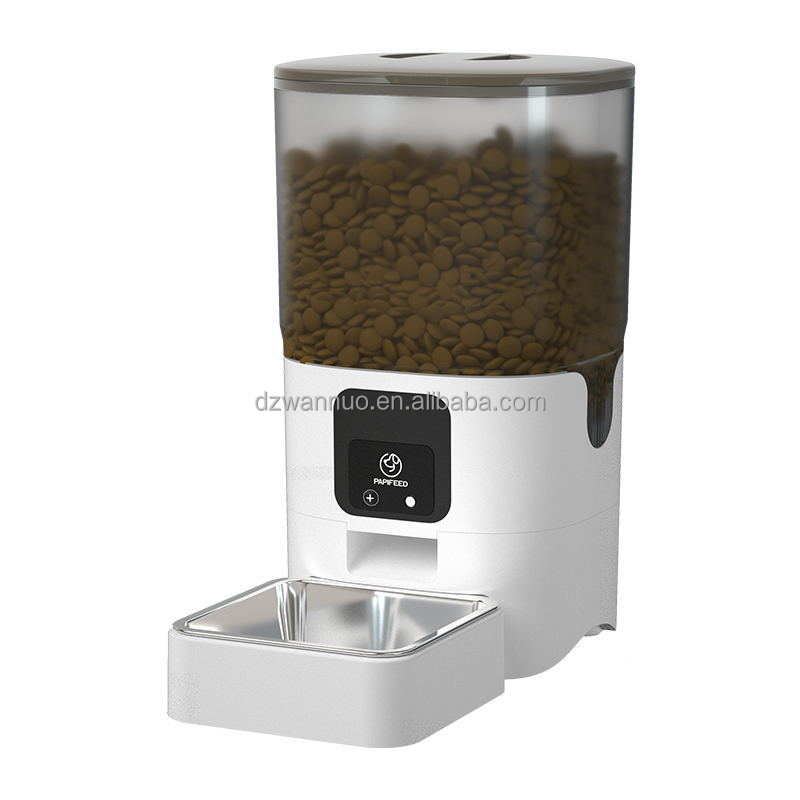
APP Remote Control Easy to Clean Automatic Smart Pet Feeder with Memory Function
$27.90 - $30.23
MOQ: 1000 Pieces


Comprehensive Sourcing Guide
Strategic Sourcing Guide for LCD Display Automatic Pet Feeders
Understanding Core Technical Specifications and Functional Capabilities
When sourcing an LCD Display Automatic Pet Feeder, the primary objective is to identify units that offer precise control over feeding schedules while maintaining durability and ease of use. The market for these devices is characterized by a blend of mechanical reliability and digital integration. Buyers must scrutinize the power source, as the supply chain presents options ranging from battery-operated units to those requiring standard electrical voltages. Specific product observations indicate that certain models operate on a 5V input, while others support a broader 110-240V range, a critical distinction for international procurement where voltage standards vary.
The control interface is a defining feature of the "LCD display" category. Advanced units integrate both APP connectivity and LCD screens, allowing owners to monitor and adjust feeding protocols remotely. This dual-control mechanism ensures that even if the mobile network is unavailable, the physical LCD interface remains functional for manual adjustments. The physical dimensions of the feeder are equally significant; observed specifications include models with standard dimensions around 370163370mm and others measuring 346.5191352mm. These measurements dictate the footprint required in a home or facility, influencing storage and placement logistics.
Capacity is another technical variable that dictates suitability for different pet sizes. While some units are designed with a 3.75L capacity, others may be categorized simply as "Large" or "Medium" without explicit volume data in the initial listing. The bowl and feeder type is predominantly automatic, designed to handle both food and water distribution. The material composition typically involves a combination of ABS plastic and stainless steel, ensuring the food contact surfaces are hygienic and resistant to corrosion. Buyers should verify that the stainless steel components are food-grade and that the ABS housing is robust enough to withstand potential chewing or scratching from pets.
Compliance, Certification, and Safety Standards
Navigating the regulatory landscape for pet feeding equipment requires a careful review of available certifications and standards. While some market observations mention ISO certification as a high-confidence attribute, buyers must treat this as a verification point rather than a universal guarantee for every listed product. The presence of ISO certification suggests that the manufacturer adheres to specific management system standards, which can be a proxy for quality control processes. However, the absence of explicit certification data for a specific listing does not necessarily imply non-compliance; it may simply reflect incomplete data entry on the supplier's page.
Safety standards for electrical components are paramount, especially for devices operating on 110-240V. Buyers should request evidence of compliance with regional electrical safety standards, such as CE or UL, even if these are not explicitly highlighted in the initial product description. The low-confidence background data mentions CE, but this should be treated as a potential attribute rather than a confirmed fact for all inventory. It is essential to verify that the power adapters and internal wiring meet the safety requirements of the destination country to prevent fire hazards or electrical failures.
Furthermore, the material safety of the product is a critical compliance area. The use of ABS and stainless steel is standard, but buyers must ensure that the plastics used are free from harmful chemicals like BPA. The "Eco friendly" attribute observed in some listings suggests a focus on recyclability, which aligns with growing environmental regulations. However, "Recyclable" is an observation that requires confirmation of the specific recycling protocols and material purity. Procurement teams should demand material safety data sheets (MSDS) to confirm that the product meets the chemical safety standards of the target market.
Cost Drivers and Pricing Dynamics in the Market
The pricing structure for LCD display automatic pet feeders is influenced by a complex interplay of features, materials, and order volume. The observed price range in the market spans from $0.30 to $79.00 USD, a variance that reflects the difference between basic mechanical feeders and sophisticated smart devices with app integration. The lower end of this spectrum likely corresponds to units with minimal features, such as those lacking LCD displays or advanced connectivity, while the higher end encompasses models with dual power sources, precise dosing mechanisms, and robust build quality.
Minimum Order Quantity (MOQ) is a significant cost driver in B2B procurement. The market data indicates an MOQ range from 1 to 2,000 pieces. High-volume buyers may find that ordering at the 2,000-piece threshold unlocks significant per-unit cost reductions, whereas smaller orders might incur higher unit prices or require a premium for customization. Some suppliers offer "Small Orders: Accepted," which provides flexibility for startups or retailers testing the market, but this often comes with a higher base price.
Additional cost factors include packaging and logistics. The standard packaging for these units often involves individual boxes or cartons, with specific dimensions like 437207423mm for gift boxes. The gross weight of 3.04kg per unit must be factored into shipping calculations, as heavier units increase freight costs. Customization options, such as branding or specific color requests (e.g., white), can also add to the final cost. Buyers should analyze the total landed cost, including duties and shipping, rather than focusing solely on the unit price to ensure accurate budgeting.
Typical Applications and Suitability for Different Markets
The application scope of LCD display automatic pet feeders is broad, catering to a variety of pet owners and commercial entities. The primary application is feeding, with specific models designed for dogs, cats, and small animals. The versatility of these devices allows them to be used in residential settings, where owners seek to maintain consistent feeding schedules for their pets, as well as in commercial environments like kennels, shelters, and veterinary clinics.
For residential users, the "Fixed Time Feeding" feature is a key selling point. Some models offer this capability, allowing owners to program specific meal times, while others may lack this feature, relying on gravity or manual activation. The ability to feed water in addition to food expands the utility of these devices, making them suitable for owners who travel frequently or work long hours. The "Smart Pet Feeder" classification indicates that these devices are increasingly targeted at tech-savvy consumers who value remote monitoring and control via mobile applications.
The suitability for specific animal types is also a critical factor. Models explicitly marked as suitable for dogs may have larger bowl capacities and more robust dispensing mechanisms to handle kibble sizes typical for canines. Conversely, units designed for cats or small animals may feature smaller portions and more delicate dispensing systems. The "Rounded" shape of some bowls is observed as a design feature, likely intended to prevent food spillage and make cleaning easier. Buyers should match the product specifications to the specific needs of their target customer base, ensuring the feeder can handle the type and size of food the intended pets consume.
Supplier Evaluation and Operational Reliability
Evaluating suppliers for automatic pet feeders requires a deep dive into their operational history and logistical capabilities. The supply chain data highlights that many manufacturers are based in China, with specific origins noted in Zhejiang province. This regional concentration suggests a mature ecosystem for pet product manufacturing, but it also necessitates careful vetting to ensure quality consistency. Buyers should look for suppliers with a proven track record, such as those boasting over 13 years of experience, as this often correlates with better quality control and supply chain stability.
Lead times are a critical component of supplier evaluation. Observed delivery times range from 20 days after payment to 40 days after order confirmation. These variations can impact inventory planning and market responsiveness. Suppliers with shorter lead times may offer a competitive advantage in fast-moving markets, while those with longer lead times might require more advanced planning. Buyers should clarify whether the stated lead time includes production, quality testing, and shipping, or if it refers solely to the manufacturing phase.
Payment terms and flexibility are also essential considerations. The market supports various payment methods, including T/T, L/C, Western Union, and PayPal. The availability of multiple payment options indicates a supplier's willingness to accommodate international trade practices. However, buyers should negotiate terms that protect their interests, such as using a Letter of Credit for large orders to mitigate financial risk. Additionally, the ability to accept small orders can be a positive indicator of a supplier's adaptability, though it may come with higher per-unit costs.
Quality Control and Long-Term Procurement Considerations
Ensuring the long-term reliability of LCD display automatic pet feeders requires a robust quality control strategy. The "Stocked" attribute suggests that some suppliers maintain inventory, which can be beneficial for immediate fulfillment, but it also raises questions about the freshness of the stock and the condition of the packaging. Buyers should implement a rigorous inspection process upon receipt of goods, checking for physical damage, functional defects, and compliance with the agreed-upon specifications.
Long-term procurement considerations include the availability of spare parts and after-sales support. The use of materials like ABS and stainless steel implies a need for durable components that can withstand daily use. However, electronic components such as LCD screens and control boards are prone to failure over time. Buyers should inquire about the warranty period and the supplier's policy on replacing defective units. The "Customized" attribute indicates that suppliers can tailor products, but buyers must ensure that customization does not compromise the standard quality or reliability of the core product.
Sustainability is another long-term factor. The "Recyclable" and "Eco friendly" attributes observed in the market align with global trends toward sustainable manufacturing. Buyers should assess the supplier's commitment to environmental standards, including the use of recyclable packaging and the disposal of electronic waste. This not only enhances the brand image but also ensures compliance with future environmental regulations. By prioritizing suppliers who demonstrate a commitment to quality, reliability, and sustainability, buyers can build a resilient supply chain that meets the evolving needs of the pet care market.
Comparative Analysis of Key Product Attributes
To facilitate informed decision-making, the following table summarizes the key attributes observed in the market for LCD display automatic pet feeders. This comparison highlights the diversity in specifications and helps buyers identify the most suitable options for their specific requirements.
| Attribute Category | Observed Options | Key Considerations for Buyers |
|---|---|---|
| Power Source | Charge (110-240V, 5V), Battery | Verify voltage compatibility with destination country; check battery life for portable models. |
| Control Interface | APP + LCD, LCD Only | Ensure the LCD is readable in various lighting conditions; test app connectivity stability. |
| Feeding Capability | Fixed Time Feeding (Yes/No), Water & Food | Confirm if the unit can handle both dry food and water; check dispensing accuracy. |
| Material Composition | ABS, Stainless Steel | Verify food-grade certification for stainless steel; check ABS for durability and safety. |
| Capacity & Size | 3.75L, Large, Medium, 370x163x370mm | Match capacity to pet size and household space; check dimensions for storage fit. |
| Target Application | Dog, Cat, Small Animals | Ensure the feeder design matches the specific pet's feeding habits and size. |
| Certification | ISO (High Confidence), CE (Low Confidence) | Request specific certification documents; do not assume compliance based on general claims. |
| MOQ & Lead Time | 1-2000 PCS, 20-40 Days | Negotiate MOQ based on inventory needs; plan for lead time variations in supply chain. |
This comparative analysis underscores the importance of detailed verification. While the market offers a wide array of options, the variation in specifications means that a "one-size-fits-all" approach is rarely effective. Buyers must align their procurement strategy with the specific technical and operational requirements of their business, ensuring that the selected products deliver value and reliability over the long term. By adhering to these evidence-based guidelines, procurement teams can navigate the complexities of the automatic pet feeder market with confidence and precision.
FAQs
What power sources do these feeders support?
These units support multiple power sources including battery, 5V, and 110-240V AC. Buyers should verify the specific voltage requirements for their region to ensure compatibility with local electrical standards and avoid equipment failure.
Which customization options are available for buyers?
Customization is available for branding, packaging, and specific product requests. Suppliers can accommodate custom gift box dimensions and hangtag requirements, allowing buyers to tailor the product to their brand identity and market needs.
Can the feeders handle fixed time feeding schedules?
Some models offer fixed time feeding capabilities while others do not. Buyers must check individual product specifications to confirm if the unit supports programmed meal times or relies on alternative dispensing mechanisms.
What certifications do the manufacturers hold?
High-confidence facts indicate that some products hold ISO certification. Buyers should request specific certification documents for each unit to verify compliance with management system standards and ensure quality control processes are in place.
How does the MOQ affect the purchasing process?
Minimum Order Quantities range from 1 to 2000 pieces depending on the supplier. High-volume orders may unlock better pricing, while smaller orders are accepted by some vendors but might incur higher per-unit costs.
What are the typical lead times for delivery?
Delivery times typically range from 20 to 40 days after payment or order confirmation. Buyers should plan their inventory accordingly, as lead times vary based on production schedules and specific order requirements.