Find LC Duplexer for Residential, Commercial, and Industrial Use
Source 30 LC Duplexer units suitable for residential, commercial, and industrial applications. Buyers can compare frequency ranges, power ratings, and isolation levels across diverse models to select the optimal component for their specific needs.
Key considerations
Products List




Comprehensive Sourcing Guide
Strategic Sourcing Guide for LC Duplexer Procurement
Navigating the global market for LC (Low-Cost or Liquid Crystal, though in this context often referring to specific inductor-capacitor based RF components) duplexers requires a disciplined approach to technical verification and supplier validation. The core keyword "LC Duplexer" encompasses a diverse range of radio frequency components designed to allow simultaneous transmission and reception on different frequencies. For procurement professionals, the distinction between generic marketing terms and actual engineering specifications is paramount. The following guide synthesizes observed market data and technical parameters to establish a robust framework for sourcing these critical RF components, ensuring that the selected hardware meets rigorous performance standards without relying on unverified claims.
Understanding Technical Specifications and Frequency Ranges
The primary differentiator in duplexer procurement is the frequency range and the specific wave program associated with the component. Market observations indicate a significant variance in operational bands, ranging from narrow high-frequency applications to broad multi-band solutions. For instance, specific units are engineered for the C Wave Range Program, operating within a frequency band of 25.9-28.4GHz. This high-frequency operation is distinct from other observed models designed for the Ku Program, which serve different satellite and communication needs. Furthermore, the market includes duplexers covering the 703-803MHz and 895-960MHz bands, as well as broader ranges spanning 135-520MHz and 690-2700MHz.
Buyers must scrutinize the VSWR (Voltage Standing Wave Ratio) specifications, as this metric directly impacts signal integrity. Observed data points to a maximum VSWR of 1.25 for certain high-performance models, while others may exhibit a maximum VSWR of 1.40. The insertion loss is another critical parameter; lower values indicate higher efficiency. Documented specifications show insertion losses as low as 0.25dB and 0.3dB for specific models, whereas other variants may have a maximum insertion loss of 1.0dB. Isolation, which measures the ability of the duplexer to prevent signal leakage between transmit and receive paths, is equally vital. Verified isolation values in the current market include minimums of 23dB, 35dB, 45dB, and even 50dB for specific ports.
| Parameter | Observed Range/Value | Application Context |
|---|---|---|
| Frequency Range | 25.9-28.4GHz (C Wave) | High-frequency satellite comms |
| Frequency Range | 703-803 & 895-960MHz | Cellular and mobile networks |
| Frequency Range | 135-520 / 690-2700MHz | Broadband and multi-band systems |
| VSWR (Max) | 1.25 - 1.40 | Signal reflection tolerance |
| Insertion Loss | 0.25dB - 1.0dB | Signal efficiency and power loss |
| Isolation | 23dB - 50dB | Transmitter/receiver separation |
Compliance, Certification, and Material Standards
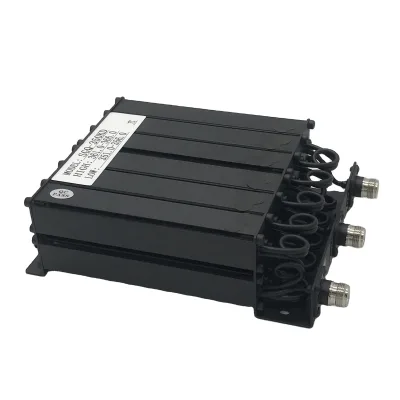
When evaluating an LC Duplexer, the material composition and adherence to physical standards are foundational to long-term reliability. The observed supply chain frequently utilizes Aluminium as the primary construction material, offering a balance of durability and thermal conductivity. The physical dimensions of the packaging and the product itself often adhere to specific export standards, such as the 20 x 35 x 45cm standard observed in certain listings, which dictates how the component is housed and shipped.
Compliance in this sector is often verified through rigorous testing protocols rather than just external certification labels. A high-confidence fact in the current market is the "Pass 100%" test result, indicating that every unit undergoes a comprehensive functional check before leaving the facility. This 100% testing regime is a critical quality control measure that buyers should mandate in their procurement contracts. Additionally, the origin of the product plays a role in supply chain transparency. Many units are traced back to Shaanxi, China, a region known for its manufacturing capabilities in electronic components. Buyers should verify the "Place of Origin" documentation to ensure consistency with their supply chain requirements and to understand the logistical implications of sourcing from this specific region.
Cost Drivers and Pricing Dynamics
The pricing structure for LC duplexers is highly variable, reflecting the diversity in frequency ranges, power ratings, and customization levels. The observed market lists prices ranging from $0.40 to $2,250.00 USD. This wide disparity is not arbitrary; it is driven by several key factors. High-frequency components, such as those operating in the C Wave Range at 25.9-28.4GHz, typically command higher prices due to the precision engineering required. Conversely, lower frequency or general-purpose models may fall at the lower end of the spectrum.
Power rating is another significant cost driver. Units with a forward power capacity of 20-150 Watts or a power rating of 200 Watts (Average) will generally be priced higher than those rated for 50 Watts (Average Per Port). The inclusion of advanced features, such as PIM (Passive Intermodulation) ratings of ≤-153dBc or -155dBc@2*43dBm, also influences the final cost. These low PIM ratings are essential for modern cellular networks to prevent signal interference, and components achieving them require superior materials and tighter manufacturing tolerances. Buyers must align their budget with the specific performance requirements of their application, understanding that a lower price point may not suffice for high-isolation or high-power scenarios.
Typical Applications and Usage Scenarios
The versatility of LC duplexers allows them to be deployed across a wide array of industries. The observed usage categories include Laptop, Home Theatre, Automotive, TV, and Hand Held devices. This indicates that these components are integral to consumer electronics, automotive communication systems, and residential general-purpose setups. In the commercial and industrial sectors, the application extends to robust infrastructure where reliability is non-negotiable.
Specific models are tailored for distinct environments. For example, the "Outdoor" classification suggests that certain duplexers are built to withstand environmental stressors, making them suitable for external antenna systems or remote base stations. The "Residential / General-Purpose" and "Commercial" applications highlight the component's role in standardizing communication networks for both private and public use. The "Automotive" usage points to integration in vehicle communication systems, where space constraints and vibration resistance are critical. Understanding the intended application is essential for selecting the correct impedance, which is standardized at 50ohm for most observed models, ensuring compatibility with standard RF transmission lines.
Supplier Evaluation and Customization Capabilities
Selecting a supplier requires a deep dive into their customization and OEM (Original Equipment Manufacturer) capabilities. The market data confirms that "Customized" options are available, and "OEM" services are accepted by suppliers. This flexibility is crucial for buyers with unique frequency requirements or specific form-factor constraints. The "Customization" attribute being marked as "Available" suggests that suppliers are willing to tailor the product to specific client needs, whether that involves adjusting the frequency range or modifying the physical packaging.
The Minimum Order Quantity (MOQ) is another critical factor in supplier evaluation. Observed MOQs range from 1 Set to 300 units. This range offers significant flexibility; buyers requiring small batches for prototyping or low-volume production can source with an MOQ of just 1 Set, while those planning large-scale deployments can negotiate based on higher volume tiers. The packaging methods, ranging from "Cartons or Wooden Cases" to "Standard Export Packing Cartons" and "Wooden Box," also reflect the supplier's ability to handle different shipping and storage requirements. Buyers should verify that the supplier's packaging standards align with the fragility of the component and the logistics of the destination.
Quality Control and Long-Term Procurement Considerations
Quality assurance in the duplexer market is anchored in rigorous testing and warranty provisions. The "Pass 100%" test result is a non-negotiable baseline for quality. Beyond this, the warranty period is a strong indicator of supplier confidence in their product. A standard warranty of 1 Year is observed, providing buyers with a defined period for recourse in case of premature failure. However, buyers should also consider the long-term implications of the component's specifications, such as the PIM rating and isolation levels, which directly affect the longevity and performance stability of the entire communication system.
For long-term procurement, the consistency of the "Model Number" and "Product Name" is vital. Specific models like "EF-VGJH73," "TPW-DDP-7090-41F," and "TPW-DP-1327-153-NF" represent distinct product lines with unique characteristics. Maintaining a consistent supply chain for these specific models ensures that future replacements or expansions will be compatible. Additionally, the "Forward Power" and "Insertion Loss" specifications must remain stable over time to prevent system degradation. Buyers should establish clear acceptance criteria based on these observed parameters, ensuring that every delivered unit meets the exact specifications of the ordered model. By focusing on these technical and procedural details, procurement professionals can mitigate risks and secure a reliable supply of high-performance LC duplexers.
FAQs
What frequency ranges are available for these duplexers?
Available frequency ranges include 25.9-28.4GHz for C Wave programs and 703-803MHz with 895-960MHz bands. Other models cover 135-520MHz and 690-2700MHz ranges to support diverse communication needs.
Can I request custom specifications for this product?
Yes, customized options are available and OEM services are accepted for these components. Buyers can tailor specific attributes to meet unique project requirements while maintaining standard performance metrics.
What is the minimum order quantity for these units?
The minimum order quantity starts at 1 Set for many models, allowing for small batch procurement. Some suppliers may require up to 300 units depending on the specific configuration and customization level.
How is the product tested before shipment?
Every unit undergoes a 100% pass test to ensure full functionality before leaving the facility. This rigorous quality control process guarantees that each component meets the required performance standards.
Which material is used for the duplexer construction?
Aluminium is the primary material used for construction, offering durability and thermal conductivity. This material choice ensures the component can withstand environmental stressors in outdoor and industrial applications.
What warranty is provided for these components?
A standard warranty of 1 Year is provided for these duplexers to cover potential defects. This warranty period gives buyers confidence in the long-term reliability and performance of the purchased units.
Where are these products manufactured and shipped from?
These products originate from Shaanxi, China, and are shipped using standard export packing cartons. The packaging often includes wooden cases or boxes to ensure safe transport of the sensitive electronic components.