Source Lightweight Taekwondo Uniform for Training, Competition, and Studios
Find 30 Lightweight Taekwondo Uniform options for training, competition, and studio use. Compare sizes from 110-200cm, colors, and customization features to select the best fit for your martial arts needs.
Key considerations
Products List


Lightweight Comfortable Taekwondo Uniform Unisex for Performance & Competition
$9.90 - $18.90
MOQ: 30 Sets


Premium Lightweight Summer Taekwondo Uniform for Training and Competitions
$5.80 - $6.37
MOQ: 100 Pieces






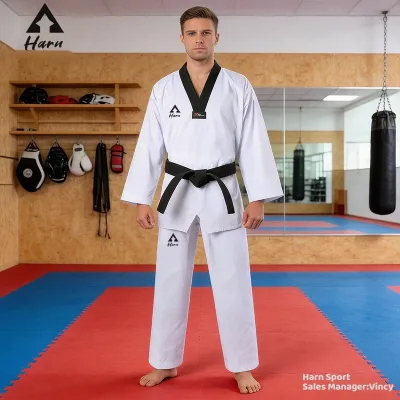
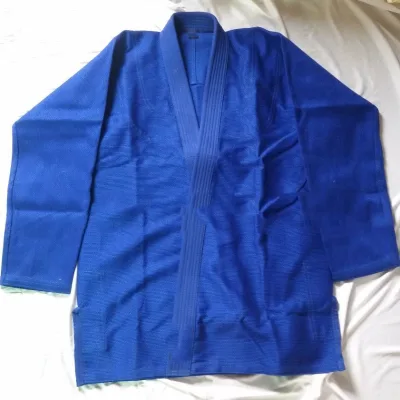
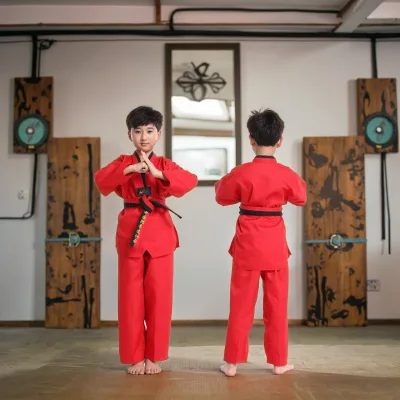
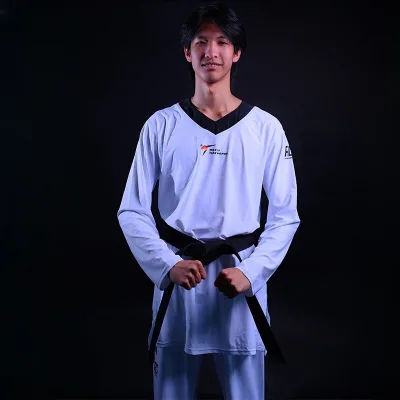
Comprehensive Sourcing Guide
Lightweight Taekwondo Uniform Sourcing Guide
Sourcing high-performance martial arts apparel requires a nuanced understanding of material composition, manufacturing standards, and commercial terms that directly impact athlete comfort and brand integrity. The global market for taekwondo uniforms, often referred to as doboks, has evolved significantly to meet the demands of both competitive athletes and training academies. Buyers must navigate a landscape where product attributes vary widely, from fabric blends to customization capabilities, ensuring that the selected uniform aligns with specific performance requirements and budgetary constraints. This guide provides a structured approach to evaluating suppliers and products, focusing on evidence-based decision-making rather than speculative claims.
The procurement process for these specialized garments involves verifying critical technical specifications, such as weight, size ranges, and material durability, while also assessing the supplier’s ability to handle custom branding and packaging requirements. By adhering to a disciplined sourcing framework, buyers can mitigate risks associated with inconsistent quality, delayed deliveries, or non-compliant materials. The following sections detail the essential steps for evaluating product scope, technical data, compliance documentation, cost structures, supplier qualifications, and long-term procurement strategies, ensuring a robust and reliable supply chain for taekwondo apparel.
Product Scope and Observed Listing Signals
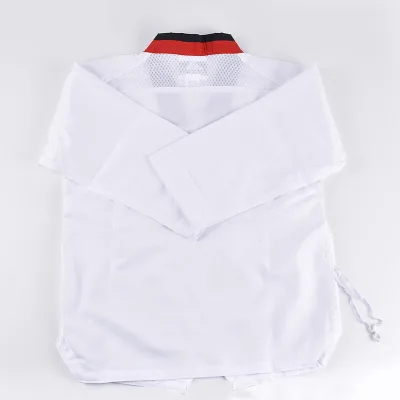
The observed market data indicates a diverse range of taekwondo uniforms available from suppliers, primarily originating from regions such as Hebei and Shandong in China. Listings reveal a price range of $4 to $90.46 USD, reflecting significant variation in material quality, brand positioning, and customization levels. Minimum Order Quantities (MOQs) vary considerably, ranging from a single negotiable set to 100 sets, allowing buyers to scale orders based on immediate needs or long-term contracts. The product names and descriptions frequently highlight attributes such as "lightweight," "black," and "white" colors, with some listings explicitly noting the availability of customized logos and specific model numbers like YU-011-3 or LT-012.
Product applications are consistently identified as suitable for both training and competition, with a specific focus on martial arts studios and taekwondo training environments. The observed listings emphasize features such as durability, washability, breathability, and comfort, which are critical for high-intensity athletic use. Material compositions are noted as polyester/cotton blends, aiming to balance moisture management with structural integrity. Additionally, packaging options range from simple plastic bags to more robust carton or parking bag configurations, indicating that suppliers offer varying levels of protection and presentation for the final product. Buyers should carefully review these signals to align product features with their specific operational needs.
Technical Specifications to Verify
Verifying technical specifications is paramount to ensuring that the taekwondo uniforms meet the rigorous demands of athletic performance. Key attributes to confirm include the weight of the uniform, with observed data indicating weights around 0.700 kg to 0.800 kg per unit, which influences the garment’s drape and movement freedom. Size ranges are typically extensive, spanning from 110 cm to 200 cm, or described as "all sizes available," allowing for inclusivity across different age groups and body types. Buyers must verify the exact material composition, particularly the ratio of polyester to cotton, as this affects breathability, shrinkage, and durability over time.
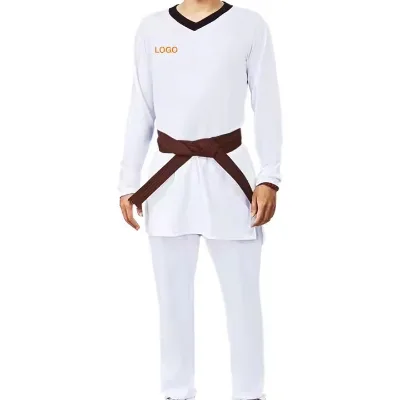
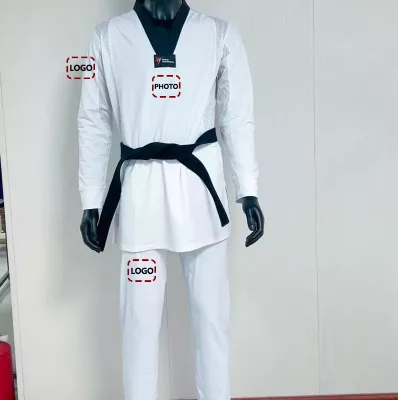
Customization capabilities are another critical technical aspect, with many suppliers offering customized logos and specific color options including white, black, red, yellow, and blue. The service life of the uniform is estimated at 5-8 years, suggesting a focus on long-term durability, but this claim should be validated through sample testing. Packaging standards vary, with some products packed in cartons measuring 40cm30cm5cm, while others use plastic bags within cartons. Buyers should request detailed specification sheets that confirm these dimensions, weights, and material properties to ensure consistency across large orders and to facilitate accurate logistics planning.
Compliance and Safety Documentation
While specific certification statuses are not explicitly detailed in the observed listings, buyers must proactively request compliance documentation to ensure that the taekwondo uniforms meet international safety and quality standards. This includes verifying that the materials used, such as polyester and cotton blends, are free from harmful substances and comply with relevant textile regulations in the destination market. Buyers should inquire about any third-party testing reports that confirm the fabric’s breathability, colorfastness, and resistance to wear and tear, which are essential for maintaining the uniform’s appearance and functionality over its expected service life.
Additionally, buyers should ensure that the supplier adheres to ethical manufacturing practices and provides necessary documentation regarding labor standards and environmental impact. Although the observed data does not specify certifications, reputable suppliers should be able to provide evidence of compliance with industry norms for sportswear production. This due diligence helps mitigate risks associated with regulatory non-compliance, potential product recalls, or reputational damage. Buyers should integrate compliance verification into their supplier evaluation process, requiring clear documentation before finalizing any purchase agreements.
Cost Drivers and Commercial Terms
The cost of taekwondo uniforms is influenced by several factors, including material quality, customization complexity, and order volume. The observed price range of $4 to $90.46 USD reflects these variations, with lower prices typically associated with basic designs and higher volumes, while premium features such as custom logos and specialized fabric blends command higher prices. MOQs range from 1 set to 100 sets, offering flexibility for small buyers but potentially increasing per-unit costs for smaller orders. Buyers should negotiate terms that balance cost efficiency with quality assurance, considering the long-term value of durable and comfortable uniforms.
Commercial terms also include packaging options and shipping logistics, which can impact the total landed cost. Suppliers offer various packaging solutions, from simple plastic bags to sturdy cartons, each with different implications for protection and handling during transit. Buyers should clarify these terms in their purchase agreements, ensuring that packaging meets their storage and distribution requirements. Additionally, buyers should discuss payment terms, lead times, and return policies to establish a clear understanding of the commercial relationship, minimizing potential disputes and ensuring a smooth procurement process.
Supplier Qualification and Quality Control
Evaluating supplier qualifications is essential for securing a reliable source of taekwondo uniforms. Buyers should assess the supplier’s production capabilities, including their ability to handle customized orders and maintain consistent quality across batches. The observed listings indicate that suppliers offer OEM services and customized logos, suggesting a level of flexibility and responsiveness to buyer needs. Buyers should request samples to evaluate the physical attributes of the uniforms, such as fabric texture, stitching quality, and fit, before committing to larger orders.
Quality control processes should be clearly defined and agreed upon with the supplier. This includes establishing acceptance criteria for defects, color consistency, and dimensional accuracy. Buyers should inquire about the supplier’s internal quality control measures and whether they conduct random inspections during production. Additionally, buyers should consider implementing their own quality checks upon receipt of goods, using the observed specifications as a benchmark for evaluation. By maintaining rigorous quality control standards, buyers can ensure that the taekwondo uniforms meet their performance and aesthetic expectations.
Long-Term Procurement Checks
Establishing long-term procurement checks is crucial for maintaining a stable and efficient supply chain for taekwondo uniforms. Buyers should regularly review supplier performance metrics, including on-time delivery rates, product quality consistency, and responsiveness to issues. The observed service life of 5-8 years suggests that the uniforms are designed for durability, but buyers should monitor actual performance in the field to validate these claims. Regular feedback from athletes and instructors can provide valuable insights into the comfort, fit, and durability of the uniforms, informing future purchasing decisions.
Additionally, buyers should stay informed about market trends and technological advancements in sportswear materials and manufacturing processes. This proactive approach allows buyers to identify opportunities for cost savings, quality improvements, or new product features. By maintaining open communication with suppliers and fostering a collaborative relationship, buyers can ensure that their taekwondo uniform procurement strategy remains aligned with their organizational goals and athlete needs. Continuous evaluation and adaptation are key to sustaining a competitive advantage in the martial arts apparel market.
FAQs
What sizes are available for lightweight taekwondo uniforms?
These lightweight taekwondo uniforms are typically available in sizes ranging from 110cm to 200cm, covering children through adult practitioners. Some listings offer all sizes on request, including special size requirements. Confirm the exact size chart with the supplier before ordering, since available ranges can vary between models such as 110-190cm or 110-200cm.
Can I customize the logo on a Lightweight Taekwondo Uniform?
Yes, customized logos are supported on these uniforms. Suppliers can apply your logo according to your requirements, often through embroidery or printing depending on the model. Provide your artwork, preferred placement, and quantity when requesting a quote, and note that customization may affect minimum order quantities, pricing, and production lead time.
What material is used in lightweight taekwondo uniforms?
The most common material is a polyester and cotton blend, which balances durability with breathability for training and competition use. The exact fabric ratio can vary by model, so request the fabric composition and weight specification from the supplier before ordering. Blended fabrics are generally washable and hold their shape well over repeated laundering.
How many sets are required as a minimum order?
Minimum order quantities vary by supplier and model, ranging from as low as 1 set to 100 sets. Some listings state 30 sets, while others accept 100 sets or negotiate quantity on request. If you need a small trial order or sample first, confirm the supplier's MOQ policy and whether sample units are available before committing.
Can I get a sample of a Lightweight Taekwondo Uniform before bulk ordering?
Yes, samples are available for many of these uniforms. Requesting a sample lets you verify fabric weight, stitching quality, sizing accuracy, and logo customization before placing a bulk order. Ask whether the sample cost is refundable against a later production order, and confirm the sample lead time so you can plan your purchasing schedule.
What colors are available for lightweight taekwondo uniforms?
Available colors include white, black, red, blue, yellow, and red and white combinations, depending on the model. White and black are the most commonly listed options for training and competition. Confirm color availability and whether custom color requests are accepted, as some suppliers offer additional colorways for larger orders.
How are lightweight taekwondo uniforms packed for shipping?
Packing typically consists of a plastic bag per uniform, with cartons used for bulk shipments. Some listings specify polybag packing, while others note carton packing or a plastic bag inside a carton. Packaging dimensions vary by model, so request carton size, units per carton, and gross weight from the supplier to calculate shipping volume and freight costs.
Which usage scenarios suit a Lightweight Taekwondo Uniform?
These uniforms suit both training and competition applications in martial arts studios and taekwondo dojangs. Lightweight polyester-cotton construction is breathable and comfortable for extended practice sessions, while durable, washable fabric supports frequent use. For formal competition, verify that the uniform meets the requirements of your association or tournament organizer before purchase.