Source Livestock Barn for Poultry, Pig, and Goat Farming
Compare 30 listings for livestock barns designed for poultry, pig, and goat farming. These steel structures offer customizable designs, online technical support, and overseas installation services to meet diverse agricultural needs.
Key considerations
Products List
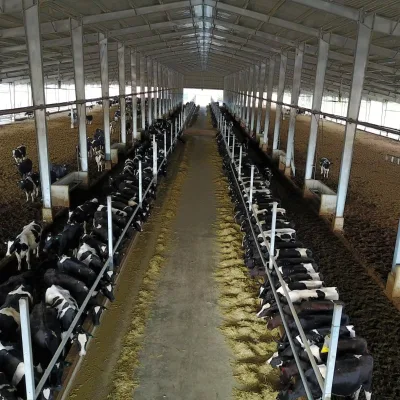


Quick Build Barn Modern Livestock House Prefab-Steel-Structure Modular-Steel-Structure Barn
$19.99 - $49.99
MOQ: 200 Square Meters

Farming Light Steel Structure Cow Shed Cattle Barn for Livestock Building Design
$26.00 - $35.00
MOQ: 500 Square Meters

Hot-DIP Galvanized Steel Frame Cattle Barn with Roll-up Livestock Farm
$26.00 - $35.00
MOQ: 500 Square Meters


Steel Frame Cattle Shelter Heavy-Duty Livestock Barn for Dairy & Beef Farms
$15.00 - $80.00
MOQ: 20 Meters


Chicken House for Hen Farm Steel Frame Building Livestock Dairy Cattle Barn
$30.00 - $40.00
MOQ: 1000 Square Meters


Steel Structure Poultry Farm and Beef Barn with Flexible Design Options
$25.00 - $45.00
MOQ: 100 Square Meters

Reliable Steel Structure Poultry Farm and Beef Barn for Various Applications
$25.00 - $45.00
MOQ: 100 Square Meters

Durable Steel Structure Poultry Farm and Beef Barn for Supermarkets
$25.00 - $45.00
MOQ: 100 Square Meters

Reliable Steel Structure Poultry Farm and Beef Barn for Supermarket Buildings
$25.00 - $45.00
MOQ: 100 Square Meters

Custom Steel Structure Poultry Farm and Beef Barn for Supermarket Buildings
$25.00 - $45.00
MOQ: 100 Square Meters

Versatile Steel Structure Poultry Farm and Beef Barn for Various Applications
$25.00 - $45.00
MOQ: 100 Square Meters

Light Section Steel Agricultural Prefab Light Steel Structure Barn Cattle
$30.00 - $60.00
MOQ: 100 Square Meters


Comprehensive Sourcing Guide
Strategic Sourcing Guide for Livestock Barn Structures
The global demand for efficient, durable, and hygienic livestock housing has driven a significant shift toward prefabricated steel structures. For procurement professionals in the agricultural sector, sourcing a Livestock Barn requires a nuanced understanding of structural engineering, material science, and regulatory compliance. The transition from traditional masonry to steel-frame solutions offers distinct advantages in speed of deployment, longevity, and adaptability to various climatic conditions. This guide provides a comprehensive framework for evaluating potential suppliers and specifications, ensuring that the selected infrastructure meets the rigorous demands of modern animal husbandry.
Technical Specifications and Structural Integrity
When evaluating a Livestock Barn, the primary focus must be on the structural skeleton and the envelope materials. The core framework typically utilizes carbon structural steel, specifically grades such as Q235, which offers a balance of strength and weldability. The forming process for these components is often hot-rolled, ensuring high intensity and resistance to deformation under load. The structural members generally include steel trusses, columns, and beams, with specific cross-sections such as Z, U, C, and H-sections designed to optimize load distribution.
The connection method is a critical technical variable. Bolted connections are preferred for their ease of assembly and disassembly, facilitating future expansion or relocation. The frame itself is often galvanized to provide a robust defense against corrosion, a common issue in environments with high humidity and ammonia exposure from animal waste. The exterior covering is equally vital; a common specification involves a 610 GSM PVC cover, which provides necessary insulation and weather protection. The door systems are typically constructed with steel frames to maintain structural continuity and security.
| Component | Typical Specification | Functional Requirement |
|---|---|---|
| Frame Material | Carbon Structural Steel (Q235) | High tensile strength and weldability |
| Surface Treatment | Hot DIP Galvanize + Painting | Anti-corrosion and longevity |
| Cross-Section | C / Z -section, U, H-Section | Optimal load-bearing capacity |
| Cover Material | 610 GSM PVC | Weather resistance and insulation |
| Connection | Bolt Connection | Modular assembly and maintenance |
| Wind Resistance | Up to 12 Grades | Structural stability in high winds |
| Earthquake Resistance | Up to 8 Grades | Safety in seismic zones |
Compliance, Certification, and Regulatory Standards
Navigating the regulatory landscape is essential for international procurement. Suppliers should demonstrate adherence to a broad spectrum of international and national standards. Verified certifications often include ISO 9001:2008 for quality management systems, alongside specific product standards such as CE, GB, ASTM, DIN, JIS, AISI, and BS. These standards ensure that the steel components meet specific chemical and mechanical property requirements.
Buyers must verify that the supplier's documentation explicitly lists these standards. The presence of a CE mark indicates conformity with health, safety, and environmental protection standards for products sold within the European Economic Area. Similarly, compliance with GB (Chinese National Standards) or ASTM (American Society for Testing and Materials) is crucial depending on the destination market. It is important to note that while some listings may claim compliance with multiple standards, the buyer must request specific test reports or certificates of conformity for the actual batch of materials being procured. The warranty period, often cited as one year for the structure, serves as a baseline for quality assurance but should be supplemented by a detailed inspection protocol upon delivery.
Cost Drivers and Economic Considerations
The total cost of a Livestock Barn is influenced by several dynamic factors. The primary driver is the quantity of steel required, which correlates directly with the building's dimensions and the design load requirements. For instance, a structure with dimensions of 10.0m in length and width and 4.5m in height will have a specific material volume that dictates the base cost. The complexity of the design, such as the inclusion of multi-tier systems or specialized ventilation features, also impacts pricing.
Material costs fluctuate based on global steel market trends. The choice between standard galvanized steel and high-performance alloys will significantly alter the unit price. Additionally, the scope of services included in the quote is a major cost variable. Suppliers offering "total solution for projects" that encompass 3D model design, graphic design, and professional drawing services may charge a premium for these engineering capabilities. Conversely, buyers seeking a basic structure may opt for suppliers who provide only the raw materials.
Lead times are another economic factor. A standard lead time for manufacturing and preparation is typically between 30 to 45 days. Delays in this window can impact project timelines and operational readiness. Furthermore, the Minimum Order Quantity (MOQ) varies widely, ranging from single items to orders of 1000 units. Buyers must align their order volume with the supplier's MOQ to avoid prohibitive per-unit costs or the inability to secure a contract. Shipping and packaging, often requiring seaworthy steel boxes or iron boxes, add to the final landed cost and must be factored into the budget.
Typical Applications and Design Flexibility
Livestock barns are designed for specific agricultural applications, with the primary usage often categorized under feeding, cleaning, breeding, and heat preservation. While the core keyword is "Livestock Barn," the specific animal type dictates the internal layout and environmental controls. Common applications include facilities for pigs, goats, and poultry. The design style is predominantly modern, emphasizing functionality and ease of maintenance.
Customization is a key feature of these structures. Buyers can often request specific color schemes, such as green, red, or blue, to match farm aesthetics or regulatory requirements. The internal configuration can be tailored to single-tier or multi-tier systems, depending on the space constraints and the number of animals. For example, a "Prefab Steel Goat Farming House" may require different ventilation and flooring specifications compared to a "Poultry farm" structure. The ability to provide a 3D model design allows buyers to visualize the final product and ensure it meets the specific operational workflow of their farm. The structure is designed for outdoor application, with features like Earthquake Resistance and Anti-Corrosion capabilities ensuring durability in various environmental conditions.
Supplier Evaluation and Service Capabilities
Selecting the right supplier involves more than just comparing prices; it requires a deep dive into their service capabilities and after-sales support. A reputable supplier should offer a comprehensive suite of services, including online technical support, onsite installation, onsite training, and onsite inspection. These services are critical for ensuring that the structure is assembled correctly and operates efficiently from day one.
The availability of engineer services overseas is a significant differentiator. For international buyers, having a team of engineers capable of traveling to the site to oversee installation can prevent costly errors and ensure compliance with local building codes. The supplier should also demonstrate a strong track record in project solution capabilities, including the ability to provide professional design drawings for free or as part of the package. This level of support indicates a commitment to the long-term success of the project rather than a simple transactional relationship.
Buyers should also assess the supplier's logistical capabilities. The packaging method, such as steel sheet iron boxes or seaworthy packages, is essential for protecting the components during transit. The supplier's location, often cited as Zhejiang or Qingdao in China, can influence shipping times and costs. While the specific location is a fact, the buyer must verify the actual shipping origin and the reliability of their logistics partners.
Quality Control and Long-Term Procurement
Quality control is paramount in the construction of livestock barns. The structural integrity of the steel frame, the quality of the galvanization process, and the durability of the PVC cover must be rigorously tested. Buyers should request detailed specifications regarding the surface treatment process, which typically involves painting and hot-dip galvanizing to ensure a long service life. The structure is designed for a usage period of up to 50 years, but this is contingent on proper maintenance and adherence to the manufacturer's guidelines.
Long-term procurement considerations include the availability of spare parts and the ease of future expansion. The modular nature of bolt-connected steel structures allows for easy modification and addition of new sections. The recyclable nature of the steel components also aligns with sustainability goals, reducing the environmental impact of the farm infrastructure. Buyers should establish a clear communication channel with the supplier for ongoing technical support and warranty claims. The warranty period, typically one year, should be clearly defined in the contract, outlining the scope of coverage for structural defects and material failures.
In conclusion, sourcing a Livestock Barn requires a strategic approach that balances technical specifications, regulatory compliance, and economic efficiency. By carefully evaluating the structural materials, verifying certifications, and assessing supplier capabilities, buyers can secure a high-quality, durable, and cost-effective solution for their agricultural operations. The flexibility of modern steel structures allows for customization to meet specific animal housing needs, ensuring a productive and sustainable farming environment.
FAQs
What certifications do Livestock Barn suppliers typically hold?
Suppliers typically hold ISO 9001:2008 and CE certifications. Additional compliance may include GB, ASTM, DIN, JIS, AISI, and BS standards to ensure structural safety and quality management for international buyers.
How long is the lead time for manufacturing livestock barns?
The standard lead time for manufacturing is between 30 to 45 days. This duration covers production and preparation before shipping, though specific timelines may vary based on order volume and customization requirements.
Can I get onsite installation support for the steel structure?
Yes, suppliers offer onsite installation services along with onsite training and inspection. Additional support includes online technical guidance and engineer services available overseas to ensure proper assembly and operational readiness.
What is the warranty period for the Livestock Barn structure?
The standard warranty period provided is one year. This coverage typically addresses structural defects and material failures, though buyers should verify specific terms regarding maintenance and long-term durability expectations.
Which steel types are used for the barn frame construction?
The frame is constructed using Carbon Structural Steel, specifically grade Q235. Components are often hot-rolled and feature C, Z, U, or H-sections with galvanized surfaces for high intensity and anti-corrosion protection.
What is the minimum order quantity for purchasing a barn?
The minimum order quantity ranges from 1 to 1000 units depending on the supplier. Buyers should check specific listings as some vendors offer single items while others require larger bulk orders for pricing efficiency.
How are the Livestock Barn components packaged for shipping?
Components are packaged in steel sheet iron boxes or seaworthy steel boxes. This robust packaging ensures protection during transit and prevents damage to the galvanized steel frames and PVC covers before delivery.