Source Long Pipe Thread Barrel Nipple for Oil, Gas, and Water
Find and compare 30 Long Pipe Thread Barrel Nipple options from verified manufacturers. Evaluate materials like SS304 and SS316, thread types such as NPT and BSP, and pressure ratings to select the right fitting for industrial applications.
Key considerations
Products List


Nipples Galvanized Carbon Steel Pipe Barrel Nipple Threaded Pipe Nipple
$0.50 - $10.00
MOQ: 500 Pieces


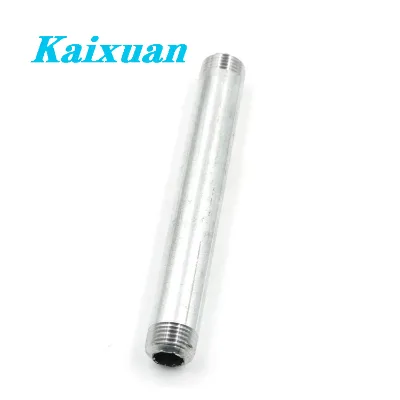


Black Steel Pipe Nipple Natural Black Nipple NPT Bsp Thread Barrel Nipple
$0.09 - $0.29
MOQ: 1000 Pieces


Bsp/NPT Barrel Nipple Stainless Steel Pipe Fitting Double Thread Pipe Nipple
$1.00 - $1.20
MOQ: 1000 Pieces

Threaded Stainess Steel Barrel Nipple with Customized Thickness for Pipe
$1.00 - $1.20
MOQ: 1000 Pieces


Stainless Steel/Carbon Steel Pipe Barrel Nipple Close Nipple with NPT Thread
$0.10 - $0.30
MOQ: 100 Pieces


Comprehensive Sourcing Guide
Long Pipe Thread Barrel Nipple Sourcing Guide
Procuring long pipe thread barrel nipples requires a disciplined approach to technical verification and supplier qualification, as these components serve as critical connectors in fluid and gas transmission systems. Unlike standard short nipples, the extended length of barrel nipples introduces unique mechanical stresses and handling challenges that must be accounted for during the design and sourcing phases. Buyers must ensure that the selected fittings maintain structural integrity under pressure while providing the necessary reach to bridge gaps between pipes, valves, or other piping components. This guide outlines the essential steps for sourcing these specialized fittings, focusing on material selection, thread compatibility, and commercial terms to mitigate risk and ensure operational reliability.
The market for stainless steel and carbon steel nipples is diverse, with manufacturers offering a wide range of customization options to meet specific project requirements. Sourcing decisions should be driven by a clear understanding of the application environment, including pressure ratings, temperature extremes, and chemical exposure. By leveraging trusted category knowledge and verifying observed listing signals, buyers can navigate the complex landscape of global suppliers to find partners who can deliver high-quality, compliant products. This guide provides a structured framework for evaluating suppliers, verifying technical specifications, and establishing robust quality control measures to support long-term procurement success.
Product Scope and Observed Listing Signals
The observed market data indicates a significant variation in product attributes, reflecting the diverse needs of different industrial sectors. Listings show a price range from $0.09 to $40.33 USD, with minimum order quantities (MOQs) ranging from 1 to 1000 pieces. This wide variance suggests that buyers can find options for both small-scale maintenance repairs and large-scale industrial projects. The presence of customization options and various material types, such as SS304, SS316, and SS201, highlights the flexibility available in the market. Buyers should carefully match these observed signals to their specific project requirements, ensuring that the selected product meets the necessary technical and commercial criteria.
Product models and standards vary significantly, with observed specifications including sizes from 1/8" to 6" and pressure ratings such as PN1, PN2, PN9, and PN10. Thread types observed include NPT, BSP, and G, indicating the need for precise verification of thread compatibility. The observed connection types, such as Male-Male (M-M) and Female-Male, further emphasize the importance of selecting the correct configuration for the intended application. Additionally, the observed packing methods, ranging from polybags to plywood cases, suggest that logistics and handling considerations should be factored into the sourcing decision. Buyers must verify these details with suppliers to ensure that the delivered products align with their technical specifications.
Technical Specifications to Verify
Material selection is a critical factor in determining the performance and longevity of long pipe thread barrel nipples. The observed material types include stainless steel grades such as SS304, SS316, and SS201, as well as carbon steel. Each material offers distinct advantages in terms of corrosion resistance, strength, and cost. For instance, SS316 is often preferred for its superior resistance to chlorides and other corrosive environments, while SS304 provides a cost-effective solution for general-purpose applications. Buyers must verify the exact material grade with the supplier, ensuring that it meets the requirements of the specific application environment. Misidentification of material grades can lead to premature failure and costly downtime.
Thread compatibility and dimensional accuracy are equally important considerations. The observed thread types include NPT, BSP, and G, each with its own standard and sealing characteristics. Buyers must verify the thread type, pitch, and taper to ensure proper engagement and sealing with mating components. The observed connection types, such as Male-Male and Female-Male, further highlight the need for precise verification. Additionally, the observed pressure ratings, such as PN1, PN2, PN9, and PN10, must be matched to the system's operating pressure. Buyers should request detailed dimensional drawings and thread gauging reports from suppliers to confirm compliance with the required standards.
Compliance and Safety Documentation
Certification and standard compliance are essential for ensuring the safety and reliability of long pipe thread barrel nipples. The observed certifications include ASME, ANSI, DIN, JIS, BS, GB, GS, KS, API, CE, ISO, and TUV. These certifications indicate that the products have undergone rigorous testing and meet specific international standards. Buyers must verify the specific certifications held by the supplier and ensure that they are relevant to the application. For example, API certification is crucial for oil and gas applications, while CE marking is required for products sold in the European market. Failure to verify certifications can result in non-compliance with regulatory requirements and potential safety hazards.
Standards such as ISO4144, EN10241, ISO7-1, ISO49, and ASTM B241 provide the technical framework for manufacturing and testing these fittings. The observed standards indicate that suppliers may adhere to different regional or industry-specific requirements. Buyers must verify which standards the products comply with and ensure that they align with the project specifications. Additionally, the observed type of standard, such as Standard or specific technical standards, should be clarified with the supplier. Buyers should request copies of the relevant standard documents and test reports to confirm compliance. This due diligence helps to mitigate the risk of receiving non-compliant products that may fail under operational conditions.
Cost Drivers and Commercial Terms
Several factors influence the cost of long pipe thread barrel nipples, including material costs, manufacturing processes, and order volume. The observed price range of $0.09 to $40.33 USD reflects the impact of these variables. Stainless steel grades, particularly SS316, are generally more expensive than carbon steel or SS201 due to their superior corrosion resistance. The manufacturing process, whether casting or CNC machining, also affects the cost, with CNC machining typically offering higher precision but at a higher price point. Buyers should consider the total cost of ownership, including maintenance and replacement costs, rather than focusing solely on the initial purchase price.
Commercial terms, such as MOQs and lead times, play a significant role in the sourcing decision. The observed MOQs range from 1 to 1000 pieces, allowing for flexibility in order sizing. However, larger orders may offer better unit prices. The observed lead times of 30-45 days indicate that buyers should plan their procurement activities accordingly to avoid production delays. Additionally, the observed packing methods, such as plywood cases and wooden pallets, suggest that logistics costs should be considered. Buyers should negotiate favorable terms with suppliers, including payment terms and shipping arrangements, to optimize the overall procurement cost. Clear communication of requirements and expectations is essential to ensure smooth transactions.
Supplier Qualification and Quality Control
Supplier qualification is a critical step in ensuring the reliability and consistency of long pipe thread barrel nipples. Buyers should verify the supplier's business type, with observed types including manufacturers and casting foundries. Manufacturers typically offer greater control over the production process and quality assurance, while casting foundries may provide cost-effective solutions for complex geometries. Buyers should request information about the supplier's production capacity, quality management systems, and past performance. Additionally, the observed machining methods, such as CNC or lathe machines, indicate the level of precision available. Buyers should assess the supplier's capability to meet their specific technical requirements.
Quality control measures are essential for ensuring that the delivered products meet the specified standards. Buyers should request detailed quality control plans, including inspection procedures, testing methods, and acceptance criteria. The observed certifications, such as CE, ISO, and TUV, indicate that the supplier has implemented robust quality management systems. Buyers should verify the supplier's ability to provide traceability for materials and components, ensuring that any issues can be traced back to the source. Additionally, buyers should consider conducting third-party inspections or audits to verify the supplier's quality control practices. This proactive approach helps to mitigate the risk of receiving defective products and ensures consistent quality.
Long-Term Procurement Checks
Establishing long-term relationships with reliable suppliers is crucial for maintaining a stable supply chain and ensuring consistent quality. Buyers should regularly review supplier performance, including delivery times, product quality, and responsiveness to issues. The observed lead times of 30-45 days should be monitored to ensure that suppliers can meet project deadlines. Additionally, buyers should track any changes in product specifications or certifications to ensure ongoing compliance. Regular communication and feedback are essential for building strong partnerships and addressing any potential issues promptly. Buyers should also consider diversifying their supplier base to mitigate the risk of supply disruptions.
Continuous improvement and adaptation are key to successful long-term procurement. Buyers should stay informed about industry trends, technological advancements, and regulatory changes that may impact the sourcing of long pipe thread barrel nipples. The observed customization options and various material types suggest that the market is evolving to meet changing customer needs. Buyers should be open to exploring new suppliers and technologies that can offer better value or performance. Additionally, buyers should regularly review their procurement strategies and processes to identify areas for improvement. By maintaining a proactive and adaptive approach, buyers can ensure that their sourcing activities remain aligned with their business objectives and operational requirements.
FAQs
What materials are available for long pipe thread barrel nipples?
Long pipe thread barrel nipples are commonly manufactured from stainless steel grades SS304, SS316, and SS201, as well as carbon steel. The specific material choice depends on the application's corrosion resistance requirements and pressure ratings. Buyers should verify the exact grade to ensure compatibility with their fluid handling needs.
Which thread standards are supported for these nipples?
These nipples typically support NPT, BSP, and G thread standards, with additional options including DIN, ISO7/1, and ISO228-1. The thread type must match the existing piping system to ensure a secure seal. Buyers should confirm the specific thread standard required by their project specifications before ordering.
What is the typical size range for long pipe thread barrel nipples?
The available size range for these nipples generally spans from 1/8 inch to 4 inches, with some variations extending up to 6 inches. Specific models may be limited to smaller ranges like 1/2 inch to 4 inches. Buyers should select the size based on the pipe diameter and flow requirements of their installation.
Can long pipe thread barrel nipples be customized for specific projects?
Yes, customization is available for long pipe thread barrel nipples, allowing adjustments to dimensions, thread types, and material grades. Manufacturers can produce specific models to meet unique project requirements. Buyers should provide detailed technical specifications to ensure the customized product meets their operational needs.
What certifications are associated with these stainless steel nipples?
These products often carry certifications such as ASME, ANSI, DIN, JIS, BS, GB, GS, KS, and API. Some may also hold CE and ISO certifications. These standards ensure the nipples meet international quality and safety requirements. Buyers should request certification documents to verify compliance with their regulatory environment.
How is the delivery time for long pipe thread barrel nipples determined?
The typical delivery time for these nipples is 30 to 45 days, depending on order volume and customization requirements. Standard items may ship faster, while custom orders require additional manufacturing time. Buyers should confirm the lead time with the supplier to align with their project schedule.
What packaging options are available for shipping these nipples?
Long pipe thread barrel nipples are typically packed in cartons, plywood cases, or wooden pallets, often with polybag protection. The packaging method is chosen to ensure safe transport and prevent damage during handling. Buyers should specify their preferred packaging to meet their logistics and storage requirements.