Source Long Nose Throat Support for HVAC, Fracture Fixation, and Neck Care
Find 30 verified products including the Long Nose Throat Support for diverse applications such as HVAC systems, fracture fixation, and neck care. Compare specifications, certifications, and factory direct prices from multiple Chinese manufacturers to find the right solution for your needs.
Key considerations
Products List







Comprehensive Sourcing Guide
Strategic Sourcing Guide for Long Nose Throat Support Devices
Understanding Product Categories and Technical Definitions
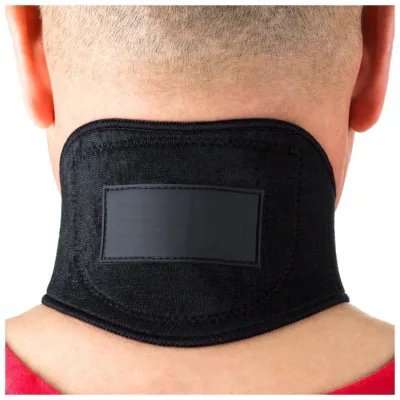
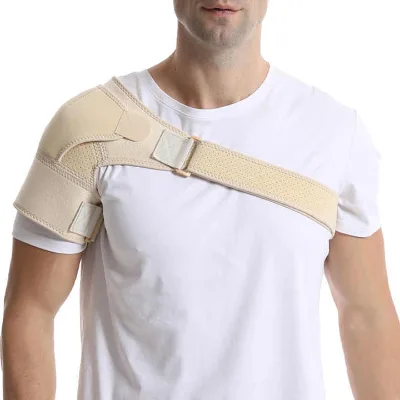
When sourcing medical or therapeutic devices under the keyword "Long Nose Throat Support," buyers must first distinguish between the specific product categories observed in the current market data. The available inventory reveals a divergence in product types that share similar functional goals but differ significantly in application and construction. One distinct category identified involves "External Fixator" devices, specifically modeled as DNOR-N03 and DNOR-B13. These items are explicitly designed for "Fracture Fixation" and "Correct Deformities," with a stated function of "Neck Support and Fixation." While the term "long nose" might colloquially suggest nasal support, the technical specifications for these specific models point toward orthopedic or structural support for the cervical spine and upper body, rather than nasal anatomy.
Conversely, the market data also lists products categorized under "Pre-Installation Boxes" with the specific use for "Air Conditioner Outdoor Unit." These items, modeled as FSP2, are described as having features like "Easy and Quick to Install on Any Ground Surface" and are made via "Casting" with "Surface Treatment." It is critical for procurement teams to recognize that while these items may share a generic "support" descriptor in broad search terms, they are industrial HVAC components, not medical devices. Confusing these categories can lead to significant procurement errors, compliance failures, and safety risks. The "Long Nose Throat Support" search term likely aggregates these disparate items due to linguistic ambiguity in product titles or metadata. A rigorous sourcing strategy requires verifying the "Using Site" attribute. For medical applications, the site is the "Shoulder&Neck," whereas for industrial applications, the site is the ground surface for HVAC units.
Technical Specifications and Material Composition
The technical viability of a "Long Nose Throat Support" device depends heavily on the material composition and physical specifications provided in the product data. For the medical-grade external fixators and neck support devices, the primary materials identified are "Nylon" and "Sponge." The combination of these materials suggests a design focused on comfort, flexibility, and structural integrity. The "Nylon" component likely provides the necessary tensile strength for the "External Fixator" function, ensuring the device can maintain its shape under pressure during "Fracture Fixation." The "Sponge" component is essential for the "Neck Support" aspect, providing cushioning to prevent skin irritation during prolonged wear.
Physical dimensions are another critical technical parameter. The data indicates specific size ranges available for these medical devices, including "S M L XL," "S M L XL XXL 3XL," and specific weight standards like "100G" and "300g." The thickness is noted as "Medium," and the height for specific models is listed as "22cm." These numerical values are vital for procurement teams to match against patient requirements or specific clinical needs. For instance, a device intended for "Adults" must align with the "Age Group" specification. The "Standard" attribute for these items varies, with some listed as "S M L" and others as "100G" or "300g," indicating that buyers must verify the exact sizing standard before placing an order. The "Color" options, including "White," "Pink," "Black," and "Coffee," allow for customization based on user preference or clinical visibility requirements.
Compliance, Certification, and Regulatory Verification
Navigating the regulatory landscape is perhaps the most critical step when sourcing medical support devices. The provided data confirms that the relevant products carry "CE" certification. For the external fixator and neck support models, the certification list explicitly includes "CE, ISO." This dual certification suggests a higher level of compliance, potentially aligning with international medical device standards. However, the data also notes a "Low-confidence background" regarding "ISO 13485." Buyers must treat this distinction carefully. While "ISO" is listed as a standard attribute, the specific standard "ISO 13485" (which pertains to quality management systems for medical devices) is flagged as low-confidence background information.
Procurement teams should not assume that every listed product automatically satisfies ISO 13485 requirements based solely on the "ISO" label. Instead, the verification process must involve requesting current, valid certificates from the supplier. The "CE" mark is a mandatory conformity marking for products sold within the European Economic Area, indicating that the manufacturer has declared compliance with the relevant EU directives. For the "External Fixator" and "Neck Support" devices, the presence of "CE" is a positive indicator, but it does not replace the need for specific clinical validation. Buyers must verify that the "Certification" listed matches the intended market of sale. If the target market is the United States, additional FDA clearance might be required, which is not mentioned in the current data. Therefore, the sourcing strategy must include a mandatory document request for the specific certificate numbers and their validity dates before any contract is signed.
Cost Drivers and Pricing Structures
The economic landscape for sourcing these devices is characterized by a wide observed price range of 0.5 to 60 USD. This broad spectrum reflects the diversity of the product types included in the search results, ranging from simple industrial boxes to specialized medical fixators. The "Factory Direct Price" attribute suggests that buyers can expect competitive pricing by sourcing directly from manufacturers, potentially eliminating intermediary markups. However, the final cost is influenced by several variables, including the "Customization" status, material quality, and order volume.
The "MOQ" (Minimum Order Quantity) ranges from 1 to 5000 units. This flexibility allows buyers to scale their procurement based on immediate needs. Small clinics or individual practitioners may opt for the lower end of the MOQ spectrum, while large hospital networks or distributors might leverage the higher volume potential to negotiate better unit prices. The "Service" attribute indicates "OEM" (Original Equipment Manufacturer) capabilities are available for some products. This means buyers can potentially brand the devices with their own logo or specifications, which adds a layer of cost complexity. Customization, whether in color (e.g., "Pink," "Black") or specific sizing, often incurs additional charges. The "Packing" method, ranging from "Plastic Bag Packaging" to "Carton Box" or "Plastic Bag and Carton," also impacts the final landed cost, as more robust packaging is required for medical devices to ensure sterility and protection during transit.
Typical Applications and Usage Scenarios
The application of "Long Nose Throat Support" devices is bifurcated based on the product category. For the medical sector, the primary usage is "Fracture Fixation" and "Correct Deformities." These devices serve a therapeutic function, providing "Neck Support and Fixation" for patients recovering from injuries or requiring structural alignment. The "Feature" list highlights "Health Care" and "Body Shaper," indicating a dual purpose of medical support and physical rehabilitation. The "Shelf Life" of "Five Years" is a crucial metric for inventory management, ensuring that stock remains viable for extended periods without degradation. The "Condition" is listed as "New," which is standard for medical devices but requires verification upon receipt to ensure no damage occurred during shipping.
In the industrial sector, the application is entirely different. The "Pre-Installation Boxes" are designed for "HVAC System" usage, specifically for "Air Conditioner Outdoor Unit." These products are not for human use but for supporting heavy mechanical equipment. The "Feature" of being "Easy and Quick to Install on Any Ground Surface" and the "Technics" of "Casting" indicate a focus on durability and ease of deployment in construction or maintenance scenarios. The "Surface Treatment" being "Yes" suggests these industrial boxes are treated for weather resistance or corrosion protection. Buyers must strictly separate these applications to avoid the catastrophic error of using an industrial box as a medical support device or vice versa. The "Using Site" attribute is the definitive differentiator: "Shoulder&Neck" for medical and "Ground Surface" for industrial.
Supplier Evaluation and Quality Assurance Protocols
Evaluating suppliers for these diverse product lines requires a multi-faceted approach. The data indicates that the "prod_origin" is primarily "China," with a specific mention of "Hebei" for the medical devices. While this provides a geographic baseline, it does not guarantee quality. Buyers should verify the supplier's production capabilities, specifically their ability to maintain the "Factory Quality Report" standard mentioned in the attributes. The "Quality" attribute suggests that a formal report is available, which should be reviewed to assess consistency and defect rates.
The "Customized" attribute varies between "Available" and "Non-Customized." For buyers requiring specific branding or modifications, selecting a supplier with "OEM" service and "Customization: Available" is essential. The "Sample" attribute is marked as "Yes" for certain models, which is a strong indicator of a supplier's willingness to provide product samples for pre-shipment testing. This is a critical step in the quality control process. Buyers should request samples of the "Nylon" and "Sponge" materials to verify the "Medium" thickness and overall durability before committing to a large order. The "Packing" methods, such as "Carton Box" or "PE Bag," should be inspected to ensure they meet the "Factory Quality Report" standards for protection during shipping.
Long-Term Procurement and Inventory Management
Sourcing these devices involves long-term considerations regarding inventory turnover and supply chain stability. The "Shelf Life" of five years for the medical devices allows for strategic stockpiling, but buyers must manage the "Age Group" (Adults) and size distribution (S M L XL XXL 3XL) to match patient demographics. Overstocking specific sizes that are less common can lead to inventory obsolescence. The "Condition" being "New" requires strict adherence to storage protocols to prevent degradation, especially for the "Sponge" components which may be susceptible to moisture or compression over time.
For the industrial "Pre-Installation Boxes," the "Casting" technics and "Surface Treatment" imply a long product lifecycle. However, the "Factory Direct Price" and "MOQ" flexibility suggest that buyers should maintain a lean inventory strategy, ordering in batches that align with project timelines rather than stockpiling indefinitely. The "Standard" attributes, such as "FSP2" for the boxes and "DNOR-N03" for the fixators, should be used as unique identifiers in the procurement system to ensure consistency in future reorders. The "Service" aspect of "OEM" also implies a long-term partnership, where the supplier may need to adjust production lines for custom orders. Maintaining open communication with the supplier regarding "Lead Times" (though not explicitly provided in the data, it is a standard requirement) and "MOQ" adjustments is vital for ensuring a steady supply of these critical support devices.
Final Sourcing Recommendations
In conclusion, sourcing "Long Nose Throat Support" devices requires a disciplined approach that separates medical from industrial applications. The technical specifications, including materials like "Nylon" and "Sponge," and certifications like "CE" and "ISO," provide a foundation for quality assessment. However, the ambiguity in the keyword necessitates a rigorous verification of the "Using Site" and "Application" attributes. Buyers must prioritize suppliers who can provide valid "Factory Quality Reports" and "Samples" to validate the "Medium" thickness and "Five Years" shelf life claims. By adhering to these evidence-based criteria and avoiding assumptions about unverified standards like "ISO 13485," procurement teams can secure reliable, compliant, and high-quality support devices for their specific operational needs.
FAQs
What certifications do the Long Nose Throat Support devices have?
The devices carry CE certification, and some models include ISO certification as well. Buyers must verify specific certificate validity dates before purchasing to ensure compliance with regional medical device regulations.
Which materials are used to construct the Long Nose Throat Support units?
Primary materials include Nylon and Sponge to ensure structural integrity and comfort. Nylon provides tensile strength for fixation, while Sponge offers cushioning for the shoulder and neck areas during prolonged wear.
How can I find suppliers offering customization for these support devices?
Some manufacturers offer customization services for color and specific sizing requirements. Buyers should check the Customization attribute to confirm availability before placing orders for branded or modified product specifications.
What is the typical MOQ for ordering Long Nose Throat Support equipment?
Minimum Order Quantities range from 1 to 5000 units depending on the supplier and product model. Small clinics can start with low volumes, while large distributors may leverage higher quantities for better pricing.
Can I get samples before committing to a large order for support devices?
Yes, samples are available for certain models to verify material quality and dimensions. Requesting samples allows buyers to test the Nylon and Sponge composition before finalizing bulk procurement agreements.
Where are the Long Nose Throat Support devices primarily manufactured?
Most products originate from China, with specific medical devices sourced from Hebei. Buyers should verify the origin location to ensure alignment with their supply chain logistics and import requirements.