Source Long Life Ceramic Brake Pads for Cars, Trucks, and SUVs
Explore 30 listings for Long Life Ceramic Brake Pads suitable for passenger and commercial vehicles. Compare semi-metallic and ceramic options from Chinese manufacturers offering OEM customization, ECE R90 certification, and various packing methods to find the right fit for your fleet or aftermarket needs.
Key considerations
Products List


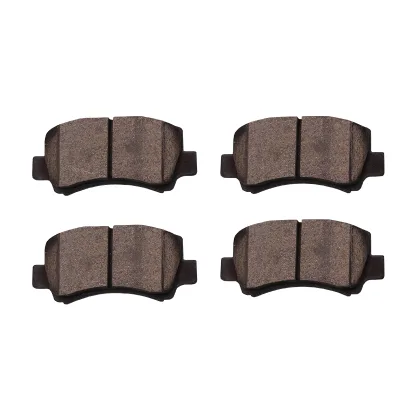


Factory Direct Supply High Performance with Lowest Price Ceramic Brake Pads
$366.00 - $588.00
MOQ: 10 Pieces


Comprehensive Sourcing Guide
Long Life Ceramic Brake Pads Sourcing Guide
Procuring Long Life Ceramic Brake Pads requires a strategic approach that balances material performance with rigorous supplier verification. Buyers must navigate a market where terminology often overlaps, distinguishing true ceramic formulations from semi-metallic or low-metallic alternatives that may be mislabeled. The core value proposition of ceramic pads lies in their reduced dust generation, quieter operation, and consistent braking performance under varied thermal conditions. However, achieving these benefits depends heavily on the specific fiber composition and binder systems used by the manufacturer. Sourcing teams should prioritize suppliers who provide transparent material breakdowns rather than relying solely on marketing terms.
This guide outlines the critical steps for evaluating ceramic brake pad suppliers, focusing on technical specifications, compliance documentation, and commercial terms. By understanding the nuances of ceramic fiber materials and their application in both passenger and commercial vehicles, buyers can mitigate risks associated with premature wear or inconsistent friction coefficients. The following sections provide a structured framework for assessing product scope, verifying technical data, and establishing quality control protocols. This disciplined approach ensures that procurement decisions are grounded in observable facts and verified supplier capabilities, leading to more reliable supply chains and satisfied end-users.
Product Scope and Observed Listing Signals
The current market landscape for ceramic brake pads reveals a diverse range of product classifications, including semi-metallic, carbon ceramic, and less metallic variants. Listings often highlight attributes such as non-asbestos composition and specific model numbers like D436 or C-1, which serve as key identifiers for buyers. Observations indicate that suppliers frequently offer customization options, allowing for tailored packaging and branding, which is crucial for private label programs. The presence of OEM references, such as OE number 581014de00, suggests that many manufacturers produce parts compatible with established automotive platforms, particularly for Hyundai and other major brands.
Buyers should note that while many listings claim high performance and long life, these are general observations rather than guaranteed outcomes for every SKU. The product scope extends across multiple global markets, including North America, Western Europe, and Southeast Asia, indicating a broad distribution network. However, the specific suitability for PV and CV cars varies by model, requiring careful cross-referencing with vehicle specifications. The availability of free samples is a common signal of supplier confidence, enabling buyers to conduct preliminary physical inspections before committing to larger orders. This initial verification step is essential for confirming the physical attributes and finish quality of the pads.
Technical Specifications to Verify
Verifying the technical specifications of ceramic brake pads is paramount to ensuring compatibility and performance. Buyers must confirm the exact material composition, distinguishing between pure ceramic fiber and hybrid formulations that may include metallic elements. The friction coefficient, wear rate, and noise reduction characteristics are critical metrics that should be validated through sample testing. Additionally, the physical dimensions and mounting configurations must match the target vehicle’s caliper system precisely. Suppliers often provide reference numbers like MD8514m or B1g12010512, which should be cross-checked against official OEM databases to ensure accurate fitment.
Packaging and labeling specifications also play a significant role in the technical evaluation. Proper shrinkage packing, carton boxing, or palletizing protects the pads during transit and prevents contamination of the friction surface. Buyers should verify that the packaging includes clear identification of the product model, batch number, and any relevant safety warnings. The color of the pads, often black or customized, may indicate specific additives or coatings that affect performance. Ensuring that the technical data sheets align with the physical samples received is a crucial step in preventing discrepancies between ordered and delivered goods.
Compliance and Safety Documentation
Compliance with international standards is non-negotiable for automotive brake components. Buyers must request and verify certifications such as ISO 9001, TS16949, and E-Mark ECE R90, which attest to the manufacturer’s quality management systems and product safety. These certifications ensure that the production processes adhere to rigorous testing protocols and consistency requirements. The absence of asbestos is a critical safety factor, and suppliers should provide material safety data sheets (MSDS) to confirm the non-asbestos nature of the ceramic fiber used. Documentation should clearly state the origin of the materials and the manufacturing location, typically China, to assess supply chain transparency.
Regulatory compliance extends beyond manufacturing standards to include market-specific regulations. For instance, products destined for Europe must meet ECE R90 standards for replacement braking systems, while those for other regions may require different approvals. Buyers should ensure that the supplier provides valid certificate copies and understands the renewal process for these credentials. Additionally, verifying that the supplier adheres to environmental regulations regarding waste disposal and chemical usage is increasingly important for corporate social responsibility goals. Proper documentation not only facilitates customs clearance but also builds trust with downstream customers who demand verified safety and quality.
Cost Drivers and Commercial Terms
Understanding the cost drivers for ceramic brake pads involves analyzing material inputs, manufacturing complexity, and logistics. The price range observed in the market varies significantly, reflecting differences in quality, certification levels, and order volumes. Buyers should be aware that factory prices may not include shipping, insurance, or import duties, which can substantially impact the total landed cost. Minimum order quantities (MOQ) typically start at 100 sets, allowing for flexibility in initial procurement while ensuring production efficiency for the supplier. Negotiating volume discounts and tiered pricing structures can help optimize costs for larger recurring orders.
Commercial terms such as delivery time and payment conditions are critical components of the procurement strategy. Standard lead times range from 30 to 45 days, though expedited options may be available for an additional fee. Buyers should clarify whether the quoted delivery time refers to production completion or shipment departure. Payment terms, often negotiated on a case-by-case basis, should balance risk for both parties. Understanding the packaging costs and freight options, including sea, air, or rail transport, is essential for accurate budgeting. Clear communication regarding these terms prevents unexpected expenses and ensures smooth transaction processing.
Supplier Qualification and Quality Control
Supplier qualification is a multi-step process that begins with a thorough review of the manufacturer’s capabilities and history. Buyers should assess the supplier’s production capacity, quality control infrastructure, and track record in the automotive aftermarket. Visiting the facility or conducting virtual audits can provide insights into the manufacturing environment and adherence to standard operating procedures. Evaluating the supplier’s ability to handle customization requests, such as private labeling or specific packaging requirements, is also important for brand alignment. A qualified supplier should demonstrate a commitment to continuous improvement and customer satisfaction.
Quality control protocols must be clearly defined and enforced throughout the production process. Buyers should request detailed quality inspection reports, including pre-shipment inspections and third-party testing results. Establishing clear acceptance criteria for defects, such as chipping, warping, or dimensional inaccuracies, helps maintain product standards. Implementing a robust sampling plan for incoming goods allows for early detection of quality issues. Building a strong relationship with the supplier through regular communication and feedback loops fosters collaboration and ensures that any deviations are addressed promptly. This proactive approach minimizes the risk of receiving substandard products.
Long-Term Procurement Checks
Long-term procurement success depends on continuous monitoring and evaluation of supplier performance. Buyers should establish key performance indicators (KPIs) such as on-time delivery rates, defect rates, and responsiveness to issues. Regular performance reviews help identify trends and areas for improvement, allowing for data-driven decision-making. Maintaining open lines of communication with the supplier facilitates the resolution of any emerging challenges and strengthens the partnership. Additionally, staying informed about industry trends and technological advancements ensures that the procurement strategy remains competitive and relevant.
Risk management is a critical aspect of long-term procurement. Buyers should diversify their supplier base to mitigate the impact of supply chain disruptions or quality failures. Developing contingency plans for potential shortages or logistical delays enhances resilience. Regularly updating the approved supplier list based on performance metrics ensures that only the most reliable partners are retained. Furthermore, fostering a culture of quality and compliance within the procurement team reinforces the importance of due diligence. By prioritizing long-term relationships and continuous improvement, buyers can secure a stable supply of high-quality ceramic brake pads.
FAQs
What materials are used for these brake pads?
These brake pads are available in semi-metallic, carbon ceramic, and less metallic formulas. The products are explicitly non-asbestos and include ceramic fiber options. This ensures high performance while maintaining safety standards for various vehicle types.
Can I request custom packaging for my order?
Yes, customization is available for packaging requirements. Options include shrinkage packing, carton boxes, and pallets. You may also request specific packing configurations to suit your logistics needs while ensuring safe transport via sea, air, or railway.
Which certifications do these brake pads hold?
The products hold ISO 9001, TS16949, E Mark ECE R90, and ISO/TSIATF-ISOECE certifications. These credentials verify quality management and safety compliance. They ensure the brake pads meet international standards for automotive spare parts used globally.
How long is the delivery time for orders?
Standard delivery time ranges from 30 to 45 days for most orders. Some specific models may be available within one week depending on stock. This timeline accounts for manufacturing and shipping via sea, air, or railway transport from the origin.
What is the minimum order quantity for purchase?
The minimum order quantity is typically 100 sets for brake pads. This MOQ applies to standard orders to ensure efficient production and shipping. Buyers can request samples free of charge before committing to the full minimum order quantity requirement.
Which car models are suitable for these pads?
These brake pads are suitable for most car models, including PV and CV cars. Specific models like Hyundai are supported with reference numbers such as MD8514m. They are designed to fit a wide range of vehicles across different global markets.
Can I get free samples before placing an order?
Yes, free samples are available for evaluation before placing a bulk order. This allows buyers to verify quality and fitment. The samples help confirm that the semi-metallic or ceramic options meet your specific vehicle requirements and performance expectations.