Source Long Wireless LED Advertising Screen for Stage, Ads, Shops
Find and compare Long Wireless LED Advertising Screen options for stage performances, outdoor advertising, and shopping guides. Browse 30 available models with varying pixel pitches, brightness levels, and installation methods to find the right display solution for your business needs.
Key considerations
Products List

High Brightness Indoor P2.5 Advertising Digital LED Giant Screen
$339.00 - $499.00
MOQ: 1 Square Meters


P6.25 High Brightness Giant LED Screen Outdoor for Advertising
$150.00 - $1300.00
MOQ: 1 Square Meters

High Brightness P3.91 Outdoor Commercial Advertising LED Display Screen
$410.00 - $589.00
MOQ: 1 Square Meters


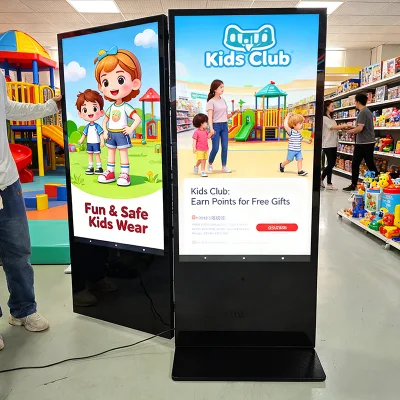


Full Color Indoor P1.8 P2 LED Panel Display LED Advertising Screen
$400.00 - $600.00
MOQ: 1 Square Meters

High Brightness Windows Indoor LED Display Screen for Advertising
$1000.00 - $3500.00
MOQ: 1 Square Meters


HD Outdoor Advertising Multiple Sizes LED Billboard Display LED Screen
$198.00 - $295.00
MOQ: 1 Square Meters

Full Color Outdoor Waterproof IP 65 Advertising LED Display Screen
$200.00 - $291.00
MOQ: 1 Square Meters


$430.00 - $620.00
MOQ: 1 Square Meters
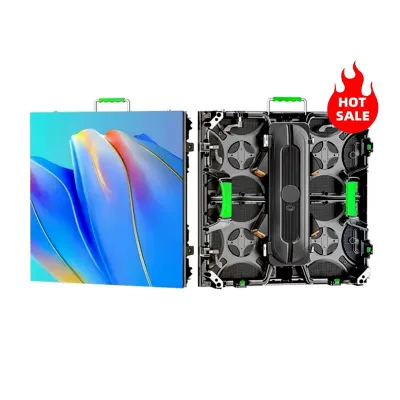

Comprehensive Sourcing Guide
Long Wireless LED Advertising Screen Sourcing Guide
Procuring long wireless LED advertising screens requires a nuanced understanding of both the physical display technology and the underlying data transmission infrastructure. While the term "wireless" often suggests a standalone, battery-powered unit, in the professional B2B context, it typically refers to displays that utilize wireless control systems for content management, such as Wi-Fi or 4G/5G modules, rather than eliminating the need for power cabling entirely. Buyers must distinguish between fully portable, battery-operated rental units and fixed-installation screens that offer wireless content updates. The core value proposition lies in the flexibility of content deployment and the reduction of complex wiring for signal transmission, which is critical for temporary installations, retail environments, or large-scale outdoor advertising where running long HDMI or fiber optic cables is impractical.
The market for these displays is characterized by a wide variance in pixel pitch, brightness, and structural integrity, directly impacting their suitability for different environments. Observed listings indicate a price range from approximately $141.48 to $3,500, reflecting the disparity between small, low-resolution modules and large, high-brightness outdoor cabinets. Minimum Order Quantities (MOQ) are generally low, ranging from 1 to 10 units, which facilitates sampling and small-scale pilot projects. However, the "wireless" capability must be verified against the specific model, as many standard LED cabinets require wired control systems for stable, high-bandwidth video playback. Buyers should prioritize suppliers who explicitly detail their wireless transmission protocols and latency performance, ensuring that the visual experience remains seamless without signal dropouts or buffering issues.
Product Scope and Observed Listing Signals
The product scope for long wireless LED advertising screens encompasses a variety of form factors, primarily defined by pixel pitch and cabinet dimensions. High-confidence data points reveal models such as the IXII-P2.5, which features a 2.5mm pixel pitch and is suitable for closer viewing distances of around 2 meters, making it ideal for indoor shopping guides or stage performances. In contrast, models like the OX-P6.67 and TR-P7.8 offer larger pixel pitches, with viewing distances extending to 7-8 meters, which are better suited for outdoor advertising or large venue backdrops. The cabinet materials vary between aluminum and steel, with weights ranging from 8 kg per cabinet to 30-50 kg per square meter, indicating that structural load-bearing capacity is a critical consideration for hanging or standing installations.
Listing signals also highlight significant variations in brightness and power consumption, which are direct indicators of the screen's operational environment. Indoor-focused displays, such as the IXII-P2.5, typically offer brightness levels around 800 nits, which is sufficient for controlled lighting conditions. Conversely, outdoor or high-ambient-light applications require displays with brightness exceeding 6,000 nits, as seen in certain high-end models. The power supply units (PSU) also vary, with some systems operating on standard AC110-240V inputs while others utilize specific 5V 60A configurations. Buyers must align these technical signals with their specific installation site, ensuring that the power infrastructure and ambient light conditions match the display's capabilities to avoid underperformance or excessive energy costs.
Technical Specifications to Verify
When evaluating technical specifications, the pixel pitch and configuration are paramount for determining image clarity and optimal viewing distance. The supplied facts indicate that many units utilize a 1R, 1G, 1B pixel configuration with Epistar or SMD 3-in-1 LED lamps, which are industry standards for color accuracy and consistency. For high-resolution applications, a 2.5mm pitch is preferred, while larger pitches like 6.67mm or 7.8mm are acceptable for distant viewing. Buyers should verify the refresh rate, with observed values ranging from >1920Hz to 3840Hz; higher refresh rates are essential to prevent flickering when photographed or filmed, which is a common requirement for stage performances and broadcast-quality advertising.
The control system and scanning mode are other critical technical areas that impact performance and maintenance. The scanning modes observed include 1/8 scan and 1/16 scan, which affect the brightness and drive current of the LEDs. Higher scan ratios (like 1/16) often allow for higher brightness but may require more robust cooling. The control systems mentioned, such as Nova, Novastar, Linsn, and Colorlight, are reputable industry standards that ensure compatibility with various media players and software operating systems like Windows. Buyers must confirm that the wireless control module integrates seamlessly with these existing control systems to avoid compatibility issues during content deployment. Additionally, the cabinet standard sizes, such as 640mmx480mm or 960mmx1280mm, should be checked to ensure they fit the intended physical space and mounting structure.
Compliance and Safety Documentation
Compliance with international safety and environmental standards is non-negotiable for B2B procurement, particularly for displays installed in public spaces or commercial buildings. The supplied facts list CCC, CE, ETL, and RoHS certifications as high-confidence attributes for certain models. CCC is mandatory for products sold in China, while CE and RoHS are essential for European markets, ensuring electromagnetic compatibility and restriction of hazardous substances. ETL certification is particularly valuable for North American buyers, as it signifies that the product has been tested against North American safety standards. Buyers must request valid, up-to-date certificates for each specific model, as certifications are often model-specific and not blanket approvals for an entire supplier catalog.
Beyond electrical safety, documentation regarding the display's lifespan and operational durability is crucial for long-term cost estimation. Observed data indicates a lifespan of up to 100,000 hours for certain models, which translates to approximately 11 years of continuous operation at 24 hours a day. However, this figure is contingent on proper thermal management and power stability. Buyers should also verify the IP rating, although specific values were not consistently listed in the high-confidence facts; for outdoor installations, an IP65 or higher rating is typically required to protect against dust and water ingress. Ensuring that the supplier provides comprehensive documentation, including user manuals, warranty terms, and compliance certificates, reduces the risk of regulatory penalties and operational downtime.
Cost Drivers and Commercial Terms
The cost of long wireless LED advertising screens is driven by several key factors, including pixel pitch, brightness, and the complexity of the wireless control system. Lower pixel pitches, such as 2.5mm, require more LEDs per square meter, significantly increasing material costs. Similarly, high-brightness displays for outdoor use require more powerful LEDs and advanced heat dissipation systems, which add to the manufacturing expense. The inclusion of wireless transmission modules, such as Wi-Fi or 4G cards, also adds a premium compared to standard wired control systems. Buyers should expect a wide price variance, with observed ranges from $141.48 to $3,500, and should request detailed breakdowns to understand which components are contributing to the final price.
Commercial terms, including MOQ and packaging, also play a significant role in the total cost of ownership. The observed MOQ range of 1-10 units suggests that suppliers are flexible, allowing buyers to start with small orders for testing. However, bulk purchases may offer better pricing per unit. Packaging is typically done in plywood cases, which are robust enough for international shipping but add to the overall weight and volume. Buyers should consider the logistics costs associated with shipping these heavy units, as the weight can range from 8 kg per cabinet to 30-50 kg per square meter. Negotiating clear terms for shipping, insurance, and potential damage during transit is essential to avoid unexpected costs upon delivery.
Supplier Qualification and Quality Control
Supplier qualification is a critical step in ensuring the reliability of long wireless LED advertising screens. Buyers should prioritize suppliers who have a proven track record in manufacturing LED displays and who provide transparent information about their production processes. The presence of high-confidence certifications like CE, RoHS, and ETL is a strong indicator of a supplier's commitment to quality and compliance. Additionally, suppliers who offer customization services, as noted in the facts, demonstrate flexibility and a customer-centric approach, which can be beneficial for unique installation requirements. Buyers should verify the supplier's ability to provide front-service cabinets, which simplify maintenance and reduce long-term operational costs.
Quality control measures should be rigorously evaluated before placing large orders. Buyers should request samples to test the display's performance in real-world conditions, focusing on aspects like color consistency, brightness uniformity, and wireless signal stability. The use of reputable components, such as Epistar LEDs and Constent Current driver ICs, is a positive sign of quality. Suppliers who provide detailed technical specifications, including contrast ratios of 3000:1 and viewing angles of 140 degrees horizontally and vertically, are likely to have better quality control processes. Establishing a clear communication channel with the supplier for post-sales support and technical assistance is also vital for resolving any issues that may arise during installation or operation.
Long-Term Procurement Checks
Long-term procurement success depends on the supplier's ability to provide ongoing support and spare parts. Buyers should inquire about the availability of replacement modules, power supplies, and control cards, as these components may need to be replaced over the 100,000-hour lifespan of the display. Suppliers who offer comprehensive warranty terms and responsive technical support are better equipped to handle unexpected failures. Additionally, buyers should consider the software ecosystem, ensuring that the control system is compatible with future updates and third-party content management platforms. The use of standard operating systems like Windows and reputable control brands like Nova or Novastar ensures that the display remains compatible with evolving technology standards.
Finally, buyers should monitor the supplier's innovation and product development roadmap. The LED display industry is rapidly evolving, with new technologies emerging regularly. Suppliers who invest in R&D and offer upgrades, such as higher refresh rates or improved wireless capabilities, are more likely to remain competitive and provide better value over time. Regularly reviewing the supplier's performance, including delivery times, product quality, and customer service, is essential for maintaining a healthy procurement relationship. By conducting periodic audits and staying informed about industry trends, buyers can ensure that their long wireless LED advertising screens continue to meet their business objectives and deliver a high-quality visual experience.
FAQs
What customization options are available for these screens?
Customization is available for these LED video displays to meet specific project needs. Buyers can request tailored solutions for stage performance or advertising applications while maintaining standard pixel configurations and cabinet materials.
Which certifications do these LED screens typically hold?
These products commonly hold CCC, CE, ETL, and RoHS certifications to ensure safety and compliance. Buyers should verify specific documentation for each unit as certifications may vary by batch and supplier location in China.
How bright are the LED video displays for outdoor use?
Brightness levels vary by model, ranging from 800 nits for indoor use to over 6000 nits for outdoor applications. The specific brightness depends on the pixel pitch and intended viewing distance for the installation site.
Can these screens be installed using back bolted hanging?
Yes, back bolted hanging is a standard installation method for these aluminum cabinet displays. Some models also support standing or hanging configurations depending on the specific product model and site requirements.
What is the refresh rate of these LED displays?
Refresh rates typically exceed 1920Hz to ensure smooth video playback without flickering. Higher-end models may offer rates up to 3840Hz, which is critical for high-quality video display applications in advertising or stage performance.
Which LED lamps are used in these full color displays?
Manufacturers often use Epistar LED lamps or SMD 3 in 1 chips for full color output. The specific lamp type depends on the pixel pitch and model, such as the IXII-P2.5 or OX-P6.67 series.
What is the average power consumption per square meter?
Average power consumption is approximately 300W per square meter for standard configurations. Higher brightness models may consume more power, so buyers should check the specific wattage for their chosen pixel pitch and application.