Source Lorawan Water Meter PCB for Civil, Industrial, and Smart Applications
Find 30 Lorawan Water Meter PCB options with features like digital counters, IP68 protection, and battery life up to 6 years. Buyers can compare models such as SH6212 and 218 for civil, industrial, and smart water management needs.
Key considerations
Products List


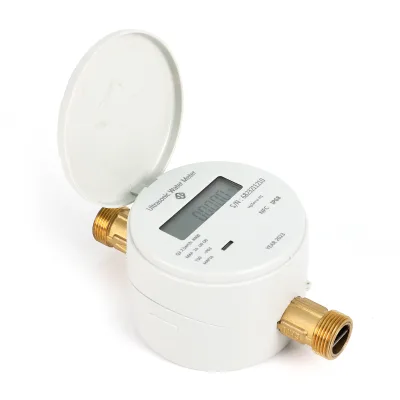
Nb/Lorawan Ultrasonic Water Meter Prepaid Water Meter Photoelectric Water Meter
$16.00 - $19.00
MOQ: 1 Pieces


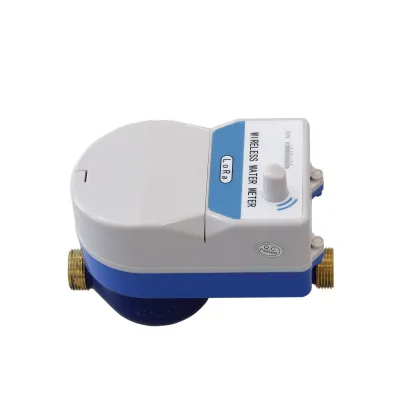
Wireless Remote Reading Lora/ Lorawan/ Nb-Iot/GPRS Smart Prepaid Water Metering
$10.00 - $13.00
MOQ: 1 Pieces




Comprehensive Sourcing Guide
Strategic Sourcing Guide for Lorawan Water Meter PCB Solutions
The procurement of LoRaWAN water meter PCBs represents a critical intersection of fluid measurement infrastructure and advanced wireless telemetry. For B2B buyers, the transition from traditional mechanical meters to intelligent, connectivity-enabled devices requires a rigorous understanding of the underlying printed circuit board (PCB) architecture, communication protocols, and environmental durability. The core keyword "Lorawan Water Meter PCB" implies a specific subset of hardware designed to facilitate long-range, low-power wide-area network (LPWAN) communication within water utility environments. This guide synthesizes available product attributes and industry standards to provide a disciplined framework for evaluating potential suppliers and specifications without relying on unverified market claims.
Technical Architecture and Communication Protocols
The fundamental differentiator for a Lorawan Water Meter PCB is its ability to transmit data over long distances while maintaining minimal power consumption. Based on observed product attributes, the communication interface for these devices often includes LoRaWAN, 4G, and NB-IoT modules. The specific inclusion of "Lorawan/4G/Nbiot" as a module attribute indicates that the PCB must support multiple radio frequency (RF) standards or be configurable for specific regional frequency bands. Buyers must verify that the PCB design supports the specific LoRaWAN class (Class A, B, or C) required by their utility network, as this dictates the power consumption profile and latency characteristics.
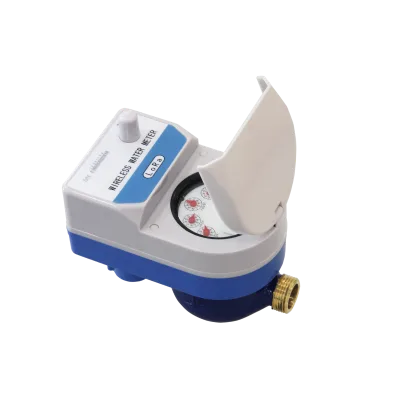
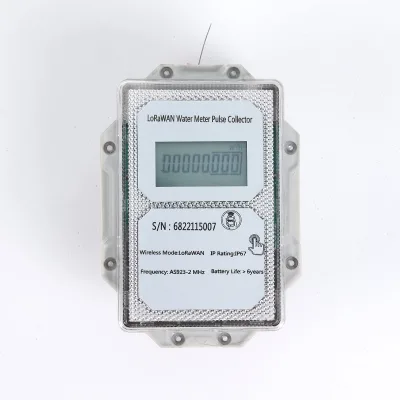
The physical design of the PCB must accommodate the "Wireless Communicating" structure observed in several product models. This implies the integration of RF antennas, which may be internal or external, and shielding to prevent electromagnetic interference (EMI) from the meter's mechanical components. The "Digital and Analogue" counter instruction attribute suggests that the PCB must handle dual-mode data processing, converting mechanical rotation into digital signals for transmission while potentially retaining an analogue display for local verification. The "Module" attribute further clarifies that the PCB often serves as a host for removable or soldered communication modules, requiring precise pinout definitions and power management circuits to ensure the "Battery Life" of up to six years is achievable.
Environmental Durability and Protection Standards
Water meters operate in harsh environments, ranging from wet underground chambers to dry indoor utility closets. The PCB must be engineered to withstand these conditions. The observed "Work Environment" attributes distinguish between "Wet Water Meter" and "Dry Water Meter" applications. For wet environments, the PCB assembly requires conformal coating or potting to prevent corrosion from humidity and direct water contact. The "Protection Class" of IP68 is a critical specification to verify; this rating indicates the device is dust-tight and capable of prolonged immersion in water, a standard often cited in high-end metering solutions.
Temperature resilience is another paramount factor. The "Medium Temperature" attribute ranges from "Cold Water" to "Hot Water," with specific maximum temperature ratings such as T30, T50, and T90. The PCB components must be rated to operate continuously within these thermal limits without signal degradation or component failure. For hot water applications, the PCB layout must account for thermal expansion and the potential for higher ambient temperatures within the meter housing. The "Medium Pressure" attribute, ranging from "General Water Meter" to "High-pressure Water Meter," further dictates the mechanical robustness required for the PCB housing, ensuring that the board does not flex or crack under hydraulic stress.
Compliance, Certification, and Regulatory Alignment
Procuring LoRaWAN water meter PCBs necessitates strict adherence to international and regional standards to ensure legal metrology compliance and market access. The supplied data explicitly lists "ISO9001, ISO4064, IP68, OIML" as certifications. ISO 4064 is the international standard for water meters, covering accuracy classes and testing procedures. Buyers must verify that the PCB and the final meter assembly meet the specific accuracy class (e.g., Class B or Class C) indicated in the product attributes. The "Level Measurement" attribute showing values of B and C suggests that different PCB configurations may be required to achieve different accuracy tiers.
The "OIML" (International Organization of Legal Metrology) certification is particularly vital for meters used in commercial billing. This certification ensures that the meter's measurement logic, including the PCB's data processing algorithms, meets legal requirements for trade. Additionally, the "Standard" attribute listing "ISO4064" and specific dimensional standards like "5026.534.5" or "34.511.418.6" highlights the importance of form-factor compliance. While these dimensions may refer to the housing or specific module sizes, the PCB must be designed to fit within these constraints while maintaining the necessary clearance for high-voltage or high-current components if applicable. Buyers should request test reports confirming that the PCB design has been validated against these specific standards before placing large orders.
Cost Drivers and Economic Considerations
The cost structure of LoRaWAN water meter PCBs is influenced by several variables, including the complexity of the RF design, the quality of components, and the level of integration. The "Price" attribute is described as "Economical," suggesting a competitive market with a wide range of pricing options. The observed price range of $0.25 to $3039.6 USD indicates a vast disparity between simple bare boards and fully assembled, certified metering units. Buyers must distinguish between the cost of the bare PCB, the cost of the assembled board with components, and the cost of the complete meter assembly.
The "MOQ" (Minimum Order Quantity) range of 1 to 500 units provides flexibility for prototyping and small-scale deployments, but larger volumes often yield better unit economics. The "Battery Life" of six years is a significant cost driver; achieving this lifespan requires high-quality capacitors, low-power microcontrollers, and efficient power management ICs on the PCB. The choice of communication module (LoRaWAN vs. 4G vs. NB-IoT) also impacts cost, as 4G modules generally incur higher component costs and subscription fees compared to LoRaWAN or NB-IoT solutions. The "Material" attribute, listing "Brass/Stain Steel/Plastic," primarily affects the housing cost, but the PCB material itself (e.g., FR-4, high-Tg materials) must be selected to match the thermal and mechanical requirements of the application.
Typical Applications and Installation Configurations
The versatility of LoRaWAN water meter PCBs allows for deployment across diverse sectors. The "Application" attribute specifies "Civil" and "Industrial" use cases. In civil applications, such as residential multi-dwelling units, the PCB must support "Horizontal" or "Vertical" installation, as indicated by the "Install" attribute. The "Installation Direction" of "H" further reinforces the need for flexible mounting designs. Industrial applications may require higher pressure ratings and more robust communication protocols to handle larger volumes of data from multiple meters.
The "Nominal Diameter" of "Small Diameter" and specific sizes like "DN15, DN20, DN25" indicate that these PCBs are often integrated into compact meter bodies. The "Type" attribute, listing "Dry Dial, Wet Liquid Seal," suggests that the PCB design must accommodate different internal sealing mechanisms. For dry dial meters, the PCB is isolated from the water, simplifying the protection requirements. For wet liquid seal meters, the PCB must be fully encapsulated. The "Medium Pressure" classification of "General Water Meter" versus "High-pressure Water Meter" also dictates the application; high-pressure PCBs are typically reserved for mainline metering or industrial processes, while general meters serve standard distribution networks.
Supplier Evaluation and Quality Control Protocols
When evaluating suppliers for LoRaWAN water meter PCBs, buyers should prioritize transparency regarding the "prod_model" numbers such as 218, 15, 145, 130, 56, SH6212, and SH5112. These model numbers often correspond to specific PCB revisions or feature sets. A robust supplier should provide detailed datasheets for each model, outlining the exact component list, PCB layer stack-up, and firmware capabilities. The "Standard" attribute listing specific dimensions like "34.511.418.6" suggests that suppliers may offer standardized form factors, which can simplify the integration process for meter manufacturers.
Quality control should focus on the "Certification" status. Buyers must verify that the supplier holds valid ISO9001 certification for their manufacturing processes and that the specific PCB models have been tested for IP68 compliance. The "Counter Instructions" being "Digital" or "Digital and Analogue" requires rigorous testing of the signal conversion logic to ensure data integrity. Furthermore, the "Communication Interface" of "RS485/ Lora/ Lorawan" implies that the PCB must support multiple communication protocols. Buyers should request sample units to test the "Meter Reading Times" capability, ensuring the device can reliably transmit data "Once a Day" or more frequently without battery depletion.
Long-Term Procurement and Lifecycle Management
Sourcing decisions for LoRaWAN water meter PCBs must account for the long-term lifecycle of the water metering infrastructure. The "Battery Life" of six years is a key metric for total cost of ownership (TCO). A PCB that drains the battery prematurely will necessitate costly maintenance visits, negating the efficiency gains of remote reading. The "Module" attribute suggests that the communication module may be replaceable or upgradable, which is a critical feature for future-proofing. As network technologies evolve, the ability to swap a LoRaWAN module for a 5G or updated NB-IoT module without replacing the entire PCB can extend the product's useful life.
The "Structure" attribute, ranging from "Traditional" to "Wireless Communicating" and "Intelligent IC Card," indicates a spectrum of technological maturity. Buyers should assess whether the supplier offers a clear upgrade path from traditional mechanical meters to fully intelligent LoRaWAN solutions. The "Packing" method, described as "Hard Carton Box" or "Wooden and Carton Packaging," also plays a role in long-term logistics, ensuring that the PCBs and assembled meters arrive without damage during transit. Finally, the "Origin" of "China" is a common sourcing location for these components, but buyers should ensure that the supply chain is resilient to geopolitical or logistical disruptions. By focusing on these technical and operational factors, buyers can secure a reliable supply of high-quality LoRaWAN water meter PCBs that meet the rigorous demands of modern water utility management.
FAQs
How does the PCB support wireless communication in water meters?
The PCB supports wireless communication by integrating modules for LoRaWAN, 4G, and NB-IoT. This design allows for long-range data transmission while maintaining low power consumption essential for battery-operated devices.
What certifications ensure the PCB meets international water meter standards?
The PCB must comply with ISO9001, ISO4064, IP68, and OIML certifications. These standards verify manufacturing quality, accuracy class, environmental protection, and legal metrology compliance for billing applications.
Which installation directions are supported by the Lorawan Water Meter PCB?
The PCB supports both horizontal and vertical installation directions. This flexibility allows the device to be mounted in various civil and industrial settings depending on the specific pipe configuration.
Can the PCB operate in high-pressure water environments?
Yes, the PCB is designed for both general and high-pressure water meter applications. It is built to withstand hydraulic stress while maintaining signal integrity in demanding industrial conditions.
What is the expected battery life for the Lorawan Water Meter PCB?
The PCB is engineered to achieve a battery life of up to six years. This longevity is maintained through efficient power management circuits and low-power communication protocols like LoRaWAN.
How does the PCB handle different water temperature ranges?
The PCB handles temperature ranges from cold water up to T30, T50, and T90 for hot water applications. Components are selected to operate reliably within these specific thermal limits.
What protection class rating does the PCB assembly achieve?
The PCB assembly achieves an IP68 protection class rating. This ensures the device is dust-tight and capable of prolonged immersion in water, suitable for wet underground environments.