Source Luxury Airline Slippers for hotels, travel, and spas
Compare 30 listings for Luxury Airline Slippers designed for hotels, travel, and spa amenities. Buyers can evaluate specifications like EVA soles, biodegradable materials, and customization options to find suitable disposable slippers for their procurement needs.
Key considerations
Products List
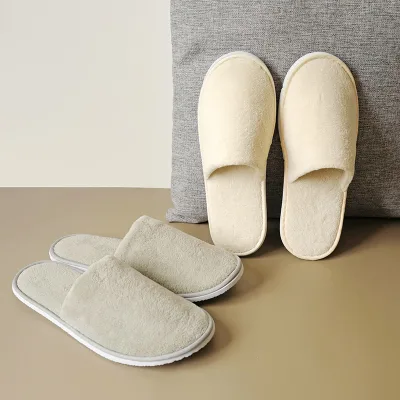

Disposable Airplane Travel Luxury Closed Toe Indoor White Hotel Slippers
$0.40 - $0.60
MOQ: 500 Pieces


Logo Custom Disposable Airplane Travel Airline Slippers for Women and Men
$0.40 - $0.60
MOQ: 500 Pieces


Luxury Non-Slip Hotel Disposable Keep Warm and Comfortable Home Slippers
$1.80 - $2.20
MOQ: 5000 Pieces


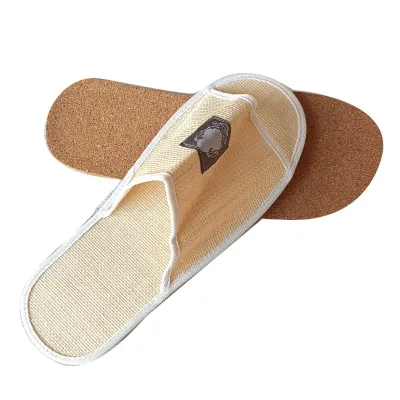


OEM Wholesale Hospitality Customizable Logo Non-Slip Sole One-Size Slipper
$0.10 - $0.50
MOQ: 5000 Pairs

Comprehensive Sourcing Guide
Strategic Sourcing Guide for Luxury Airline Slippers
Procuring high-quality airline slippers requires a nuanced understanding of the intersection between luxury aesthetics, functional durability, and the rigorous logistical constraints of the aviation and hospitality sectors. The market for "Luxury Airline Slippers" often implies a product that transcends basic disposable footwear, offering premium materials, refined design, and enhanced comfort while maintaining the cost-efficiency necessary for high-volume deployment. Buyers must navigate a complex landscape where product attributes vary significantly between suppliers, necessitating a disciplined approach to specification, verification, and supplier selection. This guide outlines the critical factors for sourcing these specialized amenities, focusing on technical specifications, material integrity, and supply chain reliability.
Technical Specifications and Material Composition
The foundation of a successful procurement strategy lies in defining precise technical specifications. In the context of airline and luxury hotel slippers, the material composition is the primary differentiator between a standard commodity item and a premium amenity. The observed market data indicates a strong prevalence of cotton and EVA (Ethylene Vinyl Acetate) materials. A "luxury" designation often necessitates a specific configuration of these materials. For instance, the upper and insole are frequently described as 100% biodegradable fuzzing or plain weave cotton, which provides a soft, plush texture essential for passenger comfort. The sole, typically constructed from EVA, offers the necessary cushioning and flexibility.
Thickness is a critical metric that directly correlates with perceived luxury and comfort. Specifications observed in the market include sponge thicknesses of 3mm and sole thicknesses of 5.5mm. These dimensions are not merely aesthetic; they determine the thermal insulation and shock absorption capabilities of the slipper. A thicker sole generally indicates a higher-end product, though it must be balanced against the weight constraints of airline cargo. The weight of individual units is often cited around 15 grams, with customization options available. Buyers should verify that the specific weight aligns with their airline's strict baggage weight limits, as even minor deviations can impact cargo efficiency.
The construction of the slipper also involves specific design elements such as edge banding, which is often made from non-woven fabric strips to prevent fraying and enhance durability. The toe design varies between closed-toe and open-toe styles, with some suppliers offering flip-flop variations. For a luxury application, closed-toe designs are often preferred to provide a more formal and secure fit. The sole type is another vital specification, with anti-slip properties being a standard requirement. The presence of anti-slip dots or specific EVA formulations ensures safety in wet environments, such as aircraft galleys or hotel bathrooms.
Compliance, Certification, and Environmental Standards
While the core keyword focuses on luxury, the regulatory and environmental landscape for airline amenities is increasingly stringent. Although specific certification statuses like FSC, ISO 9001, BSCI, REACH, or RoHS are mentioned in background contexts, buyers must treat these as verification targets rather than guaranteed attributes of every listed product. The aviation industry and high-end hospitality chains often mandate compliance with specific environmental and safety standards.
Buyers should prioritize verifying the biodegradability claims of the materials. The product data suggests that the upper and insole are 100% biodegradable, a feature that aligns with the growing global demand for sustainable travel amenities. However, "biodegradable" is a broad term. Procurement teams must request specific test reports or certifications that define the degradation timeline and conditions under which the materials break down. Similarly, the use of EVA in the sole requires verification against chemical safety standards to ensure no harmful substances are released during use or disposal.
Environmental compliance is not limited to the materials themselves but extends to the packaging. The standard packing method involves cartons, but the sustainability of the carton material and the efficiency of the packing density (often cited as 10x10x3 cm per single package) are critical for reducing the carbon footprint of logistics. Buyers should inquire about the recyclability of the packaging and whether the supplier offers eco-friendly alternatives to traditional plastic-wrapped cartons. Furthermore, the "Disposable" nature of the product, as noted in the specifications, requires a clear understanding of the waste management protocols at the destination airports and hotels. A luxury product that cannot be disposed of responsibly may face regulatory hurdles in certain jurisdictions.
Cost Drivers and Pricing Dynamics
Understanding the cost structure of Luxury Airline Slippers is essential for budgeting and negotiation. The observed price range in the market spans from $0.10 to $39.90 USD, a wide variance that reflects differences in material quality, customization, and order volume. The lower end of this spectrum typically represents basic, non-customized disposable slippers with standard cotton and EVA construction. The higher end encompasses products with premium branding, specialized anti-slip technologies, custom packaging, and enhanced material thickness.
The Minimum Order Quantity (MOQ) is a significant cost driver. Data indicates an MOQ range from 1 to 10,000 units, with specific listings showing an MOQ of 5,000 pairs for customized orders. High-volume orders generally benefit from economies of scale, reducing the unit cost significantly. However, for buyers seeking luxury customization, the MOQ may be higher, and the unit price will reflect the added complexity of the production process. Customization options, such as adding a customized logo or altering the color to match airline branding, introduce additional costs. These costs are not linear; they depend on the complexity of the design and the setup fees associated with the printing or molding processes.
Other cost factors include the origin of the product. Suppliers located in Shanghai and Yangzhou, China, are prominent in this sector. While these locations offer competitive manufacturing costs, buyers must factor in shipping, tariffs, and lead times. The lead time is influenced by the customization level and the current production capacity of the supplier. For standard items, lead times may be shorter, whereas custom orders with specific biodegradable material requirements may require longer production cycles. Buyers should also consider the "Single Gross Weight" of 0.010 kg per unit when calculating freight costs, as this impacts the total weight of the shipment and the associated logistics expenses.
Typical Applications and Usage Scenarios
The versatility of airline slippers allows them to be deployed across various high-end sectors. The primary application is, of course, the aviation industry, where they are provided to passengers for comfort during long-haul flights. In this context, the slippers must be compact, lightweight, and easy to distribute. The "Travel" and "Hotel Room" usage tags highlight their dual purpose. Many airlines partner with hotels to provide consistent amenities, creating a seamless experience for the traveler.
Beyond aviation, these slippers are widely used in the hospitality sector, specifically in 3-5 star hotels. The "Luxury" aspect is crucial here, as guests expect a certain level of quality from their accommodation. The "Spa" and "Indoor" usage tags further expand the potential applications to wellness centers and private residences. The anti-slip sole is particularly important in these wet environments, ensuring guest safety. The "Winter Slippers" designation suggests that some variants are designed for colder climates, offering additional thermal insulation.
The "Disposable" nature of the product makes it ideal for high-turnover environments where hygiene is paramount. However, the "Luxury" expectation requires that the disposable item does not feel cheap or flimsy. This creates a unique challenge for suppliers: balancing the disposability of the product with the tactile and visual qualities of a premium good. The "Plain Weave" and "Fuzzing" materials help achieve this balance, providing a soft feel that mimics higher-end reusable footwear.
Supplier Evaluation and Selection Criteria
Selecting the right supplier is a critical step in the procurement process. Buyers should evaluate potential partners based on their ability to meet the specific technical and customization requirements outlined earlier. The "OEM/ODM Custom" capability is a key indicator of a supplier's flexibility. Suppliers that accept customized logos, packaging, and material specifications are better equipped to meet the branding needs of luxury airlines and hotels.
The "Standard specifications or customized" nature of the product standard suggests that buyers must clearly define their requirements before engaging with a supplier. A supplier that can produce to a specific standard (e.g., 30*11cm dimensions) while also offering customization is ideal. Buyers should also verify the supplier's production capacity and lead time reliability. The "Lead Time" is not explicitly defined in the provided data, but it is a critical factor for supply chain planning. Buyers should request detailed production schedules and contingency plans for delays.
Quality control is another essential evaluation criterion. Suppliers should have robust QC processes in place to ensure that every pair of slippers meets the specified thickness, weight, and material standards. The "Anti-slip" feature, for example, must be consistently applied across the entire batch. Buyers should ask for quality assurance documentation and sample testing protocols. Additionally, the supplier's location, whether Shanghai or Yangzhou, may impact the ease of communication and the ability to conduct on-site audits.
Quality Control and Long-Term Procurement Considerations
Maintaining consistent quality over time is vital for luxury brands. The "Feature: Non-Slip" and "Sole: EVA or EVA with Anti-Slip DOT" specifications must be rigorously tested. Buyers should implement a quality control plan that includes random sampling and stress testing of the slippers. This ensures that the anti-slip properties remain effective and that the materials do not degrade prematurely. The "Thickness of Sponge: 3mm" and "Sole: 5.5 mm EVA" should be measured regularly to ensure they remain within the specified tolerances.
Long-term procurement considerations also involve the scalability of the supply chain. As an airline or hotel chain expands, the demand for slippers will increase. The supplier must be able to scale production without compromising quality. The "MOQ: 5000 pairs" indicates a baseline volume, but buyers should negotiate terms that allow for flexible ordering as demand fluctuates. The "Customization: Available" feature should be leveraged to create a unique brand identity that evolves over time.
Finally, sustainability must be a long-term priority. As environmental regulations tighten, the "100% Biodegradable" claim must be backed by verifiable data. Buyers should work with suppliers who are committed to continuous improvement in their environmental practices. This includes exploring new materials, optimizing packaging to reduce waste, and ensuring that the entire lifecycle of the slipper aligns with the buyer's sustainability goals. By focusing on these long-term considerations, buyers can secure a reliable supply of Luxury Airline Slippers that meet the highest standards of quality, safety, and environmental responsibility.
FAQs
What materials are used for Luxury Airline Slippers?
Luxury Airline Slippers typically use cotton for the upper and insole, paired with an EVA sole. The materials are often described as 100% biodegradable fuzzing or plain weave cotton to ensure softness and environmental compliance for high-end travel amenities.
How thick are the sponge and sole layers?
Standard specifications include a sponge thickness of 3mm and a sole thickness of 5.5mm. These dimensions provide necessary cushioning and thermal insulation while maintaining the lightweight profile required for airline cargo efficiency.
Can suppliers customize the logo and packaging?
Yes, OEM and ODM customization are accepted for logos and packaging. Buyers can request customized logos, colors, and standard or custom carton packing to align with specific airline branding or hotel amenity requirements.
What is the typical minimum order quantity for these slippers?
The minimum order quantity ranges from 1 to 10,000 units depending on the supplier. Specific listings indicate an MOQ of 5,000 pairs for customized orders, while standard items may have lower thresholds starting from a single unit.
Where are these slippers manufactured?
Manufacturing locations are primarily in Shanghai and Yangzhou, China. These regions are known for producing disposable airline slippers with specific features like anti-slip soles and biodegradable materials for the hospitality and aviation sectors.
Do the slippers have anti-slip features?
Yes, the slippers feature anti-slip soles, often with EVA and anti-slip dots. This design ensures safety in wet environments like aircraft galleys or hotel bathrooms, meeting the functional requirements for luxury travel amenities.