Source Luxury Motorcycle Cover for Indoor Storage and Transport
Find 30 verified listings for Luxury Motorcycle Cover options including dustproof and waterproof features. Buyers can compare customization, fabric types, and lead times from manufacturers in China to select the right protective gear for their fleet.
Key considerations
Products List
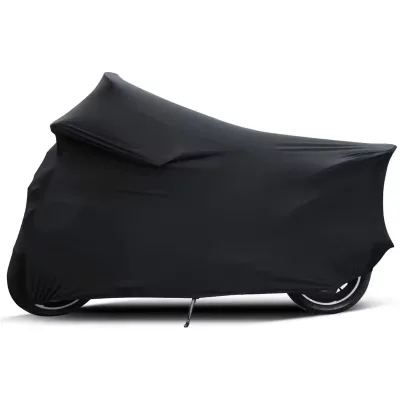

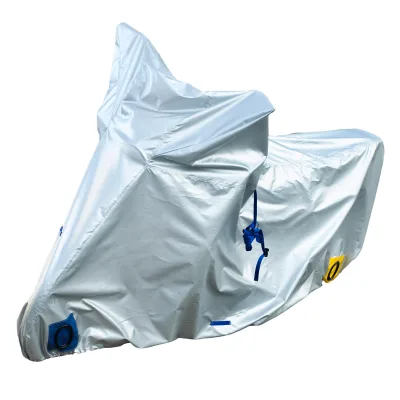
Luxury Indoor Motorcycle Cover Elastic Breathable Dust-Proof Bike Cover
$15.00 - $19.00
MOQ: 100 Pieces


Hot Sale Luxury Reinforced Scratch-Resistant Universal-Fit Motorcycle Cover
$4.24 - $4.74
MOQ: 250 Pieces


Premium Heavy-Duty Windproof Scratch-Resistant Universal Motorcycle Cover
$1.78 - $1.99
MOQ: 550 Pieces


Hot Selling Exquisite Anti-Stain Easy-Clean Motorcycle Cover Economical Motorcycle Cover
$2.16 - $2.42
MOQ: 450 Pieces

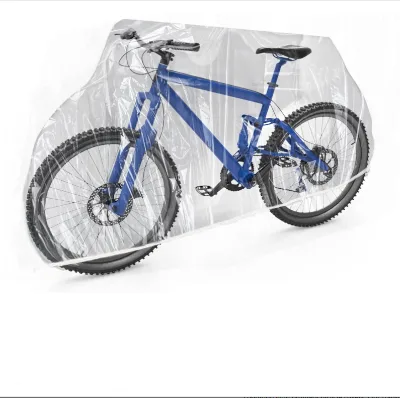


Indoor Outdoor All Weather Resistant Waterproof UV Protection Motorcycle Cover
$8.00 - $10.00
MOQ: 200 Pieces


Comprehensive Sourcing Guide
Strategic Sourcing Guide for Luxury Motorcycle Covers
Understanding the Product Landscape and Core Specifications
The market for luxury motorcycle covers is defined by a convergence of aesthetic customization and high-performance material science. When sourcing "Luxury Indoor Motorcycle Covers," buyers must first distinguish between products designed for general dust protection and those engineered for comprehensive environmental shielding. The available product data indicates a diverse range of functional attributes, with some listings emphasizing "Dust Protection" while others claim a robust suite of features including "Waterproof," "Anti-UV," and "Anti-Scratch" capabilities. This variance suggests that the term "luxury" in this context often correlates with the breadth of protective functions and the quality of the fabric construction rather than a single uniform standard.
A critical technical differentiator lies in the fabric type. The supply chain offers both "Weft Knitting" and "Warp Knitting" options. Weft knitting typically provides a softer, more stretchable fabric that conforms closely to the motorcycle's contours, which is often preferred for indoor storage to prevent scratching. Conversely, warp knitting generally offers higher dimensional stability and tensile strength, which may be necessary for covers claiming "Waterproof" and "Anti-UV" properties. Buyers must verify which knitting method aligns with their specific storage environment. Furthermore, the product specifications list a wide array of model numbers, including IC-2023317(2), AJ1106, 18103, and various LJL series codes (LJL-0174, LJL-0165, LJL-0173, LJL-0163, LJL-0172, LJL-0291). These distinct identifiers often correspond to specific size profiles or feature sets, such as the "Clear Plastic Motorcycle Cover" or the "Motorcycle Cushion Cover," indicating that a single SKU rarely covers all use cases.
Compliance, Certification, and Safety Standards
In the B2B procurement of protective gear, verifying compliance is as vital as assessing physical durability. The product data references a comprehensive list of certifications, including "CCC," "ISO9001," "RoHS," "CE," "DOT," and "EEC." These acronyms represent distinct regulatory frameworks: ISO9001 indicates a quality management system, while RoHS restricts hazardous substances. CE and EEC are European conformity marks, and DOT is a U.S. Department of Transportation standard often associated with safety equipment. However, the presence of these certifications in a general product listing does not guarantee that every specific unit or model number possesses all listed credentials.
Buyers must treat these certifications as potential attributes rather than universal guarantees. For instance, while "DOT" and "EEC" are listed, they are typically associated with helmets or active safety gear rather than passive covers. A prudent procurement strategy involves requesting specific test reports or certificates of conformity for the exact model number being ordered. The "S, M, L, XL" standards mentioned in the data likely refer to sizing rather than safety standards, yet the "38X33X6 cm" and "30.0X20.0X5.0 CM" dimensions suggest that some products may be categorized by specific packaging or internal component sizes rather than just the cover dimensions. Procurement teams should verify that the "Customized Color" and "Printing Logo" options do not compromise the integrity of any flame-retardant or chemical-resistant certifications claimed by the manufacturer.
Cost Drivers and Pricing Dynamics
The observed price range for these products spans from $0.76 to $26.51 USD, a significant variance that reflects differences in material quality, customization levels, and order volume. The lower end of this spectrum likely corresponds to basic "Dust Protection" covers made from standard weft-knitted fabrics with minimal customization. In contrast, the higher price points are driven by advanced features such as "Waterproof," "Anti-UV," and "Heat Insulation" capabilities, often utilizing warp-knitted fabrics and multi-layer constructions.
Minimum Order Quantity (MOQ) is a primary cost driver in this sector. The data shows an MOQ range from 1 to 2000 units, with specific listings citing 300 PCS or 100 Pcs. For buyers seeking "Luxury" attributes like "Embroider Logo" or "Customized Color," the MOQ will typically be higher to justify the setup costs for printing and embroidery machinery. The "Made-to-Order" supply type further influences pricing; unlike stock items, custom orders incur additional logistics and production planning costs. Buyers should note that the "Lead Time" varies between 30 days and 35-40 days, with sample times of 7-10 days. These timelines impact the total cost of ownership, as longer lead times may require higher safety stock levels or result in delayed market entry. Additionally, payment terms such as "T/T" (Telegraphic Transfer) and "L/C" (Letter of Credit) can affect the financial structure of the deal, with L/C often adding administrative fees but providing security for larger transactions.
Typical Applications and Usage Scenarios
The primary application for these products is "Protect Motorcycle," specifically for "Two-Wheeled Vehicle" types. The data highlights a "Modern" style and "Universal" gender designation, suggesting broad applicability across various motorcycle models. However, the specific features dictate the ideal usage scenario. Covers labeled with "Dust Protection" and "Breathable" attributes are best suited for indoor storage in garages or warehouses where humidity control is managed but dust accumulation is a concern. The "Clear Plastic Motorcycle Cover" variant mentioned in the data serves a niche application, likely for short-term protection or display purposes where visibility of the vehicle is required.
For outdoor or semi-outdoor environments, the "Waterproof," "Anti-UV," and "Anti-Scratch" features become critical. The "Heat Insulation" and "Main Feature" attributes indicate that some covers are designed to mitigate temperature fluctuations, which is essential for protecting sensitive motorcycle components like paint, rubber seals, and electronic systems. The "Motorcycle Cushion Cover" category suggests a specialized application for protecting the seat or interior components rather than the entire vehicle. Buyers must align the product's "Function" list with their specific storage conditions. A cover that is "Waterproof" but lacks "Breathable" properties might trap moisture indoors, leading to mold or corrosion, whereas a "Breathable" cover might fail to protect against rain if used outdoors.
Supplier Evaluation and Operational Capabilities
Evaluating suppliers for luxury motorcycle covers requires a deep dive into their operational capabilities and geographic context. The "Place of Origin" is consistently listed as "Anhui, China" or simply "China," indicating a concentrated manufacturing hub. While this region is known for textile production, buyers should verify the specific factory's capacity to handle "OEM" (Original Equipment Manufacturer) and "ODM" (Original Design Manufacturer) requests. The "Customization: Available" attribute confirms that suppliers are willing to adapt products, but the extent of this customization—ranging from simple logo printing to complex fabric engineering—must be clarified.
The "Supply Type" being "Made-to-Order" implies a flexible but potentially less predictable production schedule. Buyers should assess the supplier's ability to manage the "30days" or "35-40days" lead times without compromising quality. The "Product Packing" method, listed as "Carton," is standard, but the "Package size per batch" of "56X45X50 cm" suggests that logistics planning is necessary for efficient shipping. Suppliers offering "OEM" services should be able to provide a portfolio of previous work, particularly for "Customized Color" and "Logo" applications. It is also essential to verify the "Brand Name" association; while "MESOROCK" is listed, buyers should ensure that the supplier has the legal right to use this branding or if it is a private label arrangement.
Quality Control and Long-Term Procurement Considerations
Maintaining consistent quality in the Luxury Motorcycle Cover market requires a rigorous quality control (QC) protocol. Given the variation in fabric types (Weft vs. Warp Knitting) and functional claims (Waterproof vs. Dustproof), buyers should implement a multi-stage QC process. This includes pre-production sample approval to verify the "Logo" placement and "Color" accuracy, in-process checks to ensure the "Anti-Scratch" and "Waterproof" treatments are applied correctly, and final random inspection before shipment. The "Sample Time" of 7-10 days is a critical window for this verification; rushing this step can lead to costly batch rejections.
Long-term procurement considerations extend beyond the initial order. Buyers should evaluate the supplier's ability to maintain consistent quality over multiple production runs. The "Standard" specifications listed (e.g., "38X33X6 cm") must be strictly adhered to to ensure compatibility with different motorcycle models. Additionally, the "Payment" terms of "T/T" and "L/C" should be structured to include retention clauses or quality guarantees. For buyers planning to scale, the "MOQ" flexibility is a key factor; starting with a lower MOQ to test the market and gradually increasing to 300 or 2000 units can mitigate financial risk. Finally, the "Main Feature" of "Durable" implies a need for long-term reliability, so buyers should request durability test data or warranty information to ensure the covers will withstand repeated use and environmental exposure over time.
Comparative Analysis of Product Attributes
To facilitate decision-making, the following table summarizes the key attributes observed in the supply data, highlighting the trade-offs between different product configurations.
| Attribute Category | Basic Configuration | Premium/Luxury Configuration |
|---|---|---|
| Primary Function | Dust Protection | Waterproof, Anti-UV, Anti-Scratch |
| Fabric Type | Weft Knitting | Warp Knitting |
| Customization | Printing Logo | Embroider Logo, Customized Color |
| Lead Time | 30 Days | 35-40 Days |
| MOQ | 100 Pcs | 300 PCS |
| Certifications | General (Verify per model) | CCC, ISO9001, RoHS, CE, DOT, EEC |
| Special Features | Breathable | Heat Insulation, IR Rejection (60%) |
| Packaging | Carton | Carton (Specific Batch Sizes) |
This comparison underscores that "luxury" in this market is not a monolithic category but a spectrum defined by specific technical enhancements. Buyers must carefully map their requirements against these configurations to ensure they are sourcing a product that genuinely meets their protection and branding needs.
FAQs
What fabric types are available for luxury motorcycle covers?
Both Weft Knitting and Warp Knitting fabric types are available for these covers. Weft knitting offers softness and stretch for indoor use, while warp knitting provides higher strength and stability for waterproof and anti-UV protection.
Which certifications are listed for these motorcycle cover products?
The product data lists certifications including CCC, ISO9001, RoHS, CE, DOT, and EEC. Buyers should verify that specific model numbers possess these credentials, as certifications may vary by production batch and product configuration.
How long is the lead time for custom luxury motorcycle covers?
The lead time typically ranges from 30 days to 35-40 days depending on the order specifics. Sample production requires 7-10 days, and the supply type is made-to-order, which influences the overall production schedule.
Can I customize the logo and color of the motorcycle cover?
Yes, customization is available for both printing and embroidery logos along with customized colors. This option allows buyers to adapt the product for branding, though it may affect the minimum order quantity and lead time requirements.
What is the minimum order quantity for these motorcycle covers?
The minimum order quantity varies, with observed ranges from 1 to 2000 units. Specific listings cite MOQs of 100 pieces or 300 pieces, depending on the level of customization and the specific model number selected.
Which functions do these covers provide for motorcycle protection?
Functions include dust protection, waterproofing, anti-UV, anti-scratch, and heat insulation. Some covers are breathable to prevent moisture buildup, while others offer IR rejection up to 60% for enhanced thermal protection.