Source Tractor Gear Drive Disc Plow for soil prep, dry cultivating, and forestry
Compare 30 Tractor Gear Drive Disc Plow options with working widths from 750mm to 5.5m and matched power ranging from 55HP to 180HP. These machines support soil preparation, dry cultivating, and forestry applications with gear drive systems.
Key considerations
Products List


Tractor Mounted Disc Plough Agricultural Tube Plow Farm Tilling Machine
$580.00 - $650.00
MOQ: 1 Pieces
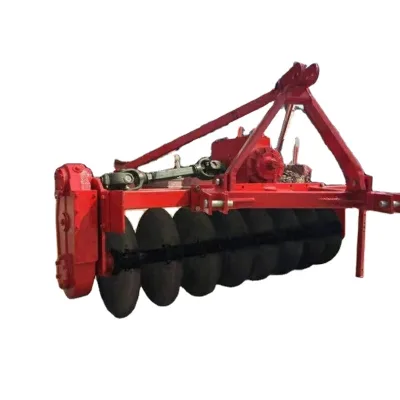

3 Point Hitch Disc Plow Power Tiller /Tractor Drive Plowing Machinery Disc Plow
$5000.00 - $7000.00
MOQ: 1 Pieces


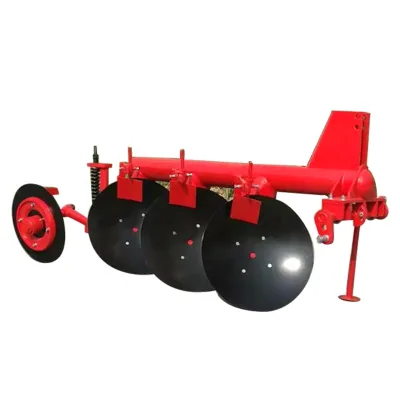

$140.00 - $210.00
MOQ: 1 Pieces


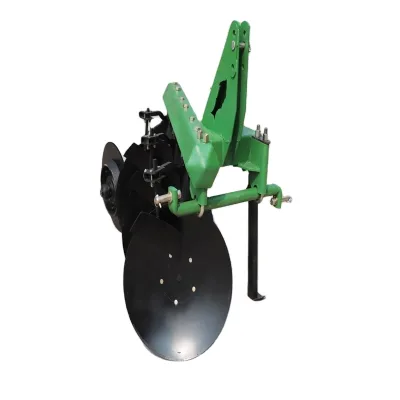
Tractor Mounted Disc Plow Tractor Disk Plough (1LY-525)
$320.00 - $600.00
MOQ: 1 Pieces
Shandong Liying Agricultural Technology Development Co., Ltd.




Comprehensive Sourcing Guide
Strategic Sourcing Guide for Tractor Gear Drive Disc Plows
Understanding the Technical Architecture of Disc Plows
When sourcing a Tractor Gear Drive Disc Plow, the buyer must first distinguish between the mechanical architecture that defines the machine's efficiency and its compatibility with existing fleet assets. The core keyword "gear drive" indicates a specific transmission method where power is transferred from the tractor's Power Take-Off (PTO) or direct traction to the disc assembly via a gearbox. This configuration is distinct from belt-driven systems, offering higher torque consistency and reduced slippage under heavy soil resistance. In the context of modern agricultural machinery, the gear drive system is critical for maintaining a constant cutting speed regardless of soil density variations.
The physical dimensions of the disc assembly are the primary determinant of the machine's operational footprint. Available specifications in the current market indicate disc diameters ranging from 660mm to 26 inches (approximately 660mm), with specific models featuring working widths of 750mm, 1000mm, and up to 5.5 meters for large-scale operations. The number of discs is equally variable, with observed configurations ranging from 2 to 6 discs in smaller units, extending to 7-9 discs for medium-duty applications, and reaching up to 48 pieces for heavy-duty, wide-width cultivators. This variance suggests that the "gear drive" specification must be paired with a specific disc count and diameter to match the intended soil preparation requirements.
The matched power requirement is a critical technical constraint. Buyers should verify that their tractor fleet can deliver the necessary horsepower to drive the gear mechanism effectively. Data indicates that smaller units with 660mm discs are typically matched to tractors in the 75-90HP range, while larger units with 5.5m working widths require significantly more power, often in the 160-180HP range. Selecting a unit with a mismatched power rating can lead to premature gearbox failure or insufficient soil penetration. The traction type also plays a role; while some units are designed for hanging configurations, others rely on direct traction, which influences how the gear drive interacts with the ground surface.
Compliance and Certification Verification
In the international B2B agricultural machinery market, compliance is not merely a formality but a prerequisite for market entry and operational safety. The primary certification observed in the supply chain for these units is the CE mark, which indicates conformity with health, safety, and environmental protection standards for products sold within the European Economic Area. Some suppliers provide additional certifications, including EU and ECE marks, which further validate the machine's adherence to specific regional regulations regarding noise, vibration, and structural integrity.
Buyers must treat certification claims as observations that require verification rather than absolute guarantees. The presence of a "CE" label on a product listing should prompt a request for the official Declaration of Conformity. This document should list the specific standards against which the machine was tested. For gear drive systems, the integrity of the gearbox housing and the safety of the rotating disc assembly are paramount. The machinery test report, which is noted as available for certain models, serves as a vital document for verifying that the gear drive system has undergone rigorous stress testing. This report should detail the load limits, the durability of the bearings, and the performance of the gearbox under continuous running operation.
It is essential to note that certification status can vary by manufacturer and specific model. While some listings mention certifications like CE, EU, and ECE, others may only list CE. Buyers should not assume that all gear drive disc plows in a specific category share the same certification profile. The origin of the product, often listed as China or specific cities like Dezhou, can influence the regulatory framework applied during manufacturing. However, the final certification status depends on the specific export compliance procedures undertaken by the supplier. Therefore, the procurement strategy must include a step to request the latest certification documentation for the specific batch of machinery being ordered, ensuring that the gear drive components meet the safety standards of the destination country.
Cost Drivers and Pricing Variables
The pricing structure for tractor gear drive disc plows is influenced by a complex interplay of material costs, manufacturing complexity, and logistical factors. The observed price range in the market spans from $140 to $7,000, a significant variance that reflects differences in scale, material quality, and feature sets. The lower end of this spectrum typically corresponds to smaller, single-item units with basic iron frame constructions and minimal customization. In contrast, the higher price points are associated with large-scale machinery featuring extensive working widths, advanced gear drive systems, and comprehensive after-sales support packages.
Material composition is a primary cost driver. The "Ironframe" and "Iron Net Box Package" mentioned in product attributes indicate the use of heavy-duty steel, which is essential for withstanding the high torque generated by the gear drive. The weight of the unit, observed at 600kg for certain models, correlates directly with the amount of steel used and the robustness of the gear housing. Heavier units generally command higher prices due to increased raw material costs and the complexity of the casting or welding processes required. Additionally, the number of discs and the diameter of the cutting edges significantly impact the cost. A unit with 48 discs and a 5.5m working width will inherently cost more than a unit with 7 discs and a 1.8m width due to the sheer volume of steel and the precision required in the gear assembly.
Customization availability is another factor that influences the final price. Suppliers offering "Customization: Available" allow buyers to specify working widths, disc configurations, and power requirements. This flexibility comes at a premium, as it requires a more flexible manufacturing process and potentially smaller production runs. The "Selling Units: Single item" attribute suggests that pricing is often calculated per unit rather than per batch, which can affect the unit cost for smaller orders. Buyers should also consider the cost of the gearbox and core components such as bearings and gears. High-quality core components, which are critical for the longevity of the gear drive system, will increase the base price but reduce long-term maintenance costs.
Typical Applications and Operational Context
The application field for tractor gear drive disc plows is predominantly agriculture, but the versatility of these machines extends to forestry, fisheries, and livestock aquaculture. The specific farming policy, such as "Bed Planting Machinery" or "Dry Cultivating Machinery," dictates the operational context. For bed planting, the disc plow must be capable of precise soil preparation to create uniform ridges, requiring a gear drive system that offers consistent speed and depth control. In dry cultivating scenarios, the machine must handle hard, compacted soils, necessitating a robust gear drive and heavy-duty discs to ensure effective penetration.
The working width and disc configuration determine the suitability of the machine for different field sizes. Smaller units with working widths of 750mm to 1000mm are ideal for small to medium-sized farms or for use in confined spaces such as orchards or greenhouses. These units, often matched to 75-90HP tractors, offer high maneuverability and are suitable for continuous running operation in varied soil conditions. Conversely, large units with working widths up to 5.5 meters are designed for expansive open fields where efficiency and speed are paramount. These units, requiring 160-180HP tractors, are optimized for high-volume soil preparation and are less suited for tight turns or small plots.
The operational depth is another critical factor in application suitability. Observed cultivating depths range from 12cm to 22cm, which is sufficient for most standard tillage operations. However, for specific applications like deep plowing or soil inversion, buyers may need to verify if the gear drive system can accommodate deeper settings without compromising the structural integrity of the machine. The "Level up the broken soil" selling point suggests that these machines are particularly effective for breaking up clods and leveling the field surface, making them ideal for post-harvest preparation and seedbed creation. The color of the machine, whether red or blue, is an aesthetic choice but does not influence performance; however, it may be relevant for fleet standardization and visibility in the field.
Supplier Evaluation and Core Component Analysis
Evaluating a supplier for tractor gear drive disc plows requires a deep dive into the quality of their core components and their after-sales service capabilities. The core components identified in the supply chain include bearings, gearboxes, and gears. These are the heart of the machine, and their quality directly impacts the lifespan and reliability of the gear drive system. Buyers should request detailed specifications for these components, including the grade of steel used, the load rating of the bearings, and the heat treatment process for the gears. A supplier that provides a machinery test report is more likely to have rigorous quality control measures in place, as this report validates the performance of these critical components under load.
The brand name and origin of the supplier are also important indicators of reliability. While specific brand names like "HaoMin" and "SX" are observed, buyers should focus on the supplier's track record rather than just the brand. The location of the supplier, such as Dezhou, China, can provide insights into the local manufacturing ecosystem and the availability of skilled labor. Suppliers located in established industrial hubs often have better access to high-quality raw materials and advanced manufacturing technologies. However, the physical location should not be the sole determinant; the supplier's ability to provide "Engineers available to service machinery overseas" is a crucial differentiator. This service capability ensures that buyers have access to technical support for troubleshooting gear drive issues, replacing worn components, and performing maintenance.
The warranty period is another key metric for supplier evaluation. A standard warranty of 1 Year is observed in the market, which provides a baseline for the supplier's confidence in their product. Buyers should carefully review the terms of the warranty to understand what is covered, particularly regarding the gear drive system and core components. Some suppliers may offer extended warranties or specific coverage for the gearbox, which can be a significant value-add. Additionally, the "Customization: Available" attribute suggests that the supplier is flexible and willing to collaborate with buyers to meet specific requirements, which is a positive sign of a customer-centric approach.
Quality Control and Long-Term Procurement Strategy
Implementing a robust quality control (QC) strategy is essential for mitigating risks associated with the procurement of tractor gear drive disc plows. The first step is to verify the dimensional accuracy of the disc assembly and the gear drive system. Specifications such as the "Plough size: 560*5mm" and "Disc Diameter: 26inch" must be strictly adhered to during manufacturing. Buyers should request pre-shipment inspection reports that confirm these dimensions and the alignment of the discs. The "Ironframe" construction should be inspected for weld quality and structural integrity, as any defects in the frame can lead to catastrophic failure under high torque loads.
Long-term procurement considerations extend beyond the initial purchase price. The availability of spare parts, particularly for the gear drive system, is critical for minimizing downtime. Buyers should assess the supplier's inventory of core components like bearings and gears to ensure that replacements are readily available. The "After-sales Service Provided" attribute, specifically the availability of engineers overseas, is a strong indicator of a supplier's commitment to long-term support. This service capability is particularly important for gear drive systems, which may require specialized maintenance and repair over time.
The "Machinery test report" provided by some suppliers serves as a valuable tool for quality assurance. This report should be reviewed to ensure that the gear drive system has been tested for durability, efficiency, and safety. Buyers should also consider the environmental impact of the machine, as the "CE" and "EU" certifications often include requirements for noise and emission levels. Finally, the "Working Width" and "Matched Power" specifications should be re-evaluated periodically to ensure that the machine remains suitable for the buyer's evolving agricultural needs. By integrating these quality control measures and long-term considerations into the procurement strategy, buyers can ensure the reliable and efficient operation of their tractor gear drive disc plows.
FAQs
What certifications are available for tractor gear drive disc plows?
Certifications such as CE, EU, and ECE are available for these machines. Buyers should verify the specific Declaration of Conformity for the batch to ensure compliance with regional safety and environmental standards before purchase.
Which power range matches the 660mm disc diameter models?
Models with 660mm discs typically require a matched power of 75-90HP. Selecting a tractor with insufficient horsepower can lead to gearbox failure, while excessive power may be unnecessary for smaller units.
Can customization be requested for working width and disc count?
Yes, customization is available for working width and disc configurations. Suppliers allow buyers to specify dimensions like 750mm or 1000mm widths and disc counts ranging from 2 to 48 pieces to suit specific farming policies.
How is the gear drive system constructed in these plows?
The system utilizes a gear drive with core components including bearings, gearboxes, and gears. This architecture offers higher torque consistency compared to belt-driven systems, ensuring reliable performance under heavy soil resistance.
What is the warranty period for the machinery test report models?
A standard warranty of 1 Year is provided for these units. This coverage typically applies to the gear drive system and core components, offering buyers confidence in the product's durability and performance.
Where are these tractor gear drive disc plows manufactured?
Products originate from China, with specific manufacturing locations including Dezhou. Buyers should consider the origin when evaluating shipping costs and verifying the regulatory framework applied during the manufacturing process.