Source Luxury Sundeck Inflatable Boat for Yachting, Fishing, and Rescue
Compare 30 Luxury Sundeck Inflatable Boat options from Qingdao suppliers with varying lengths up to 11.5 meters. Buyers can evaluate fiberglass and aluminum hulls, tube materials like PVC or Hypalon, and power ratings from 25HP to 800HP for specific marine applications.
Key considerations
Products List


Rib Boats Professional 5.8m Inflatable with Rib Boats Professional CE for Sale!
$1299.00 - $1360.00
MOQ: 1 Pieces


Durable 2.7m Inflatable Boat / Fishing Boat / Sports Boat for Leisure and Rescue
$245.00 - $260.00
MOQ: 30 Pieces


Durable 3.6m Inflatable Boat/ Fishing Boat/ Sports Boat for Leisure and Rescue
$360.00 - $375.00
MOQ: 30 Pieces

New Design 14FT 4.3m Deep-V Fiberglass Hull Inflatable Boat with Luxury Sundeck
$2400.00 - $3000.00
MOQ: 1 Boxes


New Design 14FT 4.3m Deep-V Fiberglass Hull Rib Inflatable Fishing Boat with Luxury Sundeck
$2000.00 - $3000.00
MOQ: 1 Pieces

Luxury Sundeck Sport 14FT/4.3m Deep-V Fiberglass Hull Inflatable Rib Recreational Boat for Fun
$2000.00 - $3000.00
MOQ: 1 Pieces

$4500.00 - $5500.00
MOQ: 2 Pieces


25FT High Quality Inflatable Fiberglass Aluminum Pontoon Boats with Sun Lounge
$19800.00 - $25800.00
MOQ: 1 SET/SETS
Comprehensive Sourcing Guide
Strategic Sourcing Guide for Luxury Sundeck Inflatable Boats
The global market for high-end inflatable vessels has evolved significantly, moving beyond simple utility to encompass luxury yachting, professional rescue operations, and high-performance sport fishing. For procurement professionals seeking a "Luxury Sundeck Inflatable Boat," the decision matrix involves balancing the structural integrity of rigid hulls with the portability and versatility of inflatable tubes. The available product data indicates a diverse range of configurations, from compact 3.9-meter sport models to massive 11.5-meter luxury yachts capable of supporting 800 horsepower. This guide provides a disciplined framework for evaluating these assets, focusing on technical specifications, material integrity, and supplier verification without relying on unverified market claims.
Technical Architecture and Hull Configuration
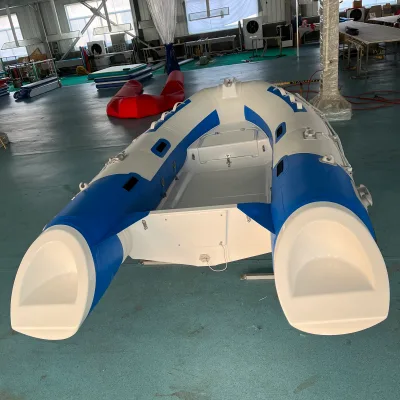
The foundational distinction in sourcing inflatable luxury boats lies in the hull configuration. The data reveals a clear bifurcation between rigid-hull inflatable boats (RIBs) and fully inflatable or hybrid structures. The RIB680 model, for instance, utilizes a fiberglass hull with a length of 680cm and a width of 232cm. This configuration suggests a vessel designed for stability and speed, where the rigid floor provides a solid platform for the sundeck and engine mounting. In contrast, the SP1150 model represents the upper echelon of luxury, featuring an aluminum hull with a length of 1150cm, a width of 365cm, and an inside width of 240cm. This vessel is explicitly categorized as a "Luxury Yacht Boat" and "Sport Yacht," capable of handling a maximum power of 800HP and a net loading capacity of 2200kg.
When evaluating the "sundeck" aspect, buyers must scrutinize the tube diameter and chamber count, as these directly impact safety and deck space. The RIB680 features a 52cm tube diameter with 5 chambers, while the SP1150 boasts a larger 60cm tube diameter with 8 chambers. The increased chamber count in the larger model provides superior redundancy; if one chamber is compromised, the vessel remains buoyant. The CB390 model, with a 43cm tube diameter and 3 chambers, serves a different market segment, likely for smaller sport fishing or personal use, with a max power of 25HP and a net weight of only 92kg. The choice between these configurations depends entirely on the intended operational environment and the required passenger capacity, which ranges from 7 passengers in the smaller models to significantly higher capacities in the luxury yacht class.
Material Integrity and Construction Standards
Material selection is the primary determinant of a luxury inflatable boat's longevity and performance. The supplied facts highlight two primary tube materials: PVC and Hypalon. For luxury applications, Hypalon is often the preferred choice due to its superior resistance to UV radiation, chemicals, and abrasion. The data explicitly mentions "Hypalon Achilles" and "Orca Hypalon" as specific material options, indicating a tier of high-quality synthetic rubber used in professional-grade vessels. The hull materials vary between Fiberglass and Aluminum. The SP1150 utilizes an aluminum hull, which offers a favorable strength-to-weight ratio and resistance to corrosion, essential for saltwater environments. The RIB680 employs a fiberglass hull, which provides a smooth finish and ease of molding for complex shapes.
The construction of the sundeck itself is not explicitly detailed in the raw data, but the "Folded: Unfolded" attribute suggests that certain models may feature collapsible or modular components. For a true luxury sundeck, buyers should verify the integration of the deck into the tube structure. Is the deck a separate platform, or is it an integral part of the rigid hull? The "Customization: Available" attribute is a critical signal for luxury buyers, implying that deck layouts, seating arrangements, and sundeck dimensions can be tailored to specific requirements. However, the "prod_standard" field lists dimensions like "680cm" and "1150cm" rather than international safety standards (e.g., ISO, CE), necessitating a direct inquiry with the supplier to confirm compliance with specific maritime safety regulations.
Compliance, Certification, and Safety Verification
A common pitfall in sourcing luxury marine vessels is the assumption of compliance based on product descriptions. The provided data lists "prod_standard" values that appear to be dimensional references (e.g., "680cm", "1150cm") rather than recognized certification bodies like ISO, CE, or ABYC. This discrepancy requires rigorous due diligence. Buyers must explicitly request documentation proving that the vessel meets the safety standards of the destination market. For a luxury yacht capable of 800HP, the structural integrity of the hull and the redundancy of the inflation chambers are non-negotiable.
The "Warranty: 3-5 Years" attribute is a significant data point, suggesting that the manufacturer stands behind the durability of the materials. However, warranty terms vary widely in scope. Does the warranty cover the Hypalon fabric, the aluminum hull, or only the workmanship? Buyers should verify if the warranty is transferable and what specific conditions void the coverage. Furthermore, the "prod_packing" method, described as "Plastic Film and Standard Package," is insufficient for international shipping of high-value assets. The procurement team must ensure that the packaging includes reinforced crates or custom foam molding to prevent damage during transit, especially given the delicate nature of the inflatable tubes and the precision of the sundeck fittings.
Cost Drivers and Economic Factors
The price range observed in the market spans from $100 to $80,000 USD, a variance that reflects the extreme differences in vessel size, material quality, and customization levels. The entry-level models, such as the CB390 with a net weight of 92kg and 25HP capacity, likely fall at the lower end of this spectrum. Conversely, the SP1150, with its 1150cm length, 800HP capacity, and luxury yacht classification, will command a premium price. The "MOQ: 1 PC" attribute indicates that buyers can procure single units, which is advantageous for fleet expansion or testing, but it may impact the per-unit cost compared to bulk orders.
Beyond the base price, several hidden cost drivers must be factored into the total cost of ownership. The "Max Power" rating dictates the engine cost, which is often a separate line item. A vessel rated for 800HP will require a significantly more expensive propulsion system than one rated for 25HP. Additionally, the "Accessorie: Air Pump" listing suggests that inflation equipment is included, but the quality and power source of this pump (electric vs. manual) will affect the operational readiness of the vessel. The "Net Weight" of 700kg for the RIB680 versus 92kg for the CB390 also influences logistics costs, including shipping, insurance, and storage. Buyers should request a detailed breakdown of the "Standard Package" to understand what is included versus what requires separate procurement.
Supplier Evaluation and Operational Capabilities
When evaluating suppliers for luxury inflatable boats, the focus must shift from simple price comparison to operational capability and customization support. The "Customization: Available" flag is a strong indicator of a supplier's ability to meet specific client needs, such as custom sundeck layouts or specialized color schemes. The "Color: Color" and "Color: Multi-colored" attributes suggest a range of aesthetic options, but buyers should verify the availability of specific color palettes that match their brand or operational requirements.
The origin of the vessel, listed as "Qingdao China," provides context for the supply chain. Qingdao is a major maritime manufacturing hub, but buyers must assess the specific factory's capacity and history. The "prod_model" variations (RIB680, SP1150, CB390, Alu Rib280c) indicate a diverse product line, suggesting a manufacturer with broad capabilities. However, the presence of multiple models does not guarantee quality consistency across all lines. Buyers should request references for similar luxury yacht projects and verify the supplier's track record in delivering vessels with high horsepower ratings and complex configurations. The "Usage: Sport Fisherman" and "Outdoor Activity: Water-Skiing" tags highlight the versatility of these vessels, but the supplier must demonstrate experience in equipping boats for these specific high-stress activities.
Quality Control and Long-Term Procurement Strategy
Implementing a robust quality control (QC) protocol is essential for luxury inflatable boats, where the margin for error is minimal. The "Tube Material: PVC or Hypalon" distinction is critical for QC. Hypalon requires specific welding and bonding techniques that differ from PVC. Inspections should focus on seam integrity, chamber pressure retention, and the bonding of the tubes to the rigid hull. For the SP1150, with its 8 chambers, a pressure test of each individual chamber is mandatory before shipment. The "Net Weight" specifications can also serve as a QC metric; significant deviations from the stated weight (e.g., 700kg for RIB680) may indicate material inconsistencies or missing components.
Long-term procurement considerations extend beyond the initial purchase. The "Warranty: 3-5 Years" is a key factor, but the availability of spare parts is equally important. Buyers should inquire about the supply chain for replacement tubes, valves, and hardware. The "prod_packing" method must be reviewed to ensure it protects the vessel during storage and transport. For luxury applications, the aesthetic condition of the sundeck and hull upon arrival is paramount. A detailed pre-shipment inspection (PSI) protocol should be established, including photographic documentation of the vessel's condition and a functional test of the inflation system and engine mounting.
Comparative Analysis of Key Models
To assist in the decision-making process, the following table summarizes the key technical specifications of the observed models, highlighting their suitability for different luxury applications.
| Specification | RIB680 | SP1150 | CB390 | Alu Rib280c |
|---|---|---|---|---|
| Length | 680 cm | 1150 cm | < 6 m | < 6 m |
| Width | 232 cm | 365 cm | 170 cm | N/A |
| Tube Diameter | 52 cm | 60 cm | 43 cm | N/A |
| Chambers | 5 | 8 | 3 | N/A |
| Hull Material | Fiberglass | Aluminum | N/A | Aluminum |
| Max Power | 200 HP | 800 HP | 25 HP | N/A |
| Max Loading | N/A | 2200 kg | 630 kg | N/A |
| Type | RIB | Luxury Yacht | Sport Yacht | Sport Yacht |
| Net Weight | 700 kg | N/A | 92 kg | N/A |
| Tube Material | PVC or Hypalon | N/A | N/A | Hypalon Achilles, Orca Hypalon |
| Max Passenger | N/A | N/A | 7 | N/A |
This comparison underscores the vast differences in scale and capability. The SP1150 is clearly positioned as a high-end luxury yacht, while the CB390 and Alu Rib280c serve more compact, sport-oriented roles. The RIB680 occupies a middle ground, offering substantial size with a fiberglass hull. Buyers must align their specific operational requirements with these technical profiles to ensure the selected vessel meets both performance and luxury expectations.
Final Procurement Recommendations
Sourcing a Luxury Sundeck Inflatable Boat requires a meticulous approach that prioritizes technical verification over marketing claims. The available data provides a solid foundation for understanding the capabilities of models like the SP1150 and RIB680, but it also highlights the need for deeper due diligence regarding certifications, material specifics, and warranty terms. By focusing on the structural integrity of the hull, the quality of the tube materials, and the supplier's ability to customize and support the vessel, buyers can secure assets that deliver on the promise of luxury and performance. The wide price range and diverse model lineup offer flexibility, but the complexity of these vessels demands a procurement strategy grounded in rigorous quality control and clear contractual agreements. Ultimately, the success of the procurement lies in the buyer's ability to translate the observed specifications into a tailored solution that meets the unique demands of their fleet or private collection.
FAQs
What materials are used for the tubes?
The tubes are constructed from PVC or Hypalon materials. Specific high-end options include Hypalon Achilles and Orca Hypalon for superior durability. Buyers should verify the exact material grade to ensure UV and chemical resistance for long-term performance.
Can the boat be customized for specific needs?
Yes, customization is available for these vessels. Buyers can tailor layouts, seating, and sundeck dimensions to meet specific requirements. This flexibility allows for unique configurations while maintaining the structural integrity of the hull and tube assembly.
Which model supports the highest power capacity?
The SP1150 model supports the highest power capacity at 800HP. This luxury yacht boat also features a maximum loading capacity of 2200kg. It is designed for high-performance applications requiring significant engine power and substantial passenger or cargo load.
How many safety chambers do the boats have?
The number of chambers varies by model, ranging from 3 to 8. The SP1150 luxury yacht includes 8 chambers for maximum redundancy, while the CB390 sport model has 3 chambers. More chambers provide greater safety by maintaining buoyancy if one section is compromised.
What is the warranty period for these boats?
The warranty period ranges from 3 to 5 years depending on the specific model and terms. This coverage typically addresses material and workmanship issues. Buyers must confirm the specific scope to understand if it includes the hull, tubes, or only assembly.
Where are these boats manufactured?
These boats originate from Qingdao, China. This location is a major maritime manufacturing hub for such vessels. Buyers should verify the specific factory capabilities and quality control processes associated with this origin to ensure compliance with international standards.
What is the minimum order quantity for purchase?
The minimum order quantity is 1 piece for most models. This allows buyers to procure single units for testing or fleet expansion. However, bulk orders may influence the per-unit cost and lead time, so negotiation is recommended for larger quantities.