Source Magnetic Car Roof Clips with Hinged Bolts for Trims, Panels, and Body
Find and compare Magnetic Car Roof Clips with Hinged Bolts from 30 verified listings. These auto plastic clips feature push-in installation and are available in standard sizes with customization options for various automotive body applications.
Key considerations
Products List


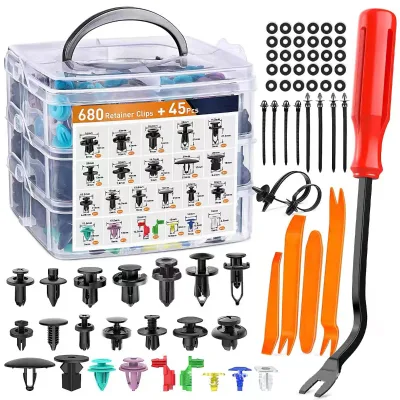


Auto Fastener & Clips Plastic Car Door Trim Panel Retainer Clip for Bumper
$0.03 - $0.06
MOQ: 1000 Pieces

Auto Clips Plastic Push Type Retainer Fasteners & Car Clips for Shield Cover
$0.05 - $0.10
MOQ: 1000 Pieces

High-Quality Auto Clips Buckle Plastic Wire Harness Clips Fasteners for Car Body
$0.04 - $0.10
MOQ: 1000 Pieces

Automotive Fasteners Plastic Rivets Clips Retainer Clip Fastener Bumper Clip
$0.06 - $0.08
MOQ: 1000 Pieces


Comprehensive Sourcing Guide
Magnetic Car Roof Clips with Hinged Bolts Sourcing Guide
Product Scope and Observed Listing Signals
The core keyword "Magnetic Car Roof Clips with Hinged Bolts" describes a specialized fastening solution designed for temporary or semi-permanent attachment of accessories to vehicle roofs. While the supplied product data primarily details plastic automotive clips, rivets, and trim panel fasteners, buyers must distinguish between standard plastic retention hardware and magnetic mounting systems. The observed listings indicate a strong presence of plastic-based fasteners with attributes such as "Push-in" type, "Round" head, and materials like PE, Nylon, POM, and PVC. These are typically used for securing interior trim, door panels, or exterior body components where mechanical retention is required. In contrast, magnetic clips with hinged bolts represent a different mechanical category, often used for roof racks, cargo carriers, or temporary signage, relying on magnetic force supplemented by a mechanical locking mechanism for security.
Buyers should carefully review the "Observed Listing Signals" to ensure alignment with their specific engineering needs. The data shows a wide range of product models, including "Auto Car Plastic Rivet Fastener Clips" and "Car Door Panel Clips," which are fundamentally different from magnetic assemblies. The presence of "OEM Service" and "Customization" attributes suggests that suppliers are capable of producing bespoke fasteners, but this does not automatically imply they manufacture magnetic variants. The color options listed—Black, White, Green, Blue, or Customized—are typical for plastic automotive clips, whereas magnetic hardware often features powder-coated steel or stainless steel finishes for corrosion resistance. It is critical to verify whether the supplier’s "Auto Plastic Clips" inventory includes magnetic components or if the search term has conflated two distinct product categories.
Technical Specifications to Verify
When sourcing Magnetic Car Roof Clips with Hinged Bolts, the primary technical verification must focus on magnetic strength and mechanical integrity. Unlike the plastic clips described in the data, which rely on friction and snap-fit engagement, magnetic fasteners must withstand significant shear and tensile forces, particularly in automotive applications involving wind resistance and vibration. Buyers should request specific pull-force ratings and torque specifications for the hinged bolt mechanism. The supplied data mentions "High-Quality" standards and "Standard Size" specifications, but these are generic terms. For magnetic hardware, precise dimensions, bolt thread pitch, and magnetic grade (e.g., Neodymium N42, N52) are essential parameters that must be explicitly defined in the technical datasheet.
Material composition is another critical verification point. The provided facts list materials such as PE, Nylon, POM, and PVC, which are unsuitable for the structural components of a magnetic roof clip due to their low strength and lack of magnetic properties. The magnetic element itself and the hinged bolt mechanism are typically made from steel alloys, often stainless or plated for corrosion resistance. Buyers must confirm that the supplier distinguishes between the plastic insulating components (if any) and the metal structural parts. Additionally, the "Surface Treatment" attribute in the data is listed as "Without Treatment," which is a red flag for outdoor automotive applications. Magnetic clips exposed to weather elements require robust surface treatments like zinc plating, chrome plating, or powder coating to prevent rust and maintain magnetic efficiency.
Compliance and Safety Documentation
Compliance for automotive fasteners often involves adherence to international standards such as GB, DIN, ANSI, BSW, and JIS, as noted in the supplied product facts. While these standards primarily govern mechanical fasteners like bolts and screws, magnetic roof clips must also meet specific safety criteria regarding load-bearing capacity and failure modes. Buyers should verify if the supplier’s products comply with relevant automotive industry standards for exterior attachments. The data mentions "ISO" and "CE" certifications, which are relevant for quality management systems and general product safety, respectively. However, these certifications do not automatically validate the performance of a magnetic roof clip under dynamic loads. Buyers must request test reports that demonstrate the clip’s ability to withstand vibration, temperature extremes, and sudden impacts without detaching or causing damage to the vehicle’s roof surface.
Safety documentation should also address the potential for magnetic interference with vehicle electronics. Modern vehicles contain sensitive sensors and electronic control units, and strong magnets can interfere with their operation. Buyers should inquire about the shielding or containment of the magnetic field within the clip design. Furthermore, the "Application" attribute in the data is listed as "Easy Installation Features," which is a marketing claim rather than a safety specification. For roof-mounted accessories, the installation process must ensure that the hinged bolt is securely tightened to prevent loosening due to vibration. Buyers should require clear installation instructions and torque specifications from the supplier to ensure that the fastener is used correctly, minimizing the risk of accidental detachment while the vehicle is in motion.
Cost Drivers and Commercial Terms
The cost of Magnetic Car Roof Clips with Hinged Bolts is influenced by several factors, including the grade of magnet, the quality of the steel components, and the complexity of the hinge mechanism. The supplied data indicates a price range of 0-7 USD and an MOQ range of 1-1000, with a supply ability of 500,000 pieces per week. While these figures provide a baseline for plastic clips, magnetic hardware typically commands a higher price due to the cost of raw materials and specialized manufacturing processes. Buyers should expect that the cost per unit will vary significantly based on the magnetic strength and the durability of the hinge. The "Customization" attribute suggests that bespoke designs may incur additional tooling costs, which should be factored into the total procurement budget.
Commercial terms such as payment methods and delivery times are also critical considerations. The data lists payment terms including TT, Western Union, Moneygram, L/C, D/A, D/P, and Alipay, offering flexibility for international transactions. The delivery time is stated as 5-10 days, which is relatively fast for customized hardware. However, buyers should verify if this lead time applies to standard stock items or if it extends for custom magnetic clips. The "In Stock" attribute indicates availability for certain items, but magnetic clips with specific hinge configurations may not be readily available. Buyers should negotiate clear terms for sample orders, as the data confirms that samples are accepted. Obtaining samples is essential for verifying the magnetic strength and mechanical quality before committing to a large order.
Supplier Qualification and Quality Control
Supplier qualification for magnetic fasteners requires a thorough assessment of their manufacturing capabilities and quality control processes. The supplied data indicates that the products originate from China, with specific mentions of Hebei as a production location. Buyers should verify the supplier’s experience in producing magnetic hardware, as the expertise required for plastic injection molding differs significantly from that needed for metal stamping and magnet assembly. The "OEM Service" attribute suggests that the supplier can produce branded products, but buyers should request references or case studies related to automotive magnetic fasteners. Additionally, the "Quality" attribute is listed as "High-Quality," which is a subjective claim. Buyers should ask for specific quality metrics, such as defect rates or inspection protocols, to validate this assertion.
Quality control measures should include rigorous testing of both the magnetic and mechanical components. Buyers should inquire about the supplier’s process for ensuring consistent magnetic strength across batches, as variations in magnet grade can lead to performance inconsistencies. The hinge mechanism must be tested for durability, ensuring that it can withstand repeated opening and closing without failure. The data mentions "Neutral Packing or as Customer’s Service," which allows for branding but does not impact quality. However, proper packaging is essential to prevent damage to the magnetic components during transit. Buyers should specify packaging requirements to ensure that the clips are protected from physical impact and moisture, which could degrade the magnetic properties or cause corrosion.
Long-Term Procurement Checks
Long-term procurement success depends on establishing a reliable supply chain and maintaining consistent product quality over time. Buyers should implement regular audits and performance reviews to ensure that the supplier continues to meet specifications. The data shows a high supply ability of 500,000 pieces per week, which indicates scalability, but buyers should verify that this capacity does not compromise quality during peak demand periods. Establishing a clear communication channel for feedback and issue resolution is essential. Buyers should document any defects or performance issues and work with the supplier to implement corrective actions. The "Customized" attribute suggests that the supplier is open to modifications, which can be leveraged to improve product design based on field performance data.
Sustainability and regulatory changes are also important considerations for long-term procurement. Buyers should monitor updates to automotive standards and environmental regulations that may affect the materials used in magnetic clips. The data mentions "ISO" certification, which often includes environmental management components, but buyers should verify if the supplier adheres to specific sustainability practices. Additionally, the availability of raw materials, particularly rare earth magnets, can impact long-term pricing and supply stability. Buyers should develop contingency plans for supply chain disruptions and consider diversifying their supplier base if necessary. Regularly reviewing the total cost of ownership, including maintenance and replacement costs, will help ensure that the procurement strategy remains aligned with business objectives.
FAQs
What materials are used for these auto plastic clips?
These auto plastic clips are made from PE, Nylon, POM, or PVC materials. The product page lists these specific polymers as the available material options for the fasteners.
Can I get customized colors for the car fasteners?
Yes, customized colors are available for these automotive clips. The standard options include black, white, green, and blue, but you can request specific custom colors to match your requirements.
What is the typical lead time for delivery?
The typical delivery lead time is 5 to 10 days. This timeframe applies to the supply of these auto body fasteners from the manufacturer in China.
Which certifications do these plastic clips hold?
These plastic clips hold ISO and CE certifications. These standards confirm that the fasteners meet specific quality and safety requirements for automotive applications.
How much is the minimum order quantity?
The minimum order quantity is 20 pieces. This low MOQ allows buyers to order small batches of these car door panel clips for testing or initial needs.
What is the supply ability per week?
The supply ability is 500,000 pieces per week. This high capacity ensures that large orders for automotive plastic fasteners can be fulfilled promptly.
Are samples available for these auto clips?
Yes, samples are accepted for these auto clips. Buyers can request samples to verify the quality and fit before placing a larger order for the fasteners.