Source Magnetic Home Use Elliptical Machine for Gyms, Training, and Home Workouts
Find and compare 30 Magnetic Home Use Elliptical Machine options featuring steel construction, CE and ISO certifications, and adjustable resistance. Buyers can evaluate models with varying dimensions, weights, and power sources for gymnasium or home applications.
Key considerations
Products List

Black Blue Gym Fitness Exercise Equipment Magnetic Home Use Elliptical Machine
$300.00 - $700.00
MOQ: 1 Pieces

Fitness Magnetic Training Exercise Sports Gym Home Equipment Elliptical Machine
$50.00 - $60.00
MOQ: 17 Pieces


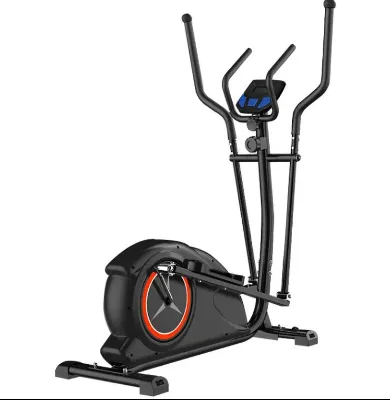


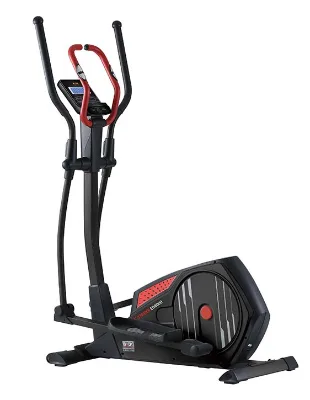

Home Gym Elliptical Trainer Aerobic Fitness Machine Elliptical Machine
$130.00 - $143.00
MOQ: 10 Pieces

Sale China Running Machine Elliptical Home Fitness Equipment Elliptical Trainer
$130.00 - $143.00
MOQ: 10 Pieces


Factory Price Elliptical Exercise Machine for Homegym Magnetic Elliptical Gym Machine
$200.00 - $210.00
MOQ: 2 Pieces


Comprehensive Sourcing Guide
Strategic Sourcing Guide for Magnetic Home Use Elliptical Machines
Understanding Product Attributes and Technical Specifications
When sourcing a Magnetic Home Use Elliptical Machine, buyers must first distinguish between the specific technical configurations available in the market. The product landscape includes variations in power sources, resistance mechanisms, and physical dimensions that directly impact suitability for residential environments. While some commercial-grade units rely on manual resistance or specific gear systems, magnetic resistance is often preferred for home use due to its smooth operation and low maintenance requirements.
The supplied data indicates a diverse range of specifications. For instance, certain models feature a manual power source, which implies a direct mechanical linkage rather than an electric motor for resistance generation. In contrast, other units, such as the Ypoo Commercial Elliptical Trainer E3 and E7 PRO, offer advanced features like 32-gear resistance adjustments and flywheel options ranging from 8 to 12 kilograms. These flywheel weights are critical indicators of the machine's inertia and the smoothness of the pedaling motion. A heavier flywheel generally provides a more stable workout experience, which is a key consideration for home users seeking commercial-grade feel in a domestic setting.
Physical dimensions are equally vital for home procurement. The market presents models with varying footprints. One observed specification lists dimensions of 144.5 cm in length, 90 cm in width, and 168 cm in height, while another compact model measures 85 cm by 47 cm by 108 cm. Buyers must verify that the selected unit fits within their allocated space, particularly considering the stride length. The Ypoo E3 model, for example, specifies a step distance of 52 cm, which is a significant metric for user comfort and joint safety. Additionally, the product weight varies significantly, with some units weighing as little as 25 kg and others reaching 200 kg. The net weight (N.W.) of 104 kg and gross weight (G.W.) of 110 kg for specific commercial models highlight the substantial mass required for stability, a factor that home buyers must weigh against floor load capacity and moving logistics.
Compliance, Certification, and Safety Standards
Ensuring that a magnetic elliptical machine meets international safety and environmental standards is a non-negotiable aspect of B2B procurement. The supply chain data confirms the presence of specific certifications, including CE, ISO, and RoHS. These marks indicate that the product adheres to European safety directives, international management system standards, and restrictions on hazardous substances, respectively.
Buyers should verify the exact scope of these certifications for the specific model they intend to purchase. The data lists "CE, ISO, RoHS" for certain units and "CE, ISORoHS" for others. While these are high-confidence facts for the listed products, a prudent buyer must request the specific certificate documents from the supplier to confirm that the certification applies to the magnetic resistance mechanism and the structural integrity of the frame. The standard "144.590168cm" and "8547108cm" are listed under product standards in the data, which suggests that dimensional compliance is part of the quality assurance process. However, buyers should not assume that all listed dimensions are universal standards but rather specific product configurations that must be validated against local building codes and safety regulations.
Furthermore, the presence of "ISO" certification implies adherence to quality management systems, which is crucial for ensuring consistent manufacturing processes. For home use equipment, the structural integrity of the frame, often made of steel as noted in the material specifications, is paramount. The data confirms steel as a primary material, which offers durability but requires inspection for rust resistance and weld quality. Buyers should also check for any specific national safety standards in their target market, as the "CE" mark is a European requirement and may need to be supplemented by other regional certifications for sale in North America or Asia.
Cost Drivers and Pricing Structure Analysis
The pricing structure for magnetic elliptical machines is influenced by a complex interplay of factors, including material costs, resistance technology, and packaging requirements. The observed price range in the market spans from 50 USD to 1150 USD, a wide variance that reflects differences in product complexity and target segments. Lower-priced units in this range may be manual or entry-level models with minimal features, while the higher end likely corresponds to commercial-grade machines with advanced digital displays and robust magnetic resistance systems.
Material composition is a primary cost driver. The use of steel for the frame provides strength but adds to the overall weight and shipping costs. Models with higher flywheel weights, such as the 12 kg option, incur higher material costs compared to the 8 kg variant. Additionally, the complexity of the resistance mechanism plays a role; magnetic resistance systems are generally more expensive to manufacture than friction-based systems due to the precision engineering required for the magnets and the flywheel assembly.
Packaging and logistics also significantly impact the final cost. The data shows variations in packing methods, ranging from "Paper Box" to "Plywood Case" and "Export Carton." Plywood cases are typically used for heavy, high-value equipment to prevent damage during transit, adding to the unit cost. The weight of the product, which can range from 25 kg to 200 kg, directly affects freight charges. Buyers should calculate the total landed cost, including shipping, insurance, and duties, rather than focusing solely on the unit price. The Minimum Order Quantity (MOQ) also influences cost efficiency; observed MOQs range from 1 piece to 100 pieces. Ordering in larger quantities can often secure better unit pricing, but it requires careful inventory management to avoid overstocking.
Typical Applications and User Demographics
Magnetic elliptical machines are designed for a broad spectrum of applications, primarily targeting home gyms, small fitness studios, and commercial gymnasium settings. The data explicitly categorizes these appliances for use in "Home" and "Gymnasium" environments, indicating their versatility. The "Adult" age group and "Unisex" gender specifications suggest that these machines are engineered to accommodate a wide range of users, from teenagers to seniors, provided the maximum user weight limits are respected.
The maximum user weight capacity is a critical specification for application suitability. While some models support up to 150 kg, others may have different limits. Buyers must ensure that the selected machine can safely support the intended user base. For home use, the noise level is a significant factor; magnetic resistance is generally quieter than friction-based systems, making it ideal for residential environments where noise disturbance is a concern.
The feature set also dictates application. Models with LCD displays, scan functions, speed, time, distance, and calorie counters are suitable for users who track their progress meticulously. The ability to adjust the slope from 0% to 15% adds versatility, allowing users to simulate hill climbing and increase workout intensity. This feature is particularly valuable for home users who may not have access to outdoor terrain or varied gym equipment. The language options available, including Chinese, English, Russian, German, and French, facilitate use in diverse international markets, making these machines suitable for export-oriented procurement.
Supplier Evaluation and Quality Control Protocols
Evaluating suppliers for magnetic elliptical machines requires a rigorous assessment of their manufacturing capabilities, quality control processes, and supply chain reliability. The data indicates that the products originate from China, a major hub for fitness equipment manufacturing. Buyers should verify the supplier's production capacity and their ability to meet specific customization requests, as "Customization" is listed as an available attribute.
Quality control should begin with the raw materials. The use of steel for the frame must be verified for grade and thickness to ensure durability. Buyers should request material test reports to confirm the steel's tensile strength and resistance to corrosion. The assembly process is another critical area; welds should be inspected for consistency and strength, and the magnetic resistance mechanism should be tested for smooth operation and consistent resistance levels across all gears.
The data mentions specific product models like HSN-0390, HSN-0371, and TZ-2010A, which can serve as reference points for quality benchmarks. Buyers should compare the specifications of these models against their requirements. For instance, the "Folded" vs. "Unfolded" status is an important attribute for home users with limited space. A supplier that offers a reliable folding mechanism without compromising stability is preferable. Additionally, the "Product Weight" variations, such as 200 kg versus 25 kg, suggest different build qualities. Buyers should request samples or third-party inspection reports to validate the weight and dimensions claimed by the supplier.
Long-Term Procurement Considerations and Maintenance
Long-term procurement success depends on understanding the maintenance requirements and lifecycle of the magnetic elliptical machine. The magnetic resistance system is inherently low-maintenance compared to friction systems, as it does not involve wear pads that need regular replacement. However, the mechanical components, such as bearings, belts, and the flywheel, require periodic inspection and lubrication.
The packaging method, whether "Paper Box," "Plywood Case," or "Foam, Export Carton," impacts the ease of installation and the potential for damage during shipping. Buyers should ensure that the packaging includes clear assembly instructions and necessary tools. The "Language Options" for the display and manual are crucial for long-term usability, ensuring that users can operate the machine correctly and understand safety warnings.
Warranty and after-sales support are also key considerations. Buyers should negotiate clear terms regarding the warranty period for the frame, electronics, and mechanical parts. The "MOQ" of 1 piece allows for small-scale testing, but larger orders may require more robust support agreements. Buyers should also consider the availability of spare parts, such as replacement belts, pedals, and console components, to minimize downtime. The "Feature" of adjustable flywheel weight (8-11 kg or 12 kg) may require specific replacement parts, so compatibility should be verified before finalizing the order.
Comparative Analysis of Key Product Specifications
To assist buyers in making informed decisions, the following table compares key specifications observed in the product data. This comparison highlights the differences in dimensions, weight, resistance, and features across various models.
| Feature | Model A (HSN-0390) | Model B (HSN-0371) | Model C (TZ-2010A) | Model D (Ypoo E3) | Model E (Ypoo E7 PRO) |
|---|---|---|---|---|---|
| Dimensions (L x W x H) | 144.5 x 90 x 168 cm | 85 x 47 x 108 cm | 2030 x 660 x 1750 mm | 1721 x 724 x 1637 mm | 1721 x 724 x 1637 mm |
| Product Weight | 200 Kg | 25 Kg | 104 kg (N.W.) | 100 kg (N.W.) | 110 kg (N.W.) |
| Resistance Type | Manual | Not Specified | 32 Gear | 32 Gear | 32 Gear |
| Flywheel Weight | Not Specified | Not Specified | Not Specified | 8-11 Kgs | 12 Kgs |
| Folded Status | Unfolded | Not Specified | Folded | Not Specified | Not Specified |
| Display | Not Specified | Not Specified | Not Specified | 5" LCD Screen | Not Specified |
| Max User Weight | Not Specified | Not Specified | Not Specified | 150 kg | Not Specified |
| Certification | CE, ISO, RoHS | CE, RoHS, ISO | CE, ISO, RoHS | CE, ISO, RoHS | CE, ISO, RoHS |
| Color | Black | White and Blue | Dark Purple | Not Specified | Not Specified |
| Packing | Paper Box | Paper Box | Plywood Case | Foam, Export Carton | Foam, Export Carton |
This table illustrates the diversity in the market. Model A is a large, heavy unit suitable for commercial gyms, while Model B is a compact, lightweight option potentially for home use. Model C and the Ypoo series offer advanced features like LCD displays and adjustable resistance, catering to users seeking a more interactive workout experience. Buyers must align these specifications with their specific needs, considering space constraints, user weight limits, and desired feature sets.
Final Procurement Recommendations
In conclusion, sourcing a Magnetic Home Use Elliptical Machine requires a balanced approach that considers technical specifications, compliance, cost, and long-term maintenance. Buyers should prioritize models that offer the right balance of stability, resistance smoothness, and space efficiency. Verifying certifications like CE and ISO is essential for safety and market access. Understanding the cost drivers, such as material weight and packaging, will help in budgeting accurately. Finally, selecting a supplier with a robust quality control process and reliable after-sales support ensures a successful procurement outcome. By carefully evaluating these factors, buyers can secure high-quality elliptical machines that meet the demands of both home and commercial environments.
FAQs
What certifications do magnetic elliptical machines have?
These machines typically carry CE, ISO, and RoHS certifications to ensure safety and environmental compliance. Buyers must verify that these marks apply to the specific model and resistance mechanism before procurement.
Which power source is used for manual elliptical machines?
Manual power sources rely on direct mechanical linkage rather than electric motors for resistance generation. This design offers a simpler operation but requires user effort to drive the flywheel and resistance system.
How does flywheel weight affect the workout experience?
Heavier flywheels, such as 12 kg options, provide more stable inertia and smoother pedaling motion compared to lighter 8 kg variants. This stability is crucial for achieving a commercial-grade feel in home environments.
Can these machines be customized for specific needs?
Customization is available for many models to meet specific buyer requirements. Buyers should confirm the scope of customization with the supplier to ensure it aligns with their operational or branding needs.
What is the maximum user weight capacity for these units?
Some commercial models support a maximum user weight of up to 150 kg. Buyers must verify the specific limit for their chosen model to ensure safe operation for their intended user base.
Which packaging types are used for shipping these machines?
Packaging varies from paper boxes to plywood cases and export cartons depending on the product weight and value. Heavier units often require plywood cases to prevent damage during transit and ensure safe delivery.
What dimensions should I check for home installation?
Dimensions vary significantly, with some models measuring 144.5 cm in length while others are compact at 85 cm. Buyers must verify the specific length, width, and height to ensure the unit fits their allocated space.