Source Waterproof Coffee Sachet for tea food and gift packaging
Compare 30 Waterproof Coffee Sachet options from verified suppliers in China. These kraft and plastic bags feature heat-sealing, custom logos, and food-grade safety for tea, food, and cosmetic applications.
Key considerations
Products List
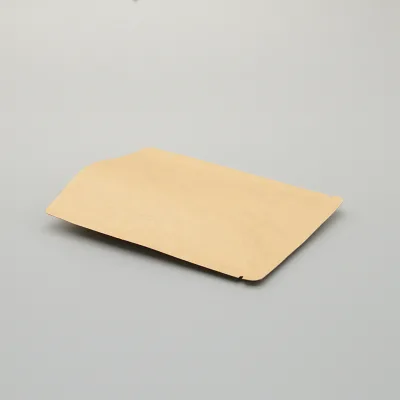


Durable Moisture Resistant Flat Bottom Coffee Bags for Custom Packaging
$0.05 - $0.07
MOQ: 20000 Pieces


Comprehensive Sourcing Guide
Sourcing Guide for Waterproof Coffee Sachets
Understanding Product Specifications and Material Composition
When sourcing waterproof coffee sachets, the primary objective is to identify packaging that preserves product freshness while maintaining structural integrity during shipping and storage. The core technical requirement for this category is a robust barrier against moisture and oxygen. Based on available market data, the material composition for high-performance coffee sachets often involves composite structures. Specifically, the raw materials frequently cited include a combination of PE (Polyethylene) and Aluminum foil layers, denoted as PE+Al. This composite structure is critical because the aluminum layer provides an absolute barrier to light, oxygen, and moisture, which are the primary enemies of coffee freshness.
The physical structure of the sachet also dictates its functionality. A common and effective design for coffee packaging is the "Three Side Seal Bag" or "Bottom Gusset" configuration. The bottom gusset allows the bag to stand upright on retail shelves, improving display aesthetics and stability. The sealing method is equally vital; heat-sealing is the standard process used to create a hermetic seal that prevents leakage. Buyers should verify that the supplier utilizes gravure printing for any branding, as this method offers high resolution and durability, essential for the detailed graphics often required in the coffee industry.
Dimensions vary significantly based on the volume of coffee required. While some specifications list custom sizes, standard observations include dimensions such as 1212cm or larger formats like 20cm30cm*8cm for different bag varieties. The thickness of the material is another adjustable parameter, often listed as "Customized" to meet specific barrier requirements. For applications requiring a visual window to showcase the product, an optional clear window can be integrated, though this must be balanced against the need for total light protection in coffee packaging.
Compliance, Safety, and Certification Verification
Ensuring that coffee packaging is safe for direct contact with food is a non-negotiable aspect of the procurement process. The supplied data indicates that many products in this category are explicitly marked as "Food Grade." This classification implies that the materials used do not leach harmful substances into the food product under normal conditions. Buyers must verify this claim through documentation rather than relying solely on product listings. The presence of a "Food Grade" label should be supported by specific test reports or declarations of conformity.
While general industry knowledge often references standards like ISO 22000 for food safety management systems, the provided product facts do not confirm that specific suppliers hold this certification. Therefore, procurement teams should not assume compliance based on the keyword alone. Instead, the buyer must request proof of compliance from the supplier. This includes asking for migration test results that demonstrate the packaging meets local regulatory limits for heavy metals and other contaminants.
Additionally, the "Safety" attribute is listed as a key feature. In the context of coffee sachets, this often extends to the integrity of the seal. A "Tightness" feature is mentioned, suggesting that the bags are designed to maintain a secure closure. However, buyers should not assume that "Waterproof" performance is absolute without testing. The term "Waterproof" in product listings generally indicates resistance to external moisture, but the internal barrier against coffee oils and steam requires specific material validation. Suppliers should be asked to provide data on water vapor transmission rates (WVTR) and oxygen transmission rates (OTR) to ensure the packaging meets the specific shelf-life requirements of the coffee being packaged.
Cost Drivers and Pricing Structures
The cost of sourcing waterproof coffee sachets is influenced by several variables, primarily material composition, order volume, and customization requirements. The observed price range in the market is quite broad, ranging from $0.01 to $0.50 per unit. This wide variance is typically driven by the thickness of the material, the complexity of the printing process, and the quantity ordered.
Minimum Order Quantity (MOQ) is a significant cost driver. The data shows a wide range of MOQs, from as low as 100 pieces to as high as 30,000 pieces. For smaller buyers or those testing new products, suppliers with lower MOQs (e.g., 500 or 1,000 pieces) are essential, though the unit cost will likely be higher. Conversely, larger orders often benefit from economies of scale, reducing the per-unit price. The "Selling Units" are typically listed as "Single item," meaning the price is per bag, but bulk discounts are standard in B2B transactions.
Customization is another major factor affecting price. Features such as "Customized Logo," "Custom Size," and "Custom Slider Color" add to the production complexity. Gravure printing, while high quality, requires the creation of printing cylinders, which incurs a setup cost. This cost is amortized over the production run, making it more economical for larger orders. Suppliers offering "Samples" allow buyers to evaluate quality before committing to a large order, but sample fees and shipping costs should be factored into the initial budget.
Typical Applications and Usage Scenarios
Waterproof coffee sachets are designed for a diverse range of industrial uses beyond just coffee. The product data lists applications including "Tea, Food, Coffee," as well as "Stationery Packaging, Medical Packaging, Gift Packaging, Cosmetic Packaging, and Clothing Packaging." This versatility highlights the adaptability of the composite bag structure. However, for coffee specifically, the primary application is single-serve packaging for ground or instant coffee.
The "Industrial Use" classification emphasizes the need for packaging that can withstand the rigors of the supply chain. Coffee is a hygroscopic product, meaning it absorbs moisture from the air, which degrades flavor and aroma. Therefore, the packaging must be hermetically sealed. The "Heat-sealing" method ensures that the bag remains intact even if exposed to humid environments during transport.
In the retail sector, the "Bottom Gusset" structure is preferred for its ability to stand upright, making it ideal for shelf display. The "Three Side Seal" design provides a flat surface for branding and nutritional information. For gift packaging, the aesthetic appeal of the "Gravure Printing" and the option for "Customized Logo" are crucial. The "Recyclable" and "Bio-Degradable" features mentioned in some product listings are increasingly important for brands targeting environmentally conscious consumers, though these claims require verification against local recycling infrastructure capabilities.
Supplier Evaluation and Geographic Considerations
When evaluating potential suppliers, geographic origin plays a role in logistics and lead times. The data indicates that products originate from various regions in China, including Zhejiang, Shandong, and Wenzhou. Each of these locations has established manufacturing clusters for packaging materials. Zhejiang, for instance, is known for a high concentration of packaging manufacturers.
Suppliers should be vetted based on their ability to meet specific customization needs. The "Logo printing" and "Customized Logo" attributes suggest that many suppliers offer branding services. Buyers should assess the supplier's capacity for "Custom Size" production, as standard sizes may not fit all coffee volumes. The "Sample" availability is a positive indicator of a supplier's willingness to engage in the evaluation process.
Lead times are another critical factor. One data point suggests a delivery time of "Usually 10-15 days," but this can vary based on order complexity and current production schedules. Buyers should confirm the actual lead time for their specific order volume and customization requirements. The "Packing" method, often listed as "Carton" or "Carton Packing," ensures that the sachets are protected during transit. It is important to verify that the outer packaging is robust enough to prevent crushing, especially for gusseted bags.
Quality Control and Long-Term Procurement Strategy
Implementing a rigorous quality control (QC) process is essential for maintaining product consistency. Buyers should establish clear acceptance criteria for the "Waterproof Performance" and "Sealing Method." Visual inspection for seal integrity, such as checking for wrinkles or gaps in the heat seal, is a basic QC step. For more advanced verification, destructive testing of the seal strength can be performed on a sample basis.
The "Feature" attributes like "Shock Resistance" and "Moisture Resistance" (noted as "Mois" in the data) should be validated through testing. While the data mentions these features, they are observations rather than guaranteed performance metrics for every listed product. Buyers must request test reports to confirm that the bags can withstand the specific stresses of their supply chain.
For long-term procurement, building a relationship with a supplier who offers "Customization" is advantageous. This allows for adjustments in bag size, material thickness, and printing design as market trends evolve. The "Recyclable" and "Bio-Degradable" features may become more critical in the future, so suppliers with experience in sustainable materials should be prioritized. However, buyers must remain cautious of "Bio-Degradable" claims, ensuring they are backed by recognized standards and that the materials are compatible with the supplier's waste management systems.
Comparative Analysis of Product Attributes
To assist in decision-making, the following table summarizes key attributes observed in the market for waterproof coffee sachets. This comparison highlights the variability in specifications and helps buyers identify what to prioritize based on their specific needs.
| Attribute | Observation A | Observation B | Observation C |
|---|---|---|---|
| Material | KRAFT | PE+Al | Mopp/PE/Vmpe |
| Structure | Three Side Seal Bag | Bottom Gusset | Plastic Bags |
| Sealing | Heat-sealing | Tightness | Temperature |
| MOQ | 500 pcs | 10,000 pcs | 100-30,000 range |
| Origin | Zhejiang, China | Shandong | Wenzhou |
| Printing | Gravure Printing | Customized Logo | Custom Slider Color |
| Features | Waterproof, Food Grade | Recyclable, Bio-Degradable | Shock Resistance |
| Standard Size | 12*12cm | 20cm30cm8cm | 70cm30cm50cm |
This table illustrates that while the core function remains the same, the execution varies widely. Buyers must align their requirements with the specific capabilities of the supplier. For instance, if a buyer requires a specific "KRAFT" aesthetic, they must look for suppliers listing that material, whereas those needing maximum barrier protection should prioritize the "PE+Al" composite.
Strategic Sourcing Recommendations
In conclusion, sourcing waterproof coffee sachets requires a balanced approach between technical specifications, cost efficiency, and supplier reliability. The market offers a wide array of options, from simple kraft bags to complex composite structures with custom features. Buyers should prioritize suppliers who can provide clear evidence of "Food Grade" safety and robust barrier properties. The variability in MOQ and pricing necessitates a flexible procurement strategy that can adapt to different order volumes.
By focusing on the specific attributes that matter most to the coffee product—such as moisture resistance, seal integrity, and print quality—buyers can secure packaging that enhances their brand value. It is crucial to conduct thorough due diligence, requesting samples and test data before finalizing any contract. With the right supplier partnership, waterproof coffee sachets can serve as a reliable and effective solution for preserving the quality of coffee from the roaster to the consumer.
FAQs
What material composition ensures waterproof performance for coffee sachets?
High-performance coffee sachets typically use a composite structure of PE and Aluminum foil, denoted as PE+Al. This combination provides an absolute barrier against moisture, oxygen, and light, which are critical for preserving coffee freshness and ensuring the bag remains waterproof during shipping.
Which sealing method is standard for creating a hermetic seal?
Heat-sealing is the standard process used to create a hermetic seal that prevents leakage in these bags. This method ensures the bag remains intact even if exposed to humid environments, maintaining the tightness required for food-grade packaging applications like coffee.
Can suppliers provide custom sizes and logos for these packaging bags?
Yes, suppliers offer customization for size, logo, and slider color to meet specific branding needs. The product data confirms that custom sizes are available alongside support for customized logos and gravure printing, allowing for tailored packaging solutions for various industrial uses.
What is the typical minimum order quantity for sourcing these bags?
The minimum order quantity varies significantly, ranging from 500 pieces to 30,000 pieces depending on the supplier. Some specific listings indicate an MOQ of 500 pcs or 10,000 pcs, so buyers must verify the specific threshold with the manufacturer before placing an order.
Are these bags suitable for food-grade applications like coffee and tea?
Yes, many products in this category are explicitly marked as Food Grade and suitable for tea, food, and coffee. The safety attributes indicate compliance with food contact standards, though buyers should request specific test reports to confirm migration limits for heavy metals and contaminants.
How long does delivery usually take for these packaging products?
Delivery time is typically around 10 to 15 days for standard orders, though this can vary by complexity. Buyers should confirm the actual lead time with the supplier, as it depends on the order volume, customization requirements, and current production schedules at the factory.
What features ensure the structural integrity and stability of the bag?
The bags often feature a bottom gusset structure that allows them to stand upright on retail shelves. This design, combined with heat-sealing and tightness features, ensures stability during display and protects the contents from shock and moisture during the supply chain.