Source Manual Tailstock for Rotary Table For Boring Milling Drilling
Find 30 verified options for a Manual Tailstock for Rotary Table suitable for boring, milling, and drilling machines. Compare specifications like indexing accuracy, mounting types, and loading capacities from Chinese manufacturers offering CE and ISO certifications; compare the available evidence and request quotations based on your requirements.
Key considerations
Products List


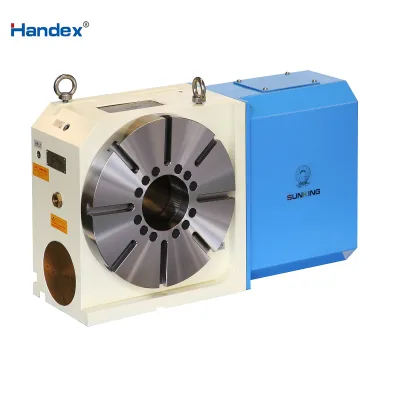


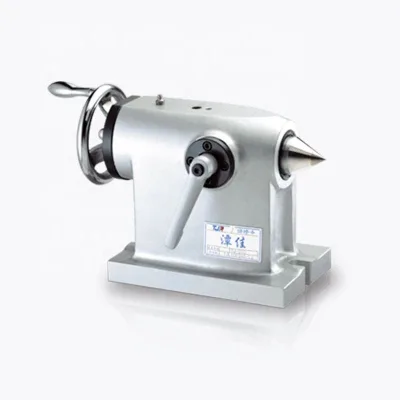


Best-Selling Manual Tilting Rotary Table with Tsk3" Tsk4" Tsk5" Tsk6" Tsk8"
$190.00 - $205.00
MOQ: 1 Pieces


Headstock Tailstock Elevating Tilt Positioners for Assembly Handling Welding
$3000.00 - $30000.00
MOQ: 1 Pieces

Comprehensive Sourcing Guide
Manual Tailstock for Rotary Table Sourcing Guide
Procuring a manual tailstock for a rotary table requires careful alignment with the specific indexing and mounting needs of your machining center. The observed market data indicates that these components are frequently paired with precision rotary tables designed for vertical and horizontal configurations, ensuring stability during complex operations like boring, drilling, and milling. Buyers must verify that the tailstock's load capacity matches the table's rated weight, as observed listings show capacities ranging from 5,500 kg to over 9,000 kg depending on the model size.
Selection should also account for the indexing accuracy required for your specific production tolerances. While some units offer infinite dividing angles, others are limited to equal divisions of 1 or 5 degrees, which directly impacts the precision of your final workpiece. It is critical to confirm whether the tailstock supports the specific mounting type, such as horizontal or vertical, and whether it integrates seamlessly with the main drive system, typically a worm and worm shaft assembly, to prevent slippage during high-torque operations.
Product Scope and Observed Listing Signals
The available product scope reveals a diverse range of rotary table models, from compact units like the TS135 to large-scale industrial tables with table diameters up to 2,000 mm. Listings frequently specify the structure as either vertical, horizontal, or a combination of both, which dictates the physical footprint and installation requirements of the tailstock. Buyers should note that packing methods vary between wooden cases and plywood cases, influencing shipping costs and the level of protection provided during transit from the origin in China.
Observed listing signals also highlight significant variations in customization options, with some suppliers offering logo printing and fully customized dimensions while others provide standard non-customized units. The size spectrum ranges from middle-sized tables to large configurations, with specific model numbers like RT2000A and RT21000A indicating distinct capacity tiers. Procurement teams must cross-reference these model identifiers with their machine tool compatibility to ensure the tailstock can be effectively integrated into existing workflows without requiring extensive modification.
Technical Specifications to Verify
Technical verification must begin with the indexing accuracy, as observed data points to a standard of 60 seconds for many precision models, though some may offer infinite dividing capabilities. Buyers should explicitly confirm the indexing type, whether it relies on equal division of 1 or 5 degrees or a more complex mechanism, to ensure it meets the angular precision required for their specific machining tasks. The operating mode is another critical specification, with options ranging from purely manual operation to pneumatic and manual hybrid systems, each offering different levels of control and automation.
Load capacity and table dimensions are equally vital for structural integrity, with observed listings showing loading capacities up to 9,000 kg and table sizes extending from 800x800 mm to 2000x2000 mm. The main drive system, typically described as a worm and worm shaft, must be inspected for wear and compatibility with the tailstock's clamping mechanism. Additionally, the mounting type, whether horizontal or vertical, must align with the machine's axis to prevent misalignment issues that could compromise the accuracy of drilling, grinding, or slotting operations.
Compliance and Safety Documentation
Compliance documentation is essential for verifying that the equipment meets international safety and quality standards. The observed market data confirms that many units carry CE certification, and some listings explicitly mention ISO 9001:2008 or ISO 9001:2000 standards, alongside GS certification. Buyers should request current certificates to ensure the supplier maintains valid quality management systems and that the product has undergone the necessary safety assessments for industrial machinery use.
Safety verification also extends to the specific standards applied to the product model, such as the TS185 or TS210 standards observed in the listings. It is crucial to confirm that the certification covers the specific configuration of the tailstock and rotary table, as standards can vary based on the size and load capacity of the unit. Procurement teams should ensure that all safety documentation is up to date and that the supplier can provide traceable records for the materials used, such as cast iron, to guarantee durability and safety under heavy operational loads.
Cost Drivers and Commercial Terms
Cost drivers for manual tailstocks are heavily influenced by the table diameter, load capacity, and the level of customization required. Larger models with higher weight loading capacities, such as those supporting up to 9,000 kg, naturally command higher prices than smaller, standard units. The complexity of the indexing mechanism, whether it offers infinite dividing angles or fixed degree divisions, also significantly impacts the final cost, as does the inclusion of features like logo printing or specific mounting configurations.
Commercial terms must be carefully negotiated, as the observed market shows a wide range of minimum order quantities (MOQ) from 1 to 1,000 units. Buyers should clarify whether the price includes specialized packaging like wooden or plywood cases, which can affect shipping logistics and insurance costs. Additionally, the availability of customization options may introduce variable lead times and pricing structures, requiring clear agreements on delivery schedules and payment terms to avoid delays in production schedules.
Supplier Qualification and Quality Control
Supplier qualification should focus on their ability to provide consistent quality control and adherence to the observed certification standards. Given that many suppliers list ISO 9001 and CE certifications, buyers must verify the validity of these credentials and request evidence of recent quality audits. It is important to assess whether the supplier has a track record of producing units that meet the specific indexing accuracy and load capacity requirements observed in the market data.
Quality control processes must be robust enough to handle the diverse range of product models, from the TS135 to the large RT2000A series. Buyers should inquire about the supplier's testing procedures for critical components like the worm and worm shaft drive and the indexing mechanism. Ensuring that the supplier can provide detailed inspection reports for each unit, particularly regarding the material quality of cast iron and the precision of the mounting surfaces, is essential for maintaining long-term operational reliability.
Long-Term Procurement Checks
Long-term procurement checks should prioritize the availability of spare parts and the supplier's commitment to after-sales support. Since the market offers a wide variety of models with different specifications, buyers must ensure that the supplier can provide compatible components for maintenance and repair over the lifespan of the equipment. This includes verifying the availability of specific indexing gears, seals, and other wear parts that may need replacement due to heavy usage in applications like punching or grinding.
Buyers should also establish a clear protocol for monitoring performance metrics, such as indexing accuracy and load stability, to detect any degradation over time. Regular maintenance schedules should be developed based on the operating mode, whether manual or pneumatic, to prevent premature wear of the main drive system. Establishing a long-term relationship with a qualified supplier ensures that any future customization needs or upgrades can be addressed efficiently, maintaining the integrity of the machining process.
FAQs
What certifications do these rotary tables hold?
These precision rotary tables hold CE and SGS certifications. Some models also carry ISO 9001:2008 and GS marks. Buyers should verify specific documentation for each unit to ensure compliance with international safety and quality standards required for industrial machinery operations.
Which mounting types are available for these tables?
Available mounting types include horizontal and vertical configurations. The product structure supports both vertical and horizontal setups depending on the specific model selected. This flexibility allows integration into various boring, drilling, milling, and grinding machine applications effectively.
Can I customize the logo on these rotary tables?
Yes, logo printing is available for customization on these units. Some listings explicitly mention options for adding specific branding like Songen. Buyers seeking personalized equipment can request this feature during the procurement process to align with their corporate identity requirements.
What is the indexing accuracy for these precision tables?
The indexing accuracy for these precision rotary tables is 60 seconds. This high level of precision ensures reliable performance for demanding machining tasks. It supports applications requiring fine division angles and consistent positioning across various industrial manufacturing environments.
How large is the loading capacity for these tables?
Loading capacities vary by model, with some units supporting up to 9000 kg. Specific models like the RT2000A series offer substantial weight loading capabilities. Buyers must select the appropriate size based on their specific material handling needs and machine specifications.
What materials are used to construct these rotary tables?
These rotary tables are constructed from cast iron. This material provides the necessary rigidity and stability for precision machining operations. The robust construction ensures durability and long-term performance under heavy industrial loads and continuous usage conditions.
Which models are available for manual operation?
Manual operation models include series like RT200-400F and RT21000A variants. These units feature manual operating modes suitable for applications where automated control is not required. Buyers can choose from various sizes ranging from 200mm to 2500mm table diameters.