Source Manual Zinc Alloy Herb Grinder for shops, wholesalers, and retailers
Compare 30 Manual Zinc Alloy Herb Grinder options from Chinese suppliers with customizable logos and varied sizes. Buyers can evaluate metal and plastic materials, packaging types, and shipping methods for hookah shops and headshops.
Key considerations
Products List




Comprehensive Sourcing Guide
Strategic Sourcing Guide for Manual Zinc Alloy Herb Grinders
Understanding Product Specifications and Material Variability
When sourcing manual zinc alloy herb grinders, buyers must first navigate the complex landscape of product specifications found in current market listings. While the core keyword emphasizes zinc alloy, the available product data reveals a significant diversity in material composition, ranging from metal and aluminum to plastic. This variance indicates that "zinc alloy" is a specific subset of a broader category of metal grinders. Buyers should verify that the specific unit they are procuring explicitly lists aluminum or zinc alloy as the primary material, rather than generic "metal" or plastic, as these materials offer distinct durability and weight profiles.
The physical dimensions of these grinders vary widely across the supply base. Observed specifications include compact sizes such as 3525mm and 3015mm, suitable for pocket carry, alongside larger units measuring 82140mm or 58159mm, which may offer increased capacity or ergonomic handling. The weight of the units is equally variable, with observed standards ranging from 35g to 321g per piece. For instance, a model identified as GT-9556BA is noted at 202g/pcs, while another standard lists 145g. These numerical ranges are critical for logistics planning and user experience. A lighter grinder, perhaps around 35g to 116g, might be preferred for discreet daily use, whereas a heavier unit near 321g could imply a more robust build or additional features like a pollen catcher.
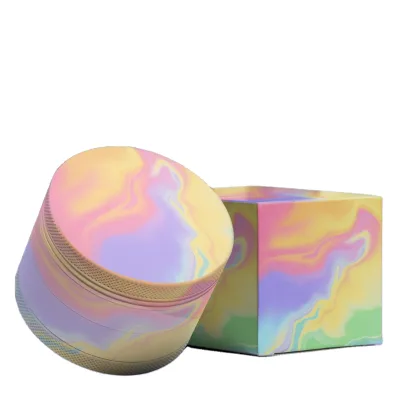
The functional design is consistently described as a "Hand Manual Grinder" with "Dry Herb Grinder" capabilities. The operation relies on a manual grinding mechanism, often featuring customizable colors. Listings indicate options for 3, 4, or 5 distinct colors, with some suppliers offering "Custom Color" requests. The packaging is equally diverse, ranging from simple OPP bags to display boxes and single box packaging. Buyers must align these physical attributes with their target market's expectations. For example, a "Display Box Packaging" suggests a retail-ready product for headshops, while an "OPP Bag" might indicate a bulk wholesale item intended for repackaging.
Technical Standards and Dimensional Verification
Technical verification is paramount when dealing with manual grinders, as the "standard" field in product data often contains dimensional or weight metrics rather than formal industry certifications. In the observed data, standards are listed as specific measurements like 40*35mm, 6.69inch, or weight benchmarks like 145g and 321g. It is crucial for buyers to understand that these figures represent product-specific attributes rather than universal regulatory standards. When evaluating a potential supplier, the buyer must request a technical data sheet that confirms the exact dimensions and weight of the specific model number, such as 092400, 092414, or 0925107.
The model numbers serve as unique identifiers for these specifications. For instance, model 092417 is associated with a 35g standard, while model 0924116 corresponds to a 321g standard. Relying on the model number is the most reliable method to ensure the correct product is being ordered. Buyers should cross-reference the model number with the requested dimensions to avoid receiving a unit that is too small or too heavy for their intended application. Furthermore, the "prod_standard" field sometimes lists dimensions like 4035mm or 3525mm. These measurements likely refer to the diameter and height of the grinder body. Verifying these exact millimeter measurements is essential for ensuring compatibility with existing storage solutions or retail shelving.
In addition to physical dimensions, the "Feature" attribute highlights that these grinders are often marketed as "Environmentally Friendly" and "Easy to Operate." While these are qualitative claims, they should be substantiated by the physical construction. A manual grinder made of zinc alloy or aluminum should demonstrate smooth rotation and durable teeth that do not degrade quickly. Buyers should request samples to test the "Easy to Operate" claim, ensuring the grinding mechanism does not require excessive force and that the teeth align correctly to produce a consistent grind size. The "Customizable" logo attribute also suggests that the surface finish must be suitable for printing or laser etching, which is a technical requirement for branding.
Compliance, Certification, and Safety Considerations
Navigating compliance for manual herb grinders requires a nuanced approach, as the product category often sits in a regulatory gray area depending on the jurisdiction and the specific end-use. The provided data mentions "CE" certification in a low-confidence background section, indicating that while some suppliers may claim compliance, it is not a universally verified fact for all listed products. Buyers should not assume that a product listing implies CE certification or any other specific safety standard unless explicitly documented in the supplier's official compliance dossier.
For products intended for "Daily Use" or targeting "Owners of Hookah Shop/Headshop/Smokeshop," safety is a primary concern. The material composition is the first line of defense. Zinc alloy and aluminum are generally considered safe for food-adjacent or personal use applications, provided they are free from harmful coatings or lead content. However, the presence of "Plastic" in some listings introduces a different set of compliance considerations, particularly regarding food-grade plastics if the grinder is used for consumables. Buyers must verify that any plastic components meet relevant food safety standards for the target market, such as FDA regulations in the United States or EU regulations for consumer goods.
The "Target People" attribute lists "Wholesalers, Retailers, Smokeshop Owners," suggesting a B2B supply chain. In this context, compliance often extends to labeling requirements and age restrictions. While the product itself is a mechanical tool, the marketing and packaging must adhere to local laws regarding the sale of smoking accessories. Buyers should ensure that the supplier provides packaging that can be customized to meet local labeling laws, including warning labels or age verification notices. The "OEM/ODM: Acceptable" attribute confirms that suppliers are willing to adapt the product, which includes adapting compliance documentation and packaging to meet specific regional requirements.
Cost Drivers and Pricing Dynamics
The pricing landscape for manual zinc alloy herb grinders is influenced by several key factors, including material costs, customization levels, and order volume. The observed price range in the market spans from $0.10 to $6.50 USD. This wide variance suggests that the final price is highly dependent on the specific model, material quality, and order quantity. The lower end of the spectrum, around $0.10, likely corresponds to basic plastic models or very small, simple metal units ordered in high volumes. Conversely, the higher end, approaching $6.50, may reflect premium zinc alloy models with complex features, custom branding, or smaller order quantities.
Material is a significant cost driver. Zinc alloy and aluminum are generally more expensive than plastic, but they offer superior durability and a premium feel. The weight of the product, ranging from 35g to 321g, also impacts the cost. Heavier grinders require more raw material, which directly increases the unit cost. Additionally, the "Customization" and "Logo" attributes add value and cost. Suppliers offering "Custom Color" or "Accept Printing Logo" services will typically charge a premium or require a higher Minimum Order Quantity (MOQ) to amortize the setup costs for custom tooling or printing plates.
The MOQ range observed is between 1 and 5000 units. This flexibility allows buyers to start with small test orders, as low as 1 unit, or commit to large-scale production runs. The "Small Orders: Accepted" attribute supports the ability to procure samples or small batches. However, buyers should be aware that unit prices will likely decrease as the order volume increases, moving toward the lower end of the $0.10 to $6.50 range. The "Sample: Freely" attribute is a valuable cost-saving tool, allowing buyers to verify quality before committing to a larger financial investment.
Supplier Evaluation and Operational Capabilities
Evaluating a supplier for manual herb grinders requires a focus on their ability to handle customization and their logistical capabilities. The "OEM/ODM: Acceptable" and "Customization: Available" attributes indicate that many suppliers are flexible and willing to work with buyers to create unique products. This flexibility is crucial for brands looking to differentiate themselves in the competitive headshop and retail market. Buyers should assess the supplier's capacity to handle "Custom Color" requests and "Accept Printing Logo" specifications, ensuring they have the necessary equipment for high-quality branding.
Logistics and shipping are also critical evaluation criteria. The observed "Shipment" options include DHL, UPS, FedEx, and Sea Shipment. This variety allows buyers to choose a shipping method that balances speed and cost. For urgent orders or samples, air freight via DHL, UPS, or FedEx is appropriate. For large bulk orders, sea shipment is the most cost-effective option, though it requires longer lead times. The "Location" attribute confirms that the primary origin is China, which is a major manufacturing hub for these products. Buyers should verify the supplier's specific location within China to understand potential regional logistics advantages or challenges.
The "Target People" attribute highlights that these products are designed for "Wholesalers, Retailers, Smokeshop Owners." A reputable supplier will have experience serving this specific demographic and understand the nuances of their supply chain needs. This includes the ability to provide "Display Box Packaging" for retail-ready products or "Single Box Packaging" for individual sale. Buyers should request case studies or references from similar clients to gauge the supplier's reliability and expertise in the smoking accessory market.
Quality Control and Long-Term Procurement Strategy
Implementing a robust quality control (QC) strategy is essential for maintaining product integrity in the manual grinder market. Given the "Feature" claims of being "Environmentally Friendly" and "Easy to Operate," QC should focus on the mechanical performance of the grinder. Buyers should test samples for smooth rotation, the sharpness and alignment of the teeth, and the durability of the finish. The "Material" diversity, including metal, aluminum, and plastic, means that QC protocols must be tailored to the specific material being sourced. For metal grinders, checking for burrs or rough edges is critical to ensure user safety.
Long-term procurement considerations involve building a sustainable relationship with suppliers who can maintain consistent quality over time. The "Small Orders: Accepted" and "Sample: Freely" attributes suggest that suppliers are open to ongoing collaboration. Buyers should establish clear communication channels for quality feedback and ensure that the supplier can replicate the exact specifications of the initial sample in future production runs. The "Model Number" system, such as 092400 or GT-9556BA, provides a clear reference for maintaining consistency. Any changes to the model number or specifications should be formally documented and agreed upon by both parties.
The "prod_packing" variations, from "OPP Bag" to "Display Box," also require QC attention. Packaging must protect the product during transit and present it attractively to the end consumer. For "Display Box Packaging," the structural integrity and print quality are vital. Buyers should inspect the packaging for damage and ensure that the branding aligns with their marketing materials. Finally, the "Shipment" options should be reviewed regularly to optimize logistics costs and delivery times, ensuring that the supply chain remains efficient and responsive to market demands.
Comparative Analysis of Product Attributes
To facilitate decision-making, the following table summarizes the key attributes observed in the market for manual herb grinders. This comparison helps buyers identify the specific features that align with their procurement goals.
| Attribute Category | Observed Options | Strategic Implication |
|---|---|---|
| Material | Metal, Aluminum, Plastic | Zinc/Aluminum offers durability; Plastic is cost-effective. Verify specific alloy for "zinc alloy" keyword. |
| Size/Dimensions | 3015mm to 82140mm | Select based on portability needs (pocket vs. desktop). |
| Weight | 35g to 321g | Heavier units imply robustness; lighter units suit travel. |
| Color Options | 3, 4, 5 Colors, Custom Color | Custom colors allow brand differentiation; standard colors reduce cost. |
| Packaging | OPP Bag, Display Box, Single Box | Display boxes for retail; OPP bags for bulk/wholesale. |
| Customization | Logo Printing, OEM/ODM | Essential for branding; verify setup costs and MOQs. |
| Target Market | Hookah Shop, Smokeshop, Wholesalers | Align product features with end-user expectations. |
| Shipping | DHL, UPS, FedEx, Sea | Choose based on urgency and order volume. |
This comparative analysis underscores the importance of precise specification matching. Buyers should not rely on general descriptions but must verify the exact model number, dimensions, and material composition to ensure the product meets their specific requirements. By focusing on these detailed attributes, buyers can navigate the diverse market of manual herb grinders with confidence and clarity.
FAQs
What materials are used for manual zinc alloy herb grinders?
Manual grinders are available in metal, aluminum, and plastic. While zinc alloy is a specific subset, buyers must verify the exact material listed for each model to ensure durability and weight profiles match their needs.
Which dimensions are available for these manual grinders?
Dimensions vary significantly, ranging from compact 30*15mm units to larger 82*140mm models. Specific sizes like 40*35mm or 35*25mm are common, so buyers should cross-reference model numbers to confirm exact physical attributes.
Can I customize the logo and color of the grinder?
Yes, customization is available for both logos and colors. Suppliers accept printing logos and offer options for 3, 4, or 5 distinct colors, including custom color requests, making them suitable for branding and retail display.
What is the minimum order quantity for these products?
The minimum order quantity ranges from 1 to 5000 units. Small orders are accepted, allowing buyers to start with samples or small batches before committing to larger production runs based on their specific business needs.
How are these grinders packaged for shipment?
Packaging options include OPP bags, display boxes, and single box packaging. The choice depends on whether the product is intended for bulk wholesale repackaging or as a retail-ready item for headshops and smokeshops.
Which shipping methods are supported for these orders?
Supported shipping methods include DHL, UPS, FedEx, and sea shipment. Buyers can select air freight for urgent samples or sea shipment for cost-effective bulk delivery, depending on their timeline and order volume requirements.
Are these grinders suitable for daily use and wholesale?
Yes, they are designed for daily use and target wholesalers, retailers, and smokeshop owners. Their features include being environmentally friendly and easy to operate, making them versatile tools for various commercial and personal applications.