Source Manual Wood Pepper Mill for Home, Restaurant, Kitchen
Compare 30 Manual Wood Pepper Mill options from verified Chinese suppliers. Buyers can evaluate specifications, certifications, and pricing for salt and pepper grinding needs in home and restaurant settings.
Key considerations
Products List


Mini Portable Hand Manual Ceramic Core Wooden Salt and Pepper Mill Grinder
$0.95 - $1.00
MOQ: 2000 pieces


Manual Wooden Salt & Pepper Mill Acacia Wood Peppermill Spice Grinder with Box
$3.00 - $3.80
MOQ: 500 Pieces
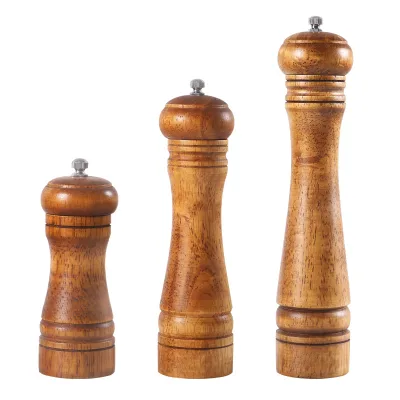



Comprehensive Sourcing Guide
Manual Wood Pepper Mill Sourcing Guide
Sourcing manual wood pepper mills requires a careful balance between aesthetic appeal, functional durability, and supply chain reliability. These kitchen tools are ubiquitous in both household and commercial settings, serving as essential instruments for grinding spices like salt, pepper, and chili. The market offers a diverse range of options, from simple glass-bodied mills to more traditional wooden designs, each catering to different brand identities and user preferences. Buyers must navigate this variety by focusing on material integrity, grinding mechanism quality, and compliance with food safety standards. This guide provides a structured approach to evaluating suppliers and products, ensuring that procurement decisions are grounded in verified data and practical industry knowledge.
The decision to source manual wood pepper mills often stems from a desire to offer products that combine sustainability with classic design. Wooden components, particularly when paired with ceramic or steel grinding mechanisms, provide a tactile experience that resonates with consumers seeking premium kitchenware. However, the term "wood" can encompass various species and treatments, each affecting the final product's weight, durability, and cost. Buyers should prioritize suppliers who provide clear specifications regarding wood types and finishes, ensuring that the product meets both aesthetic expectations and functional requirements. Understanding these nuances is critical for maintaining brand consistency and customer satisfaction across different markets.
Product Scope and Observed Listing Signals
The current market landscape for manual pepper mills reveals a wide spectrum of product configurations, with observed listings indicating significant variation in materials, sizes, and pricing. Prices for these items typically range from $0.25 to $8.86 USD, reflecting differences in material quality, manufacturing complexity, and order volumes. Minimum Order Quantities (MOQs) also vary considerably, ranging from as low as 2 pieces for sample orders to 3,000 pieces for bulk production runs. This variability allows buyers to tailor their procurement strategies to their specific needs, whether they are testing new product lines or fulfilling large-scale retail demands. It is essential to analyze these signals in the context of your specific volume requirements and budget constraints.
Product attributes observed in the market include a mix of glass, wood, and ceramic/porcelain materials, with manual operation being the standard style. Specific models such as the H11-085 and W21-009 demonstrate the diversity in design, with sizes ranging from compact 65x132mm units to larger 8-inch mills. Weight specifications also vary, with some models weighing around 189-199 grams, while others are lighter at 94 grams. These physical characteristics directly impact shipping costs and user experience. Buyers should carefully review these specifications to ensure that the selected products align with their target market's preferences for portability, stability, and overall feel.
Technical Specifications to Verify
Verifying technical specifications is crucial to ensuring that the manual wood pepper mills meet functional expectations and quality standards. Key dimensions to verify include the diameter and height of the mill, which affect both storage efficiency and ease of use. For instance, models with a diameter of 50-67mm and heights ranging from 110mm to 203mm offer different handling experiences. Buyers should confirm these dimensions with suppliers to avoid discrepancies between samples and bulk orders. Additionally, capacity specifications, such as 60ml, 80ml, or 160ml, should be clearly defined to ensure that the mill holds an appropriate amount of spice for typical use cases.
The grinding mechanism is another critical technical aspect that requires thorough verification. While many mills are designed for salt, pepper, and chili, the quality of the grinding burrs—whether ceramic or steel—determines the consistency of the grind and the longevity of the product. Buyers should inquire about the type of mechanism used and request samples to test the grinding performance. Furthermore, the weight of the mill, which can range from 94g to 202g, should be considered in relation to the material composition. Heavier mills may offer better stability during use, but they also impact shipping costs. Ensuring that these technical details are accurately documented in the purchase order is essential for maintaining quality control.
Compliance and Safety Documentation
Compliance with food safety standards is non-negotiable when sourcing kitchenware products. Certifications such as LFGB, FDA, and CE/EU are commonly required to ensure that the materials used in the pepper mills are safe for contact with food. Buyers must verify that suppliers possess valid and up-to-date certifications for each product model. These certifications provide assurance that the wood, glass, and ceramic components do not leach harmful substances into the spices. It is advisable to request copies of these certificates and cross-reference them with the relevant regulatory bodies to confirm their authenticity.
In addition to material safety, buyers should also consider the environmental impact of the products. Many suppliers highlight features such as sustainability and stocked availability, which can be attractive to eco-conscious consumers. However, claims of sustainability should be backed by verifiable data, such as the source of the wood or the recyclability of the packaging. Buyers should ask suppliers for detailed information on their sourcing practices and packaging materials. Ensuring that the products meet both safety and environmental standards helps to mitigate regulatory risks and enhances brand reputation in the global market.
Cost Drivers and Commercial Terms
Understanding the cost drivers associated with manual wood pepper mills is essential for effective budgeting and negotiation. The primary factors influencing cost include the material composition, customization options, and order volume. Wooden components, especially those made from premium species, tend to be more expensive than glass or plastic alternatives. Customization, such as logo printing or color variations, can also add to the unit cost. Buyers should negotiate these variables carefully to achieve the best possible price without compromising on quality. Additionally, the MOQ plays a significant role in pricing, with larger orders typically benefiting from economies of scale.
Commercial terms, including payment methods, lead times, and shipping arrangements, also impact the overall cost of procurement. Buyers should clarify these terms with suppliers before placing orders to avoid unexpected expenses. For instance, some suppliers may offer discounts for faster payment terms, while others may charge extra for expedited shipping. It is also important to consider the packaging options, such as white boxes, color boxes, or display boxes, as these can affect both product protection and retail appeal. By carefully managing these commercial terms, buyers can optimize their total cost of ownership and improve their profit margins.
Supplier Qualification and Quality Control
Supplier qualification is a critical step in the sourcing process, ensuring that partners have the capability and reliability to meet your requirements. Buyers should conduct thorough due diligence on potential suppliers, including verifying their business licenses, production facilities, and quality management systems. Suppliers located in regions such as Shandong, Ningbo, and Anhui in China are common sources for these products, but their capabilities can vary significantly. It is advisable to request factory audits or third-party inspections to assess their production standards and ethical practices. This due diligence helps to mitigate risks associated with supply chain disruptions and quality inconsistencies.
Quality control measures should be implemented throughout the production process to ensure that the final products meet specified standards. Buyers should establish clear quality criteria, including dimensional accuracy, material integrity, and functional performance. Regular inspections, such as pre-production, during-production, and pre-shipment inspections, can help identify and address issues early. Additionally, buyers should request samples before committing to large orders to evaluate the product's quality firsthand. By maintaining rigorous quality control protocols, buyers can ensure that their products meet customer expectations and reduce the likelihood of returns or complaints.
Long-Term Procurement Checks
Long-term procurement success depends on continuous monitoring and evaluation of supplier performance and market trends. Buyers should establish key performance indicators (KPIs) to track supplier reliability, product quality, and delivery times. Regular reviews of these metrics can help identify areas for improvement and foster stronger partnerships with suppliers. Additionally, staying informed about market trends, such as emerging materials or design preferences, can help buyers stay competitive. For example, the growing demand for sustainable products may necessitate a shift towards eco-friendly materials and packaging.
It is also important to maintain flexibility in procurement strategies to adapt to changing market conditions. This may involve diversifying the supplier base to reduce dependency on a single source or exploring new product categories to meet evolving consumer needs. Buyers should also consider the lifecycle of the products, including potential for obsolescence or regulatory changes. By proactively managing these long-term factors, buyers can ensure the sustainability and profitability of their procurement operations. Continuous improvement and strategic planning are key to maintaining a competitive edge in the dynamic kitchenware market.
FAQs
What certifications do manual wood pepper mills have?
Manual wood pepper mills typically hold LFGB and FDA certifications for food safety. Some models also include CE/EU compliance to meet European standards. These certifications ensure the materials used are safe for direct contact with spices like salt and pepper.
Can I customize the logo on these mills?
Yes, customized logos are accepted for manual wood pepper mills. Buyers can request specific branding on the product surface. This customization option allows businesses to create unique branded kitchen tools for their specific market needs.
What is the minimum order quantity for these mills?
The minimum order quantity varies by model, ranging from 100 to 1000 pieces. Some specific models require 500 pieces as a baseline. Buyers should check the specific product model to confirm the exact MOQ before placing an order.
Which materials are used for these pepper mills?
These mills are primarily constructed from wood and glass materials. Some variations also incorporate ceramic or porcelain components for the grinding mechanism. The choice of material affects the weight and overall durability of the final product.
How much capacity do these mills hold?
The capacity of these mills ranges from 60ml to 160ml depending on the model. Specific sizes include 65mm by 132mm or 50mm diameter by 150mm height. This variation allows users to select a size suitable for home or restaurant use.
Where are these mills manufactured?
These mills are manufactured in various locations across China, including Shandong, Ningbo, and Anhui provinces. The origin location may vary depending on the specific supplier and product model selected. Buyers can verify the exact production site for each item.
What packaging options are available for these mills?
Packaging options include white boxes, color boxes, display boxes, and pallets. Some sets come with one or two pieces per box. Custom packaging is also accepted to meet specific buyer requirements for retail or wholesale distribution.