Find Manual Wheelchair for Home, Hospital, and Travel
Source 30 Manual Wheelchair options with varying features like folding frames, aluminum alloy construction, and specific wheel sizes. Buyers can compare specifications including load capacity, certifications, and customization availability to select the right mobility aid.
Key considerations
Products List


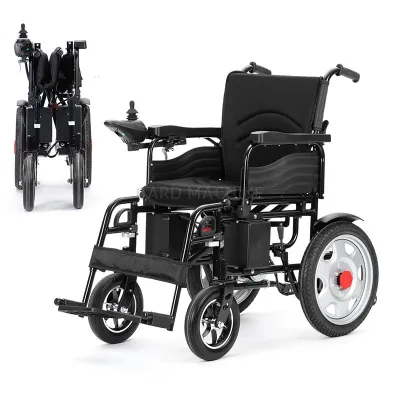


Comprehensive Sourcing Guide
Strategic Sourcing Guide for Manual Wheelchairs
Understanding Technical Specifications and Material Variations
When sourcing manual wheelchairs, the first critical step is to distinguish between the specific technical configurations available in the market. The product landscape is not monolithic; it ranges from basic transport models to complex standing aids. A primary differentiator is the frame material. Buyers must verify whether the unit is constructed from Steel or Aluminum Alloy. Steel frames are often associated with high durability and cost-effectiveness, while Aluminum Alloy frames, particularly those described as "High-Strength," offer a lighter weight profile which is essential for active users and caregivers who need to lift the device frequently. Some listings specify an "Aluminuum Powder Coatina Frame," indicating a specific surface treatment process that enhances corrosion resistance and aesthetic finish.
The structural design of the wheelchair dictates its portability and storage capabilities. A key attribute to evaluate is the folding mechanism. Many units are designed as "Folding" or "Foldable," which significantly reduces their footprint for transport in vehicles or storage in compact living spaces. Conversely, rigid frame models exist but are less common in general procurement lists unless specified for high-performance athletic use. The presence of "Fixed Handrails" and "Fixed Footrests" in certain models suggests a design prioritized for stability and ease of maintenance, whereas "Detachable" footrests and "Filp-up" armrests offer greater customization for users with specific mobility challenges or for tighter storage requirements.
Wheel configuration is another vital technical specification. The front wheel size and type vary significantly, with options ranging from 8-inch PVC+PP integrated solid wheels to 8x1-inch or 8x2-inch pneumatic tires. The rear wheel is typically larger, often 24 inches, and can be found as a "Pneumatic Rear Wheel" or a "PU Solid Wheel." The choice between pneumatic and solid tires impacts the ride quality; pneumatic wheels provide better shock absorption on uneven terrain, while solid wheels eliminate the risk of punctures and require less maintenance. Some advanced models feature "24*1.95 Wider Wheel (off-Road Tire)," indicating a capability for rougher surfaces. The caster size, often 8 inches with PU material, is crucial for maneuverability in tight indoor environments.
Compliance, Certification, and Safety Standards
Ensuring that a Manual Wheelchair meets international safety and quality standards is non-negotiable for B2B procurement. The supply chain data indicates that compliant products often carry specific certifications such as CE, ISO, and RoHS. The CE mark signifies conformity with health, safety, and environmental protection standards for products sold within the European Economic Area. ISO certification, specifically referencing standards like ISO 7176 where applicable, ensures that the wheelchair has undergone rigorous testing for structural integrity, stability, and performance under load. RoHS compliance indicates that the product is free from specific hazardous materials, which is increasingly important for environmental regulations and consumer safety.
Buyers must verify the specific certification status of each supplier. While some listings explicitly state "CE,ISO" or "CE,RoHS,ISO," others may not list them, requiring direct inquiry. It is important to note that certifications are not automatic; they are specific to the manufacturing batch and the facility. The presence of a "One Year Warranty and Five-Year Maintenance" clause in product descriptions often correlates with a supplier's confidence in their compliance and quality control processes. However, a warranty is a commercial term and should not be confused with a technical certification.
Load capacity is a critical safety parameter that must be verified against the intended user. Data suggests a standard load capacity of 100 Kg for many models, but this is not a universal constant. Procurement teams must ensure that the selected wheelchair's rated capacity exceeds the maximum weight of the end-user plus any additional equipment they may carry. Exceeding the load limit can lead to structural failure, voiding warranties and creating significant liability risks. The standard dimensions provided, such as 972782cm or 1036889.5cm, also serve as a proxy for the structural design and must be cross-referenced with the user's physical dimensions to ensure a proper fit.
Cost Drivers and Pricing Dynamics
The pricing of manual wheelchairs is influenced by a complex interplay of materials, customization options, and certification levels. The observed price range in the market spans from $18 to $460 USD, reflecting the vast difference between basic, non-customized models and high-specification units. The lower end of the spectrum typically corresponds to standard steel frames with basic features, while the higher end often includes aluminum alloy construction, specialized wheel configurations, and advanced customization options.
Material costs are a primary driver. Aluminum alloy frames are generally more expensive than steel due to the cost of the raw material and the manufacturing processes required to achieve high-strength properties without adding weight. Surface treatments also impact cost; "Chrome Plated" finishes may offer different aesthetic and durability profiles compared to "Powder Coating," and the choice between these can influence the final price. Customization is another significant cost factor. Products marked as "Customized" or offering "Available" customization options will inherently carry a higher price point than off-the-shelf units. This includes options for specific seat widths, which range from 12 inches to 24 inches, and variations in backrest materials, such as "Nylon or Leather."
The Minimum Order Quantity (MOQ) also plays a role in the effective cost per unit. The observed MOQ range is 1 to 100 units. Buyers purchasing in smaller quantities may face higher per-unit costs or limited customization options, whereas bulk orders often unlock better pricing tiers and more flexible terms. Packaging requirements, such as "Carton" versus "Box Packing," can also affect shipping costs and overall procurement expenses. Additionally, the inclusion of "Extra Service" items like brochures or specific maintenance documentation can add value but may be factored into the overall cost structure. Buyers should analyze the total cost of ownership, including potential maintenance costs, rather than focusing solely on the initial purchase price.
Typical Applications and User Scenarios
Manual wheelchairs serve diverse applications, ranging from domestic use to medical facilities and rehabilitation centers. The "Ordinary Wheelchair" category is designed for general mobility, suitable for users who need assistance with daily activities but do not require specialized medical interventions. These units are often characterized by "Fixed Armed" armrests and "Fixed Legrest" configurations, providing a stable and straightforward platform for movement. The "Double-Layer 600d Oxford Nylon Fabric" used for seat and backrests in some models suggests a focus on durability and ease of cleaning, making them suitable for high-traffic environments like hospitals or nursing homes.
For users requiring more specialized support, the "Aid Standing Wheelchair" represents a distinct category. These units are engineered to assist users in transitioning from a seated to a standing position, which is beneficial for circulation, bone density, and social interaction. The "Tilted" feature, as opposed to "Non-Tilted," is a critical differentiator for users who need pressure relief to prevent bedsores or who require specific postural support. The "Leg Rest Type" also dictates the application; models with "Both Sides Separate" leg rests offer greater flexibility for users with unilateral mobility issues, while "Across Both Sides" configurations provide uniform support.
The "Reversible Footrest" is a versatile feature that allows the footplate to be adjusted for different user needs, such as accommodating different leg lengths or allowing for foot placement during standing transitions. The "Foldable" nature of many units makes them ideal for users who need to transport the wheelchair in a vehicle, while "Fixed" structures are preferred for users who prioritize stability and do not require frequent transport. The choice of wheels also influences the application; "Pneumatic" wheels are better for outdoor use and uneven terrain, while "Solid" wheels are preferred for indoor environments where puncture resistance is paramount. Understanding these applications helps buyers match the right product to the specific needs of their end-users.
Supplier Evaluation and Quality Control Protocols
Evaluating suppliers requires a rigorous approach to ensure consistency and reliability. The origin of the products is a key factor, with the majority of the observed data indicating "China" as the primary manufacturing location, with specific mentions of "China Shanghai." Buyers should verify the specific manufacturing facility and its track record. While the data confirms the origin, it does not provide specific supplier names, so due diligence must be conducted through third-party audits or verified trade references.
Quality control should be a central part of the procurement strategy. Buyers must request documentation that verifies the structural integrity of the wheelchair, including load testing results and material certifications. The "One Year Warranty and Five-Year Maintenance" promise is a strong indicator of a supplier's commitment to quality, but it must be backed by clear terms and conditions. Buyers should also inspect the "Surface Treatment" processes, ensuring that "Chrome Plated" or "Powder Coating" is applied uniformly to prevent corrosion and ensure longevity.
The packaging is another aspect of quality control. The "Carton" or "Box Packing" must be robust enough to protect the wheelchair during transit. Damaged packaging can indicate poor handling or substandard packaging materials, which may lead to product damage upon arrival. Buyers should also verify the "Product Model" numbers, such as "LYAL-TKMCG-3 0908" or "B. 01.01.01.114 0420," to ensure they are ordering the exact specifications required. Consistency in model numbers across batches is essential for maintaining a standardized fleet of wheelchairs.
Long-Term Procurement and Maintenance Considerations
Sourcing manual wheelchairs is not just about the initial purchase; it involves long-term considerations regarding maintenance, spare parts, and lifecycle management. The "Five-Year Maintenance" clause suggests a long-term partnership with the supplier, but buyers must clarify what this entails. Does it include regular inspections, replacement of worn parts, or on-site repairs? Understanding the scope of this maintenance is crucial for budgeting and operational planning.
Spare parts availability is another critical factor. Components such as wheels, brakes, and footrests are subject to wear and tear. Buyers should ensure that the supplier can provide a steady supply of spare parts for the specific models they are purchasing. The "Detachable" nature of some footrests and "Filp-up" armrests means that these parts may need replacement more frequently than the frame. The "Reversible Footrest" and "8" PU Casters" are common points of wear that should be readily available.
The "After-Sales Warranty" is a key component of long-term procurement. A "One Year Warranty" typically covers manufacturing defects, but buyers should verify what is excluded. Are labor costs included? Is there a limit on the number of service calls? The "Extra Service" of providing a "Brochure" can be helpful for end-users, but it is not a substitute for comprehensive technical support. Buyers should also consider the "Load Capacity" and "Overall Dimensions" when planning for future upgrades or replacements. As users' needs change, the ability to adapt the wheelchair or replace it with a compatible model is essential.
Finally, buyers should monitor the market for changes in standards and regulations. The "ISO 7176" standard is a benchmark for wheelchair testing, and any changes to this standard could impact the compliance of existing inventory. Staying informed about regulatory changes ensures that the procurement strategy remains compliant and that the end-users continue to receive safe and effective products. By focusing on these long-term factors, buyers can build a sustainable and reliable supply chain for manual wheelchairs.
Comparative Analysis of Key Product Attributes
To facilitate decision-making, the following table summarizes the key attributes observed in the market, highlighting the variations that buyers should consider.
| Attribute Category | Option A (Standard/Basic) | Option B (Advanced/Custom) |
|---|---|---|
| Frame Material | Steel | High-Strength Aluminum Alloy |
| Frame Finish | Powder Coating | Chrome Plated or Powder Coating |
| Folding Mechanism | Folding / Foldable | Fixed Handrails / Fixed Footrests |
| Armrest Type | Fixed Armed | Flip-up / Detachable |
| Footrest Type | Fixed Legrest | Detachable / Reversible |
| Wheel Configuration | 8" PU Casters, 24" Pneumatic | 8" PVC+PP Solid, 24" PU Solid |
| Seat Material | 600d Oxford Nylon | Nylon or Leather |
| Load Capacity | 100 Kg (Standard) | Variable (Verify per model) |
| Certifications | CE, ISO | CE, RoHS, ISO |
| Warranty | One Year Warranty | One Year + Five-Year Maintenance |
| Origin | China | China Shanghai |
This comparison underscores the importance of aligning product specifications with the specific needs of the end-user. While Option A offers a cost-effective solution for general use, Option B provides enhanced features for users with more complex requirements. Buyers must carefully evaluate these attributes to ensure the selected wheelchair meets both functional and regulatory standards.
FAQs
What certifications do manual wheelchairs typically have?
Manual wheelchairs typically carry CE, ISO, and RoHS certifications to ensure safety and compliance. These marks indicate conformity with health, safety, and environmental standards for products sold in major markets like the European Economic Area.
Which frame materials are available for manual wheelchairs?
Available frame materials include Steel and High-Strength Aluminum Alloy. Steel frames offer high durability and cost-effectiveness, while aluminum alloy frames provide a lighter weight profile essential for active users and caregivers.
Can manual wheelchairs be customized for specific needs?
Yes, customization is available for various Manual Wheelchair models. Buyers can select specific seat widths ranging from 12 to 24 inches and choose between fixed or detachable footrests to match user requirements.
What is the load capacity for standard manual wheelchairs?
Standard manual wheelchairs often support a load capacity of 100 Kg. Buyers must verify this rating against the intended user's weight to ensure structural integrity and avoid liability risks associated with exceeding limits.
How do wheel types affect Manual Wheelchair performance?
Wheel types vary between pneumatic and solid options to suit different terrains. Pneumatic rear wheels offer better shock absorption, while solid PU wheels eliminate puncture risks and require less maintenance for indoor use.
What warranty terms are common for manual wheelchairs?
Common warranty terms include a one-year warranty and five-year maintenance coverage. This reflects supplier confidence in quality but should be reviewed alongside specific terms and conditions for long-term reliability.