Source Mechanical Black Safe Box for Office, Hotel, and Home Use
Explore 30 listings for a Mechanical Black Safe Box designed for office, hotel, and home security. Buyers can compare electronic and mechanical lock options, fireproof ratings, and customization features from verified Chinese manufacturers.
Key considerations
Products List


Heavy Fireproof Anti-Theft Password Safe Box Fireproof and Machinery Deposit Box
$30.00 - $34.00
MOQ: 10 pieces
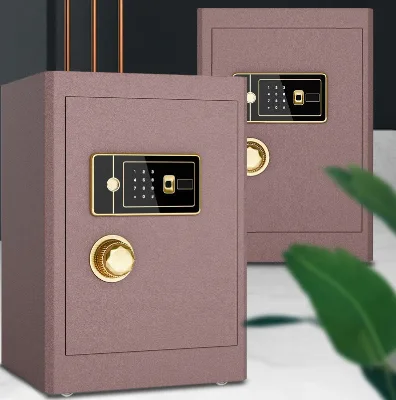
Hot Sale Electronic Metal Anti Fire Security Fireproof Deposit Safes Box
$103.30 - $415.50
MOQ: 10 Minimum


Comprehensive Sourcing Guide
Strategic Sourcing Guide for Mechanical Black Safe Boxes
Understanding the Product Category and Core Attributes
When sourcing a Mechanical Black Safe Box, buyers must first distinguish between the specific mechanical locking mechanisms and the broader electronic or biometric options that often appear in mixed listings. The core keyword "Mechanical Black Safe Box" implies a specific subset of security storage where the primary locking principle relies on a dial or keypad combination that operates through physical tumblers rather than digital circuits. However, current market data reveals a complex landscape where "mechanical" and "electronic" attributes often coexist in the same product descriptions. For instance, observed listings frequently cite "Mechanical" password working principles alongside "Electronic Digital Lock" or "Fingerprint Lock" specifications. This discrepancy requires a rigorous vetting process where the buyer must explicitly confirm the locking mechanism type before finalizing an order.
The visual and structural attributes of these units are equally critical. The target product is typically described as having a "Panel" wood style, though the primary construction material is confirmed as "Metal." This metal construction is essential for providing the necessary resistance against forced entry. The physical dimensions observed in the market vary significantly, with width specifications often falling under 370mm, while height ranges between 301mm and 500mm. Depth is generally constrained to under 273mm, making these units suitable for compact office environments or home use. The color "Black" is a standard aesthetic choice, often available as a customized option alongside other colors. Buyers should note that while some listings mention "Wood Style," this often refers to the packaging or a specific finish rather than the structural material, which remains metal.
Technical Specifications and Dimensional Analysis
A detailed examination of technical specifications is paramount when evaluating mechanical safe boxes. The thickness of the door and body is a primary indicator of security capability. Market observations indicate two distinct thickness profiles: one with a 3mm door and 1mm body, and another with a 5mm door and 1.5mm body. The thicker configuration (5mm door) generally offers superior resistance to drilling and prying, making it a preferred choice for high-value storage. The weight of these units also correlates with their security rating; observed single gross weights range from 10.5kg to 11.3kg. This weight is a crucial factor for buyers concerned with portability versus stability. A heavier unit is less likely to be easily carried away, a common theft vector for smaller safes.
The locking mechanism itself requires precise verification. While the search term specifies "mechanical," the supply chain data shows a prevalence of "Electronic Digital Locks" and "Fingerprint Locks" with security levels rated as A1. For a true mechanical safe, the buyer must verify that the "Password working principle" is indeed mechanical, relying on a rotating dial or a mechanical keypad that does not require batteries. The presence of accessories like "4xAA Battery" in some listings strongly suggests an electronic component, which contradicts the "mechanical" requirement. Therefore, the technical specification table below highlights the critical distinctions buyers must verify to ensure they receive the correct product type.
| Attribute | Mechanical Safe Expectation | Observed Market Variance | Verification Requirement |
|---|---|---|---|
| Lock Type | Mechanical Dial/Key | Electronic, Fingerprint, Digital | Confirm "Mechanical" in spec sheet |
| Power Source | None (Manual) | 4xAA Battery, External Power | Verify absence of battery slots |
| Door Thickness | 3mm to 5mm | 3mm or 5mm listed | Request millimeter verification |
| Body Thickness | 1mm to 1.5mm | 1mm or 1.5mm listed | Confirm internal steel gauge |
| Security Level | Varies by Manufacturer | A1 (Observed) | Request specific security rating |
| Installation | Wall-Mounted or Desk | Wall-Mounted/Desk | Verify mounting hardware inclusion |
Compliance, Certification, and Security Standards
Navigating the compliance landscape for safe boxes requires a clear understanding of the certifications available in the market. The observed data indicates that products often carry the "CCC" (China Compulsory Certification) mark, which is a mandatory safety certification for products sold within China. However, for international buyers, reliance on CCC alone may be insufficient. The background knowledge mentions standards such as EN 1143-1, EN 1047-1, and UL72, which are widely recognized international benchmarks for fire and burglary resistance. While the supplied product facts do not explicitly confirm that every listed safe meets these specific EN or UL standards, buyers must treat these as the gold standard for verification.
Buyers should not assume that a "Fireproof" or "Anti-theft" function claim automatically implies compliance with EN 1047-1 (fire) or EN 1143-1 (burglary). These are distinct testing protocols. The "Security Level: A1" observed in some listings is a specific rating, but without a reference to the governing standard (e.g., ISO or EN), its exact performance threshold remains undefined. To mitigate risk, procurement teams must request independent test reports that explicitly reference the desired standard. If the supplier cannot provide documentation for EN 1143-1 or UL72, the buyer should proceed with caution, understanding that the "Fireproof" attribute may refer to a basic level of heat resistance rather than certified fire survival. The "Customized" standard noted in the data suggests that many units are built to order, which further complicates certification; a custom-built safe may not carry a pre-existing certification unless specifically tested.
Cost Drivers and Pricing Dynamics
The pricing for mechanical black safe boxes is influenced by a complex interplay of material costs, locking mechanism complexity, and customization levels. The observed price range in the market is vast, spanning from $1.90 to $415.50 USD. This extreme variance indicates that the keyword "mechanical safe box" covers everything from basic, lightweight locking boxes to heavy-duty, certified security units. The lower end of the price spectrum likely corresponds to units with thinner metal (1mm body), simpler locking mechanisms, or minimal security ratings. Conversely, the higher price points are associated with thicker doors (5mm), advanced locking systems, and potentially certified security levels.
Several specific factors drive the cost upward. First, the "Customized" nature of the product allows for logo printing, color variations, and specific dimension adjustments, all of which add to the manufacturing cost. Second, the "Service: OEM ODM Customized" option implies that buyers can request tailored designs, which typically incurs a premium over standard off-the-shelf models. Third, the packaging requirements, such as "Standard Export Packing" involving OPP bags, sponge, and cartons, or "Wood" packaging, contribute to the final landed cost. The "MOQ" (Minimum Order Quantity) also plays a significant role; while some listings show an MOQ of 1PC, others may require orders up to 500 units. Bulk purchasing often reduces the per-unit cost, but the initial investment for customization and tooling can be substantial. Buyers must balance their budget against the specific security needs, avoiding the trap of purchasing the cheapest option if the application requires a higher security level.
Typical Applications and Usage Scenarios
The versatility of mechanical black safe boxes makes them suitable for a wide range of applications, from residential to commercial environments. The observed "Usage" categories include "Office" and "Home Safes, Commercial." In an office setting, these units are often used to secure sensitive documents, cash, or small valuables. The compact dimensions (width <370mm, height 301-500mm) allow them to fit discreetly under desks or in filing cabinets. The "Installation" options of "Wall-Mounted/Desk" provide flexibility in placement, ensuring the safe is either anchored to a wall for maximum security or placed on a desk for easy access.
For commercial applications, the "Hotel Equipment" keyword suggests a specific use case where safes are installed in guest rooms. In this context, the reliability of the mechanical lock is crucial, as guests may not have access to external power sources for electronic locks. The "Fireproof" and "Anti-theft" functions are particularly relevant here, protecting guest valuables from both theft and accidental fire damage. The "Multi Door" attribute observed in some listings might indicate specialized configurations for larger commercial vaults or multi-unit installations. Additionally, the "Single Item" selling unit suggests that these are often purchased individually for specific locations rather than as part of a large bulk installation, although the "OEM ODM" capability allows for large-scale custom orders. Buyers should align the product's security level and dimensions with the specific risk profile of the intended application.
Supplier Evaluation and Quality Control Protocols
Evaluating suppliers for mechanical safe boxes requires a focus on their ability to deliver consistent quality and adhere to specifications. The "prod_origin" is consistently listed as "China," with specific mentions of "Guangdong, China" as a manufacturing hub. While this provides a geographical context, it does not guarantee quality. Buyers must verify the supplier's capability to meet the "Customized" standards requested. The "Service: OEM ODM Customized" attribute indicates that many suppliers are flexible, but this flexibility must be managed through strict quality control.
Quality control should begin with the verification of material thickness. As noted, the door thickness can vary between 3mm and 5mm. Buyers should request millimeter measurements from the supplier to ensure the unit meets the required security specifications. The "Single Gross Weight" of 11.300kg and "Weight" of 10.5kg are useful benchmarks; significant deviations from these weights could indicate the use of inferior materials or hollow construction. Furthermore, the "Warranty: 2 Years" is a critical indicator of supplier confidence. A supplier offering a two-year warranty is more likely to stand behind the durability of their locking mechanisms and metal construction.
Buyers should also scrutinize the "Packing" details. The "Standard Export Packing" involving sponge and cartons is designed to prevent damage during transit. However, for custom orders, the "Wood" or "Paper Box" packaging options must be confirmed to ensure the safe arrives in pristine condition. The "prod_packing" attribute of "Wood" in some listings might refer to the crate used for shipping heavy units, which is a positive sign for handling large or heavy safes. Finally, the "Keywords: Hotel Equipment" and "Type: Safe" confirm the product category, but buyers must ensure the specific model (e.g., "ZACE-1041") matches the intended mechanical requirements.
Long-Term Procurement and Maintenance Considerations
Long-term procurement success for mechanical safe boxes depends on understanding the maintenance requirements and the lifecycle of the locking mechanism. Unlike electronic locks, mechanical locks generally require less maintenance regarding power sources but may need periodic lubrication and calibration. The "Password working principle: Mechanical" implies a reliance on physical tumblers, which can wear down over time if not maintained. Buyers should inquire about the availability of spare parts, such as replacement dials or keys, to ensure the safe remains operational for the duration of its warranty and beyond.
The "Customized" aspect of the product also has long-term implications. If a buyer opts for a customized logo or color, they must ensure that the supplier can reproduce these elements if additional units are needed in the future. The "prod_standard: Customized" note suggests that each order might be unique, which could complicate future replacements or expansions. Buyers should maintain detailed records of the specifications, including the exact thickness, dimensions, and locking mechanism type, to facilitate future procurement.
Furthermore, the "Security Level: A1" and "Fireproof" attributes should be reviewed periodically. As security threats evolve, the standards for safe boxes may change. A unit that meets A1 today might not meet future requirements for high-value storage. Buyers should consider the "Warranty: 2 Years" as a baseline for performance but plan for eventual replacement or upgrade of the safe box. The "Installation" method (wall-mounted or desk) also affects longevity; wall-mounted units generally offer better security against theft but require professional installation to ensure the anchor points remain secure over time. By focusing on these long-term factors, buyers can ensure their investment in mechanical black safe boxes remains secure and effective for years to come.
FAQs
What locking mechanisms are available for mechanical black safe boxes?
Options include mechanical, electronic digital, and fingerprint locks. While the search term specifies mechanical, listings often show electronic or fingerprint types with battery requirements. Buyers must verify the password working principle is mechanical to ensure no batteries are needed.
How thick are the doors and bodies of these safe boxes?
Door thickness varies between 3mm and 5mm, while body thickness ranges from 1mm to 1.5mm. The 5mm door configuration offers superior resistance to drilling and prying compared to the 3mm option, making it a preferred choice for higher security needs.
Can these safes be customized with specific logos and colors?
Yes, customization is available for logos, colors, and dimensions. Suppliers offer OEM and ODM services allowing for tailored designs. However, custom orders may not carry pre-existing certifications unless specifically tested for the new configuration.
What is the minimum order quantity for purchasing these safes?
The minimum order quantity can be as low as 1 piece for single items. Some listings indicate an MOQ of 1PC, while others may require orders up to 500 units. Bulk purchasing often reduces the per-unit cost for larger orders.
Are these safe boxes certified for fire and burglary resistance?
Some units carry CCC certification, but international standards like EN 1143-1 or UL72 are not guaranteed. Buyers should request independent test reports to verify specific fireproof or anti-theft claims against recognized benchmarks before finalizing an order.
Where are these mechanical black safe boxes manufactured?
Products originate from China, with specific manufacturing hubs in Guangdong. The consistent origin location provides context for shipping and sourcing, but buyers must verify the specific factory capabilities to ensure quality and adherence to custom standards.