Source Medical AC Adapter for Phone, Camera, and Game Player
Find 30 Medical AC Adapter options with varying certifications like UL, CE, and RoHS. Buyers can compare specifications including output types, dimensions, and protection features for devices such as phones, digital cameras, and game players.
Key considerations
Products List


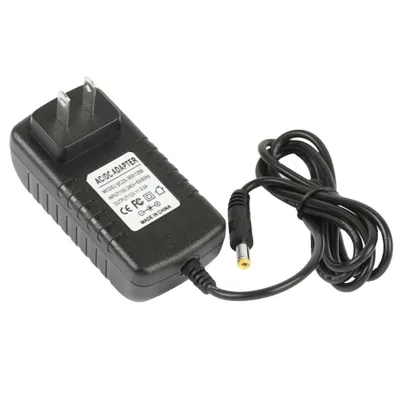


OEM Different Brand Multi Socket AC Adapter
$1.69 - $1.88
MOQ: 3000 Pieces
WANSHUN ELECTRICAL & INTELLIGENT MANUFACTURE (GUANGDONG) CO., LTD.

AC EU 16A Fused Adapter with Good Quality
$0.36 - $1.00
MOQ: 10 Pieces
WANSHUN ELECTRICAL & INTELLIGENT MANUFACTURE (GUANGDONG) CO., LTD.




Comprehensive Sourcing Guide
Medical AC Adapter Sourcing Guide
The Medical AC Adapter market presents a specialized segment where reliability and safety are paramount, distinguishing these components from general consumer electronics. Procurement teams must recognize that while many listed units share physical attributes with standard power supplies, their intended application in medical environments demands rigorous verification of internal architecture and protection mechanisms. The observed product landscape includes models designed for specific medical contexts, such as the YS5M Medical variant, which signals a direct alignment with healthcare equipment requirements. Buyers should approach these listings with the understanding that "medical" designation often implies stricter adherence to isolation standards and failure modes, even when the external form factor resembles a standard wall adapter.
Sourcing decisions for these components hinge on the ability to distinguish between generic power solutions and those engineered for clinical safety. The available data indicates a diverse range of input and output configurations, including both AC and DC output types, which necessitates precise matching to the specific medical device's power requirements. A critical observation is the variation in internal structures, ranging from on-off types to half-bridge switching power supplies, each offering different performance characteristics regarding noise, efficiency, and thermal management. Procurement professionals must verify that the selected adapter's internal topology supports the continuous, stable operation required by sensitive medical instrumentation without introducing electrical interference.
Product Scope and Observed Listing Signals
The current market listings for medical AC adapters reveal a broad spectrum of physical and functional specifications that buyers must navigate. Observed data points to a wide range of weights, from lightweight units at 76g to heavier variants at 120g, and dimensions that vary significantly, such as 692738mm versus 704530mm. These physical differences often correlate with the internal power density and cooling requirements of the specific model, such as the YS16M or YS12 series. Buyers should not assume uniformity across listings; instead, they must treat each model number as a distinct product with unique thermal and spatial constraints that must align with the host medical device's enclosure and mounting requirements.
Listing signals also highlight significant variability in input plug configurations and output capabilities, which directly impacts global deployment strategies. The observed products support multiple input plug standards including EU, US, UK, and AU, often customizable according to customer needs, which is essential for international medical equipment distribution. Furthermore, the output types are listed as both DC and AC, with specific models offering DC outputs like 12V at 3A, while others may support different voltage and current combinations. Procurement teams must carefully cross-reference the listed output voltage and current against the medical device's power consumption profile to ensure compatibility, as mismatches can lead to device malfunction or safety hazards.
Technical Specifications to Verify
Internal power supply architecture is a critical verification point for medical applications, as it dictates the stability and noise profile of the power delivery. The observed listings mention specific internal structures such as "On-Off Type" and "Half-Bridge Type," alongside connection modes described as "Series Switching Power Supply" and "Self-excited Switching Power Supply." These architectural differences influence the adapter's response to load changes and its susceptibility to electromagnetic interference, which is particularly relevant for sensitive diagnostic equipment. Buyers must request detailed schematics or technical datasheets to confirm that the internal topology meets the specific electromagnetic compatibility (EMC) requirements of the medical device being powered.
Protection mechanisms and efficiency ratings are equally vital to verify, as they determine the longevity and safety of the power supply under fault conditions. The observed data indicates that many units include protections against short circuits, over-temperature, overloads, and over-voltage, with efficiency ratings observed at 90%. However, the presence of these features in a listing does not guarantee their performance under all operating conditions. Procurement teams should demand test reports that validate the activation thresholds of these protection circuits, ensuring that the adapter will safely shut down or limit current before causing damage to the connected medical device or creating a fire hazard.
Compliance and Safety Documentation
Certification status is the primary indicator of a Medical AC Adapter's suitability for clinical environments, yet the observed listings present a complex array of approvals that require careful interpretation. The data shows a mix of certifications including CCC, ISOUL, RoHS, TUV, UL, GS, CE, EMC, SAA, FCC, CB, PSE, and Reach. While these marks indicate compliance with various regional and international standards, buyers must verify that the specific certifications apply to the exact model number being purchased and that they cover the medical application context. For instance, the presence of UL or GS marks is significant, but the buyer must confirm that the testing was conducted for the specific voltage and current ratings of the unit in question.
The distinction between general product certifications and medical-specific standards is a crucial area of verification for procurement teams. Although the provided context lists general safety and environmental certifications, it also references trusted category knowledge regarding standards like IEC 60601 and ISO 13485, which are specific to medical electrical equipment. Buyers should not assume that a product with standard CE or FCC marks automatically meets the stringent isolation and leakage current requirements of IEC 60601. It is essential to request explicit documentation confirming compliance with medical-specific safety standards, as general consumer electronics certifications may not be sufficient for devices used in direct patient care or critical monitoring scenarios.
Cost Drivers and Commercial Terms
The pricing and minimum order quantity (MOQ) structures for medical AC adapters vary widely based on the complexity of the internal design and the level of customization required. Observed data indicates a price range from $0.10 to $20.00 and an MOQ range from 1 to 5000 units, reflecting the diversity from low-volume prototyping to large-scale manufacturing. The cost is heavily influenced by the inclusion of specific certifications, the choice of internal components for higher efficiency or protection, and the customization of input plugs and packaging. Buyers should anticipate that models with specialized medical certifications or custom packaging, such as the "Polybag+White Box+Outer Carton" configuration, will command a premium over generic alternatives.
Commercial terms regarding customization and packaging are significant factors in the total cost of ownership and supply chain logistics. The observed listings confirm that customization is available, allowing buyers to tailor input plugs and packaging to specific regional or clinical needs. However, the availability of customization often introduces lead time variables and potential cost increases that must be factored into the procurement timeline. Additionally, the observed packing configurations, such as 50 pieces per carton with specific dimensions, impact shipping efficiency and storage requirements. Procurement teams must negotiate clear terms regarding the cost implications of custom orders and ensure that the supplier can maintain consistent quality across different packaging and plug configurations.
Supplier Qualification and Quality Control
Supplier qualification for medical AC adapters requires a deep dive into the manufacturing origin and the consistency of quality control processes. The observed data points to origins in China, specifically in regions like Zhejiang and Guangdong, which are known hubs for electronics manufacturing. While these regions offer competitive pricing and manufacturing capacity, buyers must verify the supplier's specific quality management systems and their ability to maintain consistency across production batches. The presence of certifications like ISO and TUV suggests a baseline of quality, but the buyer must ensure that the supplier has a robust process for traceability, allowing them to track components and production dates for every unit delivered.
Quality control measures must extend beyond the final product inspection to include the verification of incoming materials and the testing of finished goods. The observed listings mention various protection features and efficiency ratings, but these must be validated through independent testing or third-party audit reports. Buyers should require evidence of batch testing for critical parameters such as output voltage stability, leakage current, and insulation resistance. Furthermore, the supplier's ability to handle the "Life: 3-5 Years Alternative" claim must be substantiated with accelerated life testing data, ensuring that the adapters will perform reliably over the intended service life of the medical equipment without premature failure.
Long-Term Procurement Checks
Sustaining a reliable supply of medical AC adapters requires establishing a framework for long-term performance monitoring and supplier relationship management. The observed product life expectancy of 3-5 years sets a benchmark for replacement cycles, but buyers must implement a system to track field performance and identify any emerging quality issues early. This involves maintaining a log of failure rates, monitoring the consistency of output specifications over time, and conducting periodic re-verification of certifications to ensure they remain valid and applicable to the specific models in use. Proactive monitoring helps prevent unexpected downtime in medical facilities caused by power supply failures.
Supply chain resilience is another critical aspect of long-term procurement, particularly given the variability in lead times and the potential for component shortages. Buyers should develop contingency plans that include qualifying alternative suppliers or models that meet the same technical and compliance specifications. The observed diversity in model numbers, such as YS5M, YS16M, and YS12, suggests that there may be multiple sources for similar specifications, but the buyer must ensure that any substitution maintains the exact same safety and performance characteristics. Regular audits of the supplier's production capacity and inventory levels will help mitigate the risk of supply disruptions and ensure a steady flow of critical power components for medical operations.
FAQs
What certifications are available for medical ac adapters?
Medical ac adapters typically carry certifications such as CCC, ISO, UL, RoHS, TUV, GS, CE, EMC, SAA, FCC, CB, and PSE. These approvals ensure compliance with international safety and electromagnetic compatibility standards. Buyers should verify specific certificate requirements based on their target market regulations before placing orders.
Can medical ac adapters be customized for specific needs?
Yes, customization is available for medical ac adapters to meet specific client requirements. Options include adjusting input plugs to EU, US, UK, or AU standards and modifying output specifications. Buyers can request tailored packaging solutions, such as polybag plus inner box configurations, to align with their distribution and branding strategies.
What is the typical output type for these power adapters?
The output type for these power adapters is primarily DC, with some models supporting AC or DC outputs. Common specifications include 12V DC at 3A current. The internal structure is often on-off type, utilizing a half-bridge power supply system for efficient energy conversion and stable performance in medical and electronic devices.
How are medical ac adapters packaged for shipment?
Packaging options include 1PC per polybag with an inner box, or 50PCS per carton. Some models use polybag plus white box and outer carton configurations. Standard carton dimensions are approximately 34x31x37cm. This packaging ensures product protection during transit while facilitating efficient inventory management and retail display for end-users.
What are the protection features of these adapters?
These adapters feature comprehensive protection mechanisms including short circuit, overtemperature, overload, and overvoltage protection. These safeguards ensure device safety and longevity. The efficiency is rated at 90%, and the lifespan is approximately 3-5 years. Such features are critical for reliable operation in sensitive medical and digital equipment environments.
Where are these medical ac adapters manufactured?
These medical ac adapters are manufactured in China, specifically in regions like Zhejiang and Guangdong. The production facilities adhere to international standards to ensure quality consistency. Buyers can expect reliable supply chains from these established manufacturing hubs, which are known for producing high-volume electronic components and power accessories.