Source Medical Bull Nose Oxygen Regulator for Hospitals Clinics
Explore 30 verified listings for the Medical Bull Nose Oxygen Regulator, comparing features like flow rates, materials, and certifications. Buyers can evaluate piston and lever structures, single-seat designs, and packing options to find suitable suppliers for oxygen therapy applications.
Key considerations
Products List




Comprehensive Sourcing Guide
Strategic Sourcing Guide for Medical Bull Nose Oxygen Regulators
Understanding Product Architecture and Technical Specifications
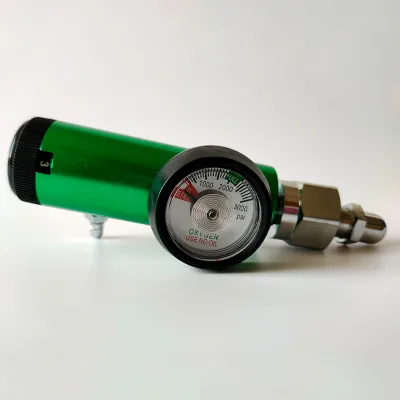
The Medical Bull Nose Oxygen Regulator represents a specialized category of flow control devices designed for precise delivery of therapeutic gases in clinical and home care settings. Based on observed market data, these units are characterized by a distinct piston or lever-based structure, which facilitates the mechanical regulation of gas pressure and flow. The core functional design often utilizes a single-seat valve configuration, ensuring a tight seal when the device is not in active use. This structural integrity is critical for preventing unintended gas leakage, a primary safety concern in medical oxygen therapy.
The physical construction of these regulators typically involves a combination of aluminum and plastic materials. The aluminum components provide the necessary durability and resistance to corrosion, while plastic elements often serve as handles or housing parts to reduce weight and improve user handling. The inlet pressure ratings observed in the market range significantly, with specific models capable of withstanding pressures between 150 bar and 200 bar. This high-pressure tolerance indicates that these regulators are designed to interface directly with standard high-pressure oxygen cylinders used in hospitals and industrial settings.
Flow control is a defining feature of the bull nose design. The market data indicates that these devices are available in various flow rate configurations, specifically covering ranges of 0 to 4, 8, 15, and 25 liters per minute (lpm). Some units feature a "click-style" mechanism, which provides tactile feedback to the user, allowing for precise adjustments without the need for continuous visual monitoring. This is particularly advantageous in emergency scenarios or for patients who require intermittent oxygen support. The devices are generally categorized as ordinary temperature regulators, meaning they are optimized for standard ambient conditions rather than extreme thermal environments.
Compliance Framework and Certification Verification
In the medical device sector, regulatory compliance is not merely a formality but a fundamental requirement for market entry and operational safety. When sourcing bull nose oxygen regulators, buyers must rigorously verify the certification status of potential suppliers. The observed product data highlights several recurring certification markers, including CE, ISO, FDA, and ISOCE. These acronyms represent adherence to specific international and regional safety standards.
The CE marking indicates conformity with health, safety, and environmental protection standards for products sold within the European Economic Area. The ISO designation, often appearing in conjunction with other standards, suggests that the manufacturer adheres to international quality management systems. Specifically, the data references ISOCE and ISOFDA, which imply a combination of international standards and potential alignment with U.S. Food and Drug Administration expectations, though the exact scope of FDA clearance must be confirmed directly with the supplier. It is important to note that while "ISO 13485" is a recognized standard for medical device quality management, it appears in background knowledge rather than the specific product facts provided; therefore, buyers should request explicit proof of ISO 13485 compliance if it is a mandatory requirement for their procurement.
Buyers should treat certification claims as observations that require validation rather than absolute guarantees. The presence of a certification on a product listing does not automatically confirm that every unit in a batch is certified. Procurement teams must request valid, up-to-date certificates from the manufacturer and verify their authenticity through the relevant issuing bodies. The "Bull Nose Oxygen Regulator" and "WGR-05" or "WGOC-06" model names found in the data suggest that certification may be model-specific. Consequently, verification should be conducted for the exact model number being ordered, rather than assuming that a certification applies to the entire product line.
Cost Drivers and Pricing Dynamics
The pricing of medical bull nose oxygen regulators is influenced by a complex interplay of material costs, manufacturing complexity, and regulatory overhead. The observed price range in the market spans from $0.01 to $75 USD, a wide disparity that reflects differences in product quality, material composition, and order volume. The lower end of this spectrum may correspond to basic, non-customized units or bulk components, while the higher end likely represents fully assembled, certified medical-grade devices with advanced features like specific flow rate calibrations or specialized packaging.
Material costs play a significant role in pricing. The use of aluminum and high-grade plastics contributes to the base cost, as does the precision engineering required for the piston and single-seat valve mechanisms. Suppliers offering "customized" options, as indicated by the product attributes, will typically command a premium. Customization can include specific color schemes (such as silver, green, or blue), tailored flow rate ranges, or unique branding on the device. The "Click-Style" feature and the inclusion of plastic handles also add to the manufacturing complexity and, by extension, the unit cost.
Order volume is another critical determinant of price. The minimum order quantity (MOQ) observed ranges from 1 to 1000 units. Buyers purchasing small quantities may face higher per-unit costs due to the lack of economies of scale. Conversely, large-volume orders can significantly reduce the average cost per unit. However, buyers must balance cost savings against the risk of overstocking, especially given the potential for product expiration or technological obsolescence. The "Carton Box" or "Ctns" packaging mentioned in the data is a standard factor, but "Standard Export Packing" or "Negotiable" packing options can also influence the final landed cost, particularly regarding shipping and handling fees.
Typical Applications and Operational Context
Medical bull nose oxygen regulators are primarily deployed in scenarios requiring controlled oxygen delivery for therapeutic purposes. The "Function" attribute explicitly identifies "Oxygen Therapy" as the primary use case. These devices are integral to the "Theory of Oxygen Breathing," serving as the interface between the high-pressure oxygen source and the patient. The "Group" attribute specifies "Adult," indicating that the standard models are designed for adult physiology, though variations may exist for pediatric use.
The applications extend beyond simple hospital wards. The "Bull Nose" design is particularly suited for portable and semi-portable setups, making it ideal for home care environments where patients require long-term oxygen therapy. The "Click-Style" mechanism allows for easy adjustment by patients or caregivers without the need for specialized training. Furthermore, the availability of different flow rates (0-4, 8, 15, 25 lpm) allows these regulators to be used in diverse clinical settings, from emergency rescue operations to chronic care management.
The "Scale" attribute, ranging from "Small" to "Medium," suggests that these regulators are versatile in size, fitting various cylinder types and space constraints. The "Without LCD Display" feature is notable; it indicates that these devices rely on mechanical indicators rather than digital readouts. This simplifies the design, reduces the potential for electronic failure, and lowers maintenance requirements, which is a significant advantage in resource-limited settings or for devices intended for rugged use. The "Oxygen Cannula PVC Plastics" standard mentioned in the data implies that these regulators are often part of a broader system that includes delivery tubing and cannulas, necessitating compatibility checks when sourcing complete therapy kits.
Supplier Evaluation and Sourcing Strategy
Selecting a reliable supplier for medical bull nose oxygen regulators requires a multifaceted evaluation strategy. The origin of the products is a key factor, with the data indicating that the majority of these items originate from China, with specific mentions of Beijing as a production hub. While this geographic concentration offers access to a robust supply chain, it also necessitates careful vetting of individual suppliers to ensure they meet international quality standards.
Buyers should prioritize suppliers who demonstrate transparency in their certification process. The presence of multiple certifications (CE, ISO, FDA, ISOCE) in the product data suggests that reputable manufacturers maintain a broad compliance portfolio. However, buyers must verify that the specific supplier holds these certifications for the specific models they intend to purchase. The "Customization" attribute being available is a positive indicator of a supplier's flexibility and manufacturing capability, but it also introduces complexity. Buyers should assess the supplier's ability to manage custom orders without compromising quality or lead times.
The "prod_packing" details, such as "Carton Box," "Ctns," or "Standard Export Packing," provide insight into the supplier's logistics capabilities. Reliable suppliers will offer packaging that protects the delicate internal mechanisms of the regulator during transit. The "Negotiable" nature of some packing options suggests that suppliers are willing to work with buyers to optimize packaging for specific shipping requirements, which can be a valuable partnership attribute.
Quality Control and Long-Term Procurement Considerations
Quality control in the medical device sector is paramount. Buyers must implement rigorous inspection protocols to ensure that every unit received meets the specified technical and safety requirements. The "Single-Seat" valve structure and "Piston" mechanism require precise manufacturing tolerances to function correctly. Any deviation in these components can lead to flow inaccuracies or safety hazards.
Long-term procurement considerations should focus on the sustainability of the supply chain. The "Lead time" and "MOQ" ranges observed (1-1000 units) suggest that buyers can start with small orders to test quality before committing to larger volumes. However, for consistent supply, establishing a relationship with a supplier who can guarantee steady production capacity is essential. The "Alloy" material and "Aluminum material" standards indicate that the products are durable, but buyers should still inquire about the lifespan of the components and the availability of replacement parts.
Furthermore, the "Click-Style" and "Plastic Handles" features should be evaluated for wear and tear over time. Buyers should request data on the durability of these components under repeated use. The "Ordinary Temperature" specification implies that the devices are not designed for extreme environments, so buyers should ensure that the storage and usage conditions align with these limitations. Finally, the "Standard Export Packing" and "Ctns" options should be reviewed to ensure they meet the specific regulatory requirements of the destination market, particularly regarding labeling and traceability.
Comparative Analysis of Key Product Attributes
To facilitate informed decision-making, the following table summarizes the key attributes observed in the market for medical bull nose oxygen regulators. This comparison helps buyers identify the specific features that align with their operational needs.
| Attribute Category | Observed Values | Procurement Implication |
|---|---|---|
| Structure | Piston, Lever | Determines mechanical reliability and ease of use. |
| Valve Seat | Single-Seat | Ensures tight sealing and leak prevention. |
| Material | Alloy, Aluminum & Plastic | Balances durability with weight and cost. |
| Flow Rate | 0~4, 8, 15, 25 lpm | Must match patient therapy requirements. |
| Inlet Pressure | 150 bar - 200 bar | Compatibility with standard high-pressure cylinders. |
| Certification | CE, ISO, FDA, ISOCE | Critical for regulatory compliance in target markets. |
| Display | Without LCD Display | Simplifies operation; reduces electronic failure risk. |
| Packing | Carton Box, Ctns, Standard Export | Affects shipping costs and product protection. |
| Origin | China (Beijing) | Influences lead times and logistics planning. |
| Customization | Available | Allows for branding and specific feature tailoring. |
By carefully analyzing these attributes and adhering to the verification protocols outlined in this guide, buyers can effectively source high-quality medical bull nose oxygen regulators that meet both clinical standards and business objectives. The focus must remain on validating claims, ensuring compliance, and maintaining a robust supply chain to support the critical need for oxygen therapy worldwide.
FAQs
What certifications do medical bull nose oxygen regulators typically have?
These regulators commonly hold CE, ISO, FDA, and ISOCE certifications. Buyers must verify that specific models like WGR-05 or WGOC-06 possess valid certificates before purchase.
How is the inlet pressure rated for these oxygen regulators?
The inlet pressure rating ranges from 150 bar to 200 bar for high-pressure cylinder compatibility. This specification ensures safe operation when connected to standard medical oxygen sources.
Which flow rate options are available for these devices?
Available flow rates include 0-4, 8, 15, and 25 liters per minute. Users can select specific ranges based on therapeutic needs without requiring digital displays.
Can these regulators be customized for specific requirements?
Yes, customization is available for features like color, handles, and flow settings. Buyers should confirm that custom orders maintain original certification standards and material quality.
What materials are used to construct these oxygen regulators?
Construction typically combines aluminum and plastic materials for durability and weight reduction. The aluminum components resist corrosion while plastic parts often serve as handles.
How are these products packaged for international shipping?
Products are packed in carton boxes, Ctns, or standard export packing. Some suppliers offer negotiable packing options to optimize protection during transit.
Where are these medical regulators primarily manufactured?
Most units originate from China, with specific production hubs in Beijing. Buyers should verify the exact origin location for each batch to ensure supply chain transparency.