Source Medical Laboratory Ultra-Low Temperature Freezer for Hospital, Lab, Fishery
Source 30 medical laboratory ultra-low temperature freezers with capacities from 58L to 838L and temperature ranges down to -135°C. Buyers can compare models like FSF-86V58 and DW-135W118 for hospital, laboratory, and pelagic fishery applications.
Key considerations
Products List


Laboratory Medical -40 Degree Ultra Low Temperature Freezer Refrigerator
$2500.00 - $3000.00
MOQ: 1 Pieces


-135 Degree Ultra Low Temperature Laboratory Freezer
$3800.00 - $5000.00
MOQ: 1 Pieces
Zhejiang Heerxin Refrigeration Appliance Technology Co., Ltd.


-86 Degree Ultra Low Temperature Medical Lab Freezer for Hospital
$5900.00 - $7800.00
MOQ: 1 Pieces
Zhejiang Heerxin Refrigeration Appliance Technology Co., Ltd.

Deep Freezer-Laboratory Freezer-Freezer-Ultra Low Temperature Freezer
$1500.00 - $8500.00
MOQ: 1 Pieces
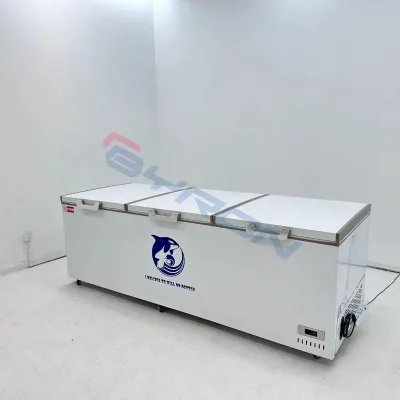
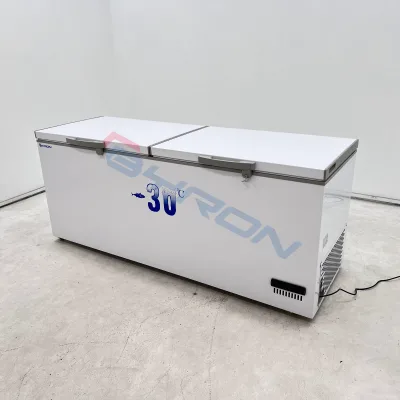
Ultra Low Temperature Freezer -86 Degree Adjustable for Ult Freezer Medical Freezer
$275.76 - $2226.46
MOQ: 1 Minimum
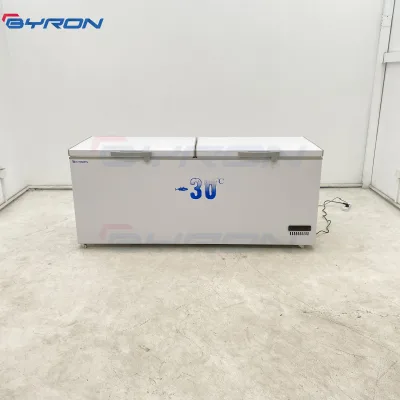


Ultra Low Temperature Laboratory Freezer for Optimal Sample Preservation
$499.00 - $1299.00
MOQ: 10 Pieces


-65℃ Lab Grade Ultra Low Temperature Freezer Medical Specimen Storage
$499.00 - $1299.00
MOQ: 10 Pieces


Comprehensive Sourcing Guide
Strategic Sourcing Guide for Medical Laboratory Ultra-Low Temperature Freezers
Understanding Core Technical Specifications and Performance Parameters
When sourcing an ultra-low temperature freezer for medical laboratory applications, the primary focus must be on the precise temperature stability and the specific capacity required for the intended biological or chemical storage. The market offers a diverse range of units, from small-scale devices to large industrial systems, each defined by distinct operational parameters. Buyers must first distinguish between the various temperature ranges available, as these dictate the type of samples that can be safely stored. The observed product data indicates a wide spectrum of thermal capabilities, with specific units capable of maintaining temperatures as low as -86°C, while others operate within a range of -40°C to -86°C. Furthermore, advanced models are designed for extreme cryobiology applications, featuring adjustable temperature ranges extending from -105°C to -135°C. This variability necessitates a rigorous assessment of the laboratory's specific storage needs before selecting a unit.
Capacity is another critical specification that varies significantly across available inventory. The data reveals units ranging from compact 58L models to substantial 838L systems, with intermediate options such as 118L and 188L capacities. The physical footprint of these units is equally important; for instance, a 118L unit may have external dimensions of approximately 1270mm in length, 795mm in width, and 990mm in height. Buyers should verify that the laboratory space can accommodate the specific external dimensions of the chosen model. Additionally, the internal construction materials play a vital role in durability and hygiene. High-quality units often feature an inner material of 304 Stainless Steel, which ensures resistance to corrosion and facilitates easy cleaning, a crucial factor in medical and laboratory environments. The structural design is typically assembled, and the units are available in horizontal shapes, which can influence how samples are organized and accessed.
Compliance, Certification, and Regulatory Standards
In the medical and laboratory sectors, compliance with international standards is not merely a formality but a prerequisite for operational legitimacy and safety. The primary certification observed in the product data is the CE mark, which indicates conformity with health, safety, and environmental protection standards for products sold within the European Economic Area. While the presence of CE certification is a strong indicator of regulatory adherence, buyers must verify that this certification is current and applicable to the specific model being purchased. It is essential to understand that certification status can vary between individual units and batches; therefore, relying solely on general product listings without verifying the specific certificate for the model number is risky.
Beyond general certifications, the standards governing the construction and performance of these freezers are equally important. The product data references specific capacity standards, such as 528L, 188L, 58L, and 838L, which serve as benchmarks for the unit's volume and classification. Buyers should ensure that the stated capacity aligns with the actual usable volume required for their laboratory workflows. Furthermore, the origin of the product is a significant factor in compliance. The data indicates that these units originate from China, specifically from regions such as Zhejiang. While this is a major manufacturing hub, buyers must ensure that the supplier can provide all necessary documentation, including the CE certificate and any other regional compliance documents required by local authorities. The absence of specific certification details in general product descriptions means that the buyer must explicitly request and validate these documents before finalizing a purchase.
Cost Drivers and Financial Considerations in Procurement
The financial landscape of sourcing ultra-low temperature freezers is influenced by several dynamic factors, with the observed price range in the market spanning from approximately $274.81 to $9,775. This vast disparity in pricing is not arbitrary but is driven by the complexity of the technology, the capacity of the unit, and the quality of the components used. High-end models capable of reaching -135°C with advanced alarm systems and specialized compressors will naturally command a higher price point compared to standard -86°C units with basic functionality. Buyers must analyze the cost drivers carefully, understanding that a lower price may indicate a reduction in capacity, a simpler cooling system, or the use of less durable materials.
The Minimum Order Quantity (MOQ) is another critical financial consideration. The observed MOQ range varies from 1 to 63 units, offering flexibility for both single-unit laboratory purchases and large-scale institutional procurement. For smaller laboratories, an MOQ of 1 allows for the acquisition of a single unit without the need for bulk purchasing, which can be advantageous for budget management. However, for larger organizations, negotiating an MOQ closer to the lower end of the spectrum can facilitate cost-effective scaling. Additionally, the warranty period, typically ranging from 1 to 2 years, is a key component of the total cost of ownership. A longer warranty can mitigate long-term maintenance costs and provide peace of mind regarding the reliability of the equipment. Buyers should also consider the optional nature of certain features, such as temperature recorders, which can add to the initial cost but provide valuable data for compliance and quality assurance.
Typical Applications and Operational Use Cases
The versatility of ultra-low temperature freezers makes them suitable for a wide array of applications within the medical and scientific sectors. The product data highlights specific use cases, including storage for food, blood, and laboratory experiments. In a medical context, these units are essential for preserving blood products, biological samples, and reagents that require extreme cold to maintain their integrity. The ability to operate at temperatures as low as -135°C makes these freezers particularly valuable for cryobiology, where the preservation of cells, tissues, and specialized materials is critical. The "Production" use nature suggests that these units are also employed in manufacturing processes that require precise temperature control, such as the production of pharmaceuticals or biological agents.
Furthermore, the specific applications extend to the pelagic fishery industry, indicating that these units are robust enough to handle the preservation of marine biological samples. The "Laboratory" and "Medical" usage tags confirm their primary role in research and clinical settings. The inclusion of an "Over-Temperature Alarm" function underscores the importance of continuous monitoring to prevent sample loss due to equipment failure. This feature is particularly crucial for high-value samples where even a brief temperature excursion can result in irreversible damage. Buyers should evaluate their specific application requirements against the capabilities of the available units, ensuring that the selected freezer can handle the unique demands of their samples, whether they are blood products, specialized materials for ultra-low temperature experiments, or biological specimens for research.
Supplier Evaluation and Quality Assurance Protocols
Evaluating a supplier for medical laboratory equipment requires a multi-faceted approach that goes beyond simple price comparisons. The presence of OEM (Original Equipment Manufacturer) services and customization options indicates that suppliers are capable of tailoring products to specific buyer needs. This flexibility is a significant advantage for laboratories with unique spatial or functional requirements. However, buyers must verify the supplier's ability to deliver consistent quality. The observation of "Customized" and "Customization: Available" attributes suggests that the supplier can modify units, but the extent of these modifications and the impact on performance must be clearly defined in the contract.
Quality control should be a central part of the supplier evaluation process. Buyers should inquire about the manufacturing standards and the testing procedures used to ensure that each unit meets the specified temperature ranges and performance criteria. The use of high-quality components, such as Secop compressors, Germany Ebm Brand flow fans, and Spain Keld Brand thermostats, is a strong indicator of a supplier's commitment to quality. These specific component brands are known for their reliability and efficiency, and their inclusion in the product design suggests a focus on long-term performance. Buyers should request documentation verifying the authenticity and specifications of these components to ensure that the final product matches the advertised quality. Additionally, the packaging method, such as wooden boxes or plywood boxes, should be assessed to ensure that the units are protected during transit, minimizing the risk of damage before installation.
Long-Term Procurement and Maintenance Considerations
Sourcing an ultra-low temperature freezer is a long-term investment that requires careful consideration of maintenance, energy efficiency, and lifecycle costs. The input power of the units, observed at 1020 watts for certain models, is a key factor in determining operational expenses. Buyers should calculate the total cost of ownership, including electricity consumption, over the expected lifespan of the equipment. Energy-efficient models, often featuring advanced compressors and fans, can significantly reduce long-term operating costs. The warranty period of 1 to 2 years provides a baseline for manufacturer support, but buyers should also consider the availability of spare parts and the supplier's ability to provide timely maintenance services.
The "Audible and Visual Alarm" system is a critical feature for long-term reliability, ensuring that any temperature deviations are immediately detected and addressed. This feature is essential for preventing sample loss and maintaining the integrity of stored materials. Buyers should also consider the optional temperature recorder, which can provide a historical record of temperature fluctuations, aiding in compliance audits and quality assurance. The "New" condition of the products ensures that buyers receive equipment with no prior wear and tear, but the long-term durability will depend on the build quality and the robustness of the components. Finally, the "Production" use nature suggests that these units are designed for continuous operation, and buyers should ensure that the supplier offers comprehensive training and support to maximize the efficiency and longevity of the equipment. By carefully evaluating these long-term factors, buyers can make informed decisions that align with their laboratory's strategic goals and operational needs.
FAQs
What temperature ranges do these freezers support?
These units support ranges from -40°C to -86°C and adjustable settings from -105°C to -135°C. Specific models are designed for cryobiology cooling with precise stability for medical and laboratory applications.
Which capacity sizes are available for purchase?
Available capacities include 58L, 118L, 188L, 528L, and 838L options. Buyers can select from small, medium, or large scales depending on their specific storage requirements for blood, food, or laboratory samples.
Can I customize the unit for my laboratory needs?
Yes, customization is available and the product is offered as a customized option. OEM services are provided to tailor the freezer to specific production or laboratory use nature requirements.
What certifications do these freezers hold?
The products carry CE certification indicating compliance with relevant safety standards. This certification is a key attribute for units intended for hospital and medical laboratory environments.
How long is the warranty period for these units?
The warranty period typically ranges from 1 to 2 years for new condition units. This coverage helps ensure reliability for critical storage applications in medical and laboratory settings.
What materials are used for the inner construction?
The inner material is constructed from 304 stainless steel for durability and hygiene. This material choice supports easy cleaning and resistance to corrosion in laboratory and medical environments.
Are alarm systems included for temperature monitoring?
Yes, the units feature audible and visual alarm functions for over-temperature events. This ensures immediate notification if the temperature deviates from the set range during operation.