Source Medium Capacity Reefer Truck for Cold Storage, Logistics, and Food Transport
Explore 30 listings for the Medium Capacity Reefer Truck, featuring diesel engines, manual transmissions, and varying dimensions. Buyers can compare specifications like wheelbase, axle load, and gross vehicle weight to find suitable units for cold chain logistics.
Key considerations
Products List


Versatile Reefer Truck with Superior Insulation and Chill Capacity
$33000.00 - $35000.00
MOQ: 1 Pieces


High Capacity Reefer Truck with State-of-The-Art Temperature Control
$14500.00 - $15500.00
MOQ: 1 Pieces

Durable Reefer Truck with Versatile Features for Frozen and Refrigerated Freight
$30000.00 - $32000.00
MOQ: 1 Pieces

Premium Refrigerated Reefer Truck with Eco-Friendly Temperature Control
$18000.00 - $19000.00
MOQ: 1 Pieces


Fuel-Powered or Full Electric Chassis Reefer Truck with Multiple Green Options
$5000.00 - $7000.00
MOQ: 1 Pieces

138HP Reefer Truck for Ice Cream and Dairy Products Transport Box Truck
$12000.00 - $24000.00
MOQ: 1 Pieces

290HP 7m Reefer Truck with Carrier Refrigeration for Fresh Seafood Long-Distance Transport
$24000.00 - $36000.00
MOQ: 1 Pieces

Long Range Electric Refrigerated Truck for Inter-City Fresh Food Transport Reefer Truck
$12000.00 - $24000.00
MOQ: 1 Pieces

4X2 Reefer Van Multi-Temperature Zone Refrigerated Truck for Dairy and Beverage Delivery
$12000.00 - $24000.00
MOQ: 1 Pieces

Factory Direct 6 Wheel Reefer Truck for Maintaining Frozen or Fresh Cargo Reefer Trucks
$15100.00 - $18610.00
MOQ: 1 Pieces
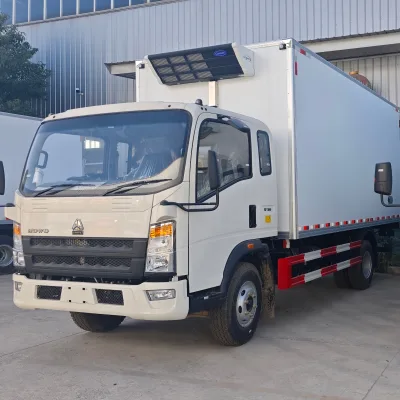
$15267.09 - $16284.90
MOQ: 1 pieces


Light Duty Reefer Truck 5/10tons Refrigerated Truck Meat Transport
$11800.00 - $15800.00
MOQ: 1 Pieces






Comprehensive Sourcing Guide
Medium Capacity Reefer Truck Sourcing Guide
Sourcing a Medium Capacity Reefer Truck requires a disciplined approach that balances technical specifications with commercial viability. The market for these vehicles is characterized by a wide variance in chassis configurations, cargo dimensions, and cooling unit capabilities. Buyers must navigate a landscape where "medium capacity" is not a standardized industry term but rather a functional description that varies by region and application. The observed product data indicates a significant range in vehicle dimensions, from compact units around 5.4 meters to larger configurations exceeding 9.5 meters in length. This variability necessitates a clear definition of operational requirements before engaging with suppliers, as the physical footprint of the truck directly impacts fuel efficiency, maneuverability, and regulatory compliance in target markets.
The procurement process for refrigerated transport vehicles involves verifying that the cold chain integrity is maintained from the factory floor to the final destination. The supplied facts highlight that these vehicles are typically diesel-powered, manual transmission units with specific gross vehicle weight ratings that often exceed standard light truck classifications. For instance, observed gross weights reach up to 18,000 kg, while curb weights vary significantly based on the insulation thickness and refrigeration machinery installed. Buyers must understand that the refrigeration unit is an integral part of the vehicle’s total weight and power consumption profile. Consequently, the sourcing strategy must prioritize vehicles that offer a balance between payload capacity and thermal efficiency, ensuring that the chosen configuration meets the specific temperature control needs of the cargo being transported.
Product Scope and Observed Listing Signals
The current market listings for medium capacity reefer trucks reveal a diverse array of chassis models and body configurations. Key chassis identifiers such as the ZZ1047D3815C1R45, Dfh1180e7, and Bj1181y6akl-01 suggest that buyers are dealing with multiple original equipment manufacturer (OEM) platforms. These chassis variations dictate the wheelbase, axle load capacity, and overall durability of the vehicle. The observed wheelbases range from 3,950 mm to 7,300 mm, indicating that the product scope covers everything from urban delivery vehicles to long-haul transport trucks. Buyers should recognize that the chassis model is the primary determinant of the vehicle’s mechanical reliability and maintenance requirements, making it a critical factor in the initial screening process.
Listing signals also indicate a strong emphasis on customization and specific packaging standards. The availability of customization options allows buyers to tailor the refrigerated box dimensions to their specific cargo needs, with observed lengths spanning from approximately 5.4 meters to 9.7 meters. Furthermore, the fact that vehicles are packed with wax before boarding suggests a standard protective measure against corrosion during sea freight, which is a common origin point for these vehicles. Buyers should interpret these signals as evidence of a mature supply chain capable of handling complex logistics. However, the presence of multiple dimension options within a single listing implies that buyers must explicitly specify their required cargo volume and external dimensions to avoid receiving a vehicle that does not fit their operational constraints.
Technical Specifications to Verify
Verifying the technical specifications of a Medium Capacity Reefer Truck is essential to ensure it meets operational demands. The observed data shows a wide range of dimensions, with lengths varying significantly across different models. Buyers must verify the exact internal cargo volume, as external dimensions do not always correlate directly with usable space due to variations in insulation thickness. The approach and departure angles, observed to range from 13/8 degrees to 18/16 degrees, are critical for vehicles that will operate on uneven terrain or in facilities with steep ramps. A higher departure angle, for example, reduces the risk of the rear of the truck scraping on loading docks, which is a common issue in urban distribution centers.
Axle configuration and load capacity are other vital technical parameters that require strict verification. The observed axle loads of 6,500/11,500 kg and gross vehicle weights up to 18,000 kg indicate that these are heavy-duty vehicles designed for substantial payloads. Buyers must confirm that the chassis is rated for the combined weight of the refrigeration unit, the insulated box, and the maximum cargo load. Additionally, the maximum speed ratings, observed at 89, 105, 110, and 125 km/h, should be aligned with local highway regulations and the operational tempo of the fleet. The number of tires, typically six for these configurations, also impacts maintenance costs and tire replacement schedules, making it a key factor in total cost of ownership calculations.
Compliance and Safety Documentation
Compliance with emission standards and safety certifications is a non-negotiable aspect of sourcing medium capacity reefer trucks. The observed certifications include ISOCCC and CCC, which are relevant for the Chinese domestic market and certain international standards. Buyers must verify that the vehicle meets the specific emission standards required in their target market, such as Euro standards, as the observed data mentions "Euro Fuel:Diesel" but does not specify the exact Euro level. Failure to comply with local emission regulations can result in significant fines, restricted access to urban zones, or the inability to register the vehicle for commercial use.
Safety documentation must also be thoroughly reviewed to ensure the vehicle meets structural integrity and operational safety requirements. The condition of the vehicles is listed as "New," which implies that they should come with full manufacturer warranties and service manuals. Buyers should request detailed documentation regarding the refrigeration unit’s safety features, including pressure relief valves and electrical safety protocols. Additionally, the occupancy ratings of 2 or 3 persons must be clearly documented to ensure that the cab configuration complies with labor and safety regulations in the destination country. Proper documentation ensures that the vehicle can be legally operated and insured, reducing liability risks for the buyer.
Cost Drivers and Commercial Terms
The cost of a Medium Capacity Reefer Truck is influenced by several key drivers, including chassis quality, refrigeration unit capacity, and body customization. The observed price range of 1,600 to 49,000 USD reflects the vast differences in vehicle specifications, from smaller, less powerful units to larger, more complex configurations. Buyers should understand that the price is not solely determined by the vehicle’s size but also by the brand and efficiency of the refrigeration machinery. Higher-end refrigeration units with precise temperature control and lower fuel consumption can significantly increase the upfront cost but may offer better long-term savings through reduced operational expenses.
Commercial terms such as minimum order quantity (MOQ) and payment conditions are also critical factors in the sourcing process. The observed MOQ of 1 suggests that buyers can procure single units, which is beneficial for testing the market or replacing individual vehicles. However, buyers should negotiate for volume discounts if they plan to expand their fleet. Payment terms should be structured to protect the buyer’s interests, with a portion of the payment held until the vehicle passes inspection and verification of all specifications. Understanding the total cost of ownership, including maintenance, fuel, and insurance, is essential for making an informed purchasing decision that aligns with the company’s financial goals.
Supplier Qualification and Quality Control
Qualifying suppliers of medium capacity reefer trucks requires a rigorous assessment of their manufacturing capabilities and quality control processes. Buyers should verify the supplier’s production history, specifically their experience with diesel-powered refrigerated trucks and their ability to customize body dimensions. The observed product origin in Hubei, China, indicates a concentration of manufacturing in this region, which is known for its automotive industry. Buyers should request evidence of the supplier’s quality management systems, including ISO certifications, to ensure that the vehicles are built to consistent standards.
Quality control measures should be implemented at multiple stages of the procurement process, from raw material inspection to final assembly. Buyers should consider hiring third-party inspection services to verify the vehicle’s specifications before shipment. This includes checking the integrity of the refrigerated box insulation, the functionality of the cooling unit, and the mechanical condition of the chassis. Additionally, buyers should verify that the vehicles are packed appropriately to prevent damage during transit, as indicated by the waxed packaging observed in the listings. Implementing a robust quality control strategy helps mitigate the risk of receiving defective vehicles and ensures that the fleet operates reliably from day one.
Long-Term Procurement Checks
Long-term procurement success depends on establishing a sustainable supply chain that can support fleet expansion and maintenance needs. Buyers should evaluate the supplier’s ability to provide spare parts and technical support over the lifecycle of the vehicle. The complexity of diesel engines and refrigeration systems requires access to specialized components and expertise, which may not be readily available in all markets. Buyers should negotiate service agreements that include regular maintenance schedules and emergency support to minimize downtime.
Furthermore, buyers should monitor market trends and technological advancements in refrigerated transport to ensure that their fleet remains competitive. The evolution of emission standards and fuel efficiency requirements may necessitate periodic upgrades or replacements. By maintaining a close relationship with qualified suppliers and staying informed about industry developments, buyers can optimize their procurement strategy and ensure that their medium capacity reefer trucks continue to meet operational and regulatory requirements. This proactive approach helps protect the investment and supports the long-term growth of the business.
FAQs
What is the maximum speed of these medium capacity reefer trucks?
The maximum speed ranges from 89 to 125 kilometers per hour depending on the specific chassis model. Some units reach 105 km/h while others achieve up to 125 km/h, ensuring efficient transport for refrigerated cargo across various road conditions.
Which certifications do these diesel refrigerated trucks hold?
These vehicles hold ISOCCC, TS, and CCC certifications confirming their compliance with safety and emission standards. They are designed to meet Euro emission requirements and are manufactured in Hubei, China, ensuring quality control throughout the production process.
Can I customize the dimensions of the Medium Capacity Reefer Truck?
Customization is available for various dimensions including lengths ranging from 5430 to 9740 millimeters. Buyers can select from multiple wheelbase options between 3950 and 7300 millimeters to fit specific cargo requirements and operational needs.
What is the gross vehicle weight capacity for these trucks?
The gross vehicle weight capacity varies by model, with options reaching up to 18000 kilograms. Smaller units may have a capacity around 3890 kilograms, allowing flexibility for different load requirements while maintaining structural integrity and safety.
How many axles and tires are equipped on these vehicles?
These trucks are equipped with two axles and typically feature six tires for stability and load distribution. The axle load capacity is rated at 6500 or 11500 kilograms, supporting heavy-duty transport operations efficiently.
What is the minimum order quantity for purchasing these trucks?
The minimum order quantity is one unit, allowing buyers to purchase a single vehicle for immediate deployment. This flexible MOQ supports small fleet expansions or individual business needs without requiring bulk commitments.
Which chassis models are used for these medium capacity reefer trucks?
Common chassis models include Dfh1180e7, Bj1181y6akl-01, and Bj1181y6aam-01. These platforms provide a robust foundation for the refrigerated body, ensuring reliable performance and compatibility with various engine configurations.